Wall Street Slips While Oil Jumps Amid Iran Strait of Hormuz Crisis/ Newslooks/ WASHINGTON/ J. Mansour/ Morning Edition/ U.S. stocks edged lower Monday as investors reacted to renewed uncertainty surrounding the Iran war and rising oil prices. The S&P 500 pulled back from record highs while Brent crude climbed above $108 per barrel as the Strait of Hormuz remained effectively closed. Markets are also closely watching this week’s Federal Reserve decision and major earnings reports from Big Tech companies.
US Stocks and Oil Prices Quick Looks
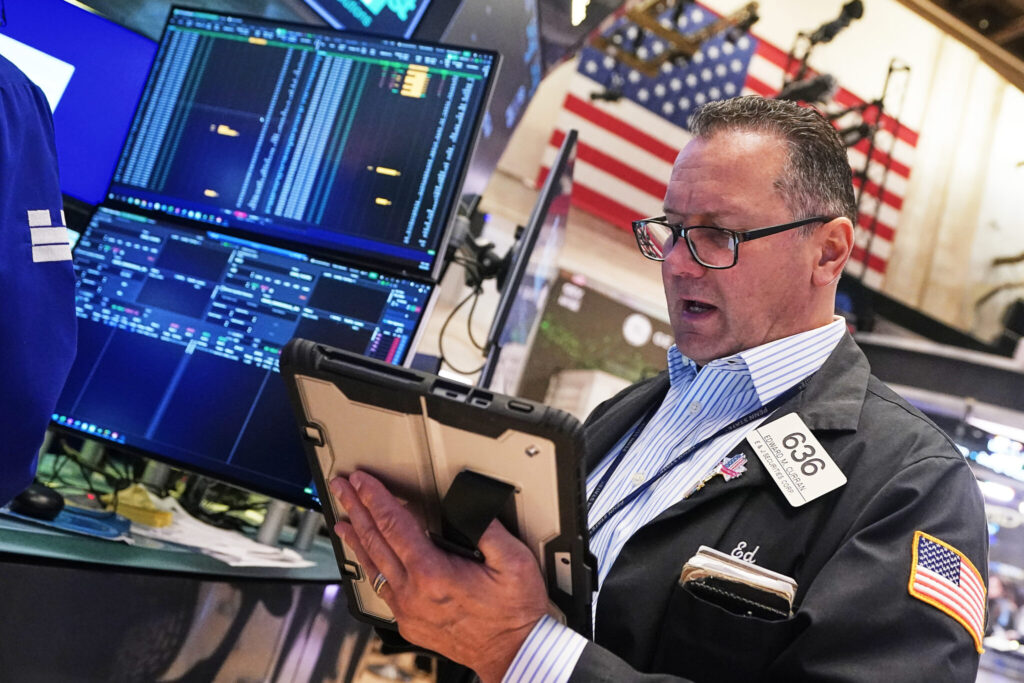
- S&P 500 slipped 0.2% after reaching record highs
- Dow Jones fell 155 points while Nasdaq dropped 0.3%
- Brent crude rose 3.4% to $108.92 per barrel
- Strait of Hormuz remains effectively closed for major tankers
- Iran offered to reopen the strait if the U.S. ends its blockade
- Trump rejected sending envoys to Pakistan for talks
- Federal Reserve interest rate decision expected Wednesday
- Alphabet, Amazon, Meta, Microsoft and Apple earnings due this week
Deep Look
Wall Street Pulls Back as Oil Prices Climb
The U.S. stock market stepped back from record highs Monday as investors weighed rising oil prices and growing uncertainty over the next phase of the Iran war.
After weeks of strong gains fueled by solid corporate earnings and hopes that the global economy could avoid a worst-case outcome from the Middle East conflict, markets slowed as energy concerns returned to the forefront.
The S&P 500 slipped 0.2% after recently hitting another all-time high.
The Dow Jones Industrial Average fell 155 points, or 0.3%, while the Nasdaq Composite dropped 0.3% from its own record levels.
The larger moves came in oil markets, where traders focused on the continuing closure of the Strait of Hormuz and the stalled diplomacy between Washington and Tehran.
Oil Prices Rise as Strait of Hormuz Remains Blocked
Oil prices climbed sharply as tankers continued to struggle to move through the Strait of Hormuz, one of the world’s most important energy shipping lanes.
The narrow waterway links the Persian Gulf to global markets and normally handles about one-fifth of all traded oil and natural gas.
With the strait effectively closed, crude remains stuck in the Middle East, including Iranian oil being targeted by the U.S. naval blockade.
That supply disruption has pushed prices significantly higher.
The price for Brent crude to be delivered in June jumped 3.4% to $108.92 per barrel.
Brent for July delivery, where most market trading is now concentrated, rose 3% to $102.08 per barrel.
Before the war began, Brent crude was trading around $70 per barrel.
At several points during the conflict, fears pushed prices close to $120.
Iran Offers a Deal, but Trump Appears Unmoved
The proposal was passed to Washington through Pakistani mediators and is aimed at restoring global oil flow while delaying more difficult discussions over Tehran’s nuclear program.
But President Donald Trump appears unlikely to accept it.
Instead of sending U.S. envoys to Pakistan for another round of talks, Trump told them to stay home over the weekend.
He said the Iranians could simply call Washington if they had a serious proposal.
That decision signaled Trump may prefer to continue squeezing Iran economically through the blockade rather than ease pressure quickly.
Markets React to the Diplomatic Uncertainty
Investors had previously been encouraged by the fragile ceasefire between the U.S. and Iran and by expectations that diplomacy could prevent a larger global economic shock.
But the latest weekend developments created fresh uncertainty.
By rejecting another Pakistan trip and keeping the blockade in place, Trump suggested the standoff may continue longer than markets hoped.
That uncertainty matters because rising fuel costs quickly affect inflation, transportation, food prices, and business costs across the global economy.
The longer the Strait of Hormuz remains restricted, the greater the risk of broader economic consequences.
Strong Corporate Earnings Still Supporting Stocks
Despite geopolitical concerns, many major U.S. companies continue reporting stronger-than-expected profits for early 2026.
That earnings strength has helped keep the broader market near record highs.
Since hitting a low in late March, the S&P 500 has climbed nearly 13%.
Strong earnings have reassured investors that businesses are still performing well even as oil prices and inflation risks rise.
That balance between strong profits and global uncertainty is now driving much of Wall Street’s daily movement.
Verizon Gains After Strong Quarter
One of Monday’s bright spots came from Verizon Communications.
Its stock rose 3.3% after the company reported a better-than-expected first quarter for postpaid phone customers.
For the first time since 2013, Verizon added more postpaid phone customers than it lost during the opening quarter of the year.
The company also raised its full-year profit growth forecast.
Although revenue for the quarter came in slightly below analyst expectations, investors focused more on customer growth and stronger profit guidance.
That helped lift the stock and support the broader market.
Domino’s Pizza Slides on Weak Results
Not every earnings report helped.
Domino’s Pizza dropped 9.6% after posting weaker profit and revenue than analysts expected.
The disappointing quarter made the company one of Monday’s biggest drags on the market.
Investors remain especially sensitive to consumer-facing companies because higher food costs and inflation can quickly impact restaurant demand.
The contrast between Verizon and Domino’s showed how sharply Wall Street is reacting to earnings this season.
Big Tech Earnings Week Arrives
Several of the market’s most influential companies are set to report results this week, which could heavily shape the next move for stocks.
Alphabet, Amazon, Meta Platforms, and Microsoft are all scheduled to report Wednesday.
Apple follows on Thursday.
Because these companies make up such a large share of major stock indexes, their earnings reports often move the entire market.
Strong results could help offset concerns about oil prices and inflation.
Weak guidance, however, could add pressure at a sensitive moment.
Federal Reserve Decision Looms
Investors are also focused on the Federal Reserve, which will announce its latest interest rate decision Wednesday.
Most traders expect the Fed to keep rates unchanged.
Lower interest rates would help support hiring, borrowing, and economic growth.
But with oil prices rising and tariffs also threatening higher consumer costs, cutting rates too quickly could worsen inflation.
That makes the Fed’s decision especially difficult.
Markets are also watching because this may be the final Fed meeting led by Chair Jerome Powell.
His term ends next month, and Trump has already nominated Kevin Warsh to replace him.
That leadership change adds another major layer of uncertainty.
Global Central Banks Face the Same Pressure
The Fed is not alone this week.
Global policymakers are all facing the same challenge: how to support growth without allowing inflation to surge again because of energy prices.
That makes this one of the most important weeks for global financial markets in months.
International Markets Mixed
Stock markets abroad showed mixed results Monday.
European indexes slipped as investors reacted cautiously to the same oil and inflation concerns affecting Wall Street.
In Asia, trading was stronger.
South Korea’s Kospi jumped 2.2%, while Japan’s Nikkei 225 gained 1.4%, marking two of the strongest performances among major global indexes.
The stronger Asian finish reflected continued optimism about corporate earnings and hopes that the ceasefire would hold.
Records Still Close, But Risks Are Rising
Even with Monday’s pullback, U.S. markets remain very close to record highs.
Strong earnings and economic resilience are keeping investors optimistic.
But rising oil prices, fragile diplomacy with Iran, and central bank decisions this week are all creating fresh risks.
Wall Street’s next move may depend less on quarterly profits and more on whether ships can safely move again through the Strait of Hormuz.
For now, investors are watching both earnings screens and oil tankers with equal attention.