Which Trump Tariffs Did Supreme Court Strike?/ Newslooks/ WASHINGTON/ J. Mansour/ Morning Edition/ The Supreme Court struck down tariffs imposed by President Donald Trump under emergency powers. The ruling specifically targets import taxes enacted through the 1977 International Emergency Economic Powers Act. However, many other sector-specific tariffs remain in effect.
Supreme Court Blocks Key Trump Emergency Tariffs Quick Looks
- Supreme Court rules 6-3 against emergency-based tariffs
- Decision limits use of IEEPA for import taxes
- “Liberation Day” global tariffs struck down
- Canada, China, Mexico “trafficking tariffs” impacted
- Brazil and India emergency tariffs affected
- Section 232 steel, aluminum, auto tariffs remain
- Sectoral levies on copper, lumber still active
- President retains other trade enforcement tools
Deep Look: Which Trump Tariffs Did Supreme Court Strike?
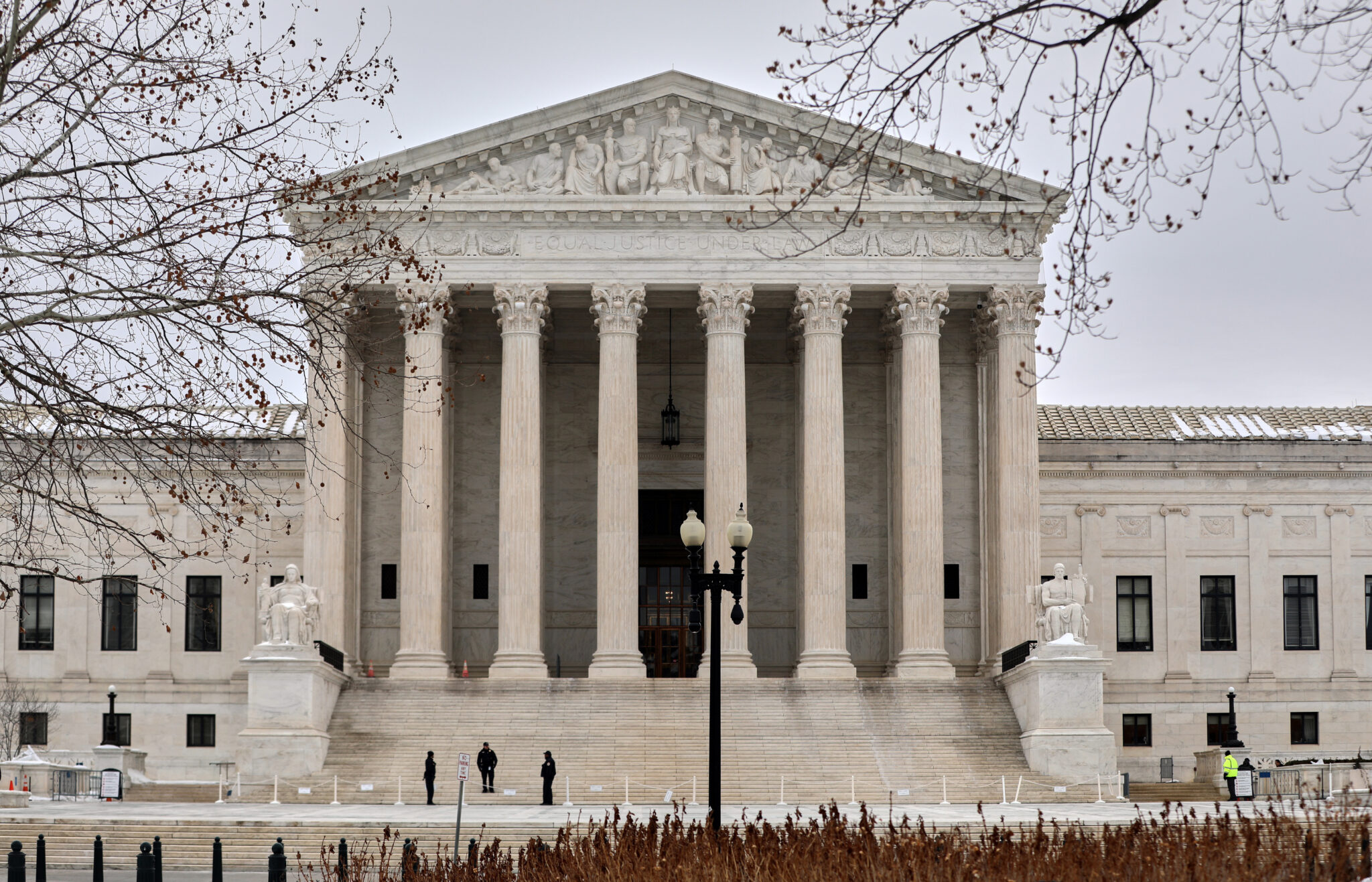
The Supreme Court of the United States delivered a major ruling Friday, striking down some of President Donald Trump’s most sweeping tariffs in a 6-3 decision that limits the executive branch’s use of emergency powers to impose broad import taxes.
At the heart of the ruling is the 1977 International Emergency Economic Powers Act (IEEPA), a law that authorizes presidents to regulate commerce after declaring a national emergency. While past administrations used IEEPA primarily to impose sanctions, Trump became the first president to use it as the legal basis for widespread tariffs on goods imported from around the world.
The court determined that Trump overstepped his authority by stretching IEEPA beyond its intended scope. As a result, a core group of tariffs enacted under the emergency declaration framework is now invalid.
‘Liberation Day’ Global Tariffs
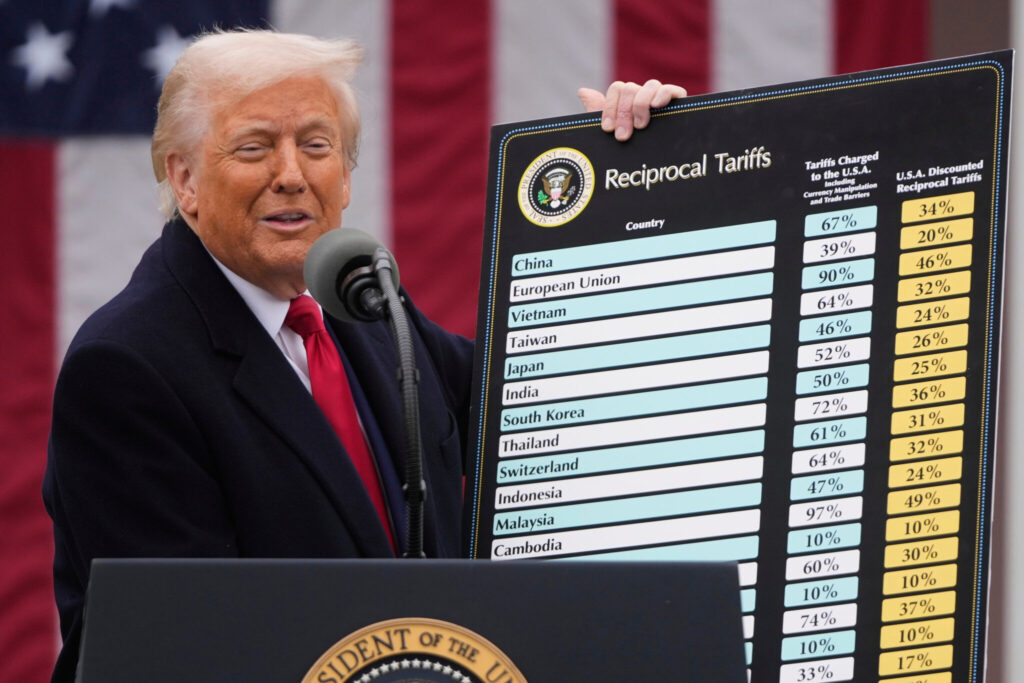
One of the most significant casualties of the ruling is Trump’s so-called “Liberation Day” tariff package unveiled on April 2 of last year.
Using IEEPA, Trump imposed “reciprocal” tariffs of up to 50% on dozens of countries, alongside a 10% baseline tariff on nearly all imports. Although implementation was staggered and some rates were revised after negotiations, many of those levies ultimately went into force.
The administration justified the move by declaring a national emergency tied to longstanding U.S. trade deficits. Even countries with which the United States maintained trade surpluses were affected.
Major trading partners hit by the Liberation Day tariffs included Japan, South Korea, and the European Union. After negotiations, many of these nations faced revised rates around 15%, though some threats of further hikes lingered.
Because these tariffs were imposed under IEEPA, they are now invalidated by the Supreme Court’s decision.
‘Trafficking Tariffs’ on Canada, Mexico, and China
Another set of impacted levies includes tariffs Trump placed on America’s top trading partners — Canada, Mexico, and China — also using IEEPA authority.
Trump declared a national emergency tied to undocumented immigration and fentanyl trafficking to justify those measures. Tariffs reached 35% on some Canadian imports, 25% on certain Mexican goods not compliant with the U.S.-Mexico-Canada Agreement, and up to 20% on Chinese products before partial rollbacks.
With IEEPA authority curtailed by the court, these emergency-based “trafficking tariffs” are directly impacted by the ruling.
The stakes are substantial. China is a major supplier of electronics, clothing, and household goods to the U.S., while Canada is America’s largest crude oil supplier and Mexico is a critical source of automobiles, produce, and beverages.
Brazil Tariffs Linked to Bolsonaro
Trump also invoked IEEPA to impose tariffs on Brazil, citing political developments and the criminal prosecution of former President Jair Bolsonaro.
Brazil had already faced baseline tariffs, but the emergency declaration added an extra 40%, pushing some total levies to 50%. Those emergency-based additions now fall under the Supreme Court’s invalidation.
India Tariffs Tied to Russian Oil
Similarly, Trump used IEEPA to levy additional duties on India, initially imposing 25% tariffs and later adding another 25% in response to India’s purchases of Russian oil.
Recent trade negotiations between Washington and New Delhi led to proposed reductions, but the emergency-based legal foundation of those tariffs is now undermined by the court’s ruling.
What Tariffs Still Remain?
Despite the significant rollback, many tariffs remain intact.
Trump has relied on Section 232 of the Trade Expansion Act of 1962 to impose tariffs on steel, aluminum, automobiles, copper, lumber, and other sector-specific goods, citing national security concerns. Those levies were not imposed under IEEPA and therefore are unaffected by Friday’s decision.
Additional tariffs on products such as kitchen cabinets, furniture, and certain manufactured goods remain in place under separate statutory authority.
While the Supreme Court curtailed Trump’s use of emergency powers for broad-based tariffs, it did not eliminate his ability to pursue aggressive trade policies through other mechanisms. Laws such as Section 301 of the Trade Act of 1974 and Section 232 still provide avenues for targeted import restrictions, albeit with procedural requirements.
Broader Impact
Economically, the decision injects uncertainty into global trade policy. Businesses that paid billions in tariffs under IEEPA may seek refunds, and future administrations will likely face tighter judicial scrutiny when invoking emergency powers for economic measures.
Politically, the ruling represents a rare setback for Trump’s trade agenda, which has centered on reshaping global supply chains and reducing trade deficits through assertive tariff use.
Still, the broader trade architecture remains largely intact. While one of Trump’s most sweeping tools has been struck down, the White House retains significant authority to tax imports through other statutes — ensuring that trade policy will remain a central and contested issue in U.S. economic strategy.