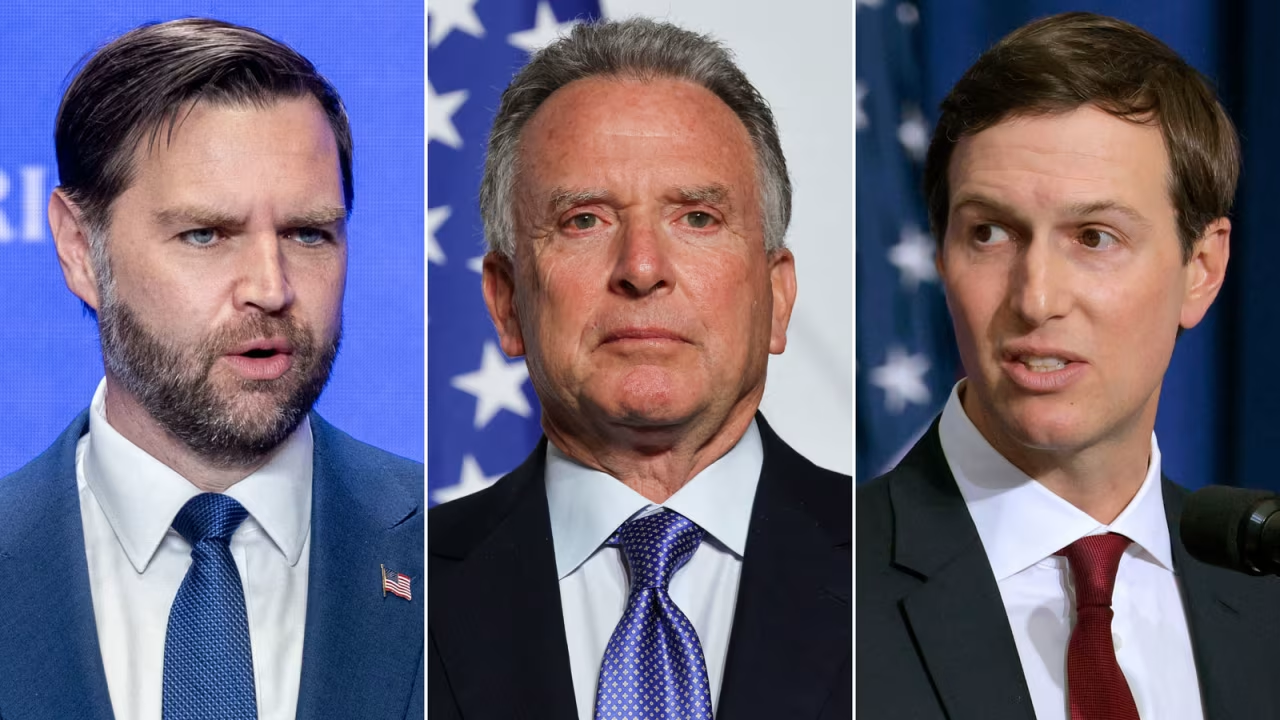
White House: Vance, Witkoff, Kushner Participating in Iran Talks in Pakistan This Weekend/ Newslooks/ WASHINGTON/ J. Mansour/ Morning Edition/ Vice President JD Vance will lead U.S. negotiations with Iran in Pakistan. Jared Kushner and envoy Steve Witkoff will join the talks. Negotiations follow a fragile two-week ceasefire agreement.
Iran Talks Pakistan Quick Looks
- JD Vance to lead negotiations
- Talks scheduled for Islamabad Saturday
- Jared Kushner joins diplomatic team
- Steve Witkoff participating in talks
- China involved in recent diplomacy
- Israel supports ceasefire, White House says
- Strait of Hormuz reopening central issue
- Iran proposals under review
- Uranium enrichment remains key dispute
- Talks aim to extend fragile ceasefire
Deep Look: Vance, Kushner and Witkoff Head to Pakistan for Iran Negotiations
WASHINGTON — The United States is dispatching a high-level negotiating team to Pakistan this weekend for talks with Iran, as diplomatic efforts intensify following a fragile two-week ceasefire.
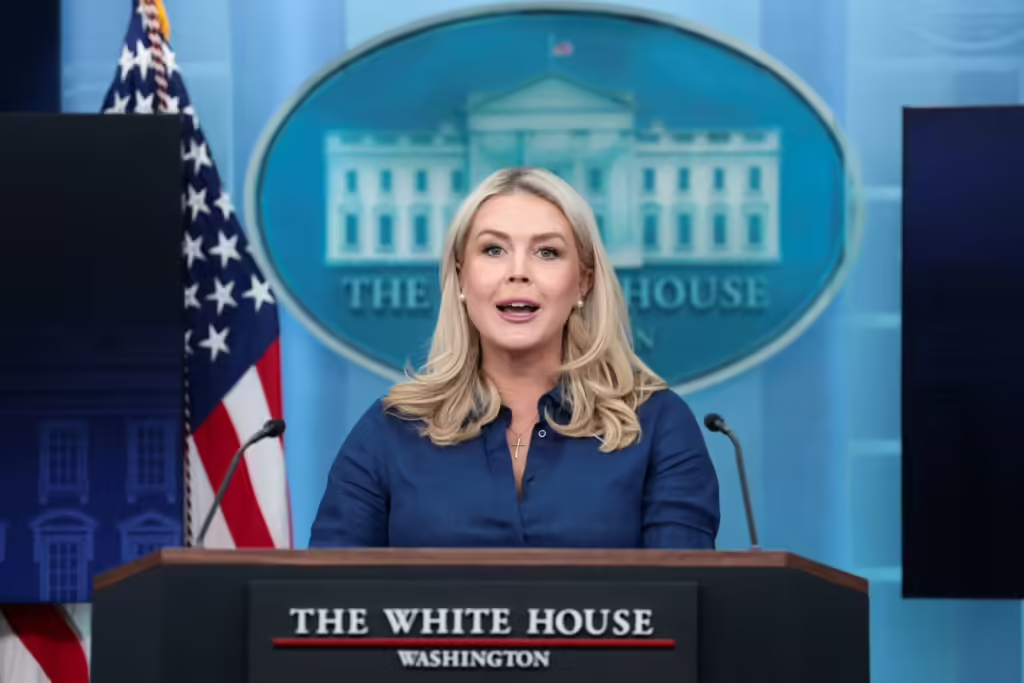
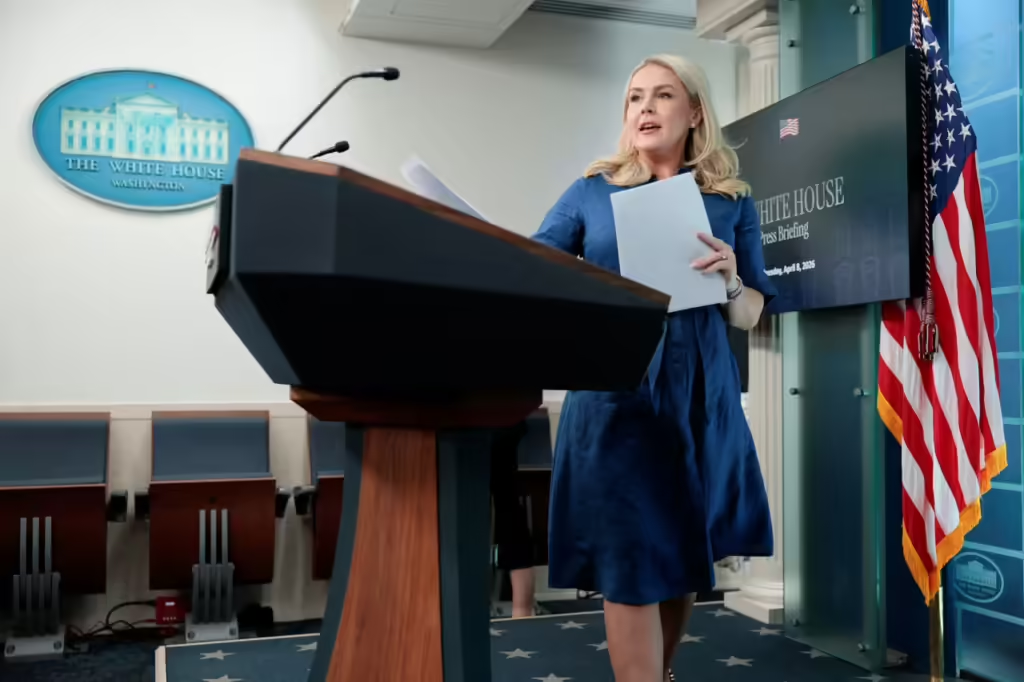
Vice President JD Vance will lead the U.S. delegation to Islamabad, joined by special envoy Steve Witkoff and Jared Kushner, President Donald Trump’s son-in-law and longtime adviser. White House Press Secretary Karoline Leavitt announced the plans during a briefing Wednesday, saying the first round of talks will begin Saturday morning local time.
The negotiations are aimed at building on the temporary ceasefire and working toward a broader agreement between Washington and Tehran.
China Played Role in Negotiations
Leavitt also revealed that U.S. officials held high-level discussions with China in recent days as ceasefire negotiations developed.
She said Trump maintains a strong working relationship with Chinese President Xi Jinping and that Beijing played a role in diplomatic outreach.
Trump is expected to travel to China in the near future after postponing an earlier trip due to the conflict.
Vice President Vance has been involved in the diplomatic discussions and will now lead face-to-face negotiations in Islamabad.
Israel Supports Ceasefire
The White House said Israeli Prime Minister Benjamin Netanyahu supports the ceasefire agreement.
Leavitt said Trump spoke privately with Netanyahu, who reaffirmed Israel’s support for the president and ongoing partnership with the United States.
However, Israel has continued strikes in Lebanon, which Trump said were not covered under the Iran ceasefire.
Strait of Hormuz a Key Negotiation Issue
The reopening of the Strait of Hormuz remains a central component of negotiations.
Leavitt said Trump has floated the idea of the United States earning revenue from the strategic waterway, though discussions remain ongoing.
“The immediate priority of the president is the reopening of the Strait without any limitations,” she said.
Iran has privately indicated it will allow shipping traffic through the strait, according to the White House.
Officials said increased ship movement has already been observed, though full operations may take time to resume.
Competing Proposals
The White House said Iran initially submitted a 10-point proposal that was rejected as “unserious.”
Later, Iran submitted a revised plan shortly before Trump’s deadline, which officials described as a “workable basis” for negotiations.
Negotiators now aim to merge Iran’s revised proposal with the administration’s 15-point plan.
A key U.S. demand remains ending Iran’s uranium enrichment program.
“The president’s red lines… have not changed,” Leavitt said.
Iran Pushes Back
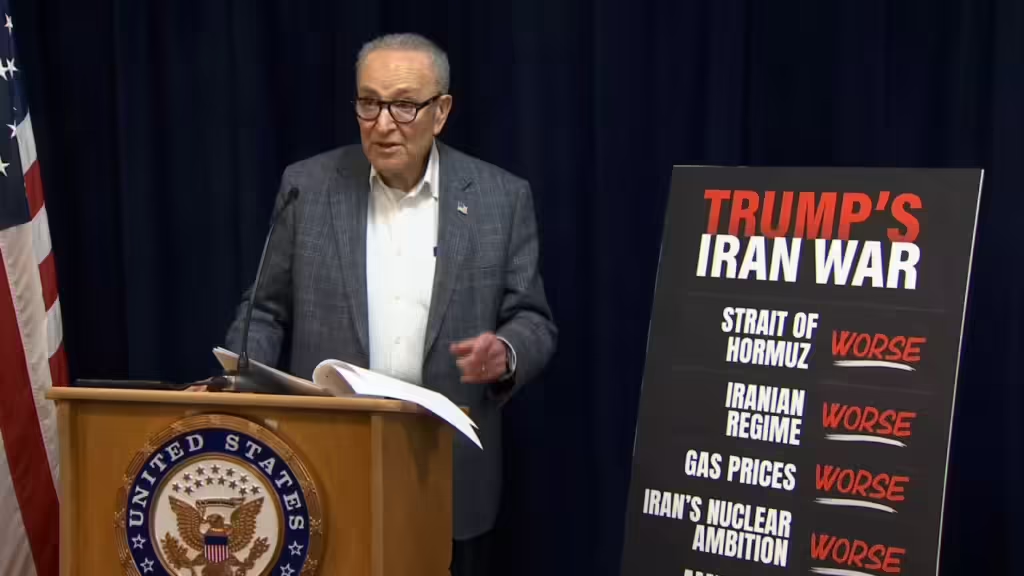
Iranian Foreign Minister Abbas Araghchi warned that the United States must choose between honoring the ceasefire or allowing continued Israeli strikes.
“The Iran–U.S. ceasefire terms are clear,” Araghchi said, adding that Washington must choose between peace and “continued war via Israel.”
Iran’s Revolutionary Guard also warned it would respond if attacks in Lebanon continue.
High-Stakes Talks
The negotiations in Islamabad mark the first major diplomatic effort following the ceasefire.
Key issues expected to dominate talks include:
- Uranium enrichment
- Strait of Hormuz access
- Sanctions relief
- Regional security
- Israel-Lebanon conflict
Pakistan has positioned itself as a mediator and hopes the talks will lead to a broader peace agreement.
With tensions still high, the weekend negotiations are seen as critical in determining whether the ceasefire evolves into lasting diplomacy.
White House Press Secretary defends Trump’s threat to wipe out ‘whole civilization’

White House Press Secretary Karoline Leavitt takes questions during a news briefing in the James S. Brady Press Briefing Room of the White House on Wednesday.Anna Moneymaker/Getty Images
White House Press Secretary Karoline Leavitt defended President Donald Trump’s threat to wipe out an entire civilization in the war with Iran, telling reporters that his “very tough rhetoric and his tough negotiating style is what has led to the result that you are all witnessing today.”
On Tuesday, Trump said in an early morning Truth Social post “A whole civilization will die tonight, never to be brought back again,” if Iran did not come to the negotiating table and reopen the Strait of Hormuz ahead of an evening deadline.
“Well, I understand the questions about the president’s rhetoric, but what the president cares most about is results, and in fact, his very tough rhetoric and his tough negotiating style is what has led to the result that you are all witnessing today,” Leavitt said Wednesday.
In a follow-up exchange, the press secretary said the world “should take his word very seriously in understanding that the president is always most interested in results.” She that Trump “absolutely has the moral high ground over the Iranian terrorist regime,” despite criticism of his comments.
Pressed on Trump’s warning to wipe out an entire civilization, Leavitt said it “was a very, very strong threat from the president of the United States that led the Iranian regime to cave to their knees and ask for a ceasefire and agree to reopening the Strait of Hormuz.”