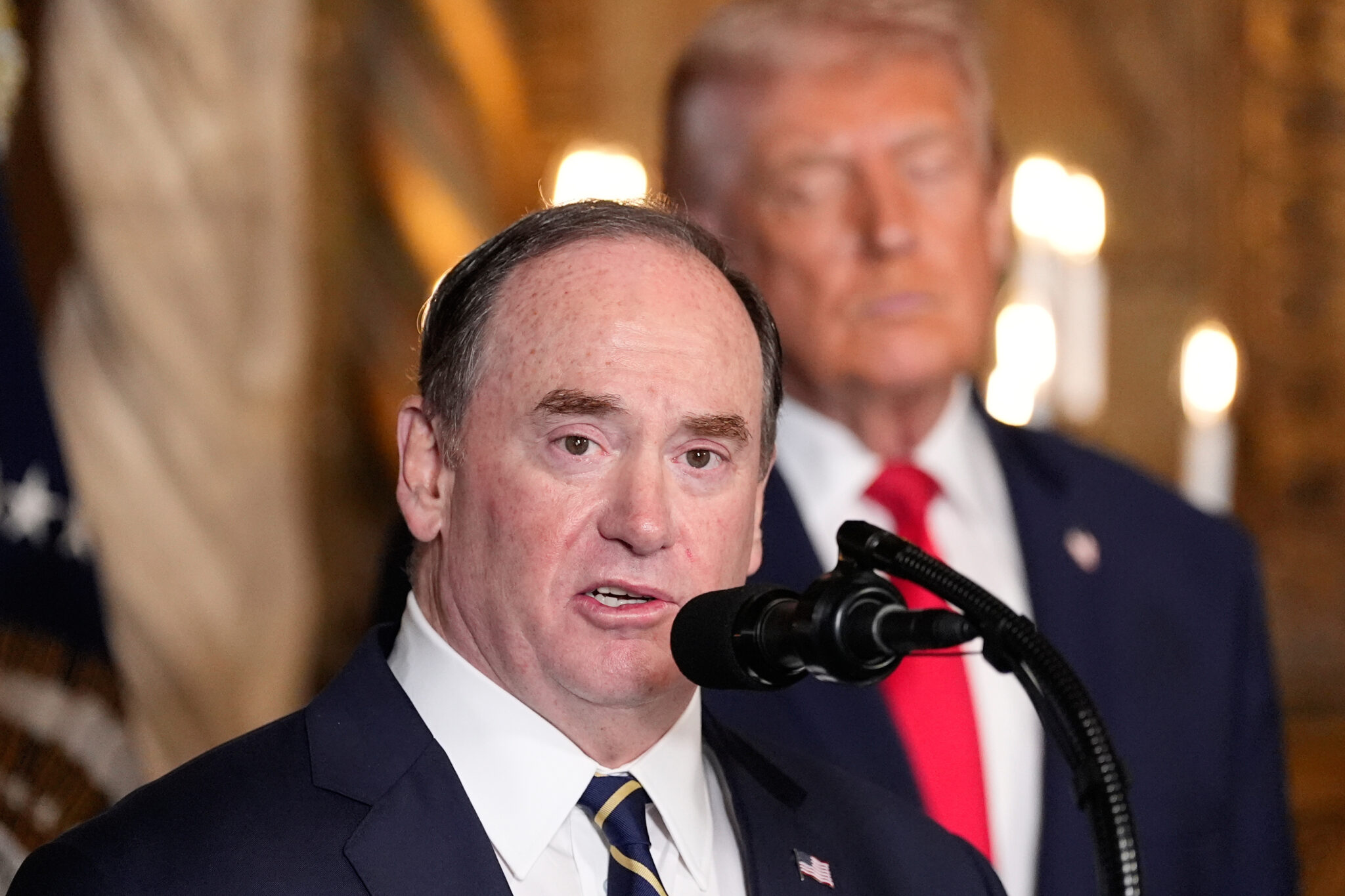
Navy Secretary John Phelan Exits Pentagon Suddenly/ Newslooks/ WASHINGTON/ J. Mansour/ Morning Edition/ Navy Secretary John Phelan has abruptly left his position, becoming the first military service secretary to depart during President Donald Trump’s second term. No official reason was given, but the leadership change comes during heightened U.S. naval operations involving Iran and global maritime tensions. Navy Undersecretary Hung Cao, a Trump ally and former Senate candidate, will take over as acting Navy secretary.
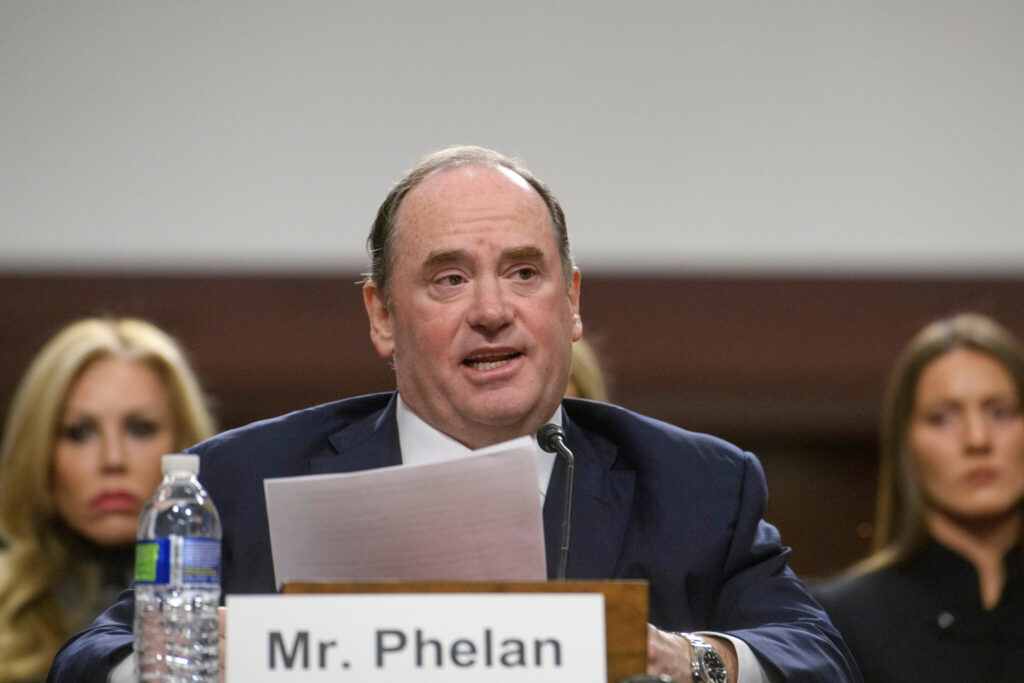
Navy Secretary John Phelan Leaves Pentagon Quick Looks
- Navy Secretary John Phelan is leaving the Pentagon effective immediately
- No reason was provided for the sudden departure
- Phelan is the first military service secretary to leave during Trump’s second term
- Navy Undersecretary Hung Cao will serve as acting Navy secretary
- The leadership change comes during U.S. naval operations targeting Iranian-linked vessels
- Phelan was a major Trump donor and had no prior military service experience
- Cao is a Navy combat veteran and former Republican Senate candidate in Virginia
Deep Look
Pentagon Announces Sudden Departure of Navy Secretary
WASHINGTON — Navy Secretary John Phelan is leaving his post in a sudden Pentagon leadership shakeup that marks the latest high-profile departure among top U.S. defense officials during President Donald Trump’s second term.
The Pentagon announced Wednesday that Phelan would leave immediately, making him the first military service secretary to step down under Trump’s current administration.
No formal reason was provided for the abrupt exit of the Navy’s top civilian leader.
Pentagon spokesman Sean Parnell confirmed the move in a post on X, saying Phelan was “departing the administration, effective immediately.”
The timing is especially notable as the U.S. Navy remains heavily engaged in major military operations involving Iran, maritime security missions, and anti-drug enforcement campaigns across multiple regions.
Departure Comes During Major Naval Operations
Phelan’s exit comes while the Navy is playing a central role in one of the administration’s most sensitive foreign policy confrontations.
The sea service has maintained a blockade of Iranian ports while targeting ships linked to Tehran across global waters during a fragile ceasefire tied to the broader regional conflict.
The Trump administration has warned that U.S. forces remain prepared to resume direct combat operations against Iran if the ceasefire collapses.
At the same time, the Navy has deployed three aircraft carriers either in or heading toward the Middle East, underscoring the scale of ongoing operations.
Beyond the Middle East, the Navy has also maintained a major presence in the Caribbean, where it has supported operations against alleged drug trafficking vessels and played a key role in the January capture of Venezuelan leader Nicolás Maduro.
The sudden leadership change adds uncertainty during a period of intense military activity.
Latest in a Series of Pentagon Shakeups
Phelan’s departure is part of a broader pattern of major changes across the Pentagon under Defense Secretary Pete Hegseth.
Just weeks ago, Hegseth fired the Army’s top uniformed officer, Gen. Randy George.
Since taking office last year, Hegseth has also removed several top generals, admirals, and senior defense officials.
The leadership reshuffling began in February 2025 when he dismissed several major military figures, including Adm. Lisa Franchetti, the Navy’s top uniformed officer, and Gen. Jim Slife, the Air Force’s No. 2 leader.
President Trump also removed Gen. Charles “CQ” Brown Jr. as chairman of the Joint Chiefs of Staff.
These moves reflect the administration’s effort to reshape military leadership with figures more closely aligned with Trump’s national security priorities.
Phelan Was Seen as an Outsider
Phelan entered the Navy secretary role without prior military service or senior Pentagon leadership experience.
Trump nominated him in late 2024, and many viewed him as an outsider chosen specifically to disrupt traditional Navy leadership structures.
Before joining the Pentagon, Phelan was best known as a major donor to Trump’s campaign and as the founder of private investment firm Rugger Management LLC.
His biography also noted his involvement with Spirit of America, a nonprofit organization supporting Ukraine’s defense and Taiwan’s security, where he served in an advisory capacity.
Despite his outsider status, Phelan had remained publicly active just one day before his departure.
On Tuesday, he addressed sailors and defense industry leaders at the Navy’s annual conference in Washington and later met with House Armed Services Committee leaders to discuss shipbuilding plans and the Navy’s budget priorities.
The suddenness of the announcement surprised many inside the defense community.
Hung Cao Takes Over as Acting Navy Secretary
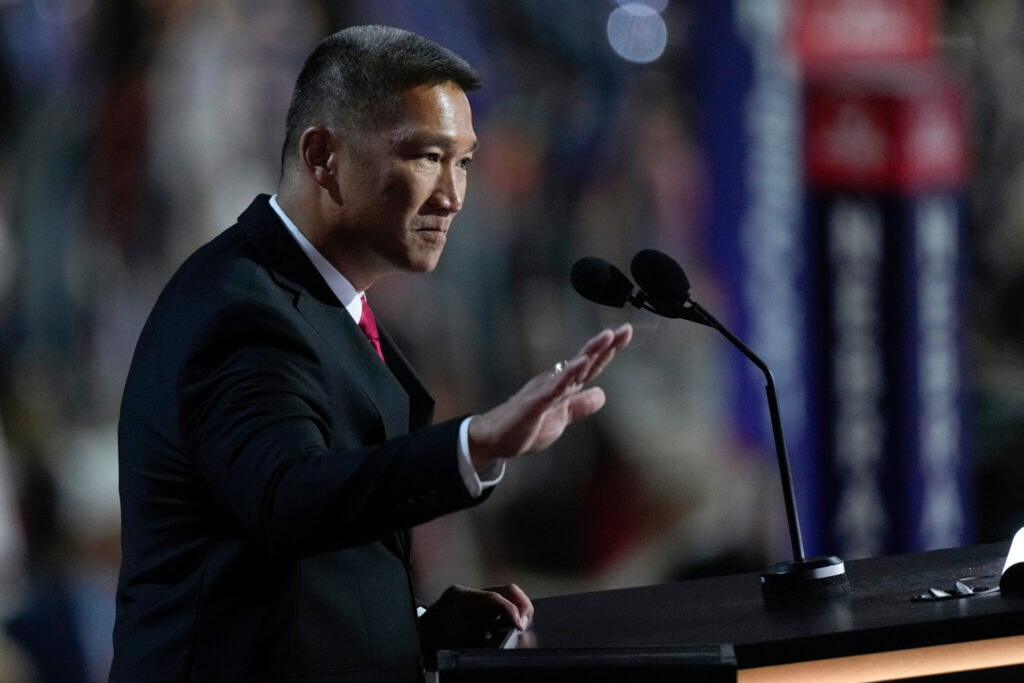
Taking Phelan’s place is Navy Undersecretary Hung Cao, another strong Trump ally with deep military credentials and recent political experience.
Cao served 25 years in the Navy as a combat veteran and special operations officer, including assignments with SEAL teams and special forces in Iraq, Afghanistan, and Somalia.
He retired with the rank of captain.
Cao also ran unsuccessful Republican campaigns for both the U.S. Senate and House in Virginia.
In 2024, he sought to unseat Democratic Sen. Tim Kaine with Trump’s endorsement and even spoke at the Republican National Convention.
His political positions closely align with Trump’s military agenda.
Cao’s Strong Views on Military Culture
During his Senate campaign, Cao sharply criticized COVID-19 vaccine mandates for service members and strongly opposed military diversity, equity, and inclusion programs.
“When you’re using a drag queen to recruit for the Navy, that’s not the people we want,” Cao said during a debate.
“What we need is alpha males and alpha females who are going to rip out their own guts, eat them and ask for seconds. Those are the young men and women that are going to win wars.”
Trump and Hegseth have both made opposition to DEI initiatives a major focus of Pentagon policy, banning such programs and removing officials accused of supporting them.
Cao has also championed efforts to reinstate service members who refused to comply with the Biden-era COVID-19 vaccine mandate.
Immigration Story and Academic Background
Cao’s personal story has also made him a notable political figure.
He fled Vietnam with his family as a child during the 1970s and later graduated from Thomas Jefferson High School for Science and Technology in Alexandria, Virginia.
He went on to attend the U.S. Naval Academy and later earned a master’s degree in physics, along with fellowships at both the Massachusetts Institute of Technology and Harvard University.
During his 2022 congressional campaign, Cao also voiced opposition to U.S. aid for Ukraine.
“My heart goes out to the Ukrainian people. … But right now we’re borrowing $55 billion from China to pay for the war in Ukraine. Not only that, we’re depleting our national strategic reserves,” Cao said.
His appointment as acting Navy secretary signals the administration’s continued preference for politically aligned leaders with strong loyalty to Trump’s agenda.
What Comes Next for the Navy
With Phelan gone and Cao stepping in, the Navy enters another period of transition during one of its most operationally demanding moments in years.
From Middle East tensions to global shipping security and domestic defense restructuring, the next Navy secretary will play a major role in shaping both military readiness and Trump’s broader defense strategy.
For now, the Pentagon has offered little explanation for Phelan’s sudden exit — only adding to speculation about what may come next.