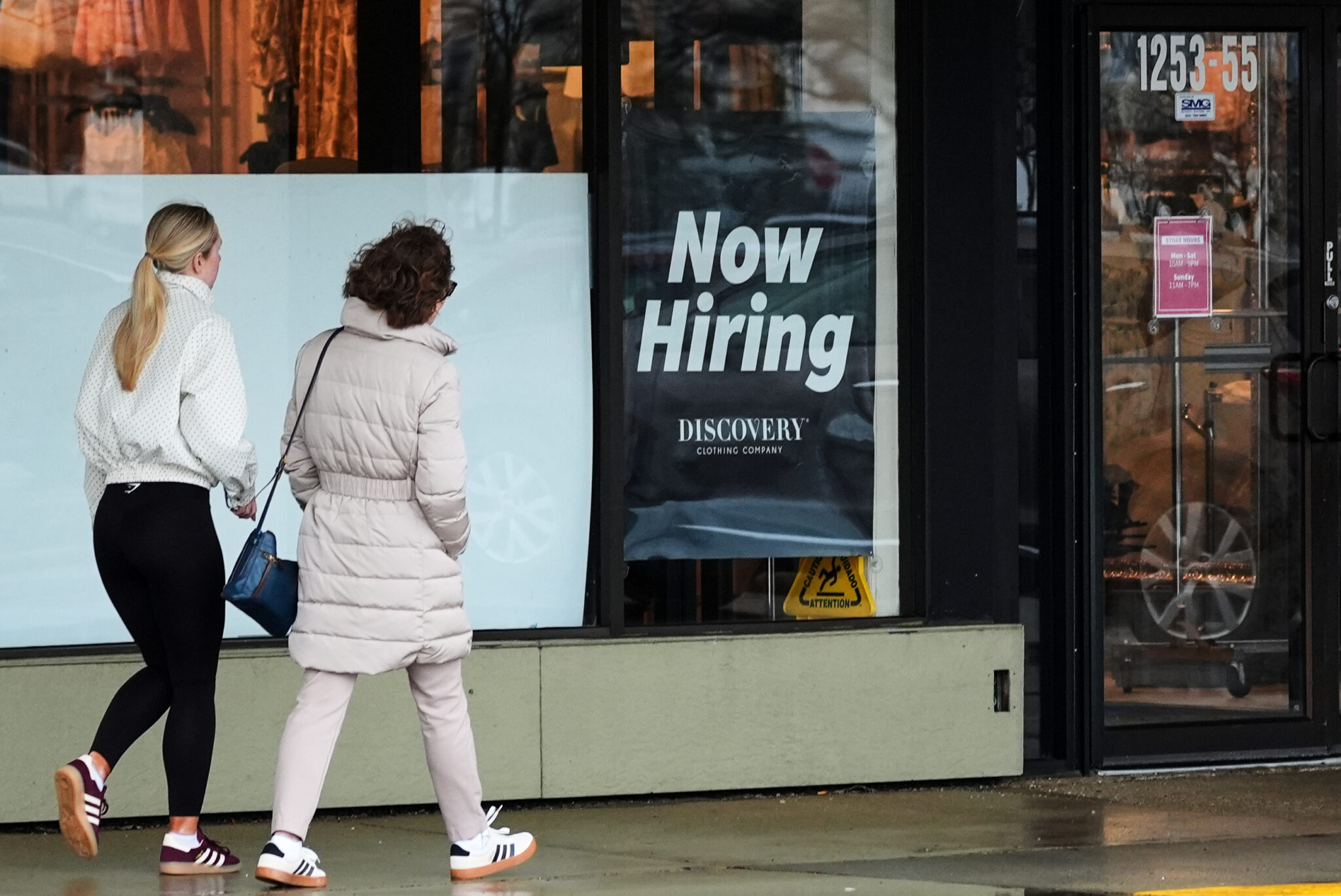
US Jobless Claim Filings Rise Modestly to 214,000 Last Week/ Newslooks/ WASHINGTON/ J. Mansour/ Morning Edition/ U.S. unemployment benefit applications rose modestly last week to 214,000, staying within historically healthy labor market levels. Despite higher inflation, elevated gas prices, and uncertainty from the Iran war, layoffs remain relatively low across the country. Economists say the labor market remains stuck in a “low-hire, low-fire” pattern as hiring slows and workers struggle to find new jobs.
US Jobless Claims Rise Quick Looks
- Weekly unemployment claims rose by 6,000 to 214,000
- Analysts had expected around 210,000 new filings
- The four-week moving average increased to 210,750
- Continuing unemployment claims rose to 1.82 million
- Inflation climbed to 3.3% in March due largely to rising gas prices
- Oil prices remain elevated because of the ongoing Iran conflict
- The Federal Reserve is expected to hold off on more rate cuts
Deep Look
Weekly Jobless Claims Tick Higher but Stay Stable
WASHINGTON — The number of Americans applying for unemployment benefits increased slightly last week, but overall layoffs remain low and the labor market continues to show signs of stability despite broader economic pressures.
The Labor Department reported Thursday that jobless aid applications for the week ending April 18 rose by 6,000 to 214,000.
That figure is slightly above the 210,000 economists surveyed by FactSet had expected and up from the previous week’s revised total of 208,000.
While the increase signals a modest rise in layoffs, the total remains well within the historically healthy range seen over the past several years.
Weekly unemployment claims are closely watched because they provide one of the fastest indicators of labor market strength and business confidence.
For now, the numbers suggest employers are still holding onto workers even as economic uncertainty grows.
Iran War Adds Pressure to Economic Outlook
One of the biggest uncertainties facing the U.S. economy is the ongoing war involving Iran, now entering its eighth week.
Although a ceasefire remains in place between Iran and the United States, the conflict has created major concerns for global energy markets and inflation.
U.S. crude oil prices have settled around $94 per barrel after briefly surging to $112 earlier this month.
While the pullback offers some relief, oil remains roughly 40% more expensive than it was before the war began.
Gasoline prices have also stayed high, putting additional financial pressure on businesses and households nationwide.
The sharp rise in fuel costs is now feeding directly into broader inflation concerns across the economy.
Inflation Jumps as Gas Prices Surge
The Labor Department recently reported that consumer prices rose 3.3% in March compared with a year earlier.
That marks a sharp increase from February’s 2.4% annual inflation rate and represents the largest yearly increase since May 2024.
On a monthly basis, prices rose 0.9% from February to March, the biggest monthly jump in nearly four years.
Officials say the surge was largely driven by the largest monthly increase in gas prices seen in six decades.
Higher transportation and energy costs are now affecting food prices, shipping expenses, and the cost of many everyday products.
This inflation spike comes at a difficult time for the Federal Reserve, which has been trying to bring inflation back toward its long-term target of 2%.
Fed Faces Difficult Interest Rate Decision
Persistent inflation is making it less likely that the Federal Reserve will cut interest rates anytime soon.
Lower interest rates typically encourage borrowing, investment, and hiring, but they can also increase inflationary pressure.
Fed officials cut interest rates three times at the end of 2025 because of concerns that the labor market was weakening.
However, they have paused additional cuts this year as inflation remains stubbornly high.
The Federal Reserve is scheduled to meet next week to make its next interest rate decision, and most analysts expect officials to remain cautious.
The combination of higher inflation and a slowing labor market creates a difficult balancing act for policymakers.
Hiring Slows Even as Unemployment Stays Low
The U.S. labor market remains unusually balanced between low layoffs and weak hiring.
Earlier this month, the government reported that employers added a stronger-than-expected 178,000 jobs in March, helping push the unemployment rate slightly lower to 4.3%.
That followed a surprising loss of 92,000 jobs in February.
In addition, revisions removed 69,000 jobs from payroll reports for December and January, suggesting labor market conditions may be softer than originally believed.
Many economists describe the current environment as “low-hire, low-fire.”
That means companies are not laying off large numbers of workers, but they also are not hiring aggressively.
As a result, unemployment remains historically low, but workers who lose jobs are finding it harder to secure new employment quickly.
Major Companies Continue Workforce Cuts
Several large corporations have announced job cuts in recent months, reflecting ongoing caution across major industries.
Companies including Morgan Stanley, Block, UPS, and Amazon have all reduced staffing as businesses respond to slower economic growth and higher operating costs.
Hiring also slowed significantly during 2025, partly due to President Donald Trump’s shifting tariff policies, reductions in the federal workforce, and the long-term effects of high interest rates.
According to FactSet, employers added fewer than 200,000 jobs last year compared with roughly 1.5 million jobs in 2024.
That sharp slowdown highlights the cooling pace of labor market expansion.
Continuing Claims Also Move Higher
The Labor Department’s latest report also showed that the four-week moving average of unemployment claims — which smooths out weekly fluctuations — rose by 750 to 210,750.
That rise suggests some unemployed workers are taking longer to find new jobs, even if layoffs remain relatively low.
The broader picture shows a labor market that is still healthy by historical standards, but increasingly under pressure from inflation, global conflict, and slower hiring.
As the Fed prepares for its next move, the coming weeks may reveal whether the economy can maintain that balance — or whether cracks begin to widen.