Secret Service Reviews Trump Event Security After White House Dinner Attack/ Newslooks/ WASHINGTON/ J. Mansour/ Morning Edition/ Federal officials are reassessing security plans for President Donald Trump’s upcoming major public events after the armed attack at the White House Correspondents’ Dinner. The incident marked the third violent assault near Trump in less than two years, raising concerns about balancing public appearances with safety. Upcoming events include the World Cup, America’s 250th anniversary celebrations, campaign rallies, and Trump’s planned White House birthday UFC event.
Trump Security Concerns Quick Looks
- Secret Service reviewing protection plans after dinner attack
- White House meeting scheduled with DHS and Secret Service
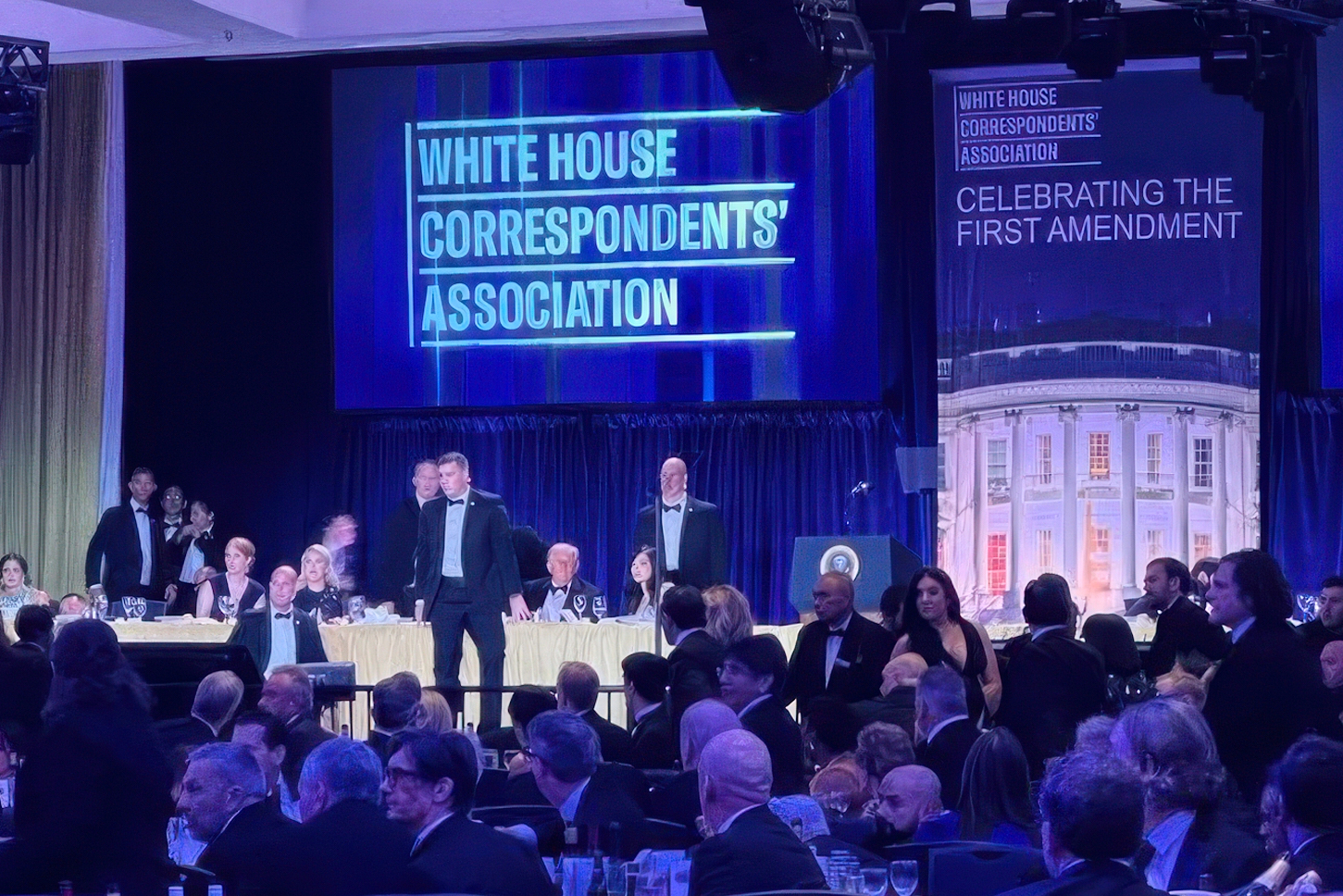
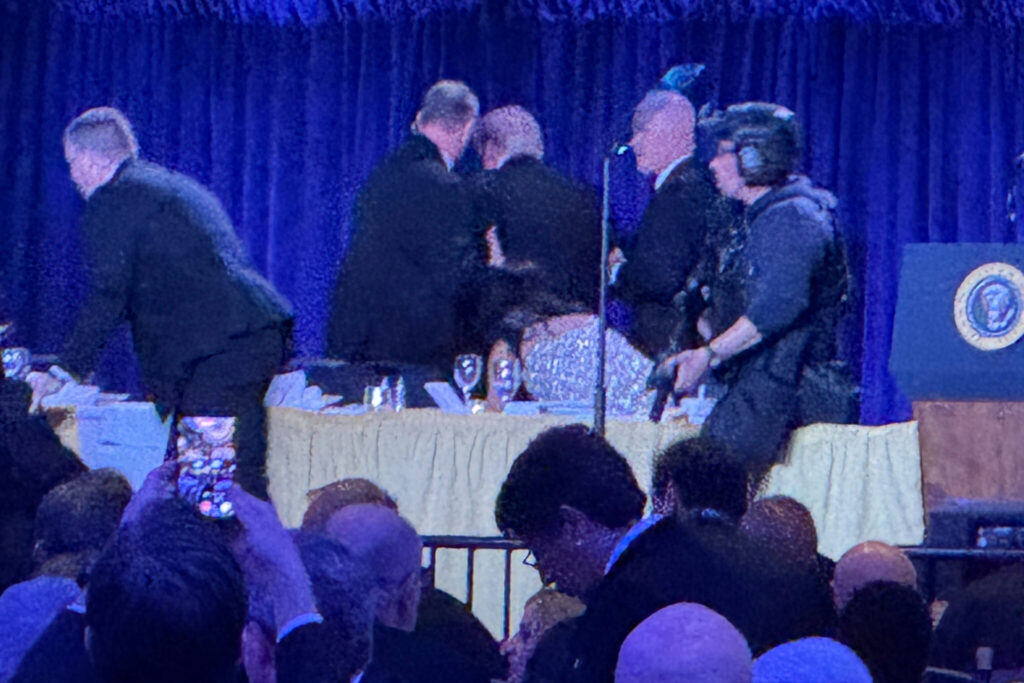
- Attack happened at White House Correspondents’ Dinner Saturday
- Trump faces multiple major public events in coming months
- World Cup and July 4th anniversary events increase exposure
- White House lawn UFC event planned for Trump’s 80th birthday
- Officials warn of possible copycat threats after attack
- Trump says presidency is “the most dangerous” profession
Deep Look
Trump’s Busy Public Schedule Creates New Security Challenges
Federal law enforcement officials are reevaluating security plans for President Donald Trump as he prepares for a packed calendar of large public appearances following the violent incident at the White House Correspondents’ Dinner.
The armed attack Saturday night at the Washington hotel where Trump was scheduled to speak marked the third violent assault in Trump’s vicinity in less than two years.
Now, officials are facing a familiar but increasingly urgent challenge: how to protect a highly visible president who continues to appear at large public events while minimizing the risk of another attack.
The incident has renewed concerns inside the White House, the Secret Service, and the Department of Homeland Security about how security should evolve moving forward.
White House Security Review Already Underway
White House chief of staff Susie Wiles is expected to lead a high-level security meeting this week involving officials from the White House operations team, the U.S. Secret Service, and the Department of Homeland Security.
According to a senior White House official, the goal is to review which security measures worked successfully during Saturday’s attack and identify additional options for future presidential events.
At the same time, the Secret Service is separately reviewing its own operational posture for upcoming public appearances.
Officials say the agency’s alert level was already elevated because of the extraordinary number of threats Trump has faced, including two assassination attempts during the 2024 campaign and the ongoing tensions tied to the U.S.-Iran conflict.
High-Profile Events Ahead Raise Stakes
Trump’s upcoming schedule includes several major events that could present complex security demands.
Among them are celebrations marking America’s 250th anniversary, rallies ahead of November’s midterm elections, World Cup events as the U.S. prepares to co-host the tournament, and a planned UFC fight on the White House lawn tied to Trump’s 80th birthday in June.
There is also an IndyCar race expected to pass near the White House.
Each event brings different security challenges depending on crowd size, venue design, and public access.
While some are indoors and tightly controlled, others involve open-air environments that are harder to secure.
That reality is forcing security teams to rethink planning far beyond the immediate aftermath of the correspondents’ dinner attack.
King Charles Visit Still Moving Forward
Despite the security concerns, the White House and Buckingham Palace confirmed that King Charles III and Queen Camilla’s scheduled state visit will proceed as planned.
The royal visit begins Monday and includes a formal White House state dinner hosted by Trump and first lady Melania Trump.
Officials say the visit will move ahead under heightened security.
Still, the decision shows how difficult it is to delay or cancel major diplomatic and ceremonial events, even after a serious security breach.
Questions Raised About Hotel Security
Some lawmakers and attendees questioned how the attacker was able to get so close to the event at the White House Correspondents’ Dinner.
Critics pointed to the fact that the suspect reportedly reserved a room at the hotel and was able to bring weapons inside the broader security perimeter before being stopped.
Texas Republican Rep. Michael McCaul, chairman emeritus of the House Homeland Security Committee, suggested the Secret Service may need to reconsider allowing both Trump and Vice President JD Vance to attend similar events together.
“I think the Secret Service needs to reconsider having both the president and vice president together at something like that,” McCaul said during a CNN interview.
Kari Lake Criticizes “Lax” Security
Kari Lake, Trump’s choice to lead the U.S. Agency for Global Media and a longtime political ally, also criticized the security process.
She said she was surprised she was not required to show a photo ID matching her event ticket when entering the hotel.
“I can’t believe how lax the security was,” Lake wrote on social media.
Her comments added to broader criticism from guests who felt the outer security perimeter was too easy to breach.
Secret Service Defends Its Response
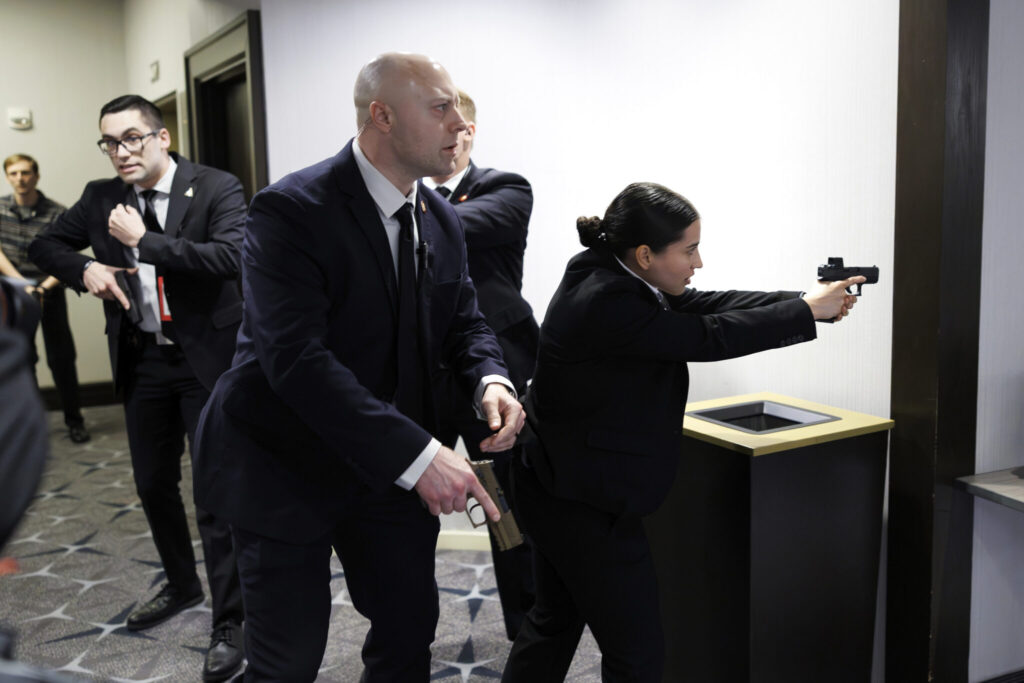
The Secret Service has strongly defended how it handled the incident.
Director Sean Curran said the multilayered protection system worked exactly as intended.
“Our multilayered protection works,” Curran said.
Trump also praised the agents who responded.
“Those guys did a good job last night. They did a really good job,” he said during an interview with CBS News’ “60 Minutes.”
Security experts note that the agency’s responsibility is protecting the president and designated protectees—not necessarily controlling every part of a large event venue.
In that sense, many argue the response showed the system functioning correctly.
Experts Expect More Security Changes
Still, additional changes are likely.
Security experts say authorities may consider using bulletproof glass more often during both indoor and outdoor speeches, similar to measures taken after the 2024 assassination attempt in Butler, Pennsylvania.
Attendees at future events may also face stricter screening, including longer entrance lines and expanded credential checks.
Ronald Kessler, author of “In the President’s Secret Service,” said those steps are common after high-profile threats.
He pointed to Trump’s attendance at the U.S. Open last fall, where security lines became extremely long because of tighter protections.
The Constant Tension of Presidential Visibility
Protecting a president always involves balancing safety with accessibility.
Americans expect presidents to hold rallies, attend sporting events, meet supporters, and move through public spaces.
But every public appearance increases risk.
“Presidents don’t like to have too much protection,” Kessler said.
He explained that presidents often want to appear approachable and resist anything that makes them look isolated or trapped behind security barriers.
That tension is not new.
Even Theodore Roosevelt reportedly found Secret Service protection frustrating and sometimes slipped away for private horseback rides.
President Ronald Reagan was famously shot in 1981 after leaving the Washington Hilton through an open-air exit instead of a safer garage route.
Trump Says He “Wasn’t Making It Easy”
Trump himself admitted that he complicated the Secret Service response Saturday night.
He told “60 Minutes” that when shots were fired, he initially wanted to stay and see what was happening.
“I wasn’t making it easy,” he said.
He recalled agents urging him to get down and move quickly.
“I said: ‘Wait a minute, wait a minute. Lemme see. Wait a minute,’” Trump explained.
Eventually, he and first lady Melania Trump both got to the floor as agents secured the area.
Trump later said the agents were professional and calm throughout the incident.
Trump Wants the Dinner Rescheduled
Rather than backing away from the event entirely, Trump said he wants the White House Correspondents’ Association to reschedule the dinner.
He said future security would simply be stronger.
“They’ll have even more security,” Trump said.
“And they’ll have bigger perimeter security. It’ll be fine.”
That response reflects Trump’s broader approach: continue public appearances, increase protection, but do not retreat from visibility.
A Presidency Under Constant Threat
The latest incident highlights how uniquely difficult presidential security has become in a deeply divided political environment.
Between campaign threats, global tensions, and public-facing events, Trump’s presidency continues to operate under extraordinary security pressure.
With the World Cup, national celebrations, and campaign season approaching, every appearance now carries even greater scrutiny.
The biggest challenge for the Secret Service may not be preventing one attack—but preventing the next one without turning the presidency into a fortress.
That balance will define security planning for the rest of 2026.