Defying Protocol, Trump Relays Private Conversation Details with King Charles/ Newslooks/ WASHINGTON/ J. Mansour/ Morning Edition/ President Donald Trump caused debate in Britain after revealing details of a private conversation with King Charles III during a state dinner. Trump said the king agreed that Iran should never be allowed to have nuclear weapons, sparking concerns over royal protocol. Experts noted that private discussions with the monarch are traditionally kept confidential to protect the king’s political neutrality.
Trump King Charles Protocol Quick Looks
- President Donald Trump spoke publicly about a private conversation with King Charles III
- Trump claimed Charles agreed Iran should never obtain nuclear weapons
- British commentators raised concerns over royal protocol and diplomatic tradition
- The monarch is expected to remain politically neutral and above public political debate
- Buckingham Palace issued a statement giving context to Trump’s remarks
- King Charles’ U.S. visit aimed to strengthen ties between Britain and Washington
- Constitutional experts said the incident could have been far more damaging
- The visit now shifts to New York with less focus on politics and more on creative industries
Defying Protocol, Trump Relays Private Conversation Details with King Charles
Deep Look
LONDON — President Donald Trump stirred discussion in Britain after publicly sharing details of a private conversation with King Charles III, a move that many viewed as a break from long-standing royal and diplomatic protocol.
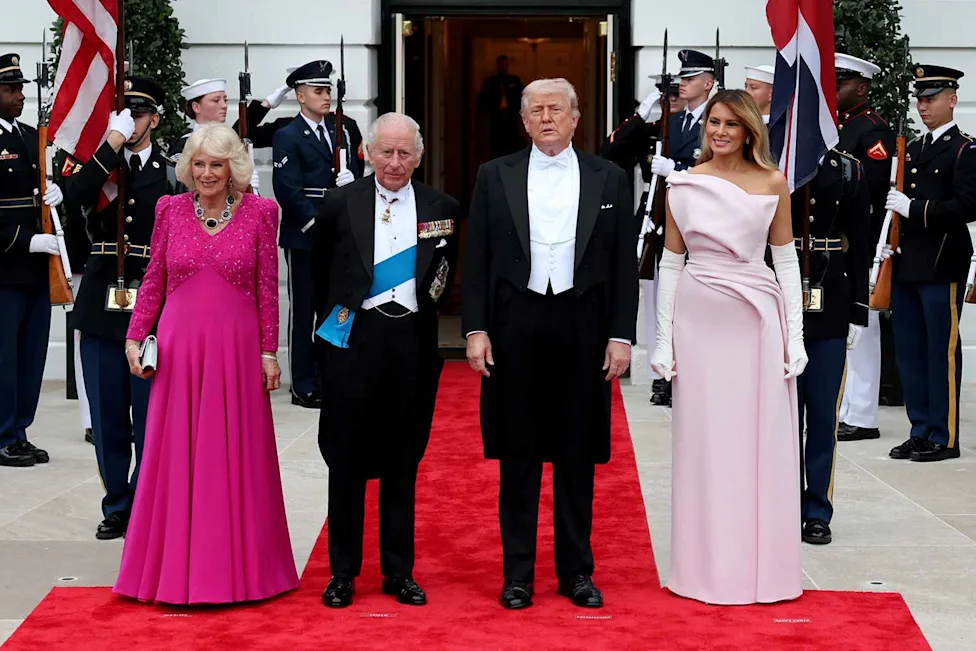
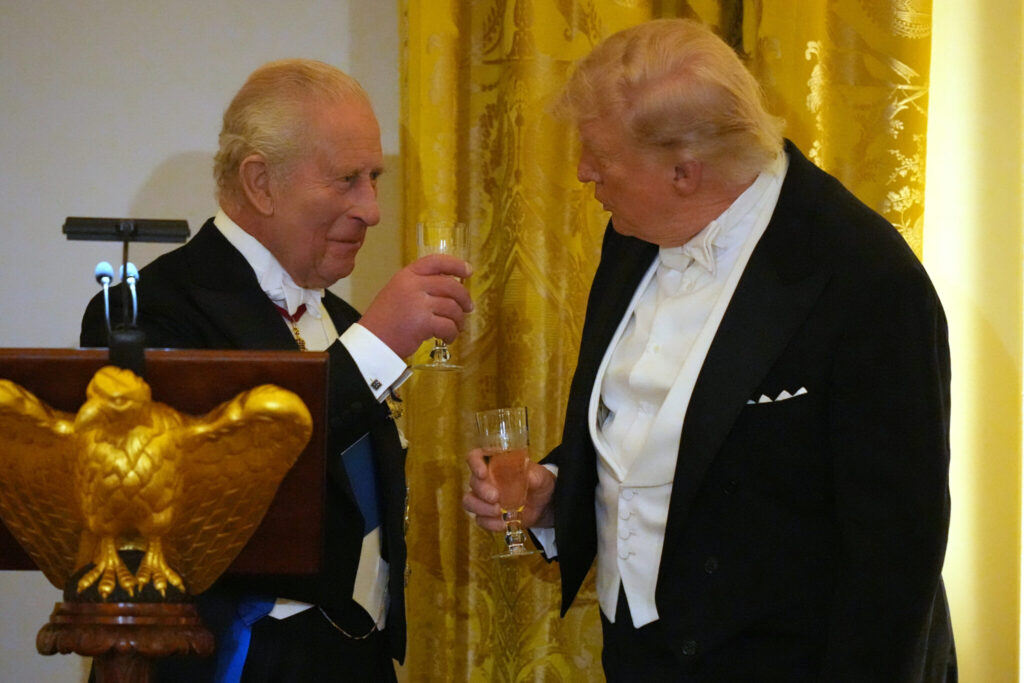
During Tuesday’s state dinner honoring King Charles III and Queen Camilla, Trump told guests that the British monarch had agreed with his position that Iran must never be allowed to obtain nuclear weapons.
“We’re doing a little Middle East work right now … and we’re doing very well,” Trump told the audience. “We have militarily defeated that particular opponent, and we’re never going to let that opponent ever — Charles agrees with me, even more than I do — we’re never going to let that opponent have a nuclear weapon.”
While many people in Britain may support the broader message about nuclear nonproliferation, Trump’s decision to publicly reference a private exchange with the king immediately drew attention from royal watchers and political analysts.
In Britain, such disclosures are generally considered inappropriate.
Royal convention strongly discourages the sharing of private conversations involving the monarch. This tradition exists partly because the king must remain politically neutral and stay above partisan political debate. It also protects the sovereign from being drawn into public disputes, especially since the monarch cannot easily step into public arguments to confirm or deny what was said.
Craig Prescott, a constitutional law and monarchy expert at Royal Holloway, University of London, explained why the situation created discomfort.
“Generally, as a matter of protocol, I think I would expect discussions between heads of state to be sort of behind the scenes, in those closed meetings, for those to be sort of kept private,” said Craig Prescott, an expert on constitutional law and the monarchy at Royal Holloway, University of London. “And, you know, this was something that the U.K. government wanted to avoid.”
Before the king’s visit to the United States, there had already been concern inside British political circles. Trump’s public frustration with U.K. Prime Minister Keir Starmer over his lack of support for U.S. military actions involving Iran had created diplomatic tension.
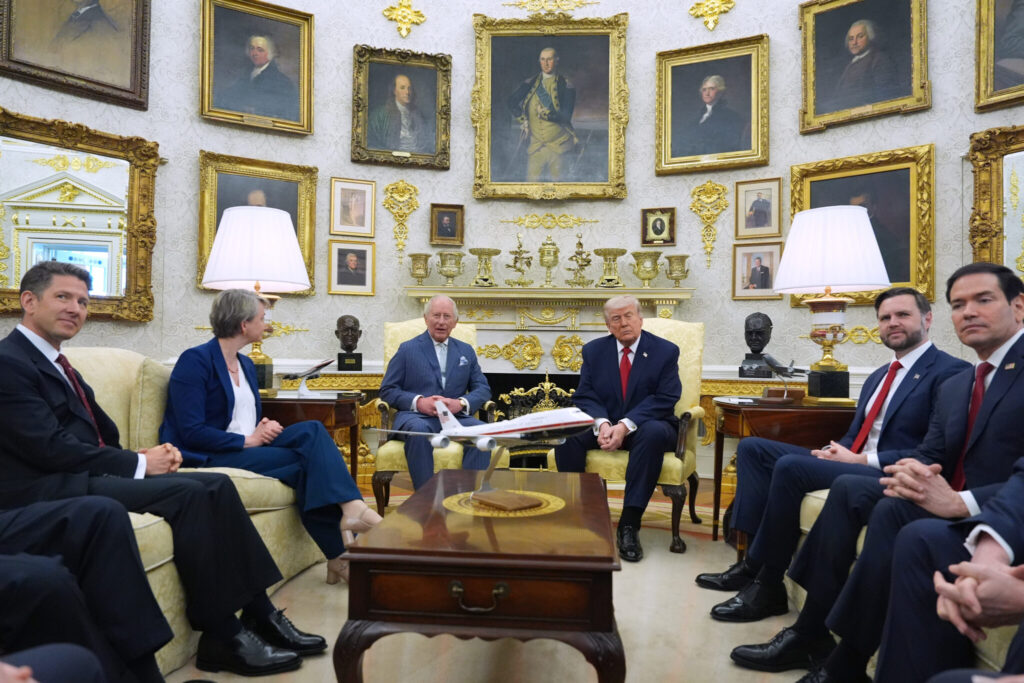
Royal visits are carefully planned diplomatic events carried out at the request of the British government. Officials hoped the warm personal relationship between Trump and King Charles — combined with Trump’s well-known admiration for the British royal family — could help smooth over political disagreements between Washington and London.
However, Trump’s reputation for speaking freely and breaking political norms created uncertainty over how the visit might unfold.
Officials were reportedly concerned about what he might say publicly, especially during high-profile events involving the king.
In this case, the Palace moved quickly to soften any political interpretation of Trump’s remarks.
“The King is naturally mindful of his government’s long-standing and well-known position on the prevention of nuclear proliferation,” Buckingham Palace said in a statement designed to provide context to the president’s remarks.
The carefully worded statement emphasized that the king’s views were aligned with established British government policy rather than representing any personal political intervention.
Prescott said this was always the central risk surrounding Trump’s visit.
“in a sense, this was always the issue, just what Trump would do or say — would he put the king in an embarrassing position,’’ Prescott said.
“You always had that sort of issue of what he would post on social media,” he said. “And I think, you know, this could have been much, much worse.”
Despite the protocol concerns, the overall state visit has largely been seen as successful for both Buckingham Palace and the British government.
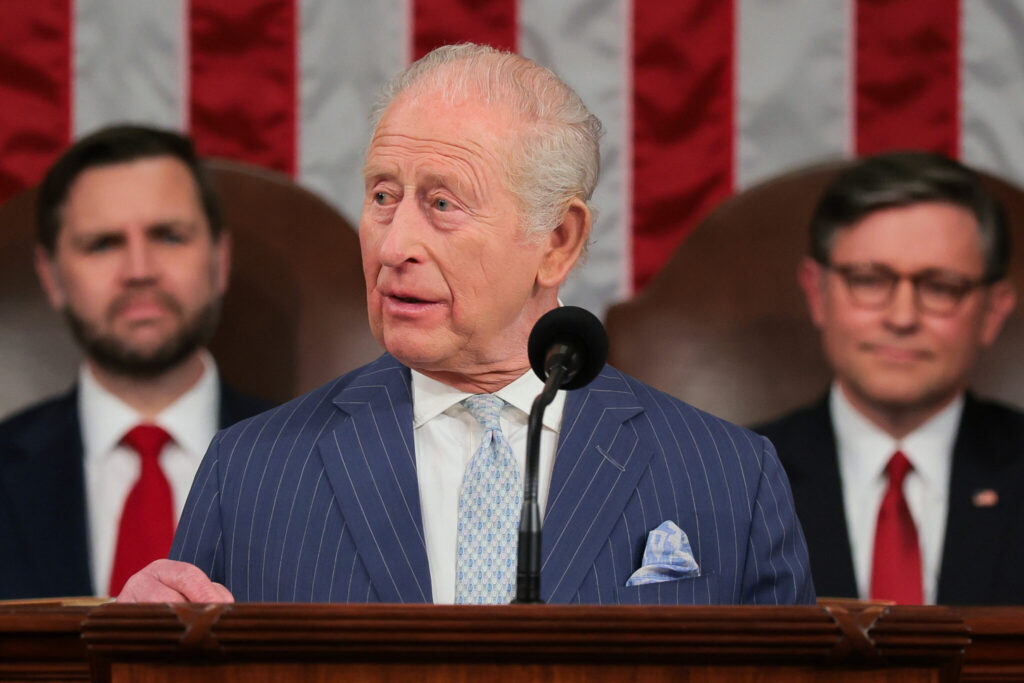
Before the formal dinner, King Charles addressed a joint session of the U.S. Congress, where he received multiple standing ovations. His speech praised the long-standing relationship between Britain and the United States while also making subtle references to difficult issues such as NATO, support for Ukraine, and climate change.
The address balanced diplomacy with carefully chosen messages that reflected Britain’s broader international priorities without directly challenging the American president.
From the British government’s perspective, the visit now moves into less politically sensitive territory as the king and queen leave Washington and continue on to New York. There, attention will shift toward the city’s cultural and creative industries rather than foreign policy and international security.
Prescott said the most politically dangerous phase of the trip may already be finished.
“If this is the only controversy arising out of this phase of the state visit, I think overall this has been an enormous success for the king and the British government, because the king was able to make some quite pointed remarks in Congress and it hasn’t really yielded any sort of negative reaction from the president.”
“In a sense,” he said, “you get the feeling that the king (has) rather charmed Washington with his speech to Congress and, you know, his very witty speech at the state banquet.”
For Britain, avoiding a larger diplomatic incident may be the biggest victory of all.