King Charles: America’s Words ‘Carry Weight,’ The Nation’s Actions ‘Matter Even More’/ Newslooks/ WASHINGTON/ J. Mansour/ Morning Edition/ King Charles III closed his historic address to Congress by reminding lawmakers that America’s words carry weight, but its actions matter even more. He urged the United States and the United Kingdom to continue defending shared democratic values, supporting Ukraine, protecting NATO, and addressing climate and security challenges together. The king’s speech received rare bipartisan applause and reinforced the importance of the US-UK alliance during a time of global uncertainty.
King Charles Congress Final Speech Quick Looks
- King says America’s actions matter more than words
- US-UK alliance called “priceless and eternal”
- Charles quotes Trump praising special relationship
- King calls for continued support for Ukraine
- NATO praised for protecting common security
- Climate change framed as national security issue
- Congress responds with rare bipartisan applause
- Charles urges nations not to turn inward
Deep Look
King Charles Tells Congress America’s Actions Matter More Than Words
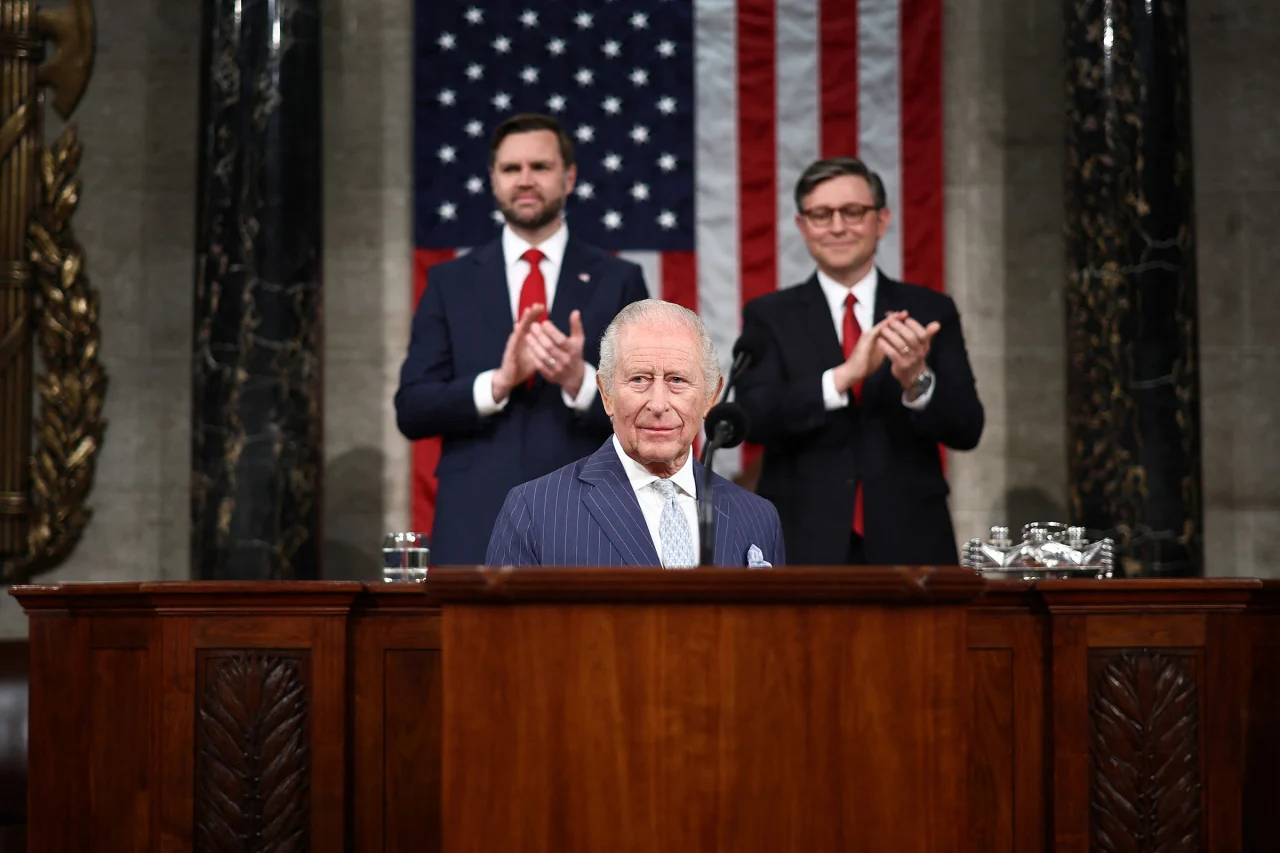
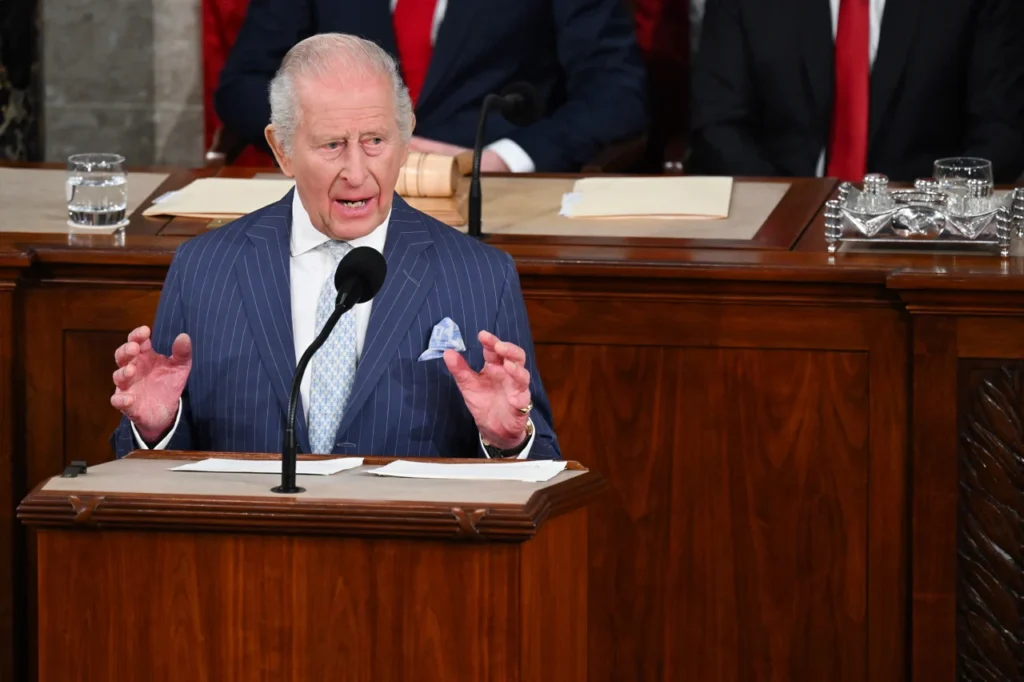
King Charles III ended his historic address to Congress with a clear message for American lawmakers: the world listens to what the United States says, but it judges America even more by what it does.
Closing his speech inside the House chamber Tuesday, Charles reflected on the global influence of the United States and the responsibility that comes with it.
“America’s words carry weight and meaning, as they have since independence,” the king said.
“The actions of this great nation matter even more.”
He then invoked President Abraham Lincoln and the Gettysburg Address, reminding lawmakers that history remembers deeds more than speeches.
“The world may little note what we say, but will never forget what we do.”
It was one of the strongest closing messages of the day—and one aimed directly at America’s global leadership role.
A Call to Renew the US-UK Alliance
Charles used the final moments of his speech to reaffirm what Britain calls the “special relationship” between the United States and the United Kingdom.
He described the partnership as one built not only on shared history, but on shared responsibility.
“Let our two countries rededicate ourselves to each other,” he said, “in the selfless service of our peoples and of all the peoples of the world.”
He ended with a blessing for both nations:
“God bless the United States and the United Kingdom.”
The message came during a tense diplomatic moment as relations between President Donald Trump and British Prime Minister Keir Starmer remain strained over Iran, tariffs, and NATO policy.
Charles’ speech aimed to rise above those political disagreements and remind both countries of the deeper alliance beneath them.
Quoting Trump to Reinforce the “Special Relationship”
In one of the most notable moments of the address, Charles directly quoted Trump’s own words praising the US-UK bond.
“As President Trump himself observed during his state visit to Britain last autumn,” Charles said, “the bond of kinship and identity between America and the United Kingdom is priceless and eternal. It is irreplaceable and unbreakable.”
The quote was carefully chosen.
It served as both praise and gentle diplomacy—using Trump’s own language to reinforce the alliance at a time when the president has sharply criticized Britain’s government over its refusal to provide major military support in the Iran conflict.
It was diplomacy through flattery, and it landed well in the chamber.
Ukraine Receives One of the Strongest Ovations
Charles also used the speech to make a clear statement about Ukraine.
He said the same resolve that united Britain and America through two world wars, the Cold War, and Afghanistan is now needed again.
This time, he said, it is needed for “the defense of Ukraine and her most courageous people.”
He framed support for Kyiv as part of defending democracy and securing “a truly just and lasting peace.”
The mention of Ukraine drew one of the largest standing ovations of the speech.
That moment carried political significance because Trump has paused much of America’s military aid to Ukraine since returning to the White House.
By emphasizing Ukraine so strongly, Charles subtly signaled Britain’s continued support for Kyiv and reminded Congress of the broader Western alliance behind that effort.
NATO Gets a Direct Defense
The king also offered a strong defense of NATO, particularly after Trump’s repeated criticism of the alliance.
Charles reminded lawmakers that NATO invoked Article 5 for the first time after the September 11 attacks, treating the assault on America as an attack on every member nation.
He praised the role of U.S. forces and allied militaries in keeping both North America and Europe safe.
“The commitment and expertise of the United States Armed Forces and its allies lie at the heart of NATO,” he said.
The comments came as Trump has threatened to reduce U.S. commitments to NATO and questioned the alliance’s relevance during the Iran conflict.
Charles’ message was clear: NATO is not just a European project—it protected America when America needed it most.
Climate Change as a Security Issue
Charles also brought one of his longtime personal causes—environmental protection—into the heart of Congress.
Rather than frame climate purely as an environmental issue, he described it as a matter of national security.
He warned that the collapse of critical natural systems threatens not only nature itself but also prosperity and global stability.
“We ignore at our peril,” he said.
The king pointed to melting Arctic ice caps and broader ecological collapse as risks that governments must confront together.
This section of the speech highlighted a quiet but important contrast with Trump’s “drill, baby, drill” energy philosophy.
While Charles has long championed conservation and renewable energy, Trump has openly opposed many of those policies.
Still, the king chose careful language focused on shared responsibility rather than confrontation.
Rare Bipartisan Warmth in Congress
One of the most striking aspects of the speech was the audience response.
In today’s deeply divided Congress, bipartisan standing ovations have become rare.
But Charles received them repeatedly.
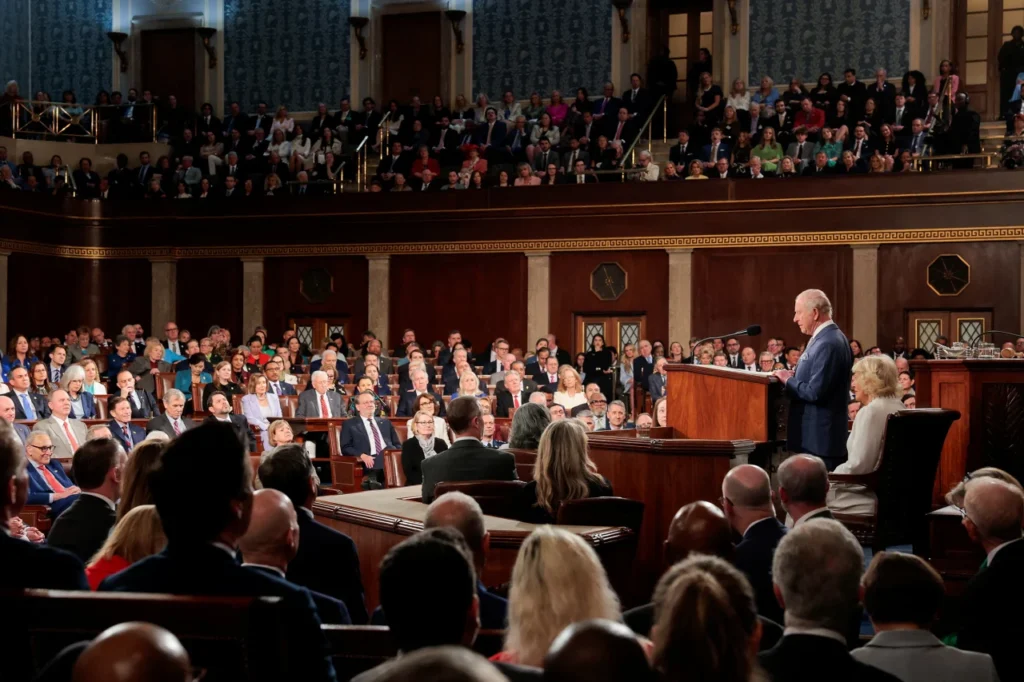
Lawmakers from both parties applauded, laughed at his jokes, and rose together during key moments on democracy, NATO, and Ukraine.
CNN described it as something unusual in modern Washington—a genuinely warm bipartisan response.
Unlike recent State of the Union addresses, there was no heckling, no partisan silence, and no visible protest.
For one afternoon, Congress looked united.
That alone made the event politically significant.
Rejecting Isolationism
Perhaps the broader theme of Charles’ address was a warning against turning inward.
He said the US-UK alliance must continue not only for themselves, but for global stability.
“I pray with all my heart,” he said, “that our alliance will continue to defend our shared values.”
He warned against ignoring what he called “the clarion calls to become ever more inward-looking.”
That line was widely interpreted as a response to rising isolationist politics on both sides of the Atlantic.
Charles argued that strong alliances, not retreat, are what preserve peace.
It was a royal message aimed at a very modern political debate.
King Charles’ address was restrained but forceful as he called for US-UK unity

Britain’s King Charles and Queen Camilla arrive to speak to a joint meeting of Congress in the House Chamber of the US Capitol on Tuesday.
For a figure constitutionally bound to remain above politics, King Charles’ speech before the US Congress was about as firm as we could expect. Charles subtly – but with some force – pushed back on several issues that President Donald Trump has sparred with Britain over in recent months.
Earlier this year, Trump disparaged NATO’s efforts in Afghanistan, baselessly claiming that they “stayed a little back” from the front lines.
Charles stressed in his speech that following the 9/11 terrorist attacks, the US became the first (and, so far, only) country to invoke NATO’s Article 5.
“We answered the call together – as our people have done so for more than a century, shoulder to shoulder, through two World Wars, the Cold War, Afghanistan and moments that have defined our shared security,” Charles said.
Trump also recently dismissed Britain’s Royal Navy aircraft carriers as mere “toys.” Again, Charles quietly pushed back, saying he served “with immense pride” in the navy more than 50 years ago – as did many of his ancestors.
In terms of issues of foreign policy, the King – an avid environmentalist – urged his audience to protect America’s “natural splendour” and “decide how to address the collapse of critical natural systems.” Charles has long championed the sort of green policies that his host, the president, has dismissed as a “scam.”
There were, however, two punches that he pulled. Listening to Charles’ speech, you would not know that the United States was bogged down in a war with Iran, which has sent shockwaves through the global economy and caused huge friction between Washington and London. The monarch made a fleeting reference to a “conflict” in the Middle East early in his speech, then skirted on.
The second subject Charles thought better to avoid was the scandal surrounding the late sex offender Jeffrey Epstein, which has dominated politics in both Britain and the US.
Aside from a vague nod to “victims of some of the ills that, so tragically, exist in both our societies today,” Charles did not address the subject.
Why Charles’ speech to Congress did not address survivors of Epstein despite calls
King Charles wrapped up his address to a joint meeting of Congress a few moments ago. It was a wide-ranging speech that emphasized the bonds between the US and UK, while alluding to some more sensitive current matters facing the transatlantic alliance.
He did not directly reference the the survivors of Jeffrey Epstein, who had called for an in-person meeting with the monarch while he is in the country.
However, there was a part of the speech that will be seen as a nod to the group.
“In both of our countries, it is the very fact of our vibrant, diverse and free societies that gives us our collective strength, including to support victims of some of the ills that, so tragically, exist in both our societies today,” the 77-year-old sovereign said.
The reality is that Charles is the symbolic head of the legal system, just as he is of the government. While his brother Andrew Mountbatten-Windsor is being investigated by British authorities over his Epstein links – something the former prince has repeatedly denied – it would be difficult for the King to address the survivors of the late sex offenders.
That’s because he cannot be seen to be involving himself in the legal system, potentially prejudicing the ongoing investigation into his brother and it would undermine his constitutional position.
That being said, King Charles has been very clear to emphasise in any sort of abuse situation that the victims should always come first. Last night, while attending the garden party hosted at the residence of the British ambassador to the United States, Queen Camilla made a beeline to talk to representatives from organizations working with survivors of domestic abuse.
Some lighter moments from King Charles’ speech
In a high-stakes, often heavy speech, King Charles still took a few opportunities for humor.
Oscar Wilde remains the go-to source of aphorisms for Britons after a quick laugh. Charles began by quoting Wilde, saying:
“We have really everything in common with America nowadays except, of course, language!” (That gag got a faint murmer of laughter from his audience.)
Charles then told Congress how, when he addresses his own Parliament at Westminster, they follow an age-old tradition and take a member of Parliament “hostage” – holding a lawmaker at Buckingham Palace until the monarch is safely returned.
“These days, we look after our ‘guest’ rather well – to the point that they often do not want to leave! I don’t know, Mr Speaker, if there were any volunteers for that role here today…?” Charles said. (That joke did better than the first.)
Charles also made a passing reference to how his state visit was not part of some “cunning rearguard action” to thwart America’s independence. (Congress seemed to like that one.)
The loudest laugh, however, came when the King took the chance to remind the United States that it has not been so long since the Founding Fathers declared independence.
That was just 250 years ago, Charles said – “or, as we say in the United Kingdom, just the other day.” (That was probably the loudest laugh of the evening.)
More Than Ceremony
This was not just a ceremonial royal speech.
It was strategic diplomacy delivered through history, symbolism, and soft power.
Charles never directly criticized Trump.
He did not mention policy disputes by name.
But through references to NATO, Ukraine, climate security, and democratic responsibility, he made Britain’s position clear.
He reminded Congress that the alliance between America and Britain is strongest when both countries lead outward—not inward.
And he ended with the simplest possible reminder:
What America does matters.
Perhaps more than ever.