Trump Defends Iran War, Says ‘We Cannot Let Lunatics Have Nuclear Weapon’/ Newslooks/ WASHINGTON/ J. Mansour/ Morning Edition/ Donald Trump defended the U.S. war with Iran in Florida. He said Iran must not be allowed to obtain nuclear weapons. Officials highlight ceasefire progress and continued economic pressure.
Trump Iran War Defense Quick Looks
- Trump defends Operation Epic Fury against Iran
- Says Iran’s military capabilities have been weakened
- Ceasefire in place with no fighting since April
- U.S. warns against payments to Iran in Hormuz
- 45 vessels turned back amid ongoing blockade
- Negotiations remain uncertain despite mediation efforts
Deep Look
Trump Defends Military Action Against Iran
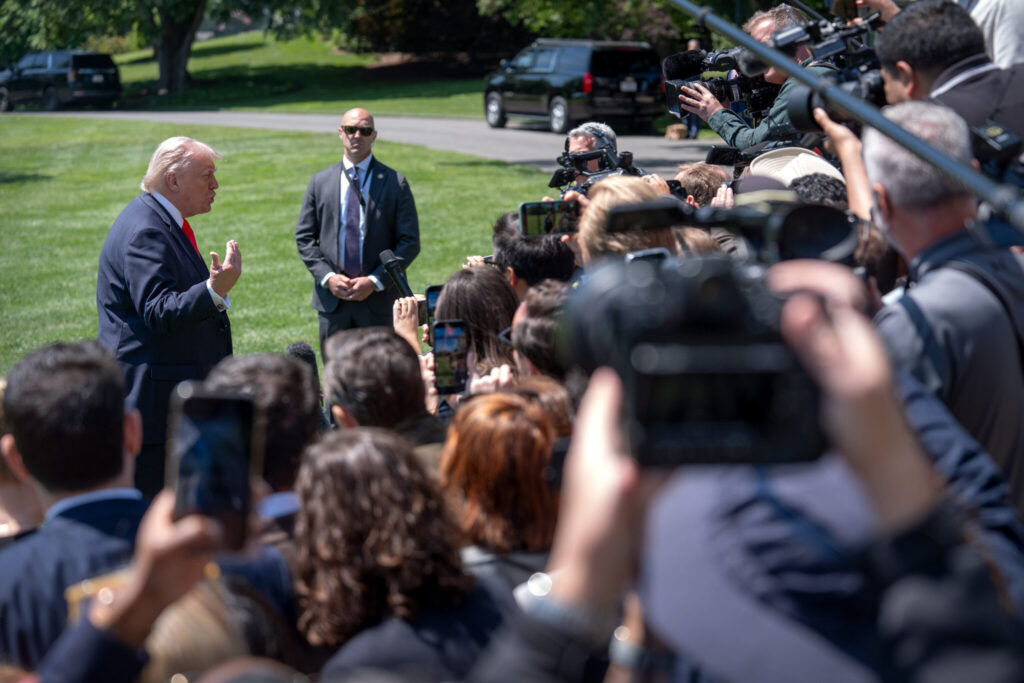
President Donald Trump strongly defended the U.S. military campaign against Iran, emphasizing national security concerns during remarks in Florida.
“We cannot let lunatics have a nuclear weapon,” Trump said, framing the conflict as a necessary step to prevent Iran from developing nuclear capabilities.
He also asserted that Iran’s military strength has been significantly reduced as a result of U.S. operations, signaling confidence in the campaign’s effectiveness.
Operation Epic Fury and Ceasefire Developments
The conflict, which began on Feb. 28 with Operation Epic Fury, has entered a ceasefire phase. In a letter to Congress, Trump stated that “hostilities” have effectively ended, noting that there has been no exchange of fire since early April.
The administration argues that this pause in fighting means the 60-day war powers deadline does not apply, a position that could shape ongoing legal and political debates.
Despite the ceasefire, tensions remain high as both sides continue strategic maneuvers and diplomatic engagement.
Negotiations Show Limited Progress
Diplomatic efforts to end the conflict continue, with Pakistan acting as a key intermediary between the United States and Iran.
However, Trump expressed dissatisfaction with Iran’s latest proposal.
“I’m not satisfied,” he said, indicating that any agreement would require stronger terms.
The stop-and-start nature of negotiations reflects the complexity of resolving the conflict, especially given ongoing military and economic pressures.
Economic Pressure Through Sanctions and Blockade
The United States continues to apply pressure on Iran through sanctions and maritime enforcement.
The Treasury Department warned shipping companies that paying Iran for passage through the Strait of Hormuz could lead to penalties, reinforcing earlier efforts to curb Iran’s influence over key trade routes.
Meanwhile, U.S. Central Command reported that “45 commercial vessels have been directed to turn around or return to port to ensure compliance” with the blockade of Iranian ports.
These actions aim to limit Iran’s revenue streams and force concessions in negotiations.
Global and Strategic Implications
The conflict has broader implications for global security and energy markets. The Strait of Hormuz remains a critical chokepoint for oil shipments, making stability in the region essential for international trade.
By combining military action with economic restrictions, the U.S. strategy seeks to weaken Iran’s position while maintaining leverage at the negotiating table.
Additional Political Signals and Remarks
During his Florida appearance, Trump also made off-the-cuff remarks about other geopolitical issues, including a joking reference to potential U.S. action involving Cuba.
While not part of official policy, such comments reflect Trump’s often informal and improvisational communication style during public events.
Outlook for US-Iran Relations
As the ceasefire holds, the future of U.S.-Iran relations remains uncertain. Continued negotiations, economic pressure, and strategic positioning will likely determine whether a long-term resolution can be achieved.
For now, the administration appears committed to maintaining pressure while leaving the door open for a negotiated settlement.