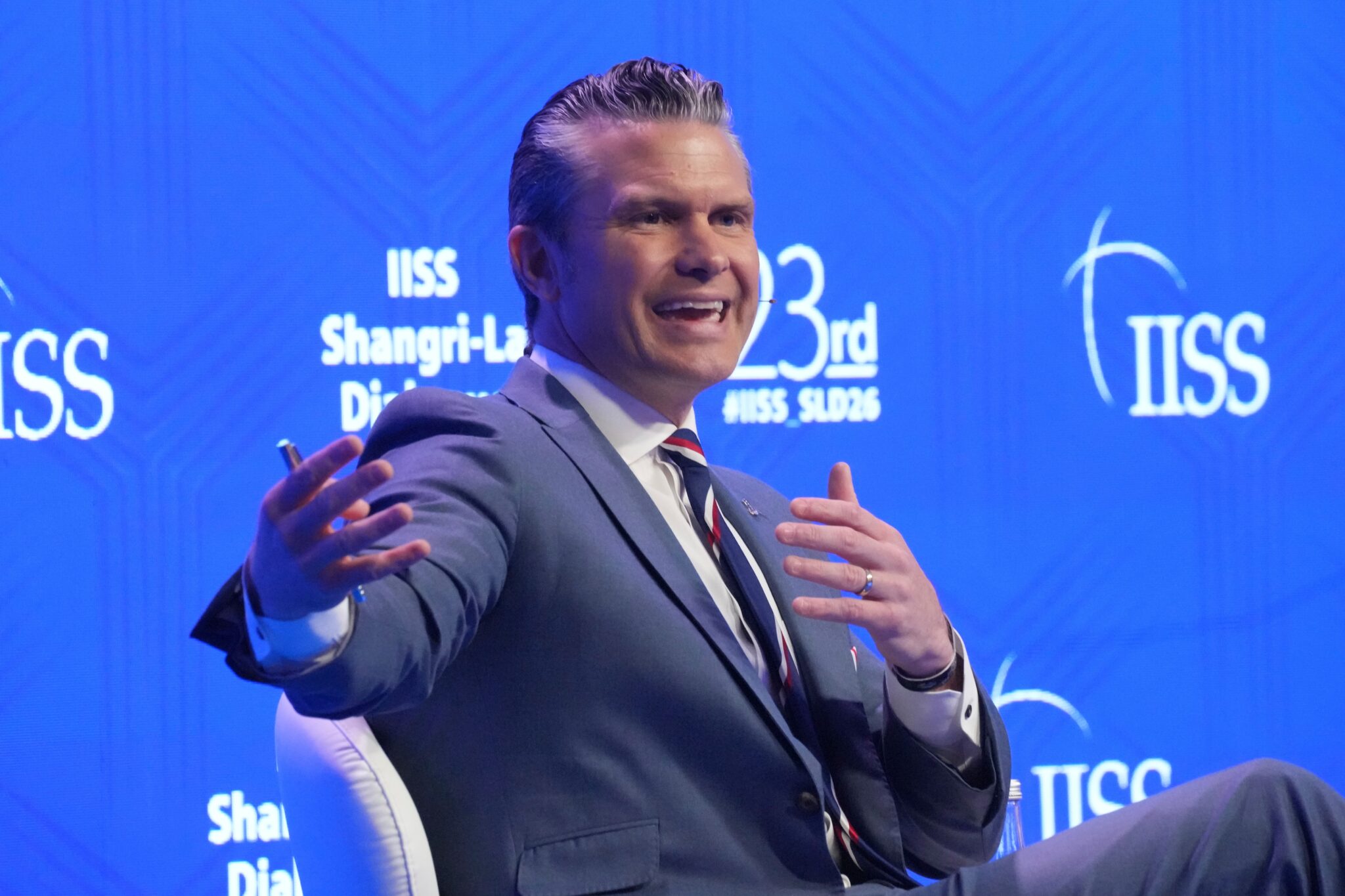
Hegseth Softens China Rhetoric While Reaffirming Pacific Commitment/ Newslooks/ WASHINGTON/ J. Mansour/ Morning Edition/ Defense Secretary Pete Hegseth reassured Indo-Pacific allies that the United States remains committed to regional security while adopting a less confrontational tone toward China. Speaking at the Shangri-La Dialogue in Singapore, Hegseth emphasized strategic stability with Beijing but warned against Chinese dominance in the Pacific. The speech reflected a shift following President Donald Trump’s recent meeting with Chinese President Xi Jinping.
Hegseth China Pacific Security Quick Looks
- Hegseth addressed the Shangri-La Dialogue in Singapore.
- The Pentagon chief softened previous warnings about China.
- He reaffirmed U.S. commitment to Indo-Pacific security.
- Hegseth emphasized strategic stability with Beijing.
- The U.S. opposes Chinese dominance in the Pacific.
- Taiwan policy remains unchanged, according to Hegseth.
- Questions remain about a proposed Taiwan arms package.
- Allies were urged to increase defense spending.
- Australia and the UK joined the U.S. in announcing a new AUKUS initiative.
- Underwater drone technology will be a major focus of future cooperation.
Deep Look
Hegseth Reassures Allies At Major Security Forum
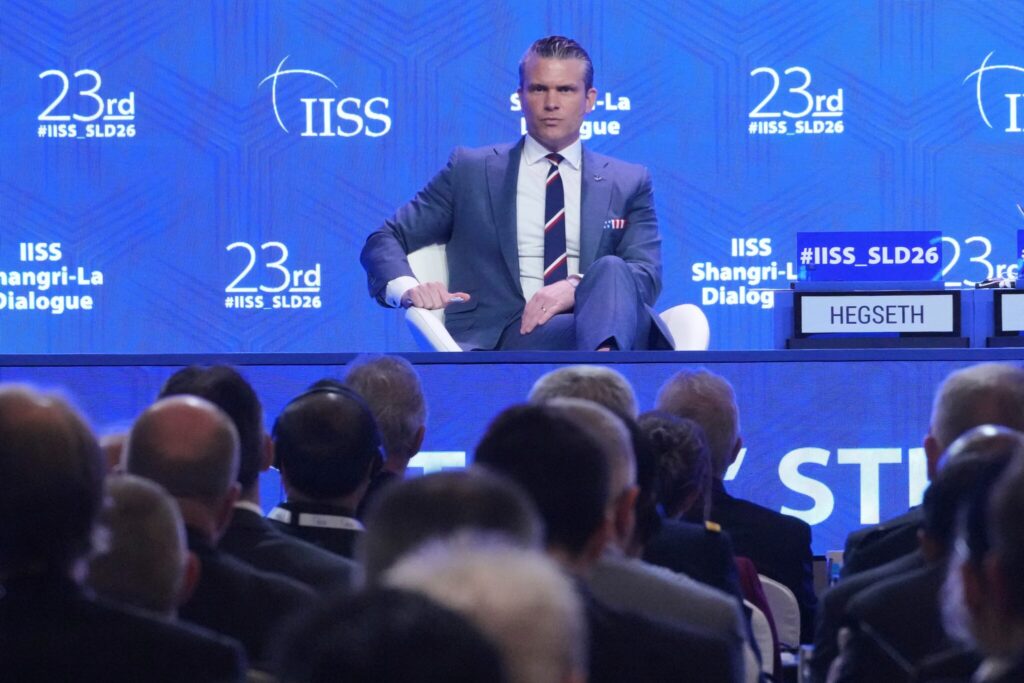
SINGAPORE — U.S. Defense Secretary Pete Hegseth sought to reassure allies and partners across the Indo-Pacific on Saturday, emphasizing Washington’s commitment to regional security while striking a noticeably softer tone toward China than he did a year ago.
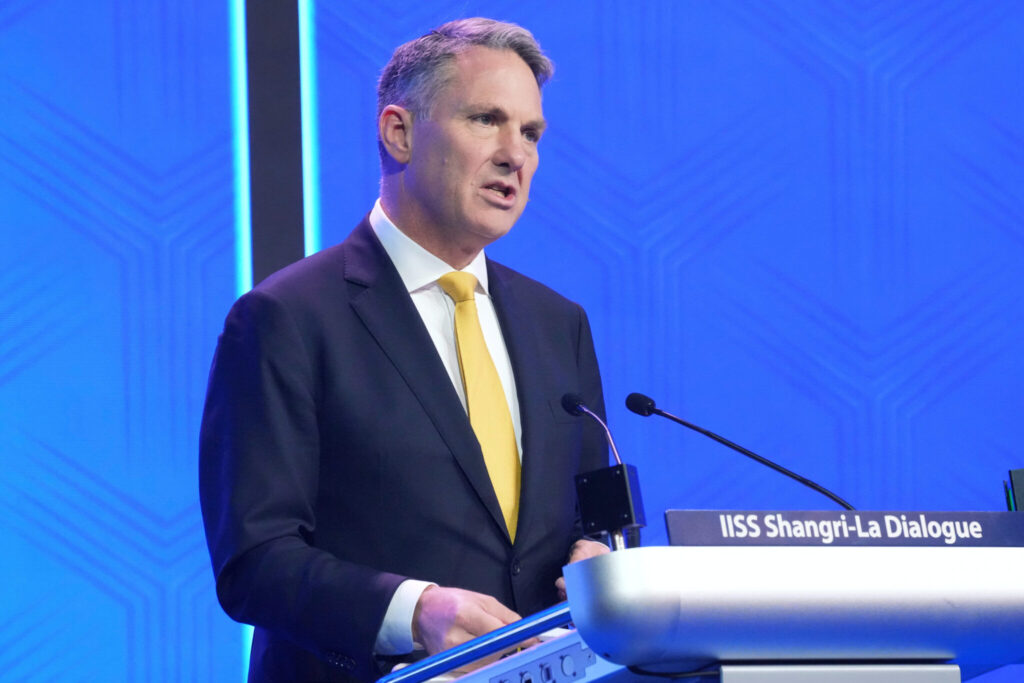
Addressing political leaders, military officials, and security experts at the Shangri-La Dialogue in Singapore, Hegseth described the Indo-Pacific as a region of immense strategic importance to the United States.
“The region has profound implications for U.S. security and prosperity,” Hegseth said, adding that Washington remains focused on achieving “a lasting and favorable balance of power in the Pacific.”
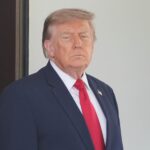
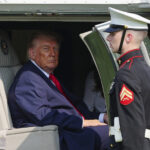
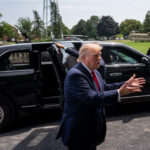
His remarks came at a time of shifting diplomatic dynamics following President Donald Trump’s recent visit to Beijing and renewed efforts to stabilize U.S.-China relations.
Softer Tone Following Trump-Xi Meeting
The contrast between Hegseth’s latest speech and his remarks at last year’s conference was significant.
During the 2025 Shangri-La Dialogue, Hegseth delivered one of the administration’s strongest warnings about China’s military expansion and activities near Taiwan. At that time, he argued that Beijing was actively preparing for a potential invasion of the self-governing island.
This year, however, the defense secretary emphasized cooperation and stability after Trump’s recent summit with Chinese President Xi Jinping.
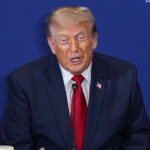
Trump described Xi as a “great leader” following their meeting and expressed optimism about future relations between the world’s two largest economies.
The softer rhetoric reflects broader diplomatic efforts to ease tensions while maintaining strategic competition.
Strategic Stability Remains Goal
Hegseth highlighted what he described as a new framework agreed upon by Trump and Xi during their discussions in Beijing.
According to Hegseth, both leaders endorsed a relationship based on strategic stability, fairness, and reciprocity.
He said the two countries would continue protecting their respective interests while seeking opportunities for practical cooperation where mutual interests overlap.
The comments suggest an effort to balance competition with engagement rather than pursuing outright confrontation.
China Still Viewed As Strategic Challenge
Despite the more measured tone, Hegseth made clear that Washington remains concerned about China’s growing military capabilities.
“There is rightful alarm regarding China’s historic military buildup and the expansion of its military activities in the region and beyond,” he said.
The defense secretary stressed that the United States remains committed to ensuring no single power dominates the Indo-Pacific.
“We share a clear-eyed assessment of that security environment and a mutual understanding that a Pacific dominated by any hegemon would unravel the regional balance of power and undermine the equilibrium we all seek to preserve.”
The remarks signaled that while the administration seeks improved relations with Beijing, it continues to view China’s military expansion as a strategic concern.
China Welcomes More Positive Messaging
Chinese officials responded positively to portions of Hegseth’s speech.
Maj. Gen. Meng Xiangqing praised the recent Trump-Xi meeting and described the leaders’ agreement as a framework that could guide bilateral relations for years to come.
Meng emphasized concepts including cooperation, controlled competition, management of differences, and long-term peace.
The response suggested that Beijing views recent diplomatic engagement as an opportunity to stabilize relations following years of heightened tensions.
Democrats Raise Concerns About China Policy
Not everyone welcomed the administration’s approach.
Sen. Tammy Duckworth of Illinois, who attended the conference as part of a congressional delegation, expressed concern that the White House may be moving too close to Beijing.
“I worry that this administration is being distracted into wars that they’ve started in other parts of the world at the expense of our commitment here in the Indo-Pacific,” Duckworth told reporters.
She went further, suggesting that some administration policies appear aligned with Chinese interests.
“I am concerned that it seems like our president is entering into, you know, policies where he’s doing what Beijing wants him to do,” she added.
Her criticism reflects growing debate in Washington over the balance between diplomacy and deterrence.
Taiwan Questions Remain Unresolved
Taiwan remained one of the most closely watched issues at the conference.
Following his meeting with Xi, Trump raised questions about a proposed $14 billion arms package for Taiwan, describing it as “a very good negotiating chip” in dealings with China.
The comments sparked concern among some security experts and regional allies.
Hegseth sought to reassure participants that U.S. policy toward Taiwan remains unchanged.
“There was no change in our status” toward Taiwan, he said.
However, he declined to discuss whether Trump would approve the pending arms package, noting that the final decision rests solely with the president.
Allies Pressed To Increase Defense Spending
Another major theme of Hegseth’s speech was burden sharing among allies.
The defense secretary reiterated the administration’s long-standing position that partners should invest more heavily in their own defense capabilities.
“We need partners, not protectorates,” he said.
Hegseth praised several Indo-Pacific nations for increasing military spending while also criticizing some European allies for what he described as excessive reliance on rhetoric rather than defense investments.
He argued that successful partnerships are built on shared interests and practical cooperation rather than idealistic commitments alone.
Australia Defends Rules-Based Order
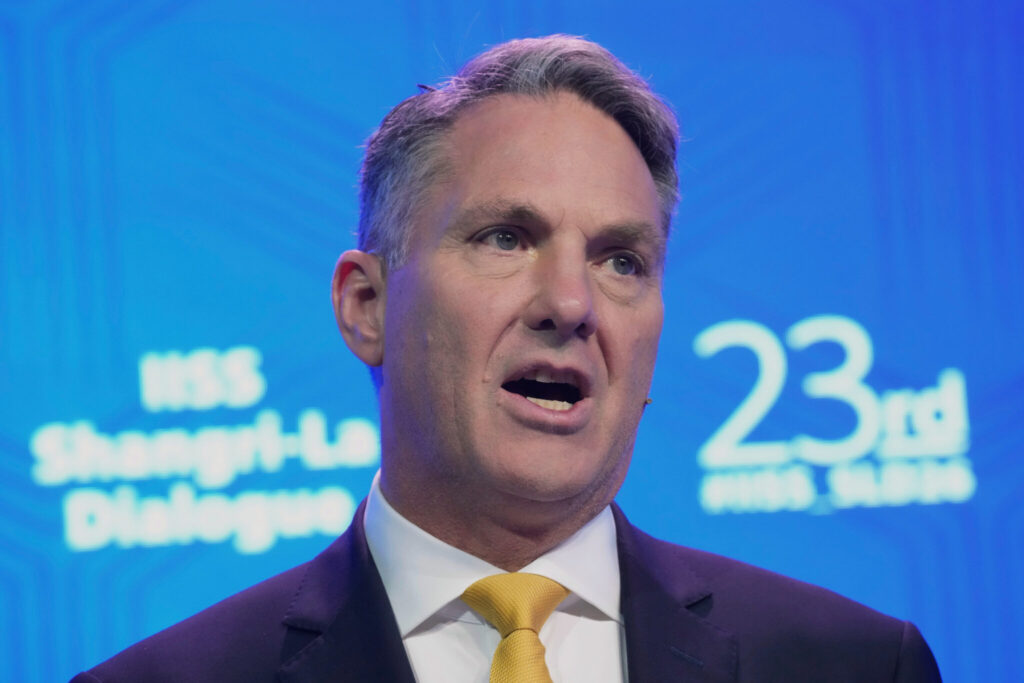
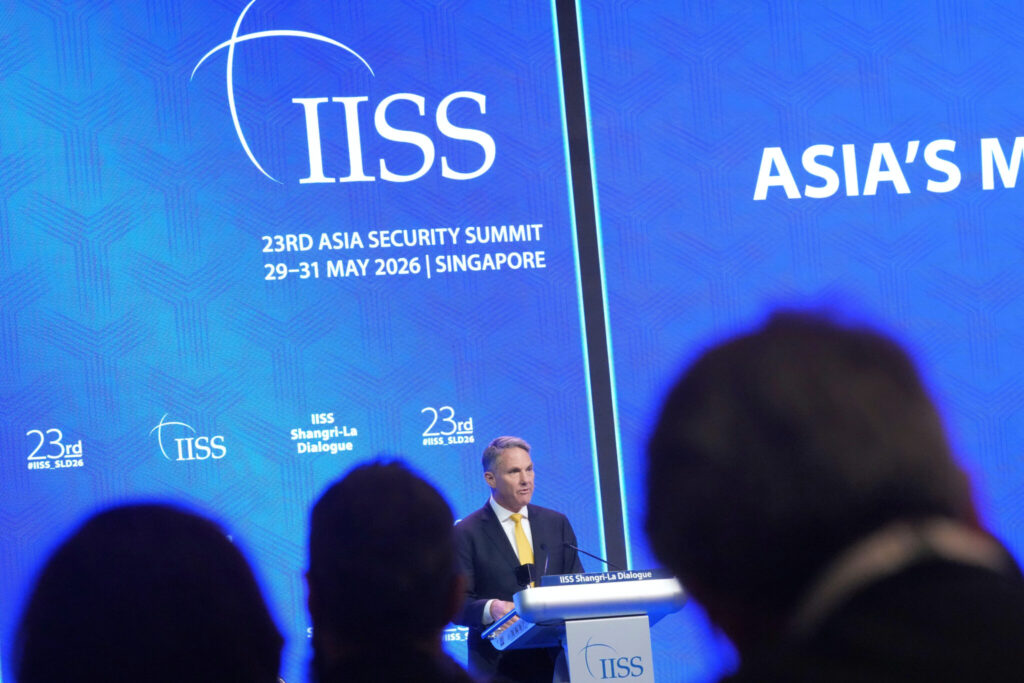
Australian Defense Minister Richard Marles offered a different perspective during remarks following Hegseth’s speech.
While acknowledging that the international system is imperfect, Marles argued that nations should focus on strengthening the existing rules-based order rather than abandoning it.
“When the rules apply, smaller states have agency,” Marles said. “When the rules yield to power, sovereignty becomes, as others have put it, the purview of the powerful.”
His comments highlighted continuing debates among allies regarding the future of international institutions and global governance.
AUKUS Expands Into Underwater Drone Technology
Outside the main conference sessions, defense leaders from the United States, Australia, and the United Kingdom announced a significant expansion of their AUKUS security partnership.
The three countries unveiled a new initiative focused on advanced underwater drone technologies.
The effort falls under the second pillar of AUKUS, which focuses on emerging defense technologies beyond the partnership’s flagship nuclear-powered submarine program.
British Defense Secretary John Healey said the project would improve sensors, weapons systems, and detection capabilities for underwater drones.
The technology could play a key role in monitoring threats to underwater infrastructure, including communications cables and energy pipelines.
Indo-Pacific Strategy Continues To Evolve
Hegseth’s appearance underscored the administration’s evolving approach to the Indo-Pacific.
While rhetoric toward China has softened following high-level diplomacy, Washington continues investing in regional partnerships, military cooperation, and deterrence efforts.
The message from Singapore was clear: the United States wants a more stable relationship with Beijing but remains determined to prevent any single power from dominating the Pacific.
How those competing goals are balanced will likely shape regional security and U.S.-China relations for years to come.