Iran Attack On Kuwait Airport Kills One, Injures 63/ Newslooks/ WASHINGTON/ J. Mansour/ Morning Edition/ An Iranian attack on Kuwait International Airport killed one person and injured at least 63 others, according to Kuwaiti authorities. The strike damaged part of the airport terminal as regional tensions escalated following new U.S. military operations near the Strait of Hormuz. The attack comes as diplomatic efforts involving Iran, the U.S., Israel, and Lebanon remain stalled amid continued fighting.

Kuwait Airport Attack Quick Looks
- Iran launched an attack that struck Kuwait International Airport.
- At least one person was killed and 63 others were injured.
- The airport terminal sustained significant damage.
- The attack follows new U.S. military operations near the Strait of Hormuz.
- Iran warned that further hostile actions would trigger a “decisive response.”
- U.S. forces carried out additional strikes against Iranian military targets.
- Lebanon and Israel are holding U.S.-mediated talks in Washington.
- Fighting continues despite ceasefire efforts in Lebanon.
- Hezbollah and Israeli forces exchanged attacks on Wednesday.
- Iran remains opposed to resuming negotiations under current conditions.

Deep Look
Kuwait Airport Hit As Regional Conflict Intensifies
KUWAIT CITY — A deadly Iranian attack on Kuwait International Airport has further escalated tensions across the Middle East, killing one person and injuring at least 63 others while damaging part of the airport’s terminal infrastructure.
The strike represents one of the most serious attacks on civilian infrastructure in the Gulf since the conflict between the United States, Israel, and Iran intensified earlier this year.
Emergency crews rushed to the scene following the attack as authorities assessed structural damage and treated the wounded.
The incident comes amid growing concerns that the conflict could spread further across the region despite ongoing diplomatic efforts.
U.S. Conducts New Operations Near Hormuz
The attack followed a fresh round of U.S. military operations in and around southern Iran.
American forces announced Wednesday that they had conducted what officials described as defensive strikes targeting missile launch sites, Iranian naval assets, and vessels allegedly attempting to deploy mines near the strategically vital Strait of Hormuz.
The waterway remains one of the world’s most important energy corridors, carrying a significant portion of global oil and natural gas shipments.
Disruptions to traffic through the strait have already contributed to elevated energy prices and increased concerns about global economic stability.
Iran Warns Of Further Retaliation
Iranian Foreign Minister Abbas Araqchi issued a strong warning following the latest U.S. actions.
“Any hostile act will be met with an immediate, decisive response.”
Araqchi stated that Iranian military operations were defensive in nature and were intended to respond to what Tehran views as violations of the ceasefire framework.
“Our Armed Forces are conducting self-defense strikes on sites the U.S. is permitted to use to attack civilian shipping and violate the ceasefire.”
Iran has repeatedly accused Washington and its regional partners of escalating tensions through military operations near Iranian territory.
Lebanon Remains A Major Flashpoint
While attention focused on Kuwait, fighting continued across Lebanon despite efforts to establish a broader ceasefire.
Israeli military officials reported intercepting rockets launched by Hezbollah toward northern Israel.
At the same time, Lebanese security sources said Israeli drone strikes targeted multiple vehicles in southern Lebanon.
Another Israeli strike near the coastal city of Tyre reportedly killed six people, according to Lebanon’s Health Ministry.
The ongoing violence has complicated diplomatic efforts to secure a broader regional agreement.
Lebanon And Israel Meet In Washington
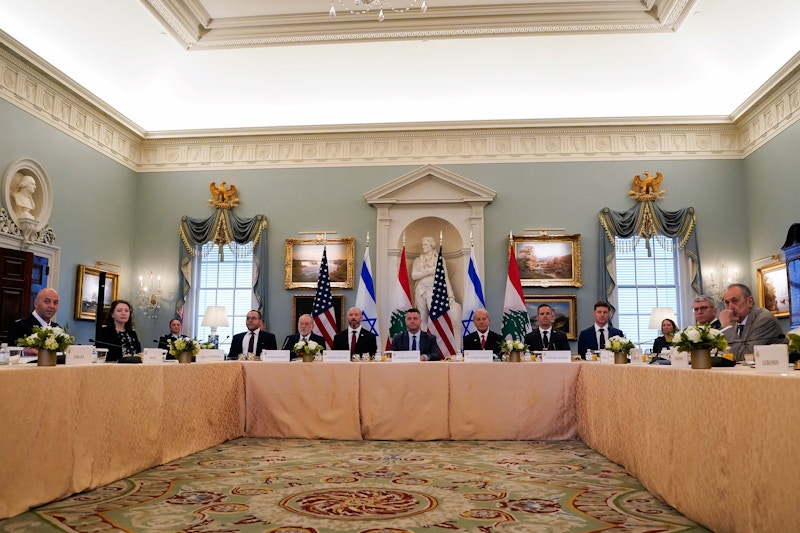
The first day of talks at the State Department in Washington, D.C., June 2, 2026
Against the backdrop of continued fighting, Lebanese and Israeli representatives met Wednesday in Washington for a second consecutive day of talks facilitated by the United States.
The meetings mark the fourth face-to-face encounter between the two sides since the conflict began.
U.S. Secretary of State Marco Rubio expressed hope that negotiations could produce concrete results.
“produce a joint statement and an action plan on a track for security in that country, independent from Hezbollah, independent from nefarious influence.”
The talks have proceeded despite objections from Hezbollah and growing pressure from Iran, which has insisted that any wider agreement must include a ceasefire in Lebanon.
Iran Ties Diplomacy To Lebanon
Iran has repeatedly linked progress in broader negotiations with developments in Lebanon.
Tehran has demanded an end to Israeli military operations there and has suggested it could become more directly involved if attacks continue.
Officials have also indicated that support for Hezbollah remains a critical component of Iran’s regional strategy.
Recent statements from Iranian media and government officials have raised concerns that further escalation could threaten shipping routes beyond the Strait of Hormuz, including other strategic waterways in the region.
Israeli Communities Remain On Edge
Despite limited steps toward de-escalation, many communities near the Israel-Lebanon border remain cautious.
Schools in parts of northern Israel reopened Wednesday following updated security guidance from military authorities.
Parents dropping children off at school voiced concerns about the fragile security situation.
“There have been hits here, more than once or twice. It’s not completely secure.”
The comments reflect ongoing uncertainty as residents continue to navigate periodic attacks and military operations.
Regional Stability Faces New Challenges
The attack on Kuwait Airport underscores the increasingly complex security environment across the Middle East.
With U.S. forces conducting operations near Iranian territory, continued exchanges between Israel and Hezbollah, and diplomatic efforts struggling to gain traction, fears remain that the conflict could widen further.
The latest violence has placed additional pressure on negotiators attempting to prevent a broader regional confrontation while protecting critical infrastructure and international shipping routes.