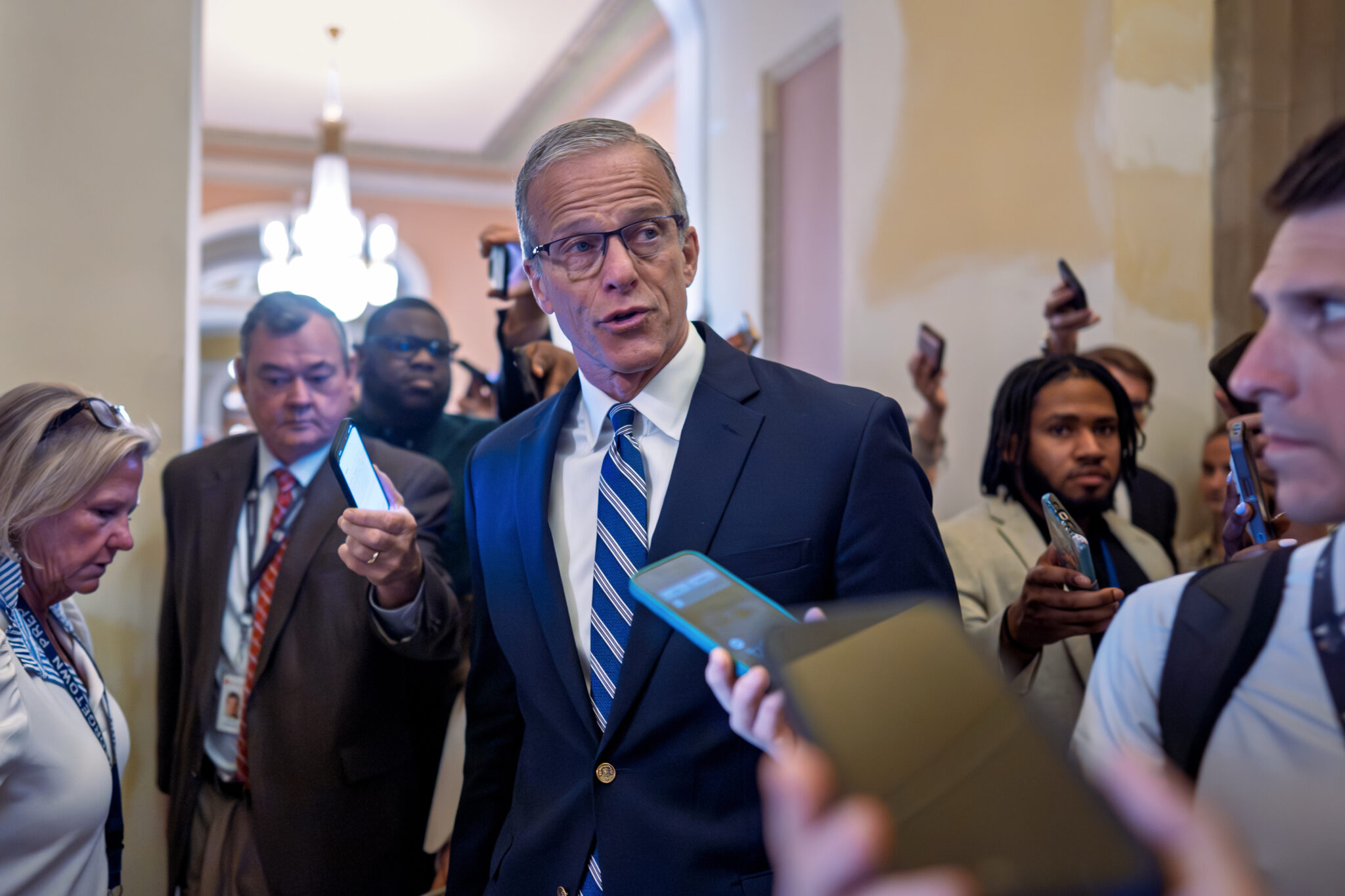
Senate Passes $70 Billion ICE Funding Bill After Fund Fight/ Newslooks/ WASHINGTON/ J. Mansour/ Morning Edition/ The Senate approved a $70 billion immigration enforcement package after an overnight session marked by fierce debate over President Donald Trump’s controversial settlement fund. Republicans defeated multiple bipartisan attempts to permanently block the $1.776 billion fund despite concerns from several GOP senators. The legislation now heads to the House, where lawmakers are expected to consider it next week.

ICE Funding Bill Quick Looks
- Senate passed the bill 52-47.
- Funding covers ICE and Border Patrol through 2029.
- Bill allocates approximately $70 billion.
- Multiple amendments targeting Trump’s settlement fund failed.
- GOP divisions surfaced throughout marathon voting sessions.
- Sen. Lisa Murkowski was the lone Republican opposing final passage.
- Sen. Michael Bennet missed the final vote.
- Democrats criticized the lack of restrictions on immigration enforcement.
- Republicans used reconciliation procedures to bypass a filibuster.
- House consideration is expected next week.

ICE Funding Bill Deep Look
The U.S. Senate approved a major immigration enforcement funding package early Friday, ending months of uncertainty surrounding federal funding for Immigration and Customs Enforcement (ICE) and the Border Patrol while exposing ongoing divisions within the Republican Party over President Donald Trump’s controversial settlement fund.
The legislation passed by a vote of 52-47 after an all-night voting session that stretched into the early morning hours. The measure provides approximately $70 billion for immigration enforcement operations through the remainder of Trump’s term and now advances to the House of Representatives for consideration.
While Republican leaders ultimately secured passage of the bill, the debate was dominated by disputes surrounding a separate $1.776 billion settlement fund tied to Trump’s lawsuit against the Internal Revenue Service.
“This would have been done several hours ago if we weren’t having to deal with some of the issues around the fund,” Senate Majority Leader John Thune, R-S.D., said shortly before midnight.
Immigration Funding Finally Advances
The bill funds ICE and Border Patrol operations for the next three years, addressing a funding gap that has existed since February.
Republicans argued the legislation was essential to maintaining border security and supporting immigration enforcement efforts.
Democrats had blocked the funding for months while demanding policy changes related to immigration enforcement practices, including increased transparency for federal officers and expanded use of judicial warrants.
Those negotiations failed to produce a bipartisan agreement, prompting Republicans to pursue passage through the budget reconciliation process, which allowed them to advance the legislation without Democratic support.
Settlement Fund Dominates Debate
Although the bill focused on immigration enforcement, Senate debate became consumed by questions surrounding Trump’s proposed settlement fund.
The fund emerged from a settlement resolving Trump’s lawsuit against the IRS regarding the disclosure of his tax returns.
Many lawmakers from both parties have expressed concerns that payments could potentially benefit individuals who claim they were politically targeted by the federal government, including some people connected to the January 6 Capitol riot.
Acting Attorney General Todd Blanche recently told lawmakers that the Justice Department was not moving forward with the fund.
Despite those assurances, several senators sought legislative guarantees preventing any future revival of the proposal.
Republicans Reject Multiple Amendments
Throughout Thursday and into Friday morning, senators voted on a series of amendments designed to permanently eliminate or restrict the settlement fund.
A Democratic proposal to ban the fund outright failed after a lengthy procedural delay while several Republicans weighed their positions.
Another amendment from Republican Sen. Thom Tillis would have redirected the money to a Justice Department anti-fraud initiative. That proposal also failed despite support from more than ten Republican senators.
“If Blanche says this is largely inoperative, why not use this moment to codify that?” Tillis said. “Otherwise, you’re exposing every one of our members who are in cycle to having to deal with this between today and Election Day, and that makes no sense for something that the DOJ says they’re not moving forward with.”
Tillis argued Republicans risk political damage by refusing to formally eliminate a proposal that administration officials say is already inactive.
He warned that the issue could become a campaign liability heading into the midterm elections.
Cassidy’s Amendment Falls Short
One of the most closely watched votes involved an amendment from Sen. Bill Cassidy of Louisiana.
His proposal would have redirected settlement money to law enforcement officers injured during the January 6, 2021 Capitol attack.
The amendment represented a direct challenge to concerns that future settlement payments could potentially benefit some individuals involved in the riot.
Cassidy argued that despite Blanche’s assurances, the settlement remains legally active and could still be utilized.
Republicans ultimately defeated the amendment, clearing the final obstacle before passage of the broader immigration legislation.
Narrow Final Vote
The final vote reflected strong Republican support for the immigration package despite internal disagreements.
Sen. Lisa Murkowski of Alaska was the only Republican to vote against final passage.
Democratic Sen. Michael Bennet of Colorado was absent.
The 52-47 vote gives Senate Republicans a significant legislative victory after weeks of procedural delays and internal party disputes.
Democrats Continue Criticism
Democrats sharply criticized both the immigration package and Republican handling of the settlement fund controversy.
Senate Minority Leader Chuck Schumer argued that Republicans are relying on assurances from administration officials rather than placing permanent legal restrictions on the settlement proposal.
“leaving taxpayers to rely on nothing more than a promise from Donald Trump’s personal fixer. That is not accountability. That is a permission slip.”
Democrats also objected to the lack of immigration enforcement reforms included in the legislation.
They have repeatedly argued that any long-term funding measure should contain additional oversight mechanisms and accountability requirements for federal immigration authorities.
House Vote Looms
Attention now shifts to the House of Representatives, where Republican leaders are expected to bring the measure up for consideration next week.
House Republicans have generally supported increased funding for ICE and Border Patrol, but lawmakers will now face many of the same political questions that complicated Senate debate.
If approved by the House, the legislation would provide immigration enforcement agencies with stable funding through the end of Trump’s current term.
The bill’s passage also demonstrates Republicans’ ability to overcome significant internal disagreements, though the continuing controversy surrounding the settlement fund suggests the issue may remain politically sensitive throughout the remainder of the legislative session and into the 2026 election cycle.