

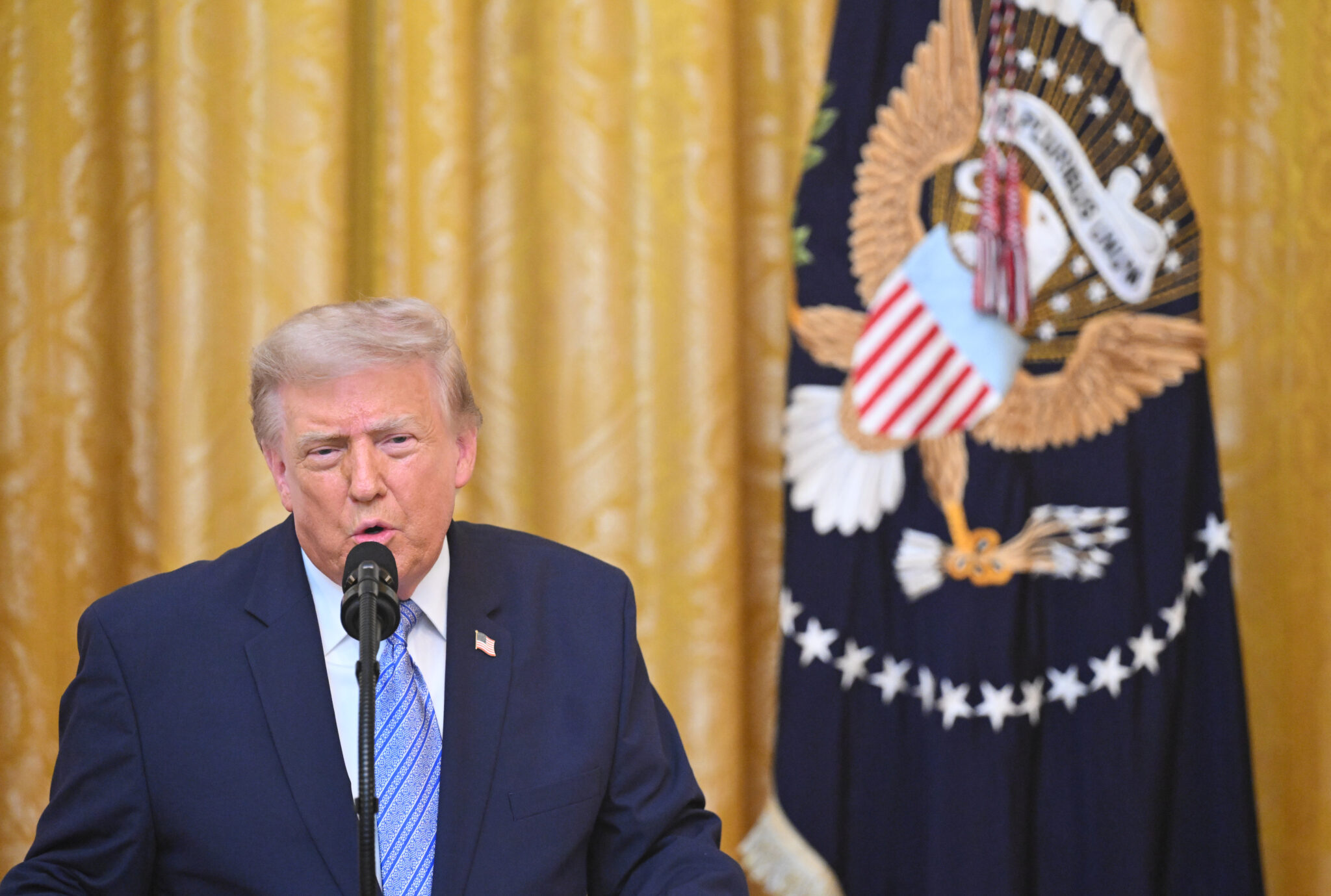
Trump Threatens Higher Tariffs on Canada Over Wildfire Smoke/ Newslooks/ WASHINGTON/ J. Mansour/ President Donald Trump threatened to increase tariffs on Canada after wildfire smoke triggered dangerous air quality across parts of the United States. Trump accused Canadian authorities of failing to maintain forests and said the cost of the pollution should be added to existing tariffs. Canada has acknowledged that its wildfire crisis is worsening partly because of increasingly hot and dry climate conditions.
Quick Look
- Trump threatened additional tariffs on Canada over cross-border wildfire smoke.
- He said the cost of the pollution should be added to tariffs Canada is already paying.
- Trump accused Canadian officials of failing to properly maintain forests and brush.
- He described the smoke entering the United States as dangerous and unacceptable.
- Trump said he planned to contact Canadian Prime Minister Mark Carney.
- He accused Canada of “Willful Negligence.”
- Canadian officials did not immediately respond to the tariff threat.
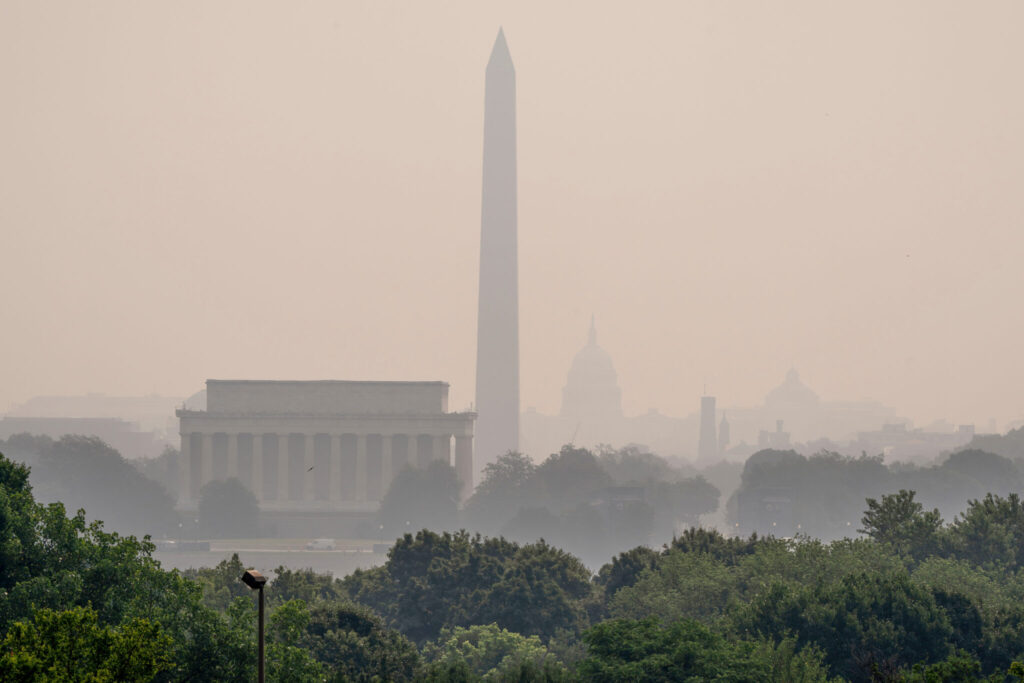
- Smoke from Canadian fires triggered health warnings across the Midwest and Northeast.
- New York City was among the major cities covered by thick smoke.
- Wildfire smoke exposes millions of people to immediate and long-term health risks.
- Canada says hotter and drier conditions are worsening its wildfire crisis.
- Canadian officials launched a national fire prevention and mitigation strategy in 2024.
Deep Look
Trump Threatens Canada With Higher Tariffs
President Donald Trump threatened Friday to impose additional tariffs on Canada in response to wildfire smoke drifting across the border and creating dangerous air quality in the United States.
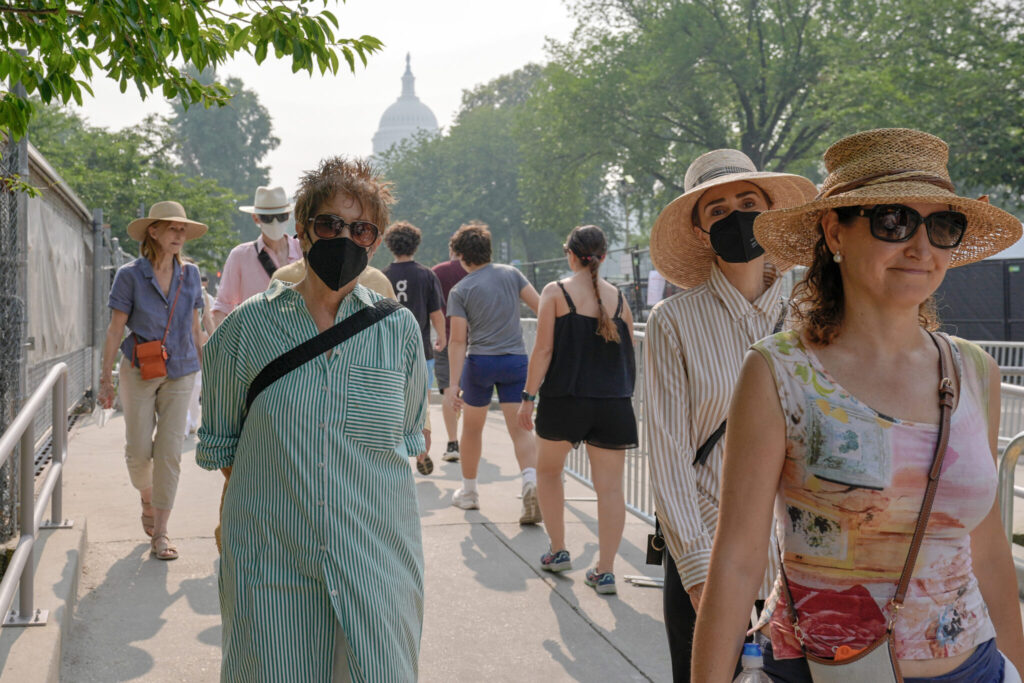
Smoke from Canadian wildfires has reached major American cities, triggering public health warnings and disrupting outdoor events and activities.
Trump said Canada should face additional economic costs because of the pollution entering the United States.
In a Truth Social post, the president said the “cost of this pollution must of necessity be added to the TARIFFS Canada is currently paying.”
Trump did not specify how large the proposed tariff increase would be, which Canadian products could be affected or when the higher rates might take effect.
Trump Blames Canadian Forest Management
The president attributed the smoke to what he characterized as inadequate forest and brush management by Canadian officials.
Trump accused Canada of “not properly maintaining their Forests, and Brush therein,” which he said had caused the United States to be “unnecessarily invaded by filthy, polluted, and unhealthy air, the quality of which is dangerous, and totally unacceptable!”
Wildfire smoke has increasingly become a cross-border air quality problem for the Midwest and Northeast.
Large Canadian fires can send smoke hundreds or thousands of miles south, depending on wind direction and atmospheric conditions.
Trump Plans Call With Mark Carney
Trump said he intended to raise the issue directly with Canadian Prime Minister Mark Carney.
The president said he would call Carney “to find out what they are going to do about it.”
Trump also accused Canada of “Willful Negligence.”
Canadian officials did not immediately respond publicly to the president’s tariff threat or his criticism of the country’s wildfire management practices.
Wildfire Smoke Creates Health Risks
Canadian wildfire smoke has degraded air quality across major US population centers, including New York City and cities throughout the Midwest and Northeast.
The pollution exposes millions of people to short- and long-term health risks.
Wildfire smoke contains microscopic particles known as PM2.5 that can travel deep into the lungs and, in some cases, enter the bloodstream.
Exposure can cause coughing, breathing difficulties, eye irritation and inflammation. It can also worsen asthma, heart disease and other existing medical conditions.
Children, older adults, pregnant people and those with respiratory or cardiovascular illnesses are especially vulnerable.
Canadian Wildfire Crisis Is Worsening
The Canadian government has acknowledged that the country faces a worsening wildfire threat.
Hotter and drier climate conditions are contributing to longer and more destructive fire seasons by drying vegetation and creating conditions in which fires can ignite and spread more easily.
Smoke from Canada has become a recurring air quality problem in parts of the United States, particularly during the late spring and summer.
The increasing frequency of these events has generated questions about forest management, emergency planning, climate adaptation and international cooperation.
Canada Launches Wildfire Prevention Strategy
In 2024, the Canadian Council of Forest Ministers introduced the Canadian Wildland Fire Prevention and Mitigation Strategy.
The initiative aims “to provide a cohesive vision of wildland fire prevention and mitigation to mobilize collective action and reduce the negative impacts of wildland fire.”
The strategy seeks to coordinate action among Canadian governments and other organizations involved in wildfire preparation, prevention and response.
Trump’s tariff threat adds a new economic and diplomatic dimension to a problem that has primarily been treated as an environmental, climate and public health issue.
No Tariff Details Announced
Trump’s statement represented a threat rather than the announcement of a finalized tariff policy.
The administration had not provided details about the legal mechanism it would use to connect wildfire smoke to import duties.
It also remained unclear whether the threatened tariffs would be intended to generate money to compensate for pollution costs, pressure Canada to modify forest management practices or serve as part of broader US-Canada trade negotiations.
Any additional tariffs could further strain relations between the neighboring countries as they confront recurring cross-border wildfire smoke.





You must Register or Login to post a comment.