

US and Iran Trade Strikes as Kuwait Suffers Infrastructure Damages/ Newslooks/ WASHINGTON/ J. Mansour/ Morning Edition/ The United States and Iran exchanged additional strikes Saturday as their confrontation over the Strait of Hormuz intensified. Iranian attacks damaged a desalination plant and an oil facility in Kuwait, while US strikes hit military and infrastructure targets in southern Iran. Shipping through the strategic waterway has fallen sharply, contributing to oil prices rising above $86 per barrel.
Quick Look
- US Central Command carried out its seventh consecutive night of strikes against Iran.
- US targets included surveillance sites, military logistics, underground weapons storage and maritime capabilities.
- Iran struck a desalination plant and an oil facility in Kuwait.
- Several people were injured at the oil facility.
- A fire forced power-generating units offline at the desalination plant.
- Kuwait depends on desalination for 90% of its drinking water.
- The attack was the second against a Kuwaiti desalination facility in two days.
- Kuwait temporarily closed its airspace and rescheduled most flights.
- Iraq reported shooting down Iranian drones over Irbil.
- Jordan intercepted Iranian missiles, while sirens sounded in Bahrain and Saudi Arabia.
- US strikes hit an electricity and desalination plant in Iran’s Hormozgan province.
- Iranian authorities reported at least 50 deaths and more than 500 injuries from US strikes over three weeks.
- Fourteen US service members have been killed and 427 wounded since the war began.
- Only eight vessels crossed the Strait of Hormuz Thursday, a three-week low.
- Oil rose above $86 per barrel Friday.
Deep Look
US and Iran Exchange More Strikes
DUBAI, United Arab Emirates — The United States and Iran attacked infrastructure and military targets Saturday as their expanding conflict over the Strait of Hormuz spread across the Middle East.
The region has experienced days of retaliatory strikes since an interim ceasefire collapsed, leaving no clear path toward ending the war launched by the United States and Israel more than four months earlier.
The conflict has increasingly centered on control of the Strait of Hormuz, a critical shipping corridor that carried approximately one-fifth of the world’s traded crude oil during peacetime.
US Completes Seventh Night of Attacks
US Central Command said American forces conducted their seventh consecutive night of strikes against Iranian targets.
The military said the attacks hit “surveillance sites, military logistics infrastructure, underground weapons storage, and maritime capabilities.”
Washington has intensified its campaign in an attempt to weaken Iran’s ability to control commercial traffic through the Strait of Hormuz.
The continued attacks have targeted Iran’s transportation, energy and military infrastructure near the strategic waterway.
Iran Damages Kuwaiti Water and Oil Facilities
The most substantial infrastructure damage reported Saturday occurred in Kuwait.
Iranian strikes hit a water desalination plant and an oil facility, according to Kuwaiti authorities and the Kuwait Petroleum Corporation. Officials did not disclose the locations of either facility.
Several people were injured at the oil site.
A separate strike caused a fire at the desalination plant and forced several electricity-generating units out of operation.
It marked the second attack on a Kuwaiti desalination facility in two days.
Kuwait Depends Heavily on Desalinated Water
The attacks pose a serious risk to Kuwait because the desert country depends on desalination for approximately 90% of its drinking water.
Desalination facilities remove salt from seawater while also supporting essential electricity production.
Several firefighters and one worker were injured while responding to two additional fires caused by Iranian attacks, according to the Kuwait Fire Force.
Kuwaiti authorities were working to assess the damage and restore affected infrastructure.
Kuwait Temporarily Closes Airspace
Kuwait briefly shut its airspace Saturday morning because of missile threats.
Kuwait Airways announced that it was rescheduling most flights arriving at and departing from the capital.
The disruption demonstrated how the conflict is affecting civilian transportation and essential services in countries hosting US forces.
Iranian Attacks Spread Across Region
Iran targeted several other Middle Eastern countries as part of its latest military response.
Iraq said its forces shot down attack drones over Irbil in the country’s semiautonomous Kurdish region.
Jordan’s state-run Petra news agency reported that the kingdom’s air defenses intercepted Iranian missiles.
Warning sirens sounded repeatedly in Bahrain throughout the day and in Saudi Arabia during the morning, according to the countries’ governments.
The latest attacks followed Iranian strikes against other US-allied nations and military installations across the region.
US Hits Iranian Power and Water Facility
American airstrikes hit an electricity and desalination facility in Iran’s southern Hormozgan province, according to Iranian state television.
The attacks struck Bonji, a coastal village along the Strait of Hormuz.
Additional overnight strikes damaged two tunnels and a bridge, disrupting a major highway leading toward Bandar Abbas, Iran’s state-run news agency reported.
Bandar Abbas is located near the narrowest section of the strategic waterway and serves as Iran’s primary commercial port.
Iran also reported American strikes on Qeshm Island, which lies inside the Strait of Hormuz.
Strikes Disrupt Routes to Bandar Abbas
US attacks the previous day hit highway and railway bridges, according to Iranian state media.
The strikes appeared intended to separate Bandar Abbas from routes connecting the port to central Iran and Tehran.
Disrupting those transportation links could make it more difficult for Iran to move military supplies, reinforcements and commercial goods between the coast and other parts of the country.
Iran acknowledged “attacks on power infrastructure” for the first time Friday.
Its Energy Ministry asked residents of southern provinces “experiencing extreme heat” to reduce electricity consumption but did not identify the damaged facilities.
Iran Reports Rising Casualties
Iranian authorities said at least 50 people had been killed and more than 500 wounded in US strikes during the previous three weeks.
The reported deaths included eight people killed Friday when an American strike hit a bridge.
The figures could not be independently confirmed.
The Islamic Revolutionary Guard Corps warned Saturday that countries hosting American forces should be “prepared to receive a corresponding response,” according to Iranian state television.
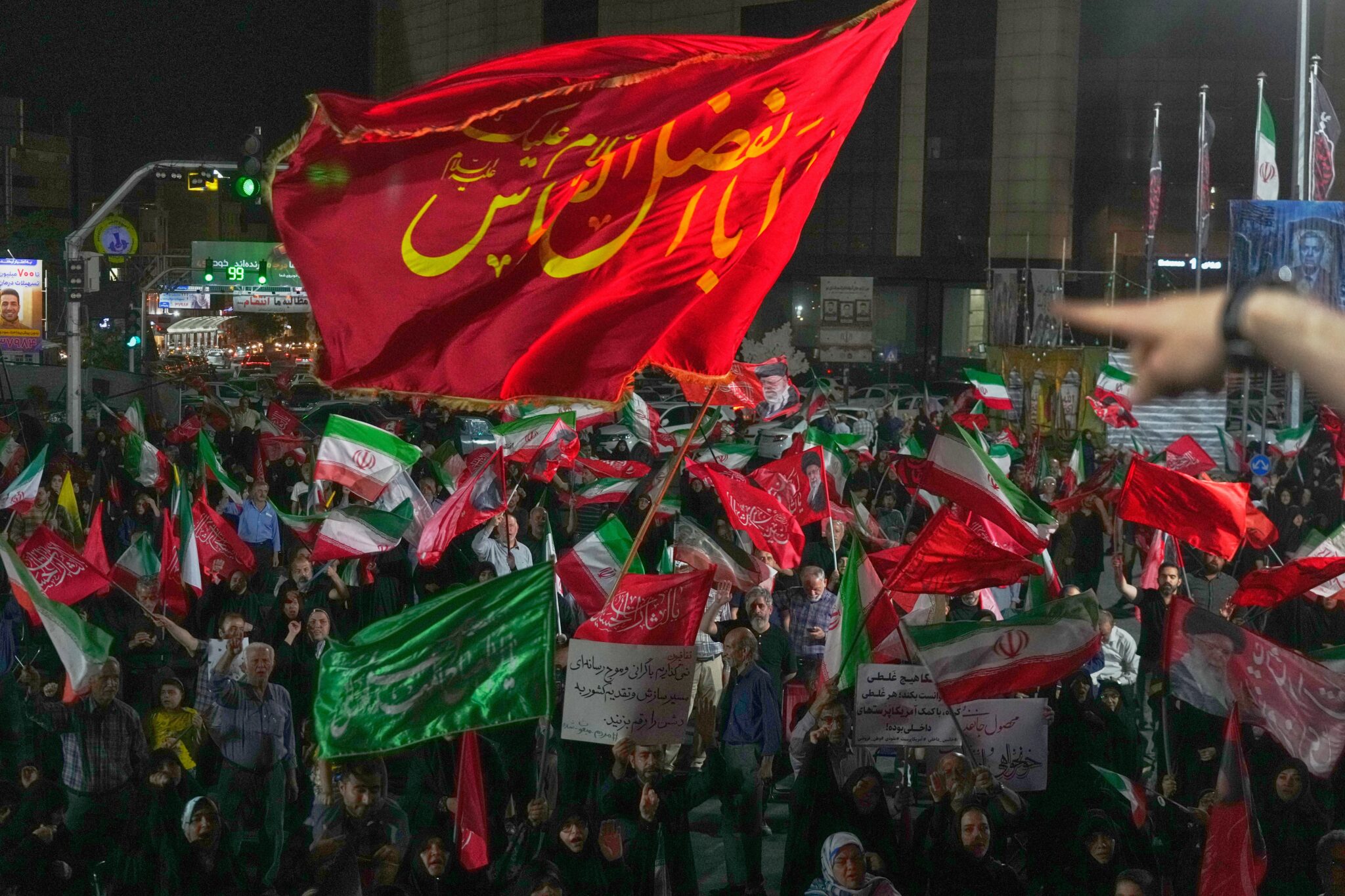
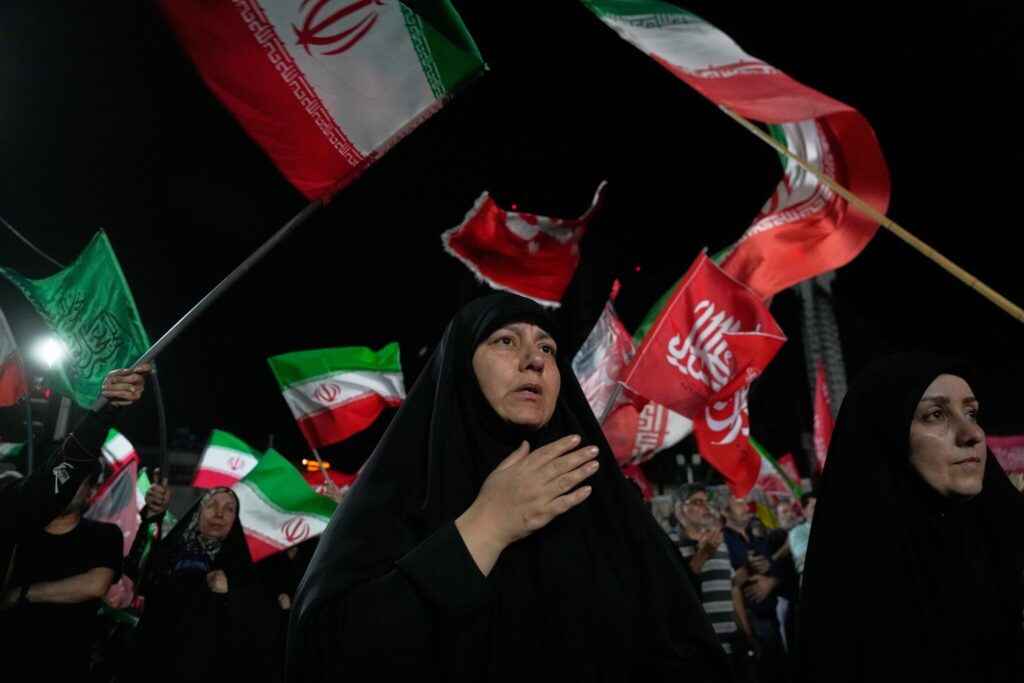
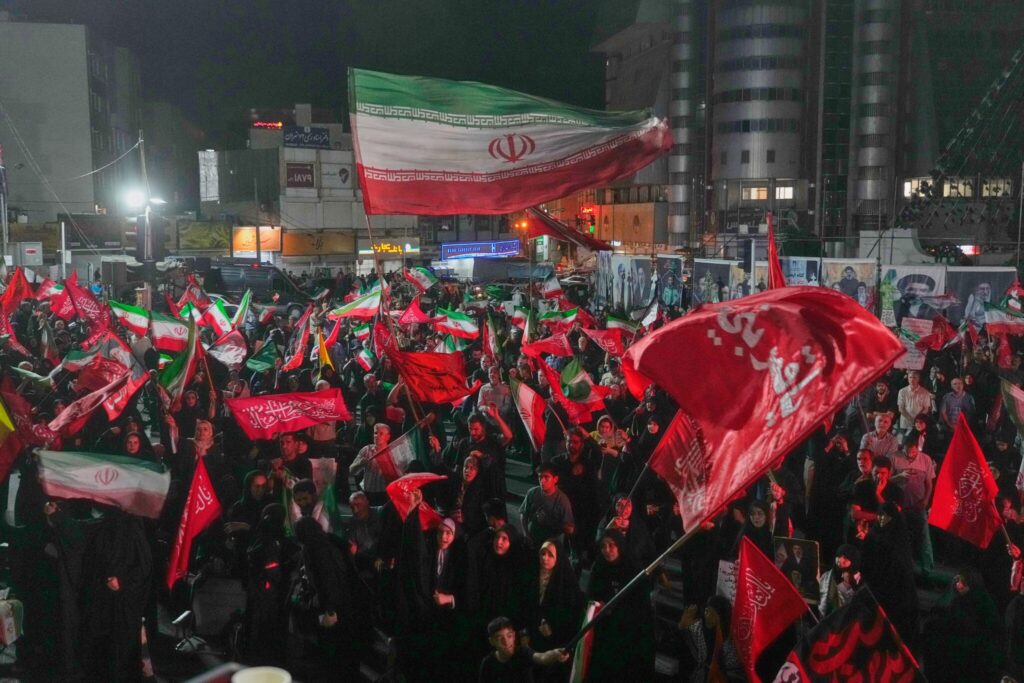
Pro-government demonstrators continued nightly protests in Tehran, which have taken place for more than 100 days.
US Military Reports 427 Wounded
American officials reported that 13 additional US service members had been injured since Monday.
The casualties included 10 Army soldiers and three Navy sailors. Officials did not provide further information about the incidents.
Since the war began, 14 American service members have been killed and 427 wounded.
Trump Says US Is ‘Winning Big’
President Donald Trump defended the military campaign during an address to the American public Thursday.
“We are likewise winning big in Iran, and you will see the fruits of that labor very, very shortly,” Trump said.
Before the war began, the United States had been negotiating with Iran over its nuclear program.
Trump now faces political pressure to bring the conflict to an end and avoid the kind of prolonged Middle Eastern war he previously promised to prevent.
Iran Seeks Control of Strait of Hormuz
Iran effectively closed the Strait of Hormuz to commercial shipping after the war began Feb. 28.
Tehran maintains that the strait should be under its exclusive control and that ships should pay fees to Iran.
The international community has long regarded the waterway as an international shipping route.
Its closure has given Iran leverage in negotiations while creating fears of global energy shortages.
US Targets Iran’s Leverage Over Shipping
Trump has renewed threats to strike Iranian power facilities and bridges to pressure Tehran into reopening the strait.
The United States also reimposed a naval blockade on Iranian ports to prevent Iran from exporting crude oil.
Only eight vessels crossed the Strait of Hormuz Thursday, the lowest daily total in three weeks, according to MarineTraffic.com.
The reduction in shipping contributed to oil prices rising above $86 per barrel Friday, near their highest level in a month.
Pipelines Cannot Replace Lost Tanker Traffic
Energy producers are transporting a growing share of regional oil and natural gas through pipelines to avoid the Strait of Hormuz.
Continued military escalation or damage to regional energy facilities could create additional pressure on oil supplies and global prices.




You must Register or Login to post a comment.