

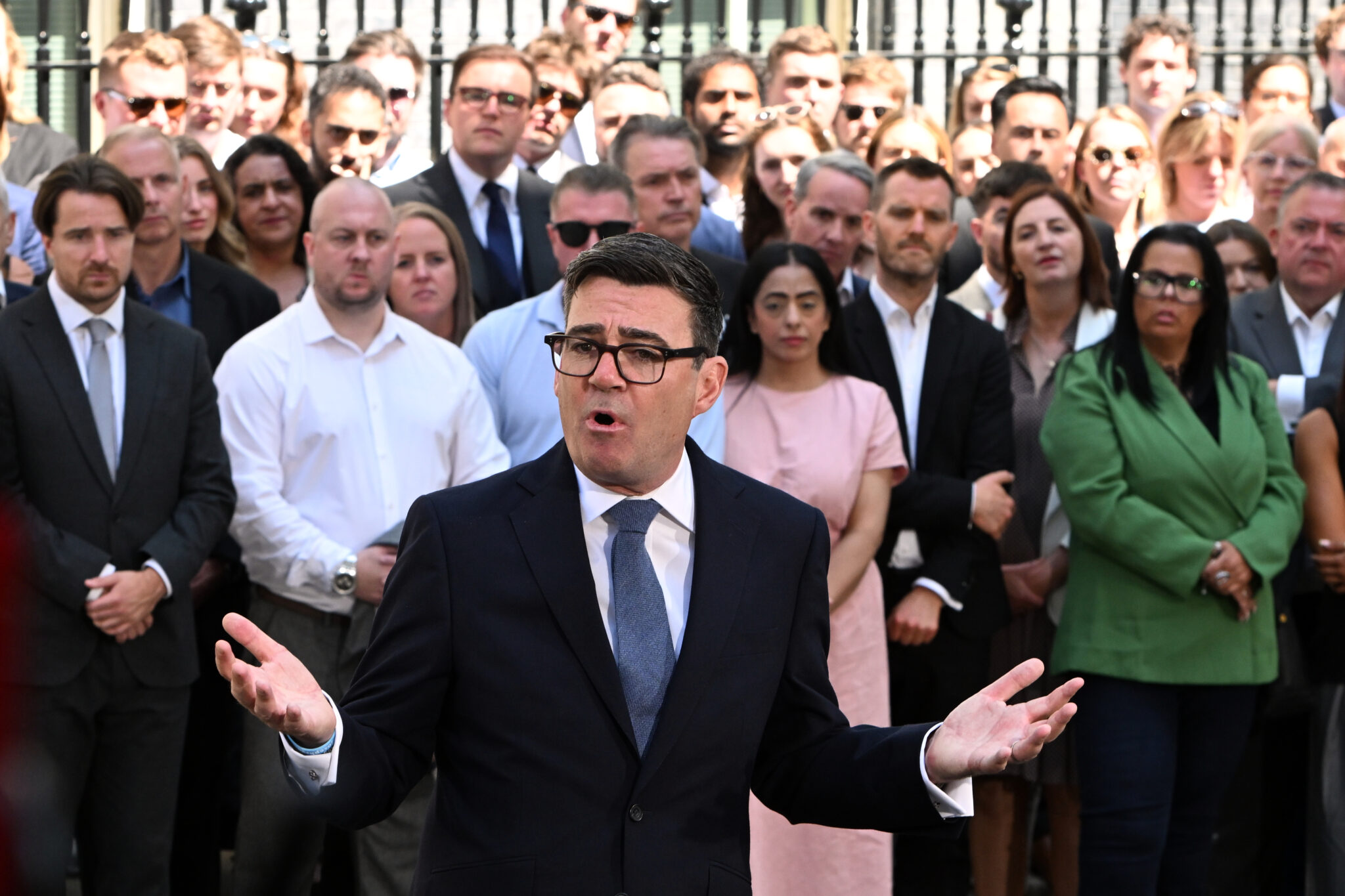
Andy Burnham Becomes UK Prime Minister After Keir Starmer Resigns/ Newslooks/ WASHINGTON/ J. Mansour/ Andy Burnham became Britain’s seventh prime minister since 2016 after King Charles III formally asked him to establish a government. Burnham replaced Keir Starmer, who resigned two years after leading the Labour Party to a landslide general election victory. The new prime minister promised to decentralize power, strengthen public control over essential services and introduce a less confrontational political style.
Quick Look
- Andy Burnham officially became UK prime minister Monday.
- King Charles III asked Burnham to form a government at Buckingham Palace.
- Burnham is Britain’s seventh prime minister since 2016.
- He replaced Keir Starmer as Labour leader Friday.
- Starmer resigned two years after winning a landslide election victory.
- Burnham was the only candidate in Labour’s leadership contest.
- He received nominations from 379 of Labour’s 403 members of Parliament.
- No general election was required for the leadership transition.
- Britain’s next national election is not required until 2029.
- Burnham promised to decentralize political power.
- He pledged to end street sleeping and strengthen public control over essential services.
- The new prime minister will present parts of a 10-year plan Tuesday.
- Burnham is expected to make significant changes to Starmer’s Cabinet.
- His government faces a sluggish economy, high living costs and overstretched public services.
- Migration and the wars in Ukraine and the Middle East are among his foreign-policy challenges.
Deep Look
Andy Burnham Becomes UK Prime Minister
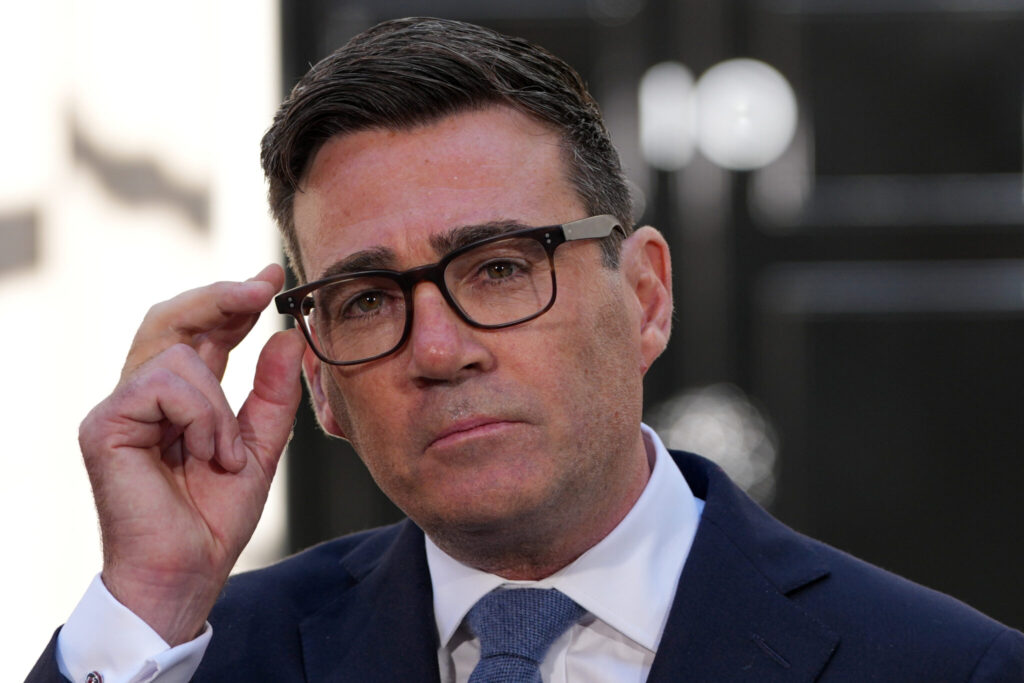
LONDON — Andy Burnham officially became the United Kingdom’s new prime minister Monday, acknowledging the political instability that made him the country’s seventh leader in slightly more than a decade.
Burnham used his first address as prime minister to promise a new political and economic direction based on decentralizing power, strengthening public services and improving cooperation across government.
He succeeded Keir Starmer, who resigned only two years after leading the center-left Labour Party to a decisive general election victory.
Burnham acknowledged that his position could be precarious after a succession of British leaders failed to remain in office for extended periods.
Burnham Promises Political ‘Circuit Breaker’
In his inaugural speech, Burnham promised a “circuit breaker” for a political and economic system he said had taken a series of wrong turns since the 1980s.
Successive governments privatized many public services during that period.
Burnham said his administration would return essential services to stronger public control in an effort to make them more affordable.
“We will change politics to make it more collaborative, more about problem-solving than point-scoring,” Burnham said. “We will take power out of here and carry it into every postcode in the land so that they can do more and in doing more, build a new economy where we put life’s essentials back under stronger public control to make them affordable to you again.”
He also pledged to end the practice of homeless people sleeping on Britain’s streets.
King Charles Asks Burnham to Form Government
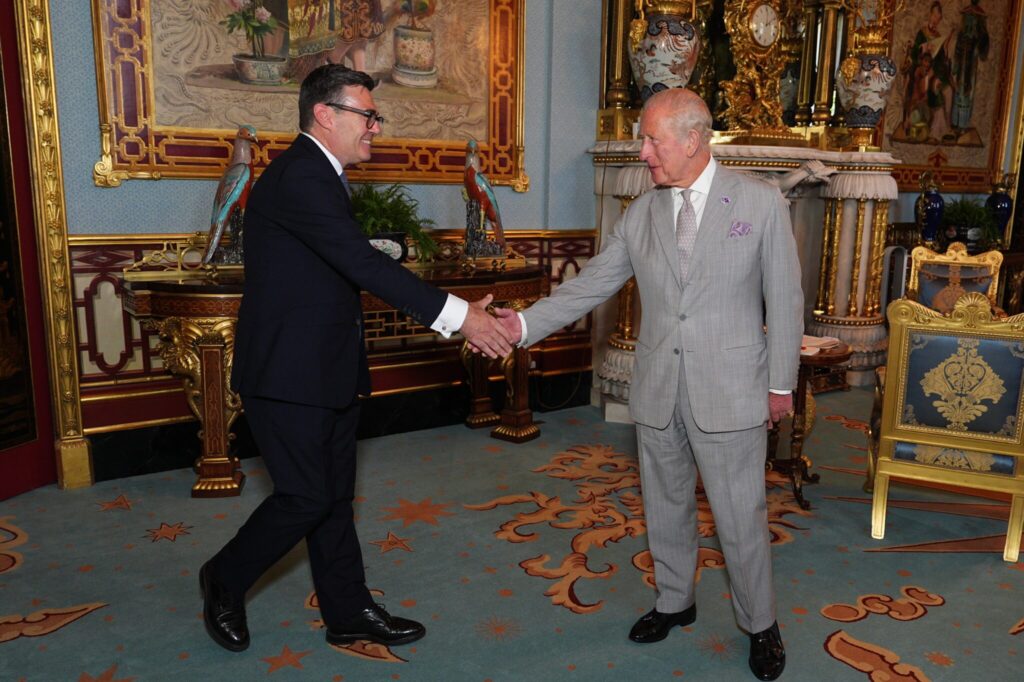
Burnham formally took office during a meeting with King Charles III at Buckingham Palace.
During the traditional ceremony, the monarch asked the Labour leader to form a new government.
Buckingham Palace released a photograph showing Burnham and the king shaking hands.
The ceremony is known as “kissing hands,” although it does not involve the incoming prime minister kissing the monarch’s hand.
The carefully organized transfer of power brought at least a temporary sense of stability following weeks of political uncertainty.
Burnham Acknowledges Leadership Turnover
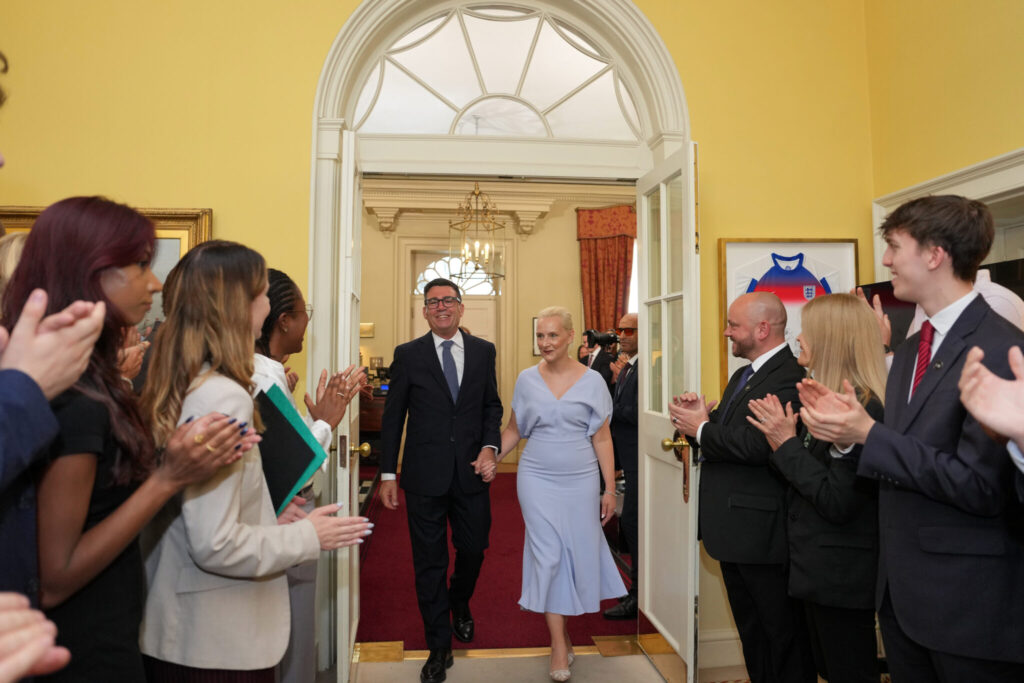
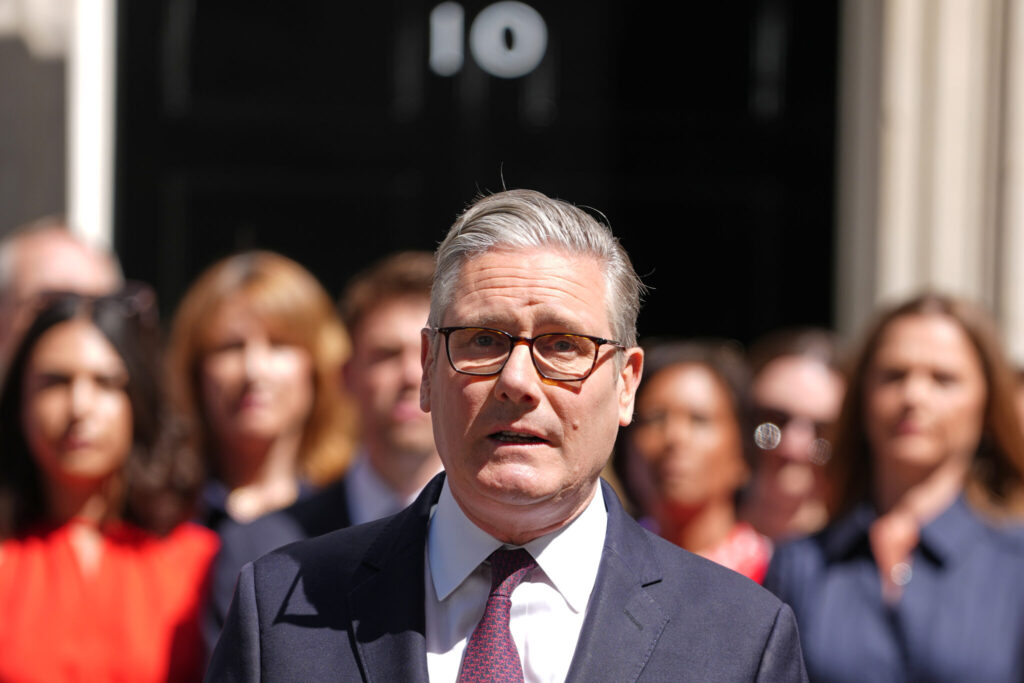
Burnham said he was “acutely conscious” that he was entering a political revolving door when he arrived at 10 Downing Street.
“This a moment for reflection and new resolution,” he said. “It requires my generation of politicians to raise our game and rise to the new challenge. Britain needs to show the world that we can regain our stability once again, and that is our challenge to make politics work, to make it work better.”
Burnham became Britain’s seventh prime minister since 2016 after replacing Starmer as Labour leader Friday.
The rapid turnover has included leaders from both the Conservative and Labour parties and reflects the instability that has characterized British politics during the past decade.
Starmer Says His ‘Work Is Done’
Just over an hour before Burnham spoke, Starmer delivered a brief farewell address from the same location outside the prime minister’s official residence.
“My work is done,” Starmer said.
The departing leader argued that the United Kingdom was “stronger and fairer than it was two years ago,” when he became prime minister.
“I go with good grace, I go with a smile and I go proud of everything that we have achieved,” Starmer said.
He then traveled to Buckingham Palace and submitted his resignation to King Charles.
The palace said it was an offer “His Majesty was graciously pleased to accept.”
Labour Changes Leaders Without Election
Britain’s parliamentary system allows a governing party to replace its leader—and therefore the prime minister—without holding a national election.
The next general election does not have to occur until 2029, although Burnham has the authority to call one earlier.
Burnham was the only candidate in the contest to replace Starmer as Labour leader.
He secured nominations from 379 of the party’s 403 lawmakers in the House of Commons, demonstrating overwhelming support within Labour’s parliamentary ranks.
Starmer Resigned After Political Missteps
Starmer announced in June that he would step down after a series of political missteps and errors in judgment damaged his standing with the public and members of his party.
He had taken control of Labour in 2020 following one of the party’s worst election defeats.
Starmer moved the party toward the political center and led it to a landslide general election victory in 2024.
His government, however, struggled with Britain’s economic and social challenges after entering office.
Burnham Faces Economic and Social Pressures
The new prime minister inherits many of the same problems that confronted his predecessor.
Britain’s economy remains sluggish, while households continue to face high living costs.
Public services are under intense strain, and the government faces pressure to address health care, housing, local government funding and transportation.
Migration remains a contentious political issue.
Burnham must also manage Britain’s international response to the wars in Ukraine and the Middle East.
New Leader Promises Less Toxic Politics
Before becoming prime minister, Burnham served as mayor of Greater Manchester.
He pledged during the Labour leadership process to make politics “less toxic,” improve living standards and “bring back the hope we have all been missing.”
Both supporters and critics will seek more specific information about how he intends to deliver those promises.
Burnham is expected to announce elements of a 10-year governing plan Tuesday.
Economic Growth Seen as Key Challenge
Joshi Herrmann, founder of the Manchester news organization The Mill, said Burnham’s agenda would depend heavily on his ability to strengthen Britain’s economy.
“Fundamentally, it only will work if you can generate significant economic growth, because it’s the lack of growth that’s really holding the country back,” Herrmann said.
Without stronger growth, Burnham could struggle to raise the money needed to improve public services or expand government control over essential sectors.
His government will need to balance its spending commitments against fiscal constraints and pressure to avoid higher taxes.
Cabinet Appointments Draw Attention
Attention is now shifting toward Burnham’s Cabinet selections.
He is expected to change key members of Starmer’s senior leadership team.
The most closely watched appointments will include the Treasury chief, foreign secretary and home secretary.
Those choices could signal the extent to which Burnham plans to depart from Starmer’s policies and political approach.
Burnham has praised his predecessor’s record and promised to “build on the foundation laid” by Starmer.
Starmer Defends His Government’s Record
During his final Prime Minister’s Questions session in Parliament, Starmer highlighted his government’s domestic and international achievements.
He defended Britain’s support for Ukraine and pointed to stronger workplace protections, reduced child poverty and increased defense spending.
Starmer also cited legislation intended to prevent public officials from concealing information following national tragedies.
“In six and a half years, I took our party from a historic defeat in 2019, changed it so it was fit to face the country and won a landslide general election victory in 2024,” Starmer said before leaving Downing Street with his wife, Victoria.
“Since then, it has been the privilege of my life to serve you and this great country as prime minister. I am confident that Britain is now stronger and fairer than it was two years ago.”




You must Register or Login to post a comment.