

US Launches 10th Night of Iran Strikes as Hormuz Crisis Deepens/ Newslooks/ WASHINGTON/ J. Mansour/ The US military launched its 10th consecutive night of strikes against Iran in an effort to reopen the Strait of Hormuz. Iran retaliated against Kuwait, Jordan and Bahrain as attacks threatened commercial shipping and pushed Brent crude above $88 per barrel. Iranian Interior Minister Eskandar Momeni traveled to Pakistan for mediation talks aimed at reviving the collapsed interim ceasefire.
Quick Look
- The United States carried out a 10th consecutive night of strikes against Iran.
- US Central Command said the attacks aimed to weaken Iran’s ability to target commercial shipping.
- American strikes hit command centers, air defenses, missile sites and maritime capabilities.
- Iran launched retaliatory attacks against Kuwait, Jordan and Bahrain.
- Jordan said it intercepted three Iranian missiles without casualties or damage.
- Bahrain accused Iran of targeting civilian air traffic systems.
- Two commercial ships were attacked in the Strait of Hormuz.
- One vessel was abandoned and remained burning near Oman.
- Iran’s Revolutionary Guard said it was targeting tankers in the strait.
- The Houthis announced a maritime embargo against Saudi Arabia.
- Brent crude traded above $88 per barrel Monday.
- Regular US gasoline returned to an average of $4 per gallon.
- Two US soldiers were killed in Jordan, and a third service member remained missing.
- Another American service member died in Iraq during the destruction of a downed Iranian drone.
- Seventeen US troops have been killed since the war began.
- Iran reported at least 50 deaths and 517 injuries from recent American attacks.
- Pakistan is attempting to revive the interim ceasefire.
Deep Look
US Launches 10th Night of Iran Strikes
DUBAI, United Arab Emirates — The United States carried out its 10th consecutive night of strikes against Iran as Washington intensified efforts to reopen the Strait of Hormuz.
The latest attacks followed the deaths of additional American service members and Iranian strikes against US allies Kuwait, Jordan and Bahrain.
Bahrain is home to the US Navy’s 5th Fleet, giving it a central role in American military operations across the Gulf.
US Central Command said the strikes “are designed to further degrade Iranian military capabilities used to attack commercial shipping” in the strait.
American Attacks Expand Across Iran
During the previous night of operations, US Central Command said its strikes targeted “Iranian military command centers, air defense and coastal surveillance sites, maritime capabilities, missile and drone launch sites and communications networks.”
American forces had previously attacked bridges and a surveillance tower at an Iranian port.
Iran’s state-run IRNA news agency said at least one person was killed in strikes near Tabriz, a city approximately 520 kilometers, or 325 miles, northwest of Tehran.
Tabriz is believed to contain underground missile bases operated by Iran’s paramilitary Revolutionary Guard.
Strikes Reported Across Several Provinces
IRNA reported likely US strikes against Bandar Imam Khomeini in Khuzestan province.
Other attacks were reported near Sirik and Jask in Hormozgan province and Konarak and Chahbahar in Sistan and Baluchistan province.
The locations include ports, coastal surveillance areas and infrastructure connected to Iran’s military operations around the Strait of Hormuz.
The expanding geographic reach indicates that the US campaign is targeting Iran’s ability to monitor and control maritime traffic.
Iran Retaliates Against US Allies
Iran responded by launching attacks toward several American allies in the Middle East.
Kuwait said its air defenses fired at an incoming barrage.
Jordan’s armed forces said Monday evening that they intercepted three Iranian missiles. Officials reported no casualties or material damage.
Iran did not immediately comment on the Jordanian interception.
Bahrain’s Foreign Ministry condemned Iranian drone strikes directed at the country’s air traffic systems, saying the attacks endangered civilian travelers.
Two Ships Attacked in Strait of Hormuz
The British military’s United Kingdom Maritime Trade Operations center reported that two commercial vessels had been attacked in the Strait of Hormuz.
One ship was struck Sunday off the coast of the United Arab Emirates.
Another vessel caught fire after being hit by a projectile near Oman’s coastline.
Its crew abandoned the ship, which remained adrift and burning hours later.
Iran Says It Is Targeting Tankers
The route nearest Oman is the corridor the US military has encouraged commercial vessels to use to avoid areas controlled by Iran.
Iran’s Revolutionary Guard later said it was targeting tankers traveling through the strait.
Shipping through the waterway has largely stopped as attacks continue.
The disruption threatens global energy markets because the Strait of Hormuz is a major route for oil and natural gas exports from the Persian Gulf.
Houthi Embargo Threatens Red Sea Route
Another threat to energy supplies emerged when Yemen’s Iran-backed Houthi rebels announced a maritime embargo against Saudi Arabia.
The group said it would block shipping between the Red Sea and the Gulf of Aden.
The Houthis described the action as retaliation for an attack on Sanaa International Airport that they blamed on Saudi Arabia.
Saudi officials did not immediately respond.
Saudi Oil Exports Face New Risk
Saudi Arabia has relied increasingly on a pipeline to transport millions of barrels of oil to the Red Sea while the Strait of Hormuz remains largely blocked.
A Houthi campaign against shipping could threaten that alternative export route.
The group previously attacked more than 100 vessels during its campaign over the Israel-Hamas war in Gaza.
Simultaneous disruptions in the Strait of Hormuz and Red Sea could further restrict regional energy exports.
US Reimposes Iranian Oil Blockade
President Donald Trump has threatened to strike Iranian bridges and power facilities to pressure Tehran into loosening its control of the strait.
Recent American attacks indicate that the military is carrying out parts of that strategy.
The United States also reimposed a naval blockade on Iranian ports to halt the country’s crude oil exports.
The US military said it had redirected seven vessels and disabled one since imposing the blockade.
Oil and Gasoline Prices Rise
The escalation has pushed oil prices higher during recent weeks.
Brent crude, the international benchmark, traded above $88 per barrel Monday.
The average price of regular gasoline in the United States returned to $4 per gallon.
Higher energy costs are placing pressure on American household budgets ahead of the fall midterm elections.
Continued disruption to Gulf shipping could raise prices further and contribute to broader inflation.
US Military Casualties Increase
The American military identified two soldiers killed in Jordan during Iranian missile and drone attacks.
A third service member remained missing following the attack.
Another American service member died Saturday in Iraq during the “controlled detonation” of a downed Iranian drone.
Trump warned Iran that “Every time Iran kills an American Soldier they will pay for that killing many times over!”
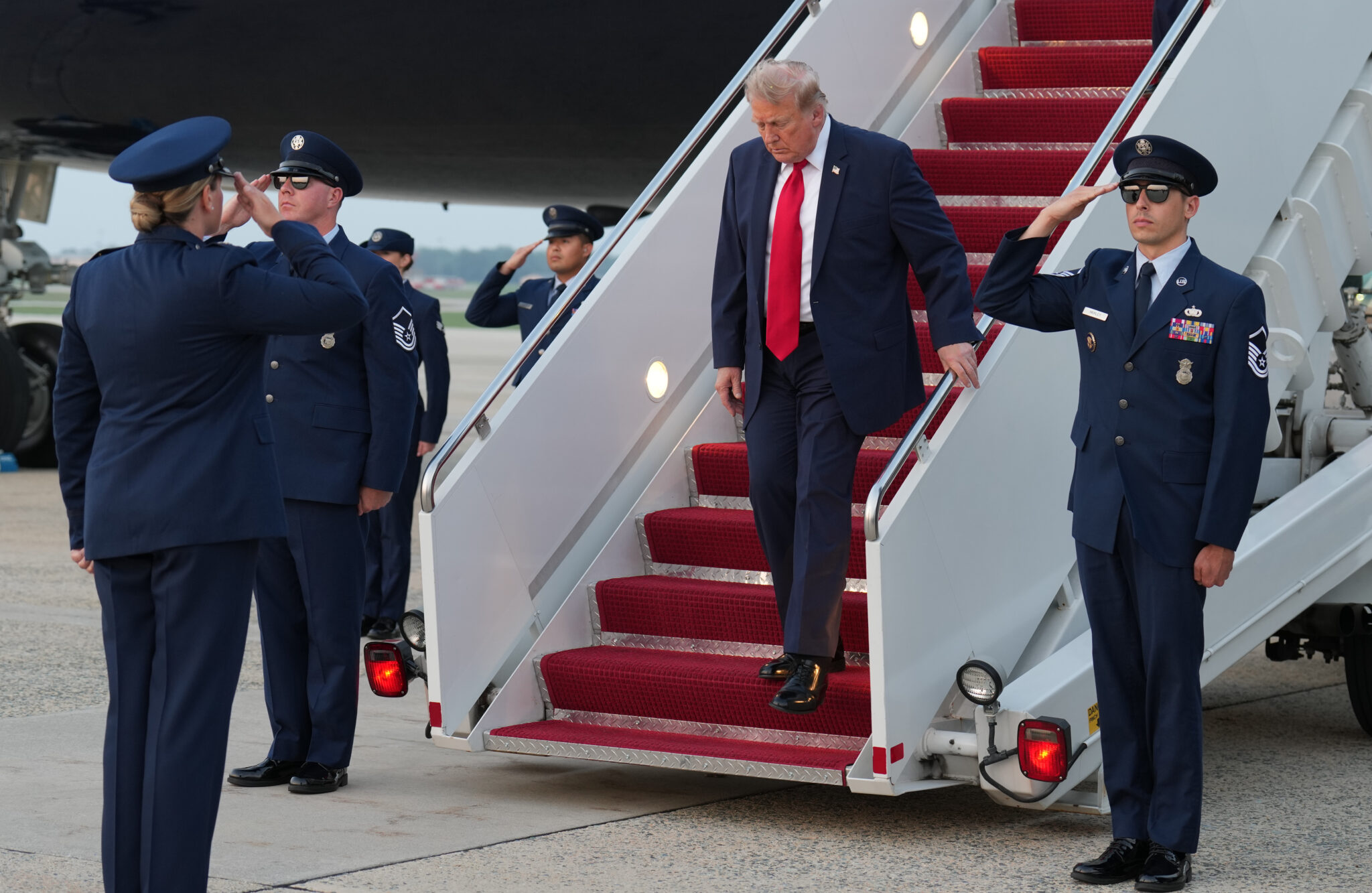
He was scheduled to attend a ceremony Tuesday evening at Dover Air Force Base, where the remains of at least one service member were expected to arrive.
Seventeen US Troops Killed
Seventeen American service members have died since the United States and Israel launched the war Feb. 28.
Iranian authorities said at least 50 people were killed and 517 wounded during the latest rounds of American strikes.
The reported Iranian casualty figures could not be independently verified.
The increasing military and civilian toll has intensified pressure on both sides to find a diplomatic path out of the conflict.
Iranian Minister Travels to Pakistan
Despite the expanding military campaign, Iran continued diplomatic contacts with Pakistan.
Iranian Interior Minister Eskandar Momeni arrived in Islamabad Monday for two days of talks with Prime Minister Shehbaz Sharif and other Pakistani officials.
Pakistan has become a key mediator in efforts to restore the interim ceasefire signed the previous month.
The agreement called for resolving remaining disputes within 60 days but collapsed after the United States and Iran resumed attacks against military positions and infrastructure.
Pakistan Expresses Hope for Progress
Pakistani Interior Minister Mohsin Naqvi expressed optimism about the talks with his Iranian counterpart.
“God willing, We will have good news,” Naqvi said.
Officials did not provide details about potential proposals or whether American representatives would participate indirectly.
The visit represented one of the few remaining diplomatic channels as the conflict approached a return to full-scale war.
Rubio Says Negotiations Must Be Real
Secretary of State Marco Rubio said Sunday that the United States remained willing to negotiate with Iran.
However, he said any potential talks “has to be real.”
“If the door opens to diplomacy — if the guys that want to do something productive for Iran win and take control of that system, or take control of the negotiations — that’ll be a very positive development,” Rubio said. “That’s not where we are tonight, unfortunately.”
His remarks left open the possibility of diplomacy while indicating that American military operations would continue.




You must Register or Login to post a comment.