

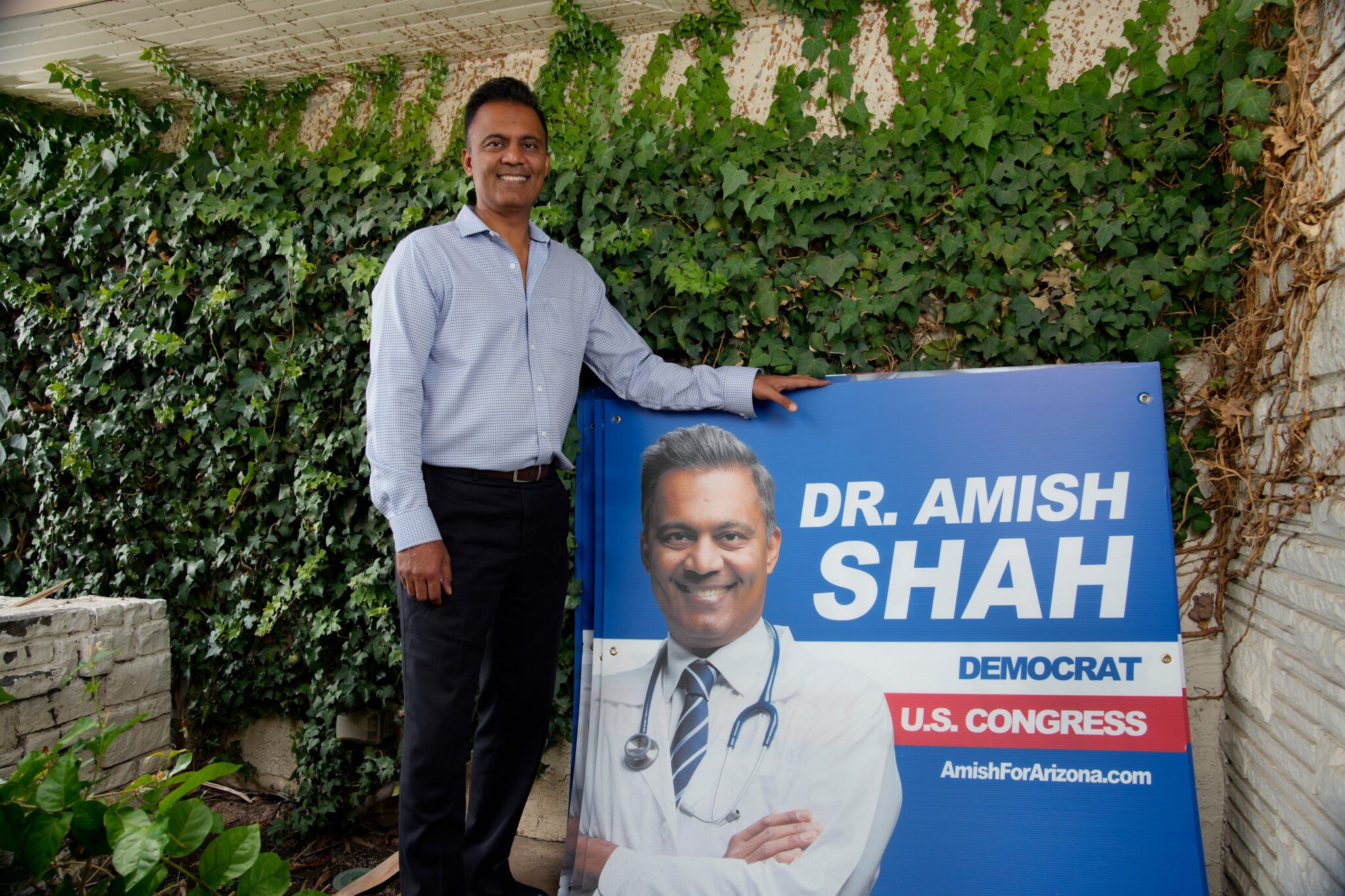
Amish Shah Wins Arizona Democratic Primary, Defying Party Establishment/ Newslooks/ WASHINGTON/ J. Mansour/ Emergency physician Amish Shah won the Democratic primary in Arizona’s competitive 1st Congressional District despite the national party’s support for Marlene Galán-Woods. Shah will face Republican nominee and former NFL kicker Jay Feely in a race expected to influence control of the U.S. House. The candidates previously worked together with the New York Jets, where Shah was a sideline physician and Feely was the team’s kicker.
Quick Look
- Amish Shah won the Democratic primary in Arizona’s 1st Congressional District.
- The Democratic Congressional Campaign Committee backed Marlene Galán-Woods.
- Shah and Galán-Woods are both considered politically moderate.
- Shah will face Republican Jay Feely in November.
- President Donald Trump endorsed Feely in the Republican primary.
- Shah and Feely worked with the New York Jets during the 2008 and 2009 seasons.
- The district includes Scottsdale, Fountain Hills, Paradise Valley and northeast Phoenix.
- Republicans hold a voter-registration advantage, but the district has moved toward the center.
- Trump narrowly carried the district in 2024, while Joe Biden won it in 2020.
- Shah was the Democratic nominee in 2024 but lost the general election.
- The result represents another primary defeat for a DCCC-backed candidate.
Deep Look
Shah Defeats DCCC-Backed Rival
PHOENIX — Emergency physician Amish Shah won the Democratic nomination Wednesday in Arizona’s highly competitive 1st Congressional District.
His victory represented another setback for the Democratic Congressional Campaign Committee, which supported former television journalist Marlene Galán-Woods.
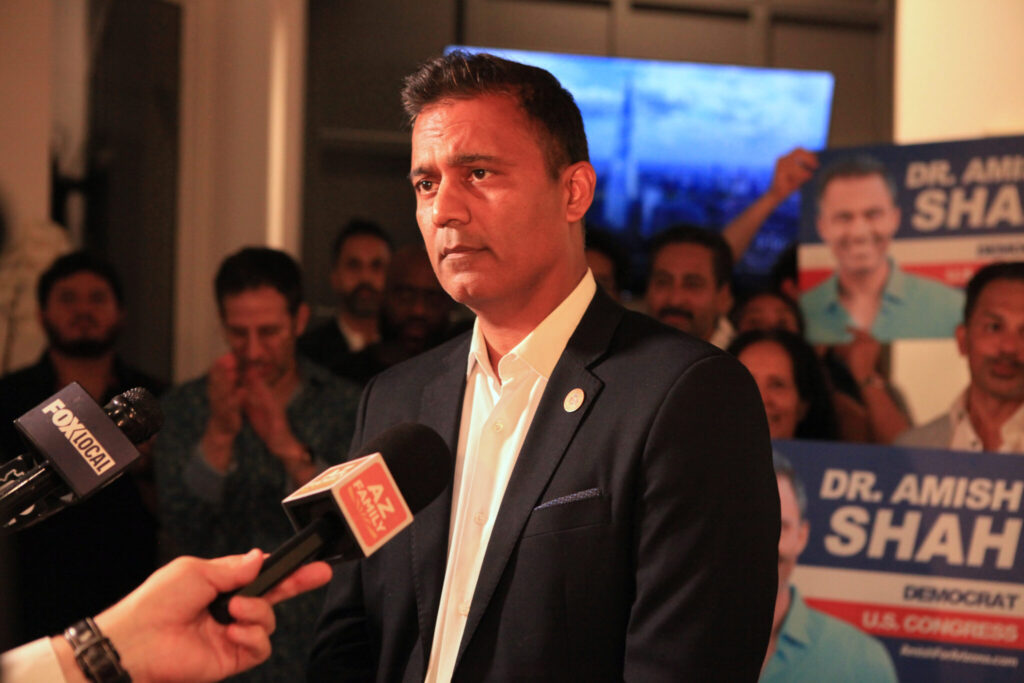
“Our victory in this primary was a grassroots victory where Arizona voters made their voices heard,” Shah said. “Now, it’s my job to earn the support of every voter in this district.”
Shah did not directly address the DCCC’s decision to support his opponent.
Shah Will Face Trump-Endorsed Jay Feely
Shah will compete in November against Republican nominee Jay Feely, a former NFL kicker and broadcaster endorsed by President Donald Trump.
Feely defeated former Arizona state lawmaker Joseph Chaplik in the Republican primary.
“I’m a political outsider committed to delivering results,” Feely said in a statement.
The general election is expected to be among the country’s most closely watched House contests because of its potential influence on control of Congress.
Former New York Jets Colleagues Become Rivals
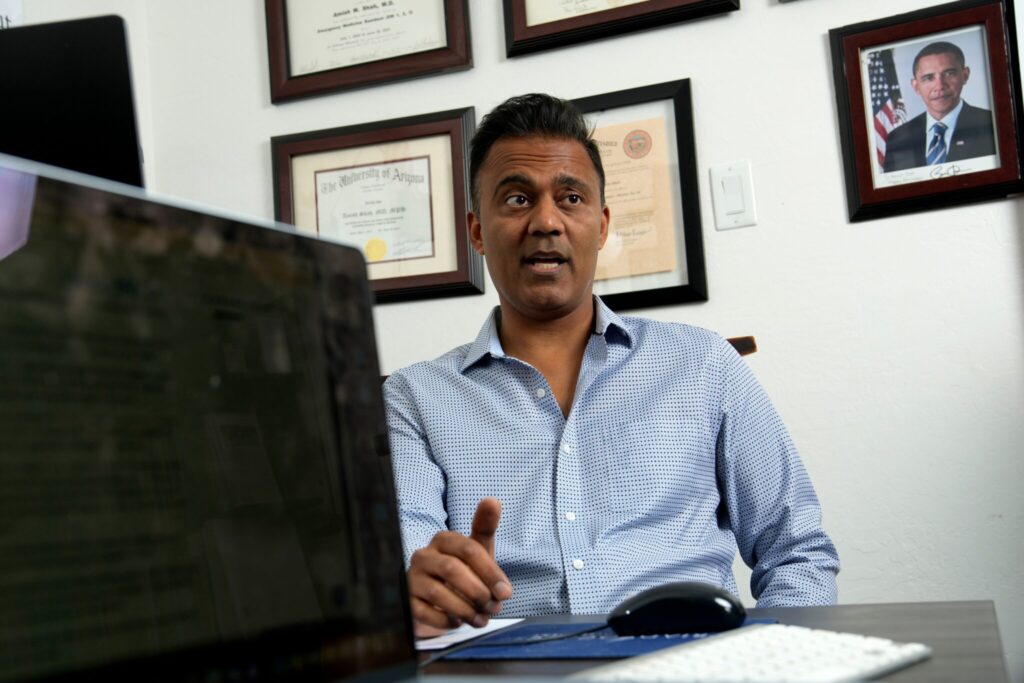
Before becoming political opponents, Shah and Feely worked for the New York Jets during the 2008 and 2009 NFL seasons.
Feely was the team’s kicker, while Shah served as an airway management physician during home games, according to Shah’s campaign.
NFL sideline medical teams use airway management physicians to intubate and resuscitate players who suffer catastrophic injuries.
“It’s an old relationship,” Feely said of Shah before the Democratic result was confirmed. “But whoever it is, I want to do this the right way. I want to run this the right way.”
Feely played for seven NFL teams during a 14-season career. He was with the Arizona Cardinals from 2010 through 2013 and became a broadcaster after retiring in 2014.
District Could Help Decide House Control
Arizona’s 1st Congressional District includes affluent communities in Scottsdale, Fountain Hills, Paradise Valley and northeast Phoenix.
Republicans maintain an advantage in voter registration, but the district has become more politically competitive over the past decade.
Trump carried it narrowly in the 2024 presidential election. Former President Joe Biden won the district in 2020, even as Republican Rep. David Schweikert retained the House seat.
The seat became open after Schweikert entered the Arizona governor’s race. He lost the Republican gubernatorial primary to Rep. Andy Biggs.
DCCC Endorsement Puzzled Local Democrats
The DCCC endorsed Galán-Woods in May as part of a group of candidates it considered competitive in Republican-held districts.
Galán-Woods was a Phoenix television journalist and a former Republican who changed parties near the beginning of Trump’s first term.
Some Arizona Democrats questioned the endorsement because Galán-Woods and Shah hold broadly similar moderate political positions.
Their contest did not reflect the wider ideological conflict between Democratic progressives and centrists.
DCCC Chair Suzan DelBene previously emphasized Galán-Woods’ journalism background but did not discuss Shah when announcing the endorsement.
National Democrats Back Shah After His Win
After the primary, DelBene issued a statement supporting Shah in the general election.
She called Feely an “extremist” and said Shah “will always put his community first.”
Her statement did not discuss the DCCC’s intervention on behalf of Galán-Woods.
Shah has said he would work with the committee if he became the nominee. He will likely need the DCCC’s fundraising network, staff and allied donors in the competitive general election.
Republicans Quickly Attack Shah
The National Republican Congressional Committee released a digital advertisement attacking Shah soon after his victory.
The ad labeled him a socialist and sought to associate him with progressive Democratic members of Congress.
Shah and Galán-Woods, however, were largely aligned ideologically during the primary, and Shah has generally been viewed as a moderate.
Race Repeats Elements of 2024 Campaign
Shah also won the Democratic nomination in 2024 after narrowly defeating several candidates, including Galán-Woods.
He then lost the general election to Schweikert.
The DCCC remained neutral during that year’s primary but supported Shah after he secured the nomination.
This year, the committee intervened earlier by endorsing Galán-Woods, creating tension among some local voters and activists.
“I wasn’t exactly my party’s pick,” Shah told supporters. “And I was willing to stand up to that establishment. And that’s what the voters of this district want.”
Party-Endorsed Candidates Face Resistance
Shah’s victory follows other defeats for candidates supported by the Democratic establishment.
Progressive Randy Villegas defeated a DCCC-backed opponent in a competitive California Central Valley district. In Maine, Matt Dunlap defeated a more moderate candidate supported by party leaders.
The results have intensified concerns among Democratic congressional officials about growing antiestablishment sentiment.
Party leaders worry that some insurgent candidates could be viewed as too ideologically extreme by swing voters, potentially reducing Democrats’ ability to benefit from Trump’s unpopularity.
Shah’s race differs because the main Democratic candidates were both moderates.
Establishment Support Can Bring Benefits and Risks
DCCC support usually provides candidates with additional funding, campaign staff and access to donors and political organizations.
However, an endorsement from national party leaders can also alienate voters who prefer locally supported or antiestablishment candidates.
“The Democratic Party needs to grow up and wake up,” said Maria Liong, a medical student who volunteered for Shah. “They need to realize that they want candidates who listen to their people.”
Shah must now unite Democrats and attract independent and crossover voters in a district where both parties have demonstrated an ability to win.


You must Register or Login to post a comment.