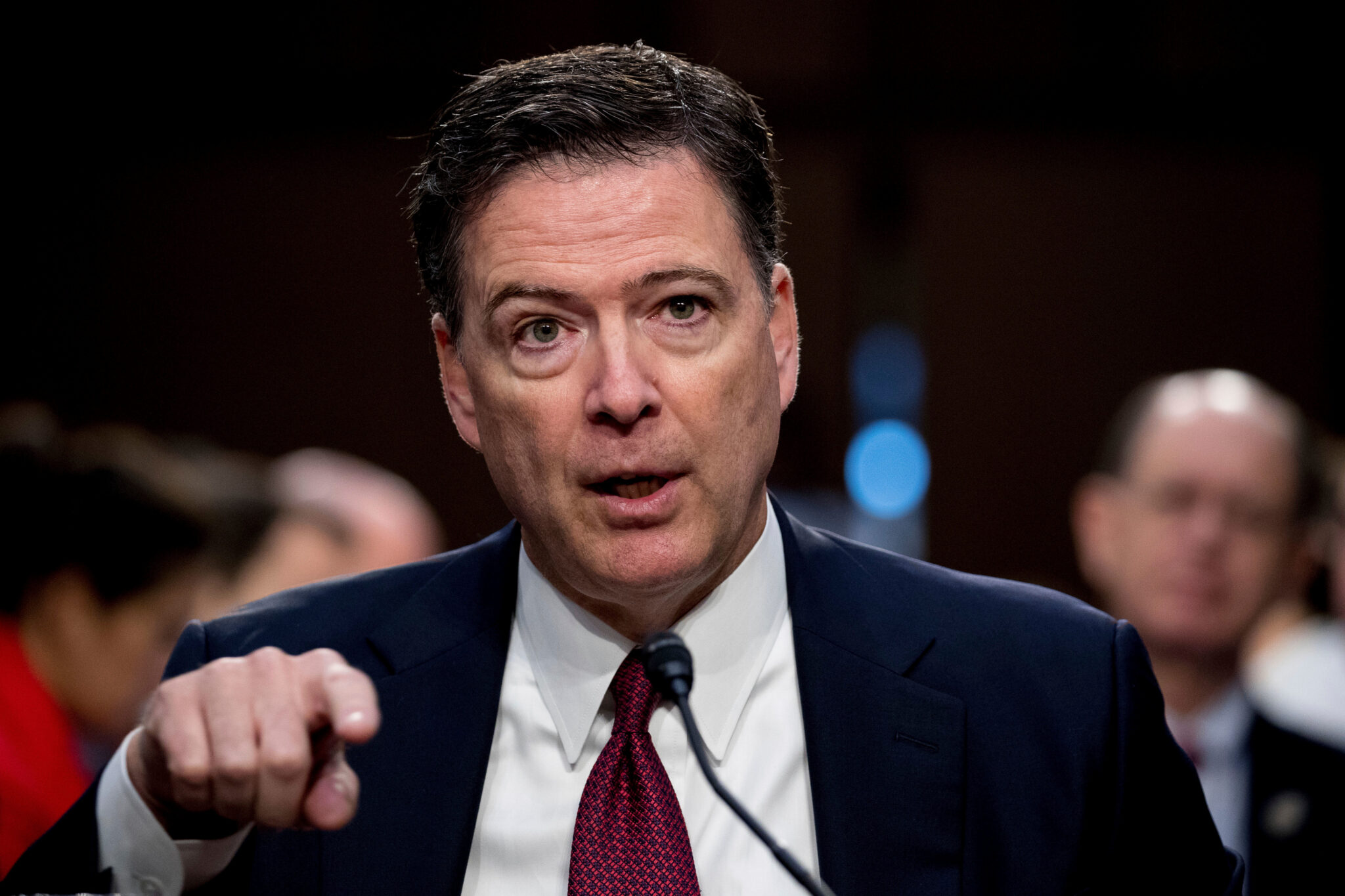
DOJ Indicts James Comey Again in Trump Threat Probe Over ‘8647’ Shell Photo/ Newslooks/ WASHINGTON/ J. Mansour/ Morning Edition/ Former FBI Director James Comey has been indicted again by the Justice Department over his controversial “8647” seashell Instagram post. Federal officials argue the post was interpreted as a threat against President Donald Trump, while Comey insists he did not intend violence. The new indictment marks the second prosecution attempt against Comey by the Trump administration.
James Comey Indictment Quick Looks
- DOJ indicts James Comey for second time
- Case centers on “8647” shell photo post
- Republicans viewed post as threat to Trump
- Comey says he did not intend violence
- Secret Service questioned Comey after post
- Trump allies pushed for criminal charges
- Previous DOJ case against Comey was dismissed
- New case reflects renewed Justice Department effort
Deep Look
James Comey Indicted Again in New Justice Department Case
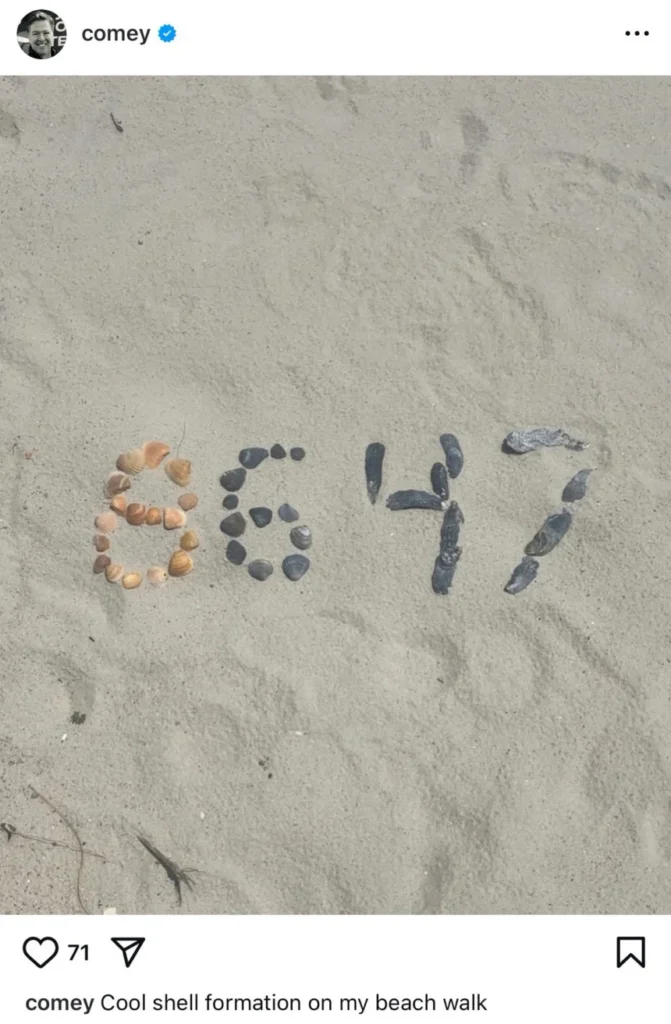
Former FBI Director James Comey has been indicted for a second time by the Justice Department, this time over a controversial Instagram post involving seashells arranged to display the numbers “8647.”
Federal officials say the image was interpreted as a threat against President Donald Trump and have moved forward with criminal charges following months of political backlash and federal investigation.
The new indictment reflects a renewed effort by the Trump administration to prosecute one of the president’s most outspoken critics and longtime political rivals.
According to multiple reports, prosecutors believe the post crossed a legal line by implying violence toward the president, even though Comey has publicly denied any such intent.
The “8647” Shell Photo That Triggered the Case
The controversy began last May when Comey shared a now-deleted Instagram photo showing seashells arranged on a beach to form the numbers “86 47.”
He captioned the post:
“Cool shell formation on my beach walk.”
The image immediately drew fierce criticism from Republicans and Trump administration officials.
Critics argued that “86” is common slang for eliminating, removing, or “getting rid of” someone, while “47” referred to Trump’s current position as the 47th president of the United States.
Together, many interpreted “8647” as a coded call for violence against Trump.
The backlash escalated quickly across conservative media and within federal agencies.
Republicans and Trump Officials Reacted Immediately
The reaction from Republican leaders was swift and aggressive.
Then-Department of Homeland Security Secretary Kristi Noem announced that the Secret Service would investigate what she described as a possible call “for the assassination” of Trump.
Director of National Intelligence Tulsi Gabbard also weighed in publicly, saying Comey should be “put behind bars” and expressing concern for Trump’s safety.
The criticism turned the Instagram post into a national political issue almost instantly.
For many Trump allies, the post was not seen as careless symbolism—it was treated as a direct threat.
Secret Service Interviewed Comey
Following the uproar, the U.S. Secret Service brought Comey in for an extended interview in Washington.
This was considered unusual, particularly because the post itself did not contain a direct written threat.
During questioning, Comey reportedly told investigators he encountered the shells during a beach walk in North Carolina and believed they represented a general political message rather than a violent statement.
He later deleted the post and issued a public explanation.
“I didn’t realize some folks associate those numbers with violence,” Comey wrote.
“It never occurred to me, but I oppose violence of any kind so I took the post down.”
His statement attempted to clarify intent, but it did little to calm political anger from Trump supporters.
Legal Experts Question Strength of the Case
Despite the indictment, many legal experts have questioned whether prosecutors can successfully prove criminal intent.
Free speech protections under the First Amendment create major legal hurdles in cases involving ambiguous political expression, especially when no explicit threat is made.
Several legal analysts have argued that proving Comey intended to threaten Trump could be extremely difficult.
Security experts have also noted that the Secret Service’s decision to conduct a lengthy interview was unusual for a vague, non-specific social media post.
CNN previously reported that some legal professionals viewed the case as potentially weak and difficult to sustain in court.
Still, the Justice Department has chosen to move forward.
This Is Comey’s Second Indictment
This is not the first time the Trump administration has pursued criminal charges against Comey.
In September of last year, the Justice Department charged him with allegedly lying to Congress over media leaks.
That earlier prosecution was later dismissed by a federal judge after the court found that the interim U.S. attorney handling the case had been improperly appointed without Senate confirmation.
The dismissal was a major legal setback for the administration.
Now, prosecutors have returned with a different case and a different legal strategy.
This second indictment signals that Trump’s Justice Department remains determined to pursue criminal accountability against the former FBI chief.
Trump and Comey’s Long Political War
The legal battle is rooted in a much deeper political conflict.
Comey became one of Trump’s most controversial adversaries after the FBI investigated Russian interference in the 2016 election and potential ties between Trump’s campaign and Moscow.
Trump fired Comey in 2017 during the early months of his presidency, a move that triggered enormous political fallout and eventually helped lead to the appointment of Special Counsel Robert Mueller.
Since then, Comey has become one of Trump’s most visible critics, frequently speaking publicly against the president and warning about threats to democratic institutions.
To many Republicans, however, Comey symbolizes what they call the “weaponization” of federal law enforcement against conservatives.
Trump has repeatedly argued that Comey should face criminal consequences.
Acting Attorney General Todd Blanche Revives the Push
The latest indictment appears to reflect the influence of Acting Attorney General Todd Blanche, who has accelerated several high-profile cases tied to Trump’s political priorities.
Blanche has reportedly pushed forward investigations involving former officials and perceived political opponents, signaling a more aggressive posture inside the Justice Department.
Comey’s case fits directly into that broader effort.
The administration sees it not only as a criminal prosecution, but as part of a larger attempt to challenge what Trump supporters believe was politically motivated law enforcement during his first term.
Comey’s Future Legal Fight
Comey’s attorneys have declined public comment on the latest indictment.
The coming legal battle will likely center on intent—whether the government can prove the Instagram post was a genuine threat rather than political symbolism or careless expression.
That distinction will be critical.
The prosecution may also face broader questions about selective enforcement and political motivation, given Trump’s long-standing public attacks on Comey.
Regardless of the outcome, the case guarantees another major courtroom fight involving one of the most polarizing relationships in modern American politics.
A Symbolic Case With National Implications
This indictment is about more than a beach photo.
It represents the continued collision between Trump and one of the most prominent law enforcement figures of the last decade.
For Trump supporters, it may be seen as overdue accountability.
For critics, it raises serious concerns about political retaliation and the criminalization of speech.
Either way, the “8647” case has now become far larger than a social media post.
It is another chapter in one of Washington’s longest-running political feuds.