

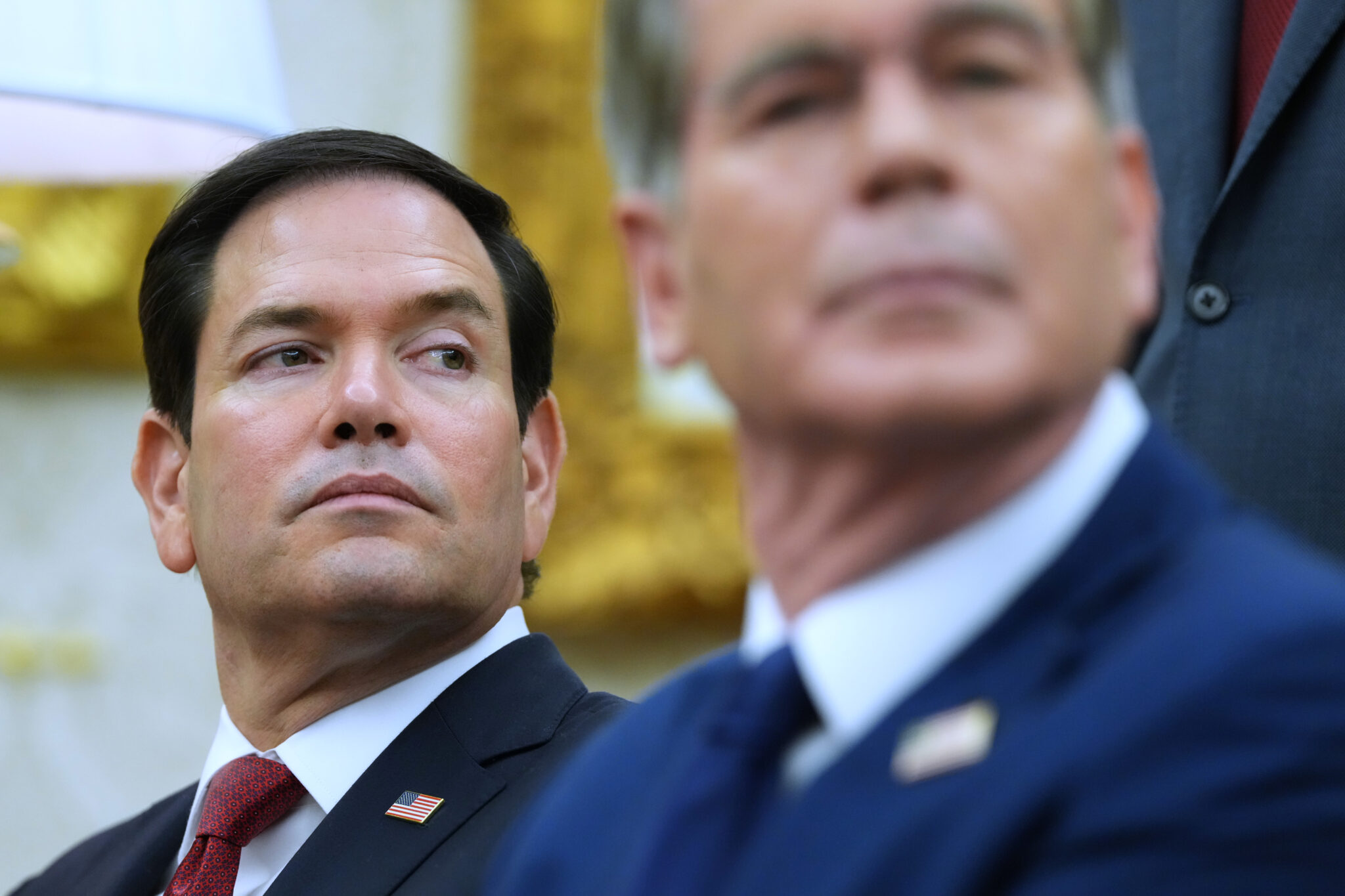
Rubio Hosts Global Summit on Left-Wing Political Violence? Newslooks/ WASHINGTON/ J. Mansour/ Secretary of State Marco Rubio convened representatives from more than 60 countries to discuss what the Trump administration describes as a growing threat from left-wing political violence. The initiative comes as Republicans make concerns about communism, Marxism and political extremism a central theme ahead of the midterm elections. Available research shows recent left-wing incidents increased from historically low levels, while far-right violence has generally remained more prevalent over the longer term.
Rubio Left-Wing Political Violence Quick Looks
- Rubio hosted officials from more than 60 countries.
- The conference focused on left-wing political violence and terrorism.
- Most participating officials came from Europe and Latin America.
- Republicans are emphasizing the issue before November’s midterms.
- Rubio called left-wing terrorism a counterterrorism “blind spot.”
- Research shows relatively few left-wing attacks in the United States.
- Far-right violence has historically occurred more frequently.
- Stephen Miller called for an urgent response to perceived threats.
- Trump officials frequently link democratic socialism with communism.
- Treasury officials discussed targeting extremist financial networks.
- The State Department previously designated four European antifa groups as terrorist organizations.
- Researchers urged authorities to confront political violence across the ideological spectrum.
Rubio Hosts Global Summit on Left-Wing Political Violence
Trump Administration Elevates Political Violence Issue
Secretary of State Marco Rubio gathered officials from more than 60 countries Thursday for an international conference focused on what the Trump administration calls the growing threat of left-wing political terrorism.
The meeting represented the administration’s latest effort to make political violence associated with the left a major national security and election issue.
Republican leaders have increasingly warned about communists, Marxists, democratic socialists and anti-fascist organizations as the party campaigns to retain control of Congress in November’s midterm elections.
The conference drew officials primarily from European and Latin American nations.
Rubio urged participating governments to cooperate more closely on intelligence, financing and counterterrorism strategies aimed at politically motivated violence.
Rubio Calls Issue a Counterterrorism Blind Spot
Rubio argued that governments and institutions have sometimes minimized violence when it was associated with left-wing political causes.
He described the issue as a significant gap in international counterterrorism policy.
“So many people in positions of power have repeatedly dismissed acts of violence and even terrorism as legitimate forms of political expression, so long as they served a left-wing cause,” Rubio said in opening remarks. “A bomb planted by a neo-Nazi group was ‘a nefarious and murderous act of evil.’ It is, but a bomb planted by a Marxist revolutionary; well, that’s just merely a tragic excess of idealism.”
The secretary of state called on officials to apply consistent standards to extremist violence regardless of the ideology claimed by those responsible.
Administration officials presented the conference as an attempt to address an “alarming rise” in attacks connected to left-wing movements.
Research Shows a More Complicated Picture
Available data presents a more nuanced view of political terrorism in the United States.
A Center for Strategic and International Studies report published last year found that the number of identified left-wing attacks had surpassed incidents from the far right as of July 4, 2025.
However, the shift occurred partly because left-wing incidents rose from an extremely low historical baseline while far-right attacks declined sharply during the same period.
From 1994 through 2000, researchers recorded an annual average of 0.6 left-wing incidents, compared with 20.6 incidents linked to the right.
Between 2016 and 2024, the annual average increased to four incidents on the left and 22.7 on the right.
By early July 2025, researchers had identified five left-wing incidents and one far-right incident.
The report cautioned that right-wing terrorism could rise again and stressed that political violence should be confronted across ideological lines.
Republicans Make Communism a Midterm Theme
President Donald Trump and senior Republican officials have increasingly portrayed the political left as a threat to American institutions and culture.
Trump has accused prominent Democrats and progressive candidates of embracing communist policies and attempting to “completely destroy the traditional American way of life.”
He has also alleged that figures on the far left support political assassination and other forms of violence.
Vice President JD Vance has described communism as a political development that is “something we haven’t seen in the U.S.”
House Speaker Mike Johnson has similarly warned about “radical candidates” who are “self-described, self-identifying Marxists.”
The language has become more prominent as Republicans seek to mobilize voters concerned about public safety, political unrest and ideological change.
Rubio Connects Concerns to Cuban Heritage
Rubio’s views on communism and political extremism have long been influenced by his family history.
He is the son of Cuban immigrants who arrived in Miami in May 1956, several years before Fidel Castro’s communist government took power.
The former Florida senator argued that the Cuban government helped establish ideological and intelligence networks that supported left-wing movements throughout the Western Hemisphere.
He said Thursday that Cuba’s government “helped to build the far left in our country and in our hemisphere.”
Rubio has frequently cited the experiences of Cuban exiles when criticizing socialism and communism in the United States and Latin America.
Stephen Miller Warns of Immediate Threat
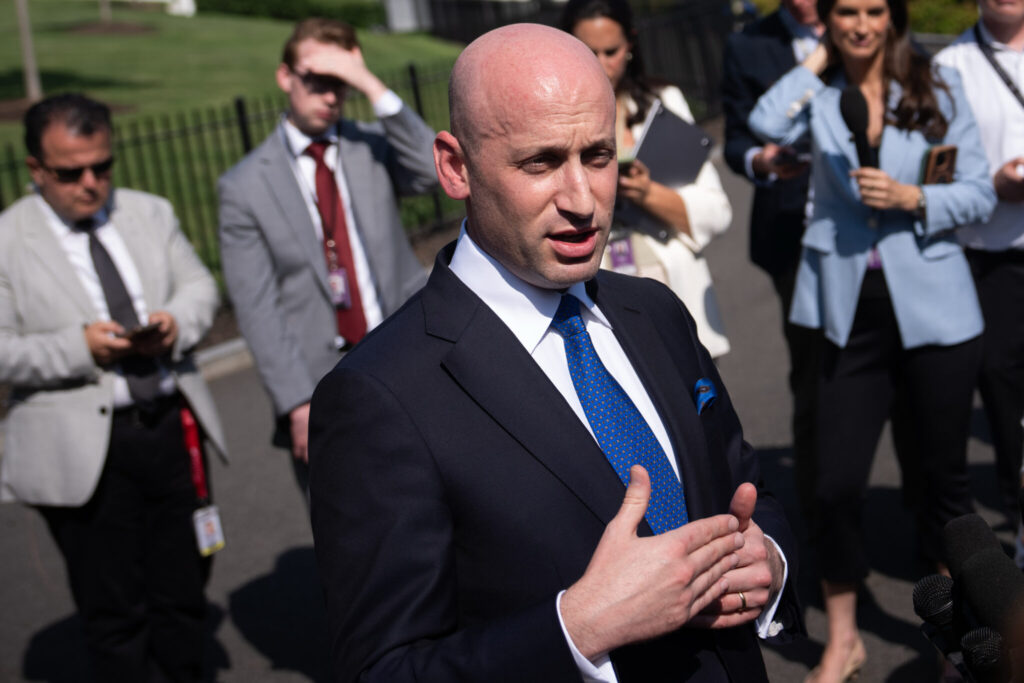
Stephen Miller, Trump’s deputy chief of staff and a principal architect of the administration’s immigration agenda, also addressed the conference.
Miller portrayed the perceived rise of left-wing extremism as an urgent threat to Western civilization and national institutions.
“If your civilization is your home, you must defend it with the same passion and force as if an enemy intruder is inside your own house where your family lives,” Miller said. “That is the level of dedication and urgency that is required.”
His remarks reflected the administration’s broader framing of ideological conflict as a struggle over national identity, border security, public order and cultural survival.
Democratic Socialism and Communism Frequently Blurred
The administration’s rhetoric has often grouped democratic socialism together with communism and revolutionary Marxism.
The ideologies differ substantially.
Democratic socialists generally advocate policies such as universal healthcare, stronger labor protections, higher taxes on wealthy individuals and corporations, and stricter regulation of private industry.
Communist systems traditionally seek widespread public ownership of major industries and the elimination or severe restriction of private property.
Critics of the administration argue that treating those ideologies as interchangeable distorts political debate and can label nonviolent policy positions as extremist threats.
Supporters say progressive economic proposals can create a pathway toward broader government control.
New York Election Results Intensify Focus
The ideological focus intensified following the election of democratic socialist Zohran Mamdani as mayor of New York City.
Several candidates aligned with Mamdani also won Democratic congressional primaries in the city, defeating incumbents and expanding the influence of the party’s left wing.
Republicans have used those victories to argue that socialism is becoming more powerful within the Democratic Party.
The developments have given Trump and his allies additional examples to cite while warning voters about the direction of progressive politics.
Administration Uses Terrorism Designations and Sanctions
The Trump administration has begun applying national security tools to organizations it identifies as connected to left-wing extremism.
In November, the State Department designated four European antifa, or anti-fascist, groups as foreign terrorist organizations.
The designation allows the U.S. government to impose financial restrictions and penalties on people or institutions providing support to the targeted groups.
Treasury Secretary Scott Bessent told the conference that disrupting financial networks would be one of the administration’s primary strategies.
“We have spent decades developing the world’s most sophisticated financial counterterrorism capabilities, and now we are mobilizing some of the same tools that we have deployed against terrorists abroad to confront this emerging threat here at home,” he said.
Financial Networks Become Enforcement Priority
Treasury officials said financial tracking can help governments identify donors, intermediaries and organizations that provide material support for politically motivated violence.
The United States has developed extensive financial counterterrorism capabilities since the Sept. 11, 2001, attacks.
Those tools include sanctions, asset freezes, banking restrictions and international intelligence sharing.
Applying them to politically motivated groups inside allied countries could raise legal and civil liberties questions, particularly when movements include both peaceful activists and individuals accused of violence.
Officials did not provide detailed criteria Thursday for distinguishing between protected political activity and conduct that could trigger sanctions or terrorism designations.
Critics Question Scale of the Threat
Critics of the administration’s initiative argue that its language exaggerates the scale of left-wing violence while minimizing the longer historical record of attacks linked to far-right movements.
Studies have consistently shown that violent incidents can emerge from multiple ideological sources, including white supremacy, anti-government extremism, religious extremism, revolutionary politics and issue-based movements.
Researchers caution that annual numbers can fluctuate sharply because the overall number of terrorist incidents in the United States is relatively small.
A handful of cases can therefore produce dramatic percentage increases without representing a broad wave of violence.
Election Politics Surround the Initiative
The timing of the conference places it firmly within the political environment surrounding the 2026 midterm elections.
Republicans are campaigning on public safety, immigration, national security and opposition to socialism as they seek to defend narrow congressional majorities.
Democrats are likely to accuse the administration of using national security agencies to target political opponents or stigmatize lawful progressive activism.
The issue could become even more prominent as Trump, Rubio, Vance and congressional Republicans continue presenting left-wing extremism as a defining threat.
Broader Debate Over Political Violence Continues
Rubio’s summit highlights the growing debate over how governments should identify and respond to ideological violence without criminalizing legitimate political expression.
The Trump administration argues that left-wing terrorism has been overlooked and requires greater international coordination.
Researchers emphasize that recent increases began from historically low levels and that far-right violence has been more common across longer periods.
Both findings can be true at the same time: threats can shift from year to year, while the broader historical record remains uneven.
The central challenge for governments will be confronting credible threats consistently while protecting lawful speech, political organization and democratic participation.

You must Register or Login to post a comment.