Wildfires Kill Florida Firefighter and Destroy 120 Georgia Homes/ Newslooks/ WASHINGTON/ J. Mansour/ Morning Edition/ A volunteer firefighter died battling a brush fire in northern Florida as massive wildfires across Georgia and Florida destroyed more than 120 homes and forced thousands to evacuate. Officials say one Georgia fire may have started from a foil balloon hitting power lines, while another likely began during welding work. Authorities warn only heavy soaking rain can stop the fast-moving blazes threatening thousands more homes.
Southern Wildfires Quick Looks
- Florida volunteer firefighter James “Kevin” Crews died battling a brush fire
- More than 120 homes were destroyed in Georgia
- Brantley County lost 87 homes in what may be a state wildfire record
- Another 35 homes were destroyed near the Florida state line
- Around 4,000 homes remained under evacuation orders
- Officials suspect one fire started from a foil balloon hitting power lines
- Firefighters say only heavy rain can fully stop the fires
Deep Look
Wildfires Spread Across South as Firefighter Dies
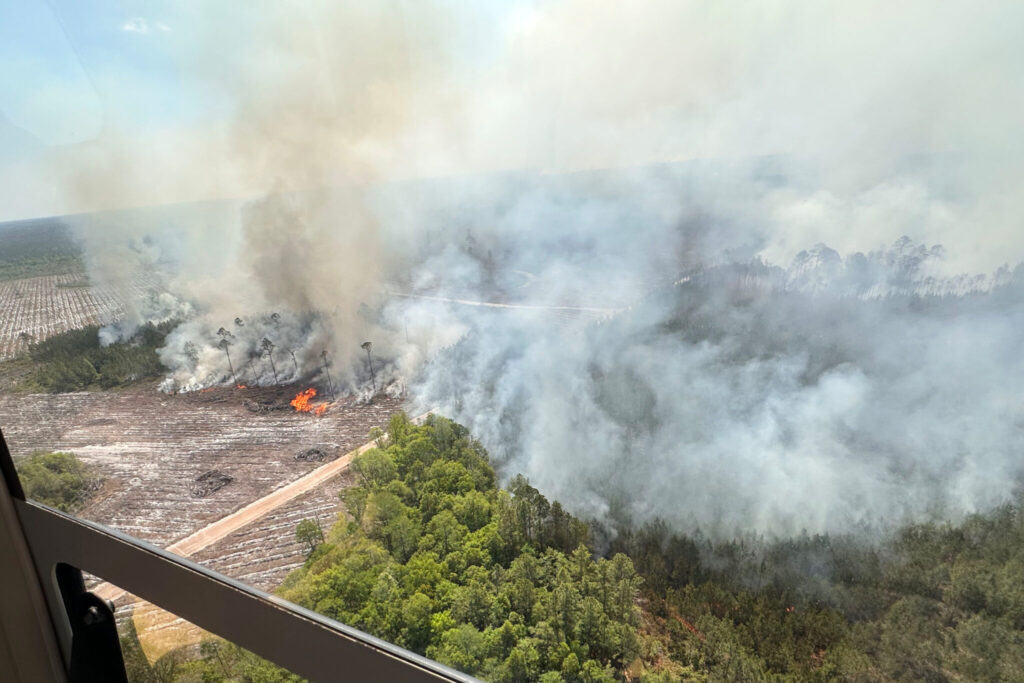
NAHUNTA, Ga. — Dangerous wildfires sweeping across the Southeast have killed a volunteer firefighter in Florida and destroyed more than 120 homes in Georgia, as officials warn that thousands more properties remain at risk.
The fires, fueled by severe drought, strong winds, and dry storm debris left behind by Hurricane Helene, have created one of the region’s worst spring wildfire outbreaks in years.
Authorities say firefighters are battling more than 150 active fires across Georgia and Florida, while smoky haze has spread hundreds of miles, triggering air quality alerts in several cities.
In northern Florida, the Nassau County Sheriff’s Office confirmed that volunteer firefighter James “Kevin” Crews died Thursday evening after suffering a medical emergency while fighting a brush fire.
Florida Firefighter Remembered for Courage
Crews was part of the firefighting effort in Hilliard, Florida, when he collapsed during operations.
He was rushed to a hospital but later died.
Officials did not immediately release details about the medical emergency.
His death marked one of the most serious tragedies connected to the growing wildfire emergency.
“Kevin was the epitome of courage and dedication,” Hilliard Volunteer Fire Chief Jerry Johnson said.
“His sacrifice will never be forgotten.”
The death has deeply impacted the local firefighting community, where volunteer crews often serve as the first line of defense during rural brush fires.
Georgia Wildfires Destroy More Than 120 Homes
In southeast Georgia, the destruction has been massive.
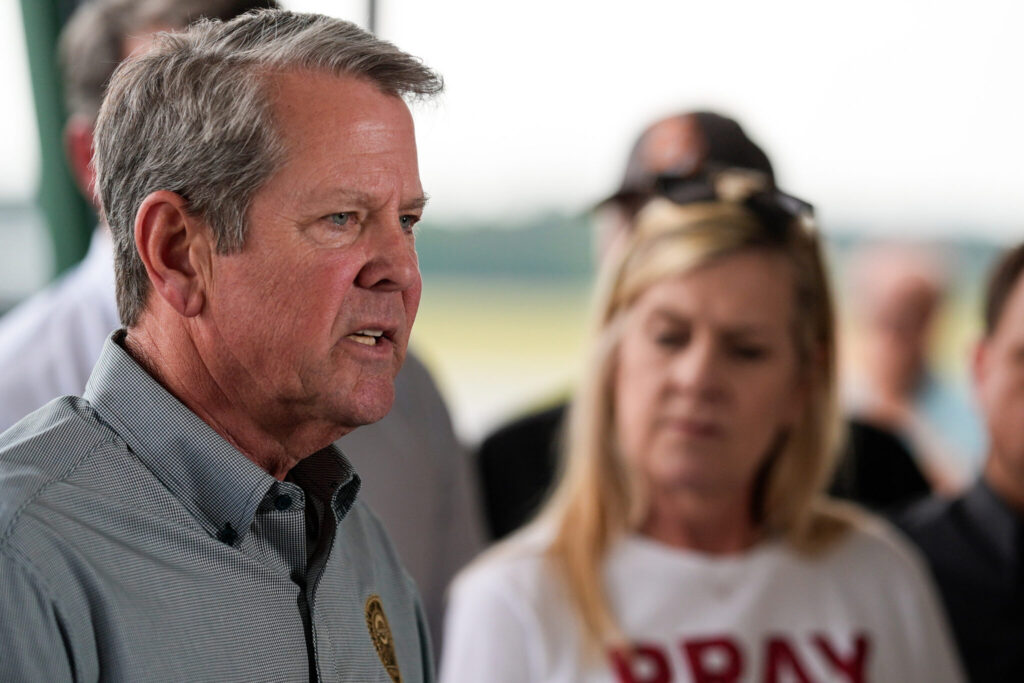
Governor Brian Kemp said 87 homes burned in rural Brantley County this week — what officials believe could be the highest number of homes lost to a single wildfire in Georgia history.
Another 35 homes were destroyed by a separate, larger fire burning across Clinch and Echols counties near the Florida state line.
That second fire has burned roughly 50 square miles, an area about twice the size of Manhattan.
Together, the two major fires have devastated entire communities and forced large-scale evacuations.
Thousands of residents remain displaced as crews work around the clock to protect what is left.
Officials Suspect Balloon Sparked One Fire
Investigators believe the Brantley County wildfire may have started from something unexpected — a foil party balloon.
Governor Kemp said officials suspect the balloon touched live power lines, creating an electrical arc that ignited dry ground below.
The larger Clinch and Echols counties fire is believed to have started when a man was welding a gate outside.
Both fires spread rapidly because of the extremely dry conditions and strong winds.
Spread across nearly 12 square miles and still growing, the Brantley County fire was only 15% contained by Friday.
Officials said about 4,000 homes in the county remained under evacuation orders.
Governor Says Only Rain Can Stop It
After touring the damage, Kemp warned that firefighters can only do so much without major weather changes.
“There’s no way to stop this fire,” Kemp said.
“They’re having to contain the flanks and the back of it and then, hopefully, we get a change in the weather.”
Firefighters are using bulldozers to create fire breaks while local departments focus on protecting homes by clearing dry brush and soaking structures with hoses and sprinklers.
Still, officials say without major rainfall, the fires will keep spreading.
Johnny Sabo, director of the Georgia Forestry Commission, said the region needs far more than a passing shower.
“It is going to take 8 to 10 inches before we can walk away from these fires,” he said.
Families Escape With Almost Nothing
For many residents, the fires moved so quickly they had almost no time to save belongings.
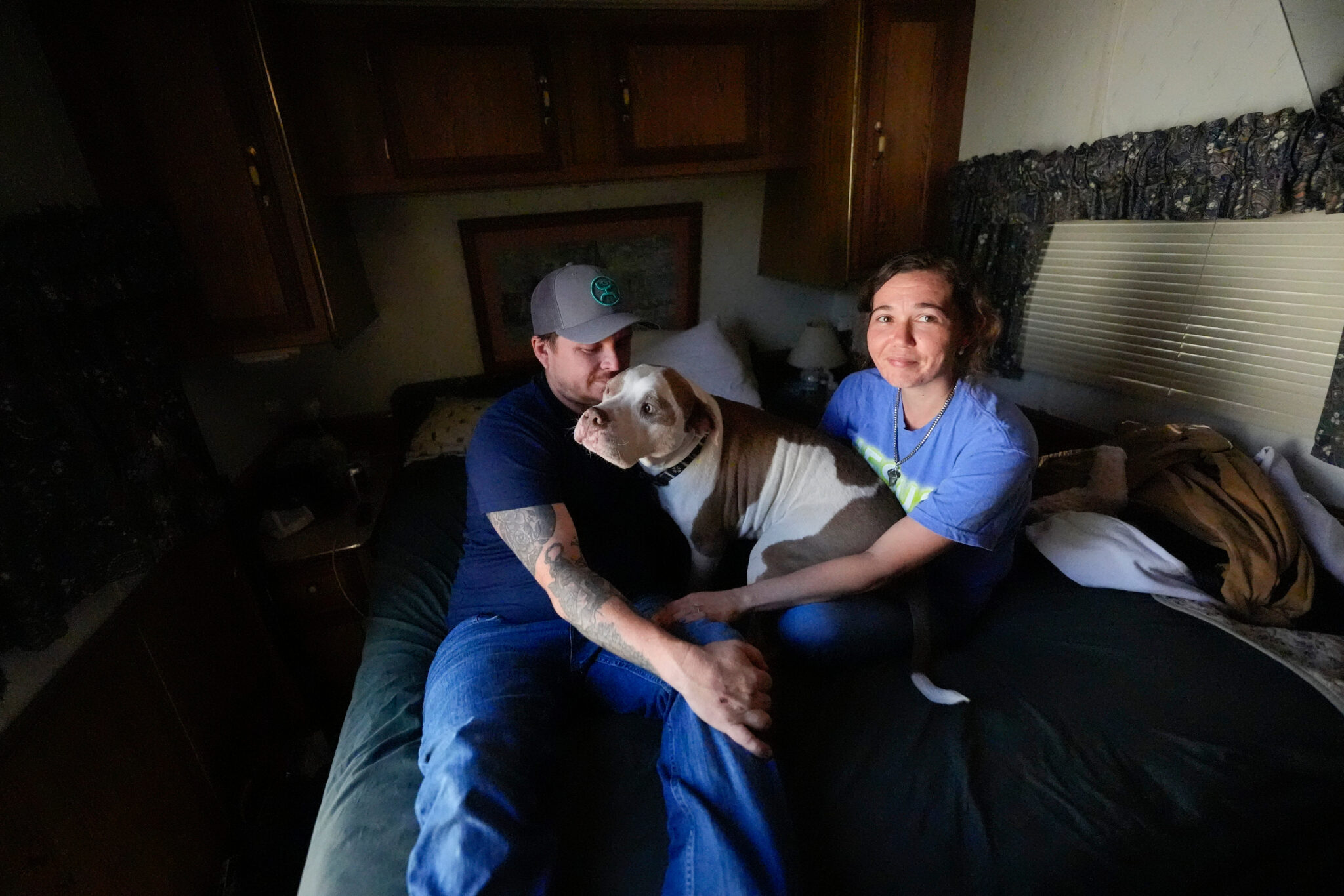
Michael Gibson was at work Thursday when his fiancée called, telling him to come home immediately.
By the time he arrived, firefighters had already reached his road.
He rushed his family — his fiancée and their four children — to safety, then tried to return for their belongings.
Police stopped him.
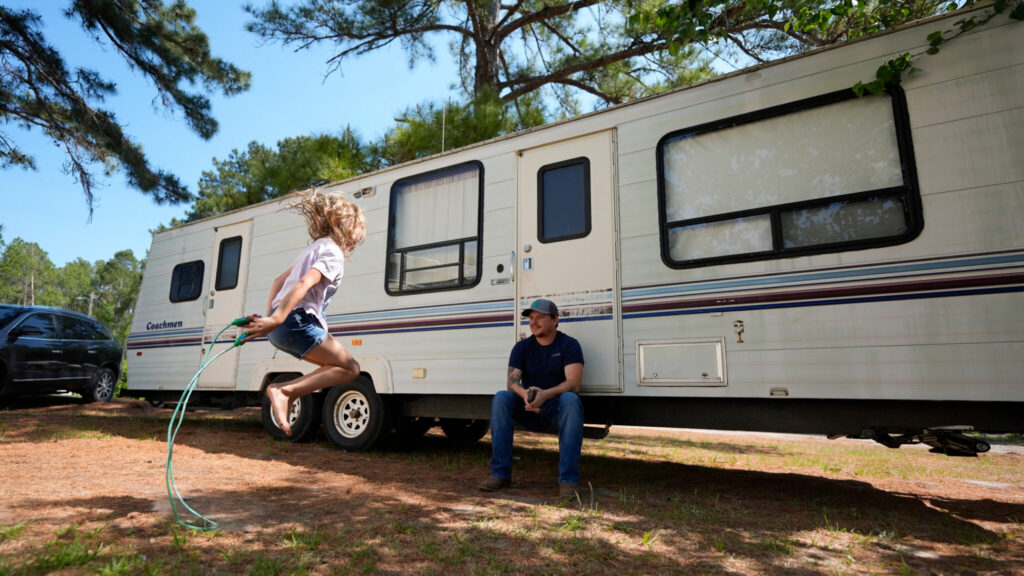
The fire destroyed his mobile home and another where his fiancée’s brother lived.
Now, the family is staying in a camper on a relative’s property.
“We’ve lost everything, but I’m one of the lucky ones,” Gibson said.
“We’ve been prepared to leave. And I’m truly blessed to have my family and to have somewhere to sleep.”
“A lot of people in my county didn’t make it out with the clothes on their backs.”
Disabled Resident Forced to Flee Fast
Jennifer Murphy also barely escaped.
She was at home in the Brantley County community of Hortense when firefighters urgently knocked on her door.
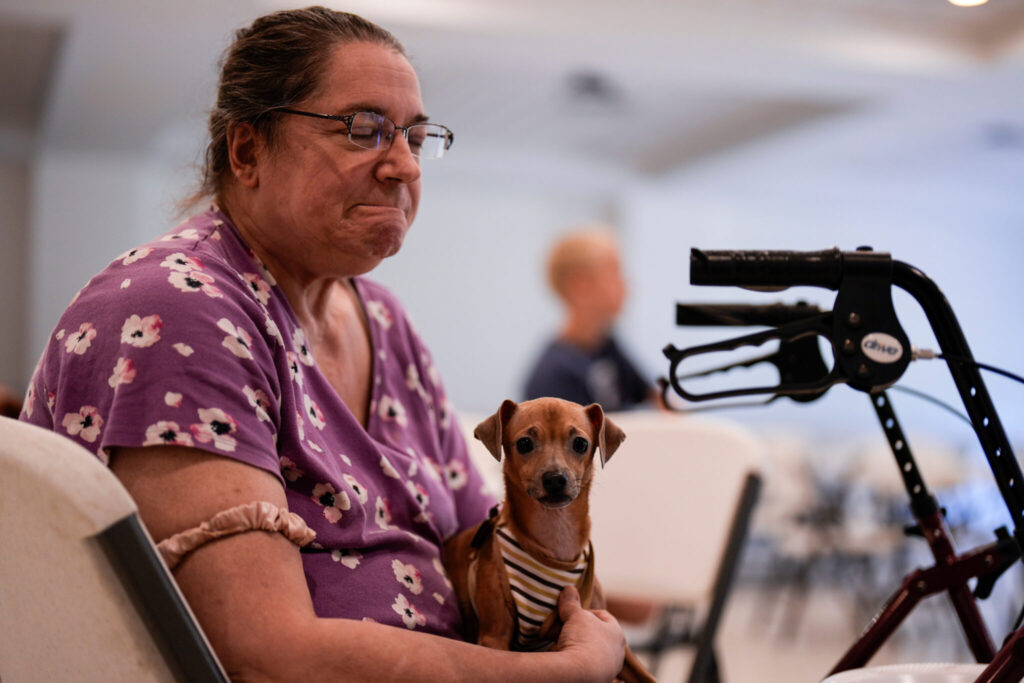
Because she uses a wheelchair ramp and a rolling walker, every second mattered.
“It was like, ‘Get out now, right now. You’ve got to leave,’” Murphy said.
She had only enough time to grab her dog, Chip, and one small bag of belongings before firefighters helped her evacuate.
She spent the night sleeping on a couch at a local church shelter.
Stories like hers have become common across the region as entire communities face sudden evacuation orders.
Hurricane Debris and Climate Conditions Fueling Fires
Officials say these fires are being made worse by a dangerous combination of factors.
Extreme drought and strong winds have dried forests across southern Georgia and northern Florida.
At the same time, dead trees and fallen limbs left behind by Hurricane Helene in 2024 are acting like fuel across wooded areas.
“There’s a ton of old Hurricane Helene debris down in the woods,” forestry officials have warned.
Scientists also point to climate change as increasing wildfire risk across the Southeast, where fire seasons are becoming longer and more intense.
This spring’s fire activity is far above normal levels.
More Fires Still Burning
In Florida, firefighters were battling more than 120 wildfires Friday, mostly across the northern half of the state.
In Georgia, crews responded to 31 new smaller fires Thursday alone.
Smoke from the fires has drifted far beyond the burn zones, creating unhealthy air conditions for children, older adults, and people with lung or heart conditions.
The National Weather Service says some rain may arrive this weekend, but officials believe it will not be enough.
There is also concern that thunderstorms could create lightning strikes and start even more fires.
Long-range forecasts predict below-average rainfall through July.
That means the wildfire emergency could continue for weeks.
Communities Hold On Through Crisis
Despite the destruction, local communities continue helping one another.
Firefighters from dozens of agencies are working side by side, while churches, volunteers, and neighbors provide shelter, food, and supplies for families forced to leave everything behind.
For now, the focus remains survival.
Residents are watching the skies, hoping for rain, and waiting to see what can still be saved.
In a region where the fires are still growing, every drop matters.