Appeals Court Pauses Portland ICE Tear Gas Restrictions/ Newslooks/ WASHINGTON/ J. Mansour/ Morning Edition/ A federal appeals court paused restrictions on tear gas use near Portland’s ICE facility. The ruling temporarily blocks lower court orders limiting federal officers’ actions during protests. The decision comes amid ongoing demonstrations against Trump administration deportation policies.
Portland ICE Tear Gas Ruling + Quick Looks
- 9th Circuit Court pauses lower court restrictions
- Federal officers allowed broader use of tear gas
- Decision issued by 2-1 appeals court panel
- Judges split along presidential appointment lines
- Protests ongoing since June outside Portland ICE building
- Lawsuits filed by ACLU of Oregon and local residents
- Lower courts limited tear gas to imminent threats
- Appeals court schedules arguments for April 7
Deep Look: Appeals Court Pauses Portland ICE Tear Gas Restrictions
A federal appeals court has temporarily paused restrictions placed on federal officers’ use of tear gas during protests at a U.S. Immigration and Customs Enforcement building in Portland, Oregon, marking another legal win for the Trump administration’s enforcement strategy.
The 9th U.S. Circuit Court of Appeals issued a 2-1 decision granting temporary administrative stays in two separate cases. The rulings pause earlier decisions by federal judges in Oregon that limited when officers could deploy chemical munitions against protesters near the Portland ICE facility.
The three-judge panel included two judges appointed by President Donald Trump who supported the pause, while a judge appointed by former President Joe Biden dissented.
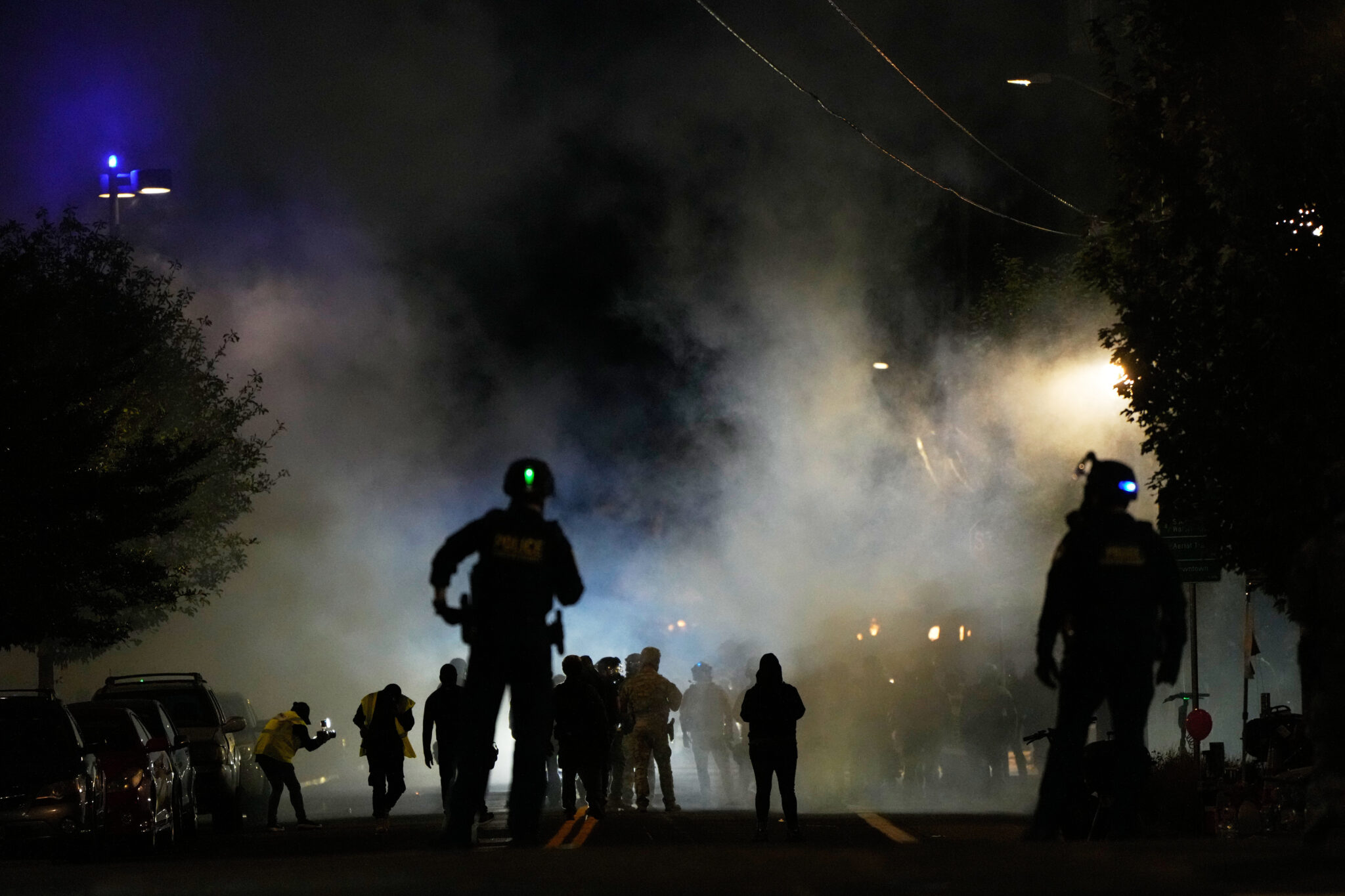
The Portland ICE building has been the focal point of ongoing protests since last June, as demonstrators opposed the Trump administration’s aggressive deportation policies. The demonstrations have included months of nightly gatherings, with tensions frequently escalating between protesters and federal officers.
Federal authorities have repeatedly used tear gas and other chemical munitions to disperse crowds, including during small demonstrations. At a large protest in late January, federal officers fired tear gas at hundreds of people participating in a daytime march. Reports indicated that children were among those affected during the dispersal.
The federal response sparked two lawsuits challenging the use of force. One lawsuit was filed by the American Civil Liberties Union of Oregon on behalf of protesters and freelance journalists who alleged that federal officers violated constitutional rights through excessive use of chemical agents and projectiles.
A second lawsuit was filed by residents of an affordable housing complex located across the street from the ICE building. Residents argued that tear gas and other chemical agents drifted into their homes, exposing families and vulnerable individuals to harmful substances.
Both lawsuits named the Department of Homeland Security as a defendant. Federal officials argued that officers must retain authority to use necessary tactics to prevent violence and protect personnel and federal property.
Earlier this month, federal judges in Portland issued preliminary injunctions in both cases. The rulings limited federal agents’ use of chemical munitions, stating tear gas could only be deployed when someone posed an imminent threat of harm or violence.
The Trump administration quickly appealed those decisions, arguing that the restrictions hindered federal law enforcement operations and officer safety during volatile protest situations.
The 9th Circuit Court’s temporary pause now allows federal officers to resume broader use of tear gas while the appeals process moves forward. The court emphasized that the administrative stays are temporary and do not represent a final ruling on the merits of the cases.
In its order, the appeals court also announced that oral arguments for both lawsuits will be consolidated. The court scheduled those arguments for April 7, when judges will hear detailed legal arguments from both sides.
The outcome of the appeal could significantly impact how federal officers respond to protests, particularly in cities where demonstrations have focused on immigration enforcement.
The Portland protests echo earlier demonstrations in the city, which has frequently served as a focal point for national debates over policing, protest rights, and federal law enforcement authority.
Legal experts note that the case raises broader constitutional questions, including First Amendment protections for protesters and the government’s authority to use force to maintain public order.
For now, the appeals court’s decision allows federal officers to continue using tear gas and other crowd-control methods near the Portland ICE building, pending further review.