Trump Arrives in Beijing for High-Stakes Xi Summit/ Newslooks/ WASHINGTON/ J. Mansour/ Morning Edition/ President Donald Trump arrived in Beijing for a major summit with Chinese President Xi Jinping focused on trade, Taiwan, and the Iran war. The visit comes as Trump faces political pressure at home from inflation and energy disruptions tied to the Middle East conflict. Both leaders are seeking stability in US-China relations while navigating growing geopolitical and economic tensions.
Trump Xi Beijing Summit Quick Looks
- Trump arrived in Beijing for talks with Xi Jinping
- Iran war and trade tensions dominate the summit agenda
- Taiwan arms sales remain a major flashpoint
- China gave Trump a large ceremonial welcome
- Trump seeks trade agreements involving soybeans, beef, and aircraft
- The US hopes to establish a new trade coordination board with China
- Trump also wants a three-way nuclear arms deal with China and Russia
- Rising inflation and energy prices are increasing pressure on the White House

Deep Look
Trump Receives Grand Welcome in Beijing
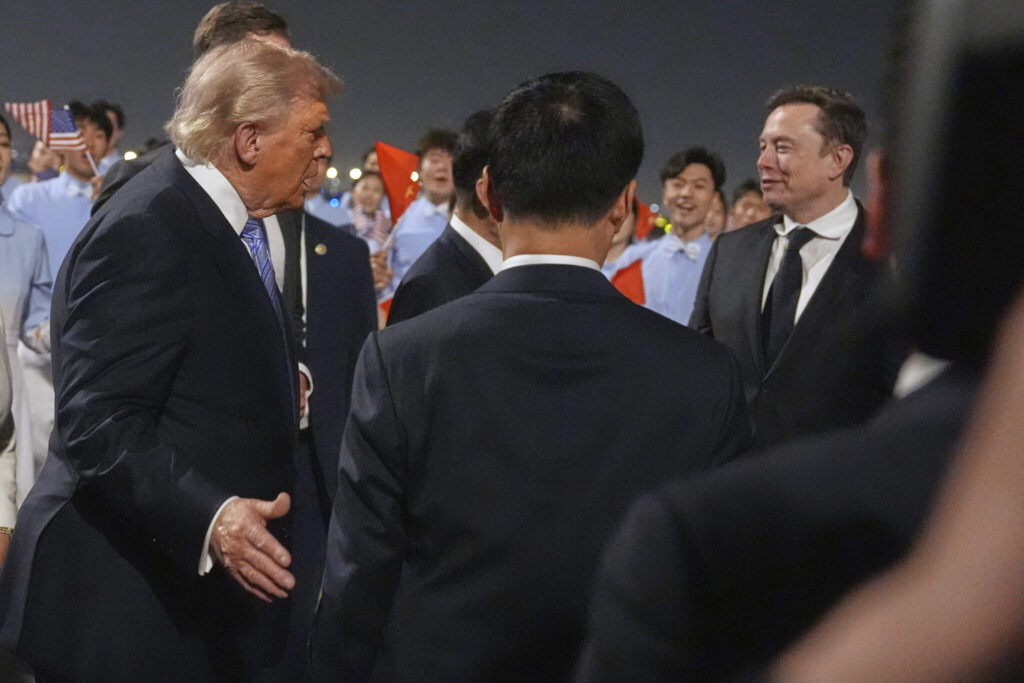
President Donald Trump arrived in Beijing on Wednesday for a highly anticipated summit with Chinese President Xi Jinping centered on the Iran war, trade disputes, Taiwan, and broader geopolitical tensions between the world’s two largest powers.
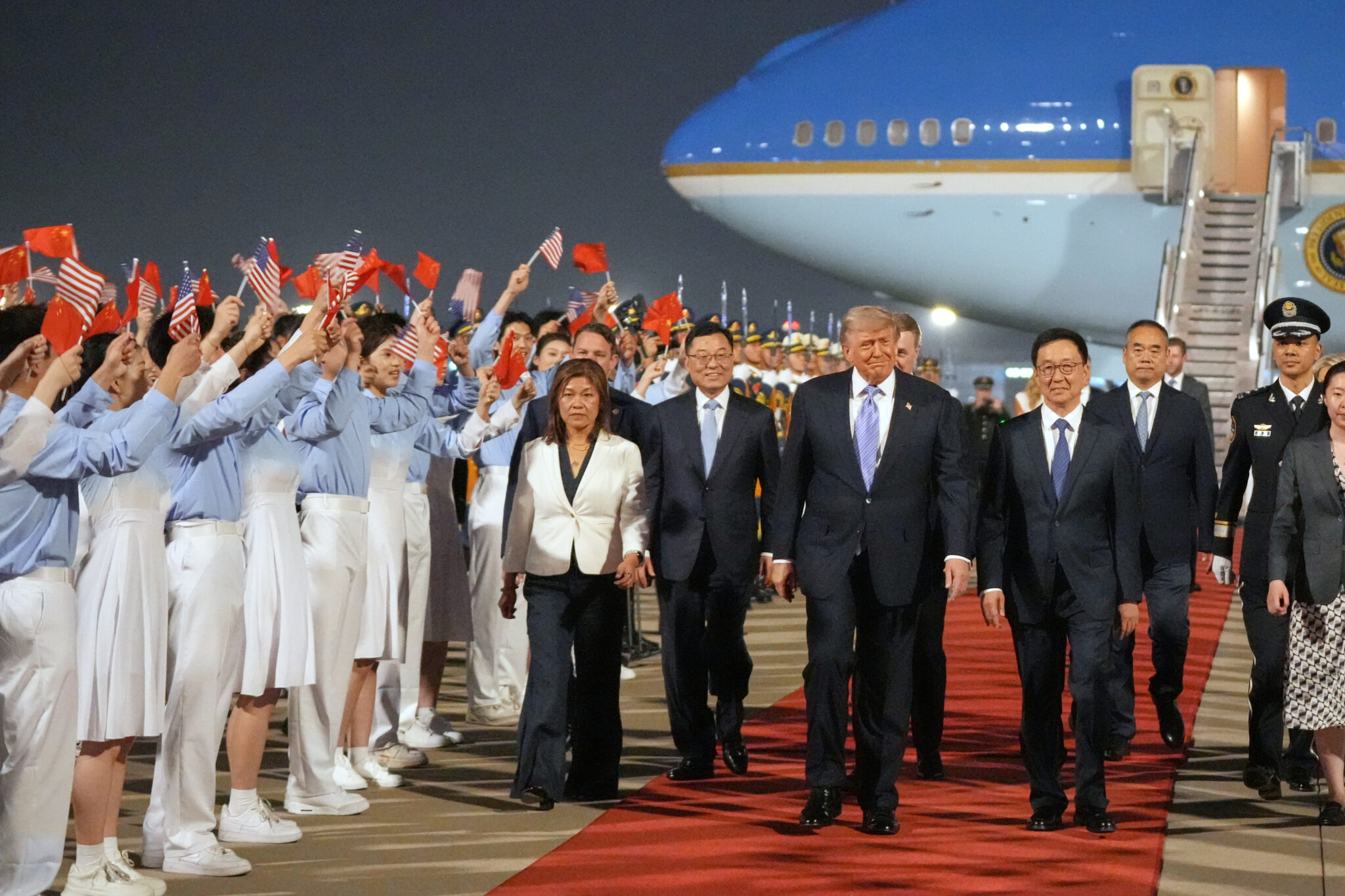
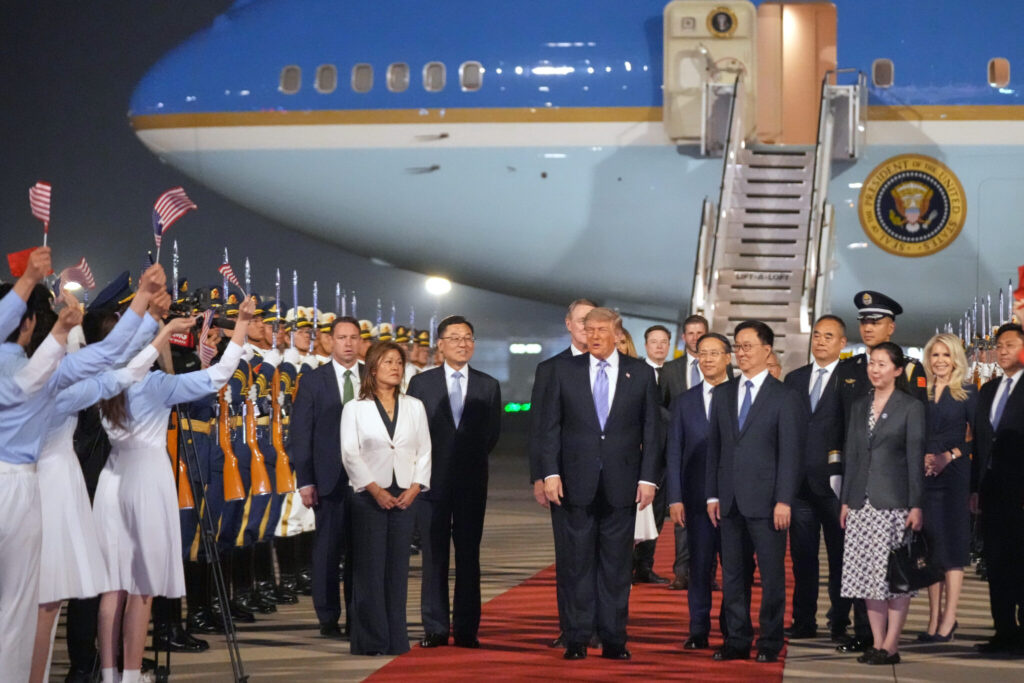
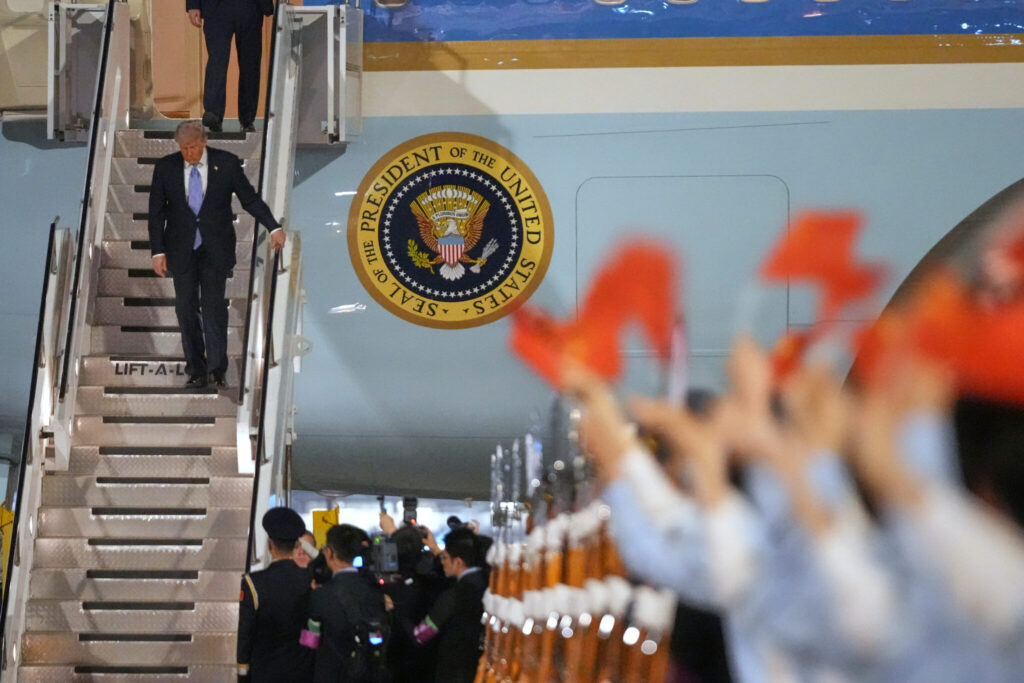
Chinese officials rolled out a ceremonial red carpet welcome after Air Force One landed in the capital.
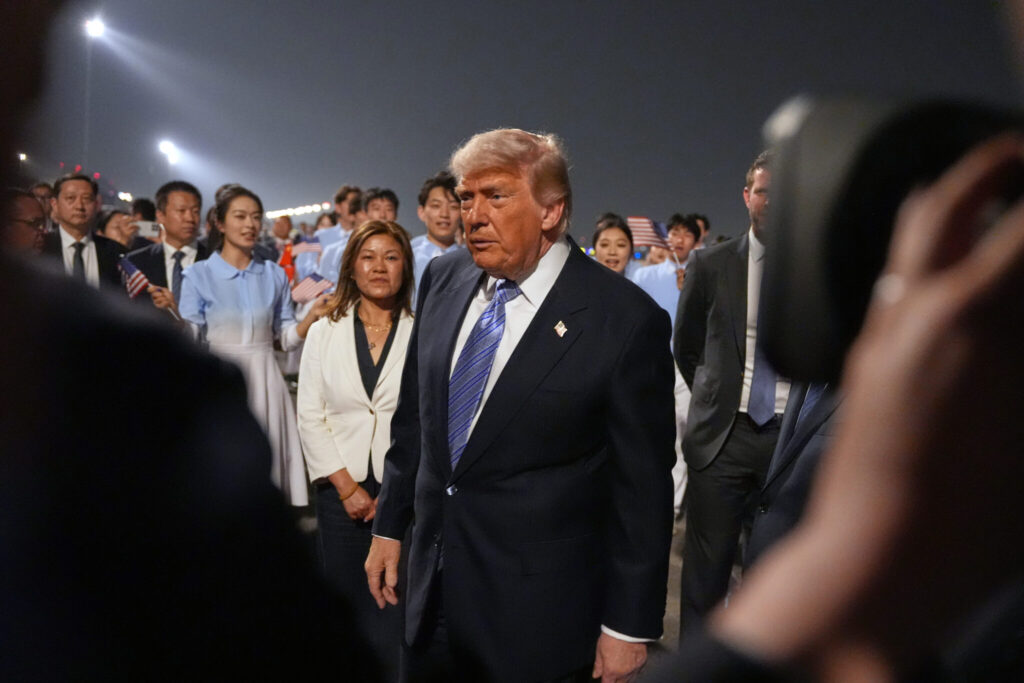
The arrival ceremony featured a military honor guard, marching band, and roughly 300 Chinese youths waving American and Chinese flags while chanting “Welcome, welcome! Warm welcome!”
The students wore white and robin’s egg blue uniforms matching the color scheme of Air Force One.
Summit Comes at Difficult Moment for Trump
Despite the elaborate reception, the summit unfolds during a politically fragile period for Trump.
The president has faced growing domestic criticism tied to the Iran war, rising inflation, and surging energy prices caused by disruptions in the Strait of Hormuz.
The Middle East conflict has sharply increased global oil prices and intensified concerns about economic slowdown both in the United States and internationally.
Trump acknowledged before leaving Washington that trade would likely dominate his discussions with Xi.
“We’re the two superpowers,” Trump told reporters before departure. “We’re the strongest nation on Earth in terms of military. China’s considered second.”
Analysts say Trump is hoping the summit produces visible economic and diplomatic victories that could improve political momentum ahead of the November midterm elections.
Trade Remains Central Priority
The administration also hopes to begin creating a new “Board of Trade” between the United States and China designed to help manage future disputes and avoid another major tariff war.
The trade relationship between the two countries has remained tense since Trump imposed sweeping tariffs in 2025.
China responded by restricting exports of rare earth minerals, exposing Western dependence on Chinese-controlled supply chains critical for industries including electric vehicles, semiconductors, and defense manufacturing.
The two countries eventually reached a fragile one-year truce last October.
Still, significant disagreements remain unresolved.
China wants Washington to reduce tariffs and ease restrictions on advanced technology exports, particularly involving semiconductor equipment and memory chips.
Taiwan Emerges as Major Flashpoint
Taiwan is expected to become one of the summit’s most sensitive issues.
Trump confirmed earlier this week that he plans to discuss an $11 billion U.S. weapons package approved for Taiwan last December.
The package represents the largest arms sale ever authorized for the self-governing island.
China strongly opposes American military support for Taiwan, which Beijing claims as part of its own territory.
Ahead of Trump’s arrival, China’s state-run People’s Daily newspaper published a sharply worded editorial warning that Taiwan is “the first red line that cannot be crossed in China-U.S. relations.”
At the same time, Taiwan has become economically crucial because of its dominant role in global semiconductor manufacturing and artificial intelligence technology.
Trump has attempted to use both Biden-era industrial programs and his own trade policies to increase semiconductor production inside the United States.
Trump Downplays Iran Discussions
Although the Iran war remains one of the most pressing international crises, Trump attempted to minimize expectations that the summit would focus heavily on the conflict.
“We have a lot of things to discuss. I wouldn’t say Iran is one of them, to be honest with you, because we have Iran very much under control,” Trump told reporters Tuesday.
Still, the war’s impact hangs heavily over the meetings.
The effective closure of the Strait of Hormuz has trapped oil and natural gas shipments, driving global energy prices sharply higher and worsening inflation worldwide.
China remains one of Iran’s largest oil customers and retains significant economic influence over Tehran.
Analysts believe Washington quietly hopes Beijing could help encourage negotiations aimed at reducing tensions.
Trump Seeks Long-Term Stability With Xi
Before leaving Washington, Trump repeatedly emphasized optimism about his relationship with Xi.
“We’re going to have a great relationship for many, many decades to come,” Trump said regarding U.S.-China ties.
Trump also mentioned Xi’s expected reciprocal visit to the United States later this year, joking that the White House ballroom currently under construction would not be completed in time to properly host the Chinese leader.
The president traveled to Beijing alongside senior aides, family members, and several prominent business executives including Nvidia CEO Jensen Huang and Tesla and SpaceX leader Elon Musk.
While flying to China, Trump posted on social media that one of his primary requests to Xi would involve opening Chinese markets further to American companies.
“I will be asking President Xi, a Leader of extraordinary distinction, to ‘open up’ China,” Trump wrote online.
China Seen as Entering Talks Stronger
Despite Trump’s confidence, some analysts believe Beijing enters the summit with stronger leverage.
Scott Kennedy of the Center for Strategic and International Studies said China appears to be in “a much stronger place” than during earlier phases of the trade war.
Even if China fails to win immediate concessions on tariffs or technology restrictions, analysts argue Beijing benefits simply by avoiding renewed escalation with Washington.
China’s growing control over critical supply chains and rare earth exports has strengthened its negotiating position significantly over the past year.
Nuclear Arms Proposal Also Expected
Trump also plans to discuss a possible three-way nuclear arms agreement involving the United States, China, and Russia.
According to administration officials, Trump wants a new treaty limiting nuclear arsenals after the expiration of the New START agreement between Washington and Moscow earlier this year.
China has traditionally resisted joining such negotiations because its nuclear stockpile remains far smaller than those of the United States and Russia.
Pentagon estimates indicate China currently possesses more than 600 operational nuclear warheads and could exceed 1,000 by 2030.
Global Stakes Remain High
The Beijing summit comes during one of the most unstable periods in modern U.S.-China relations.
Trade tensions, military rivalry, Taiwan, technology restrictions, supply-chain competition, and the Iran conflict have all increased pressure on both governments.
For Trump, the meetings represent an opportunity to demonstrate leadership on global economic and security issues while seeking political momentum at home.
For Xi, the summit offers a chance to stabilize relations with Washington while reinforcing China’s status as a global superpower increasingly capable of challenging American influence.