Trump: Iran ‘Can’t Blackmail Us’ on Strait of Hormuz, Talks ‘Working Out Very Well’/ Newslooks/ WASHINGTON/ J. Mansour/ Morning Edition/ President Donald Trump said Iran “can’t blackmail us” after Tehran reimposed restrictions on the Strait of Hormuz and ships reportedly came under fire. Trump insisted negotiations with Iran were still progressing despite renewed tensions and ongoing U.S. naval enforcement in the region. India also summoned Iran’s ambassador after two India-flagged merchant ships were reportedly targeted in the critical waterway.
Trump Iran Strait of Hormuz Quick Looks
- Trump said Iran “can’t blackmail us” over the Strait of Hormuz
- Tehran reversed its decision to reopen the key global shipping route
- Trump said negotiations with Iran are “working out very well”
- India summoned Iran’s ambassador after Indian ships came under fire
- U.S. Central Command showed military patrols over the strait
- CENTCOM said 23 ships have complied with U.S. blockade orders
- Trump referenced the 2020 strike that killed Qasem Soleimani
- Oil and shipping markets remain under pressure amid regional tensions
Deep Look
Trump Says Iran “Can’t Blackmail Us”
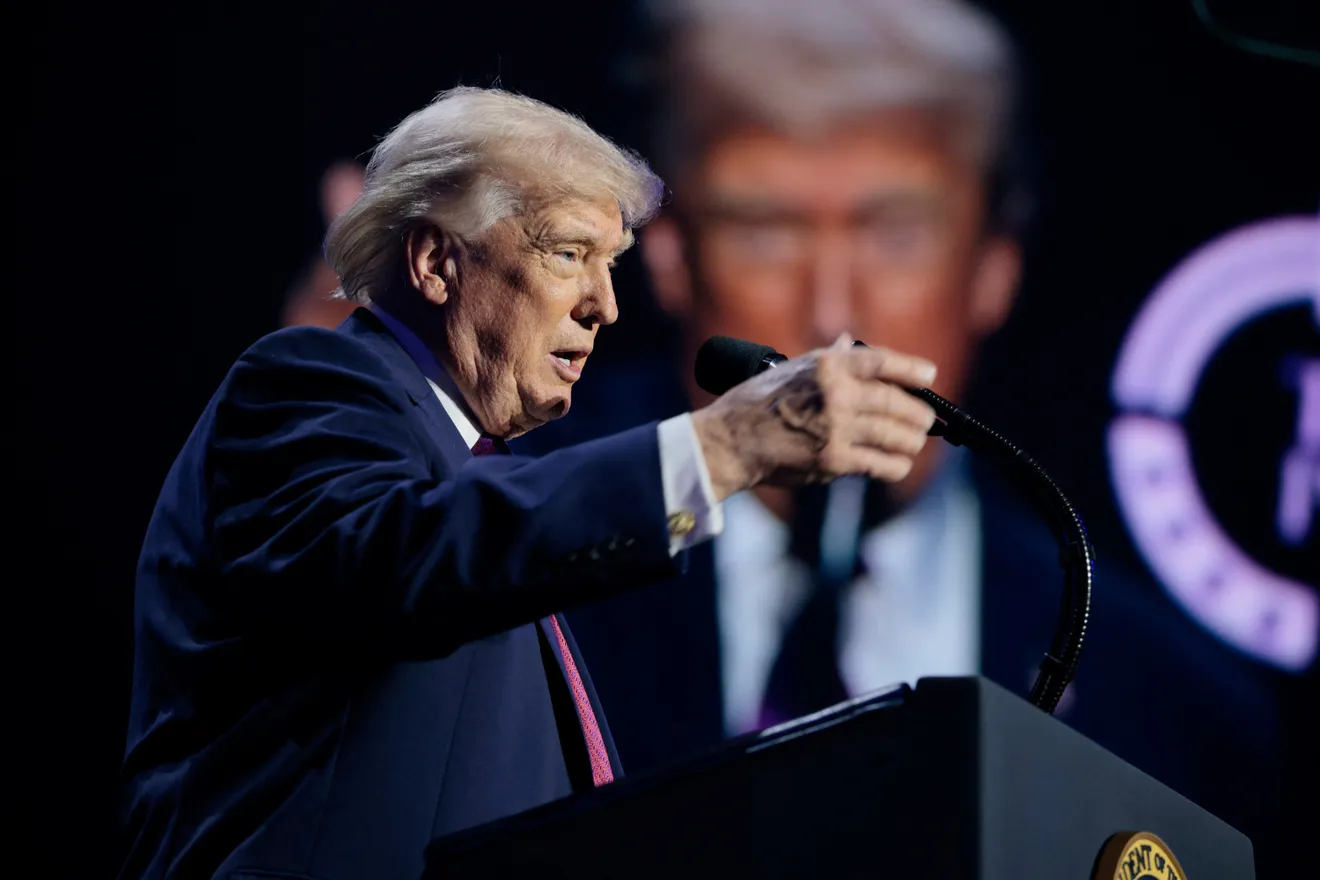
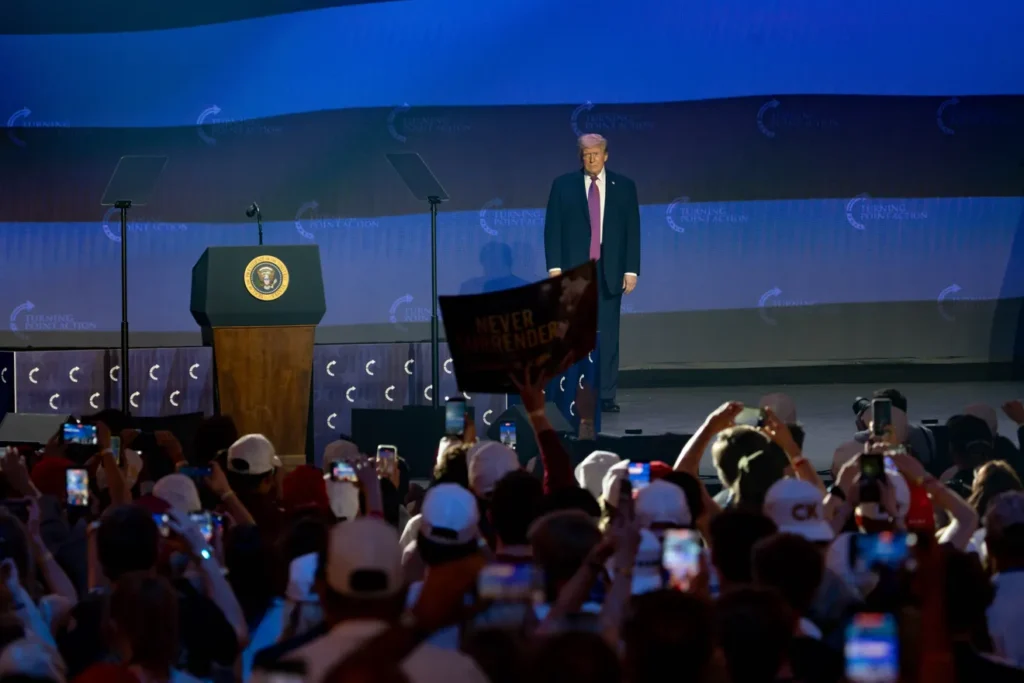
President Donald Trump said Saturday that Iran “can’t blackmail us” after Tehran announced it was once again restricting movement through the Strait of Hormuz, one of the world’s most important shipping routes for global oil supplies.
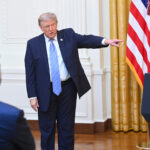
Speaking from the Oval Office during an unrelated event focused on mental health research, Trump insisted that despite Iran’s latest actions, negotiations between Washington and Tehran were still progressing positively.
“We have very good conversations going on. It’s working out very well,” Trump said.
He added that Iran had tested U.S. resolve but argued that his administration had responded with far more strength than previous presidents.
“They got a little cute, as they have been doing for 47 years, and nobody ever took them on. We took them on. They have no Navy. They have no Air force. They have no leaders. They have no nothing. Actually, their leaders are… it is regime change.”
Trump suggested that despite Iran’s threat to close the strait again, diplomacy remained active and productive.
He said negotiations were “going actually along very well” and promised additional updates “by the end of the day.”
Strait of Hormuz Crisis Raises Global Concerns
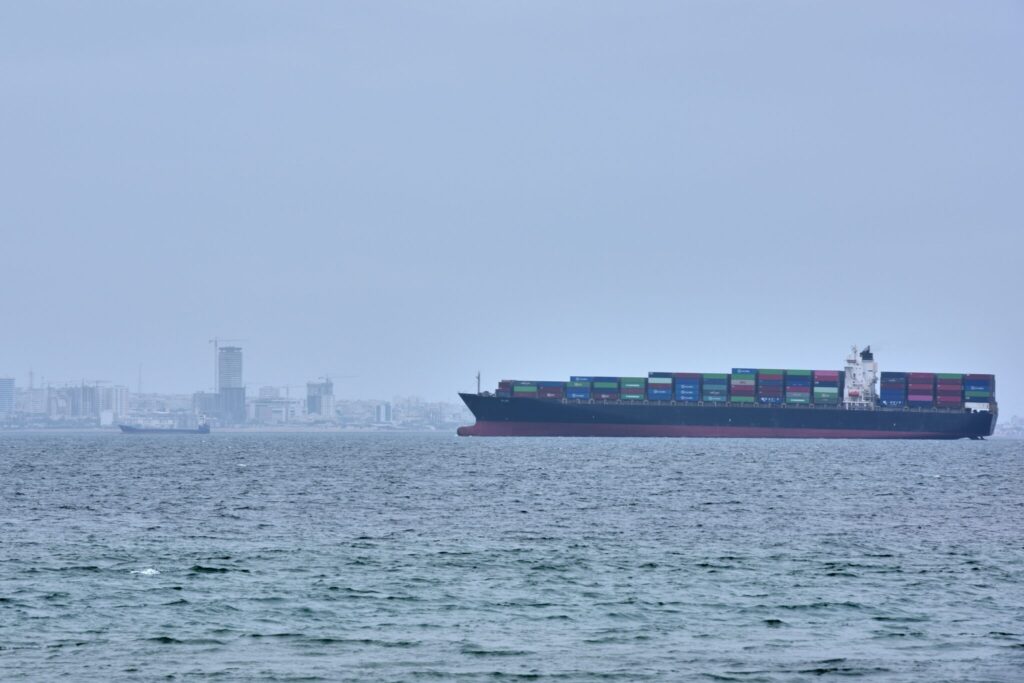
The renewed crisis centers on the Strait of Hormuz, a narrow but strategically critical waterway through which nearly one-fifth of the world’s oil supply typically passes.
Iran had briefly reopened the strait before reversing course and reimposing tight restrictions after citing the ongoing U.S. naval blockade around Iranian ports.
Iranian officials made clear they would maintain control over shipping access.
“As long as the United States does not agree to the complete freedom of navigation for vessels… the situation in the Strait of Hormuz will remain tightly controlled and in its previous state,” an Iranian military official said, according to Iranian state media agency Fars.
The decision quickly renewed fears over global energy prices, shipping disruptions, and the possibility of a broader military escalation across the Gulf region.
Trump also pointed to increased tanker traffic into American ports, including Texas and Louisiana, as proof that U.S. energy security remained strong despite regional instability.
Trump Defends Hardline Iran Strategy
Trump used the moment to defend his administration’s aggressive posture toward Iran and framed the conflict as part of a long-standing effort to stop Tehran from threatening American interests and military personnel.
“We’re taking a tough stand. They’ve killed a lot of people. A lot of our people have been killed. A lot of your fellow soldiers have been killed over the years by Iran,” Trump said.
He specifically referenced the January 2020 U.S. strike that killed Qasem Soleimani, the commander of Iran’s elite Quds Force.
Trump described Soleimani as the “father of the roadside bomb.”
“And when you see soldiers or others, but soldiers generally walking around with no legs, with no arms or face that’s been smashed, that was Soleimani, it was Iran that did that,” Trump said.
“So we have a much different view on it than other presidents. They’ve gotten away with murder for 47 years. They’re not getting away with it anymore.”
Trump’s remarks reinforced his long-running argument that strong military pressure and economic isolation are necessary to force Iran into concessions.
India Summons Iran’s Ambassador
The tensions escalated further after India summoned Iran’s ambassador following reports that Indian-flagged merchant vessels came under fire while attempting to cross the Strait of Hormuz.
India’s Ministry of External Affairs confirmed the diplomatic meeting Saturday evening.
“The Ambassador of the Islamic Republic of Iran in New Delhi was called in by the Ministry of External Affairs for a meeting with Foreign Secretary this evening,” the ministry said in a statement.
“During the meeting, Foreign Secretary conveyed India’s deep concern at the shooting incident earlier today involving two Indian-flagged ships in the Strait of Hormuz,” it continued.
India emphasized the importance of protecting commercial shipping and sailors operating in one of the world’s busiest maritime corridors.
“He noted the importance that India attached to the safety of merchant shipping and mariners and recalled that Iran had earlier facilitated the safe passage of several ships bound for India,” the ministry said.
“Reiterating his concern at this serious incident of firing on merchant ships, Foreign Secretary urged the Ambassador to convey India’s views to the authorities in Iran and resume at the earliest the process of facilitating India-bound ships across the Strait.”
Reuters also reported that the Indian-flagged Sanmar Herald, carrying crude oil, was attacked during the incident.
The attack added fresh diplomatic pressure as global shipping companies reassessed the security of the route.
CENTCOM Shows Military Presence
The U.S. military also moved to project strength in the region.
U.S. Central Command (CENTCOM) released new photos Saturday showing AH-64 Apache helicopters flying above the Strait of Hormuz during patrol operations.
“Army Soldiers are flying in and around the strait providing a visible presence in support of freedom of navigation,” CENTCOM wrote.
In another update, CENTCOM shared images of the Littoral Combat Ship USS Canberra (LCS 30) operating in the Arabian Sea as part of the blockade effort.
“Since commencement of the blockade, 23 ships have complied with direction from U.S. forces to turn around. American forces are enforcing a maritime blockade against ships entering or exiting Iranian ports and coastal areas,” CENTCOM said.
The statement highlighted Washington’s effort to maintain both military pressure and international control over key shipping lanes.
Negotiations Continue Despite Tensions
Even with fresh confrontations at sea, Trump maintained that negotiations were still moving in the right direction.
While acknowledging Iran’s latest attempt to close the strait, he insisted that Tehran would not be allowed to use global oil supplies as leverage.
“They got a little cute,” Trump said. “We’re talking to them. They wanted to close up the strait again, you know, as they’ve been doing for years, and they can’t blackmail us.”
The comments reflected Trump’s broader strategy of combining military pressure with diplomatic negotiations, aiming to force Iran into a larger agreement over regional security, shipping access, and nuclear concerns.
As oil markets, international shipping companies, and global governments continue watching the Strait of Hormuz closely, the coming days could determine whether the region moves toward diplomacy or deeper confrontation.