Iranian Official: US ‘Maximalist’ Demands Stall Face-to-Face Talks/ Newslooks/ WASHINGTON/ J. Mansour/ Morning Edition/ Iran says it is not ready for a new round of face-to-face talks with the United States because Washington has refused to drop what Tehran calls “maximalist” demands. Iran also rejected President Donald Trump’s claim that the U.S. would seize its enriched uranium, calling the idea a “non-starter.” Officials say sanctions relief, Lebanon’s ceasefire, and the future of the Strait of Hormuz remain central to negotiations.
Iran US Nuclear Talks Quick Looks
- Iran says direct talks with the U.S. are not ready yet
- Tehran blames Washington’s “maximalist” demands for delays
- Iran refuses to send enriched uranium to the United States
- Trump claimed the U.S. would “get all the nuclear dust”
- Iran wants sanctions relief before moving to in-person meetings
- Tehran says ceasefire terms must include Lebanon
- Israel’s Beirut strikes triggered renewed Strait of Hormuz tensions
- Iran says a new Hormuz protocol will keep civilian passage safe
Deep Look
Iran Says Face-to-Face Talks Are Still Not Ready
Iran said Saturday that it is not prepared to enter a new round of direct, face-to-face negotiations with U.S. officials, blaming Washington for refusing to step back from what Tehran calls excessive demands on key issues.
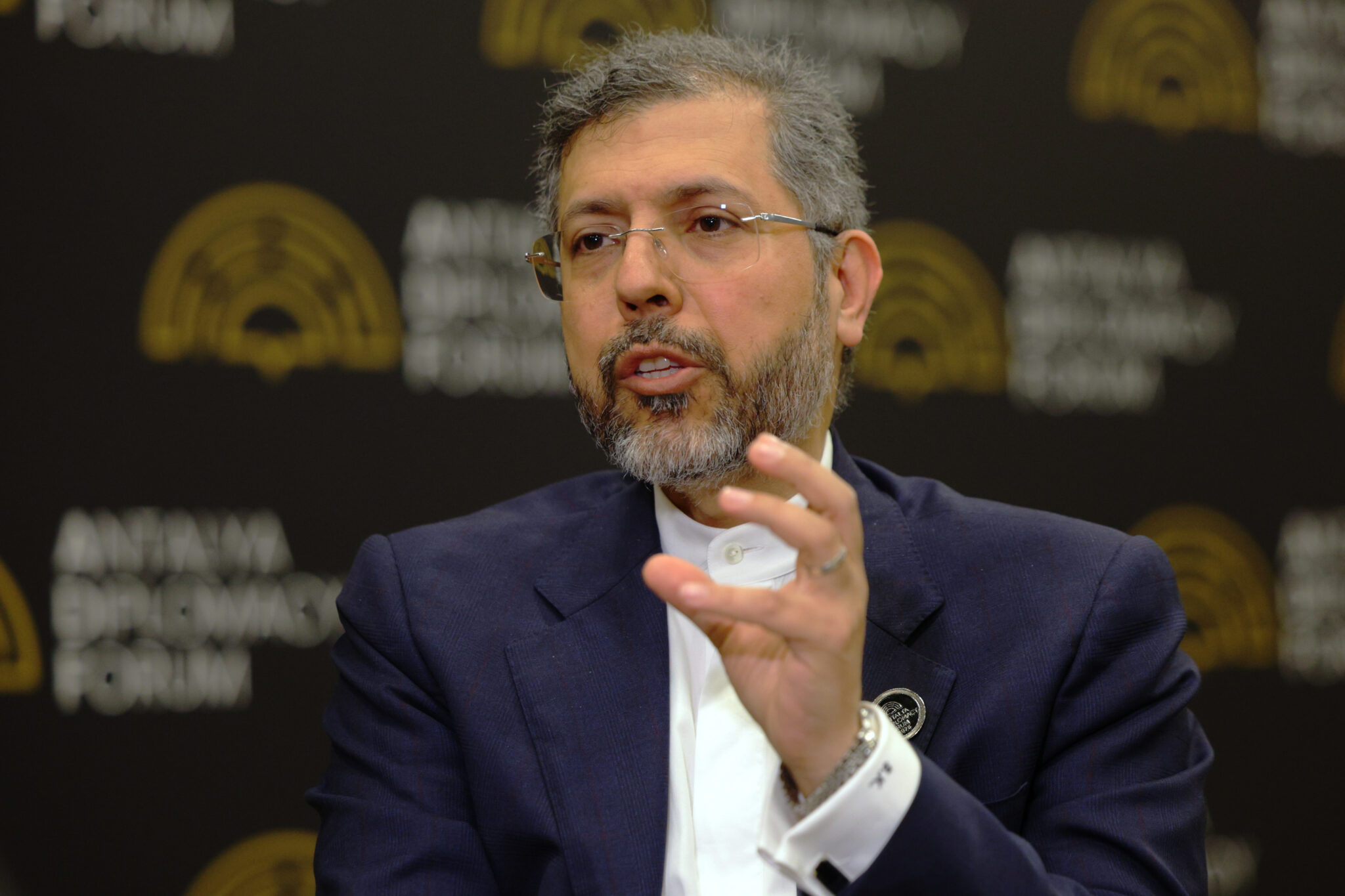
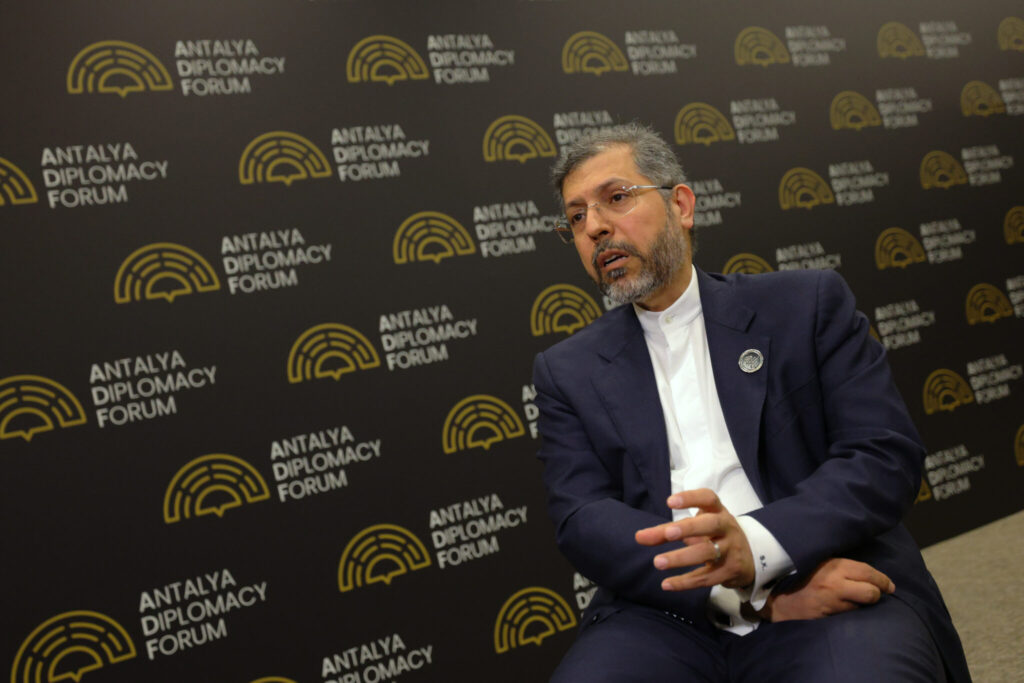
Speaking on the sidelines of a diplomacy forum in Antalya, Turkey, Iranian Deputy Foreign Minister Saeed Khatibzadeh said multiple exchanges have taken place between both sides, but serious disagreements remain unresolved.
“We are still not there yet to move on to an actual meeting because there are issues that the Americans have not yet abandoned their maximalist position,” Khatibzadeh said.
He explained that Iran wants both sides to finalize a “framework agreement” before any in-person diplomatic meeting can happen.
The remarks highlight how fragile the current negotiations remain, despite weeks of regional diplomacy and international mediation efforts involving Pakistan and Gulf states.
Iran Rejects Trump’s Uranium Statement
One of the strongest points of disagreement involves Iran’s enriched uranium stockpile.
President Donald Trump said Friday that the United States would go into Iran and “get all the nuclear dust,” referring to roughly 970 pounds (440 kilograms) of enriched uranium believed to be buried under nuclear sites damaged by U.S. military strikes last year.
Iran immediately rejected that suggestion.
“I can tell you that no enriched material is going to be shipped to United States,” Khatibzadeh said.
“This is non-starter and I can assure you that while we are ready to address any concerns that we do have, we’re not going to accept things that are nonstarters.”
The statement makes clear that Tehran sees control over its nuclear material as a red line in negotiations.
While Iran says it is open to addressing international concerns over its nuclear program, officials insist they will not accept terms they consider politically impossible.
Sanctions Relief Remains a Central Demand
Khatibzadeh did not provide details about every unresolved issue in the talks but said U.S. sanctions remain one of Iran’s biggest concerns.
He argued that Washington must address the broader economic damage caused by years of restrictions imposed on Tehran.
“The other sides also should understand and address our main concerns, which are illegal unilateral sanctions that Americans have imposed on Iranians and this economic terrorism which has targeted Iranian people to suffocate them and make them to revolt against the political structure inside Iran,” Khatibzadeh said.
Iran has long described U.S. sanctions as economic warfare and has repeatedly demanded meaningful relief before agreeing to broader concessions.
For Washington, however, sanctions remain one of its strongest tools for pressure.
That standoff continues to slow progress toward any comprehensive agreement.
Lebanon Ceasefire Adds New Tensions
Regional military tensions have also complicated diplomacy.
Asked whether Iran would respond to renewed Israeli attacks on Lebanon despite the ceasefire, Khatibzadeh made clear Tehran views the conflict as part of the broader negotiation process.
“Iran has no option, just to stop aggressors once and forever.”
Trump recently said Israel is “prohibited” by the United States from carrying out further strikes on Lebanon and declared that “enough is enough” in the Israel-Hezbollah conflict.
However, the U.S. State Department later clarified that the restriction applies only to offensive operations and does not prevent Israeli self-defense actions.
Iran has maintained that its own military actions are defensive and were triggered by aggression during ongoing negotiations.
Khatibzadeh also repeated Tehran’s position that any ceasefire must apply not only to Iran but also to Lebanon, where Israel has been fighting Hezbollah, the Iran-backed militant group.
Dispute Over Lebanon and the Ceasefire
When the United States and Iran announced a temporary truce last week, both Pakistan and Iran said the ceasefire also covered Lebanon.
Israel later rejected that interpretation, and Washington followed with the same position.
Soon after, Israel launched new airstrikes on central Beirut, intensifying tensions and leading Iran to once again close the Strait of Hormuz.
Only after a separate Lebanon truce was implemented Friday did Iran announce the reopening of the critical waterway.
“Iran negotiated with good faith, accepted a ceasefire and told everybody that this ceasefire should include all countries, including Lebanon,” Khatibzadeh said.
“Then the other side said that, it is not committed to this and then started atrocities.”
The disagreement over Lebanon has become one of the biggest trust issues in broader U.S.-Iran diplomacy.
Strait of Hormuz Remains a Negotiating Tool
Iran also signaled that the future of the Strait of Hormuz will be directly tied to negotiations with Washington.
The strait is one of the world’s most important oil shipping routes, and any disruption creates immediate concern across global energy markets.
Khatibzadeh said a “new protocol” would be introduced as part of the talks to ensure stability.
He said the waterway would “remain open and safe for all civilian passage.”
At the same time, Trump has said the U.S. blockade of the Strait of Hormuz will continue and warned that military action could resume if no agreement is reached.
That creates a high-stakes diplomatic balance: economic pressure, military deterrence, and fragile negotiations all moving at once.
With ceasefires under pressure and trust between Washington and Tehran still low, the path toward a lasting agreement remains uncertain.