House Votes to Limit Trump’s Iran War Powers in Remarkable Rebuke/ Newslooks/ WASHINGTON/ J. Mansour/ Morning Edition/ The House approved a war powers resolution seeking to halt U.S. military involvement in Iran, marking the first successful House effort to curb the conflict. A small group of Republicans joined Democrats in the vote, reflecting growing concerns about the war’s economic and political consequences. The measure now heads to the Senate, though its ultimate fate remains uncertain given likely opposition from President Trump.
House War Powers Resolution Quick Looks
- House approves war powers resolution targeting Iran conflict.
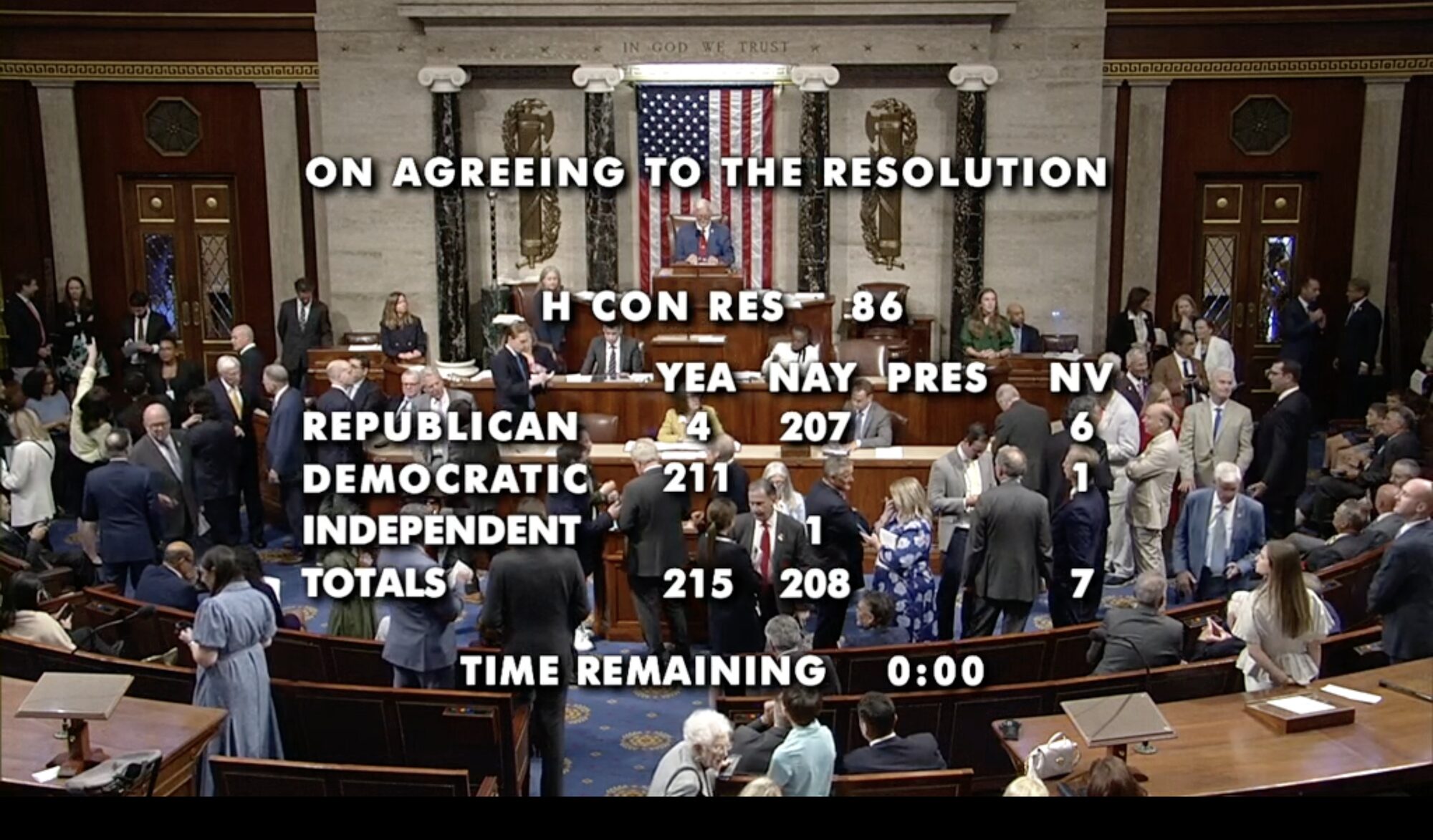
- Vote passed 215-208 with four Republicans joining Democrats.
- Rep. Gregory Meeks led the effort.
- Speaker Mike Johnson previously tried to block a vote.
- Rising gas prices and economic pressures fueled opposition.
- The Strait of Hormuz remains a central concern.
- Senate has advanced a similar measure but has not held a final vote.
- Trump is expected to oppose any limits on military authority.
- Marco Rubio warned the resolution could weaken negotiations.
- The measure sets up a potential constitutional clash over war powers.

Deep Look
House Rebukes Trump With Iran War Powers Vote
WASHINGTON — The House of Representatives approved a war powers resolution Wednesday aimed at ending U.S. military involvement in Iran, delivering a significant political setback to President Donald Trump as lawmakers expressed growing frustration with a conflict that has stretched into its fourth month.
The measure passed by a 215-208 vote, with four Republicans breaking ranks to join Democrats in support of the resolution. Republican Reps. Thomas Massie, Brian Fitzpatrick, Tom Barrett and Warren Davidson crossing party lines to support the resolution.
The vote represents the strongest congressional challenge yet to Trump’s handling of the conflict and highlights increasing bipartisan concerns about the economic and political costs of continued military engagement.
Democrats Declare “Enough Is Enough”
The effort was spearheaded by Gregory Meeks, the ranking Democrat on the House Foreign Affairs Committee.
“Enough is enough,”
Meeks said during debate on the measure.
“It is time for the president to do the right thing.”
He argued that American families are bearing the burden of the prolonged conflict through rising fuel costs and broader economic pressures.
“The people are tired of suffering because of his war of choice — suffering at the gas pump, suffering at the supermarkets.”
The vote prompted applause and cheers inside the House chamber after final passage.
Republican Resistance To The War Grows
The resolution’s success underscores a notable shift within the Republican Party.
While most Republicans continue to support Trump’s foreign policy approach, a small but growing faction has become increasingly skeptical of the war.
House Speaker Mike Johnson previously attempted to prevent a vote on the measure by halting floor action when support appeared to be growing.
However, continued fighting and the administration’s inability to secure a comprehensive peace agreement have fueled additional opposition.
The House vote follows similar developments in the Senate, where several Republican senators recently joined Democrats to advance a comparable resolution.
Economic Fallout Drives Political Pressure
Much of the opposition centers on the economic consequences of the conflict.
Since U.S. and Israeli military operations against Iran began on February 28, disruptions in the Strait of Hormuz have contributed to higher energy prices and inflation concerns.
The strategic waterway remains one of the world’s most important transportation routes for oil, natural gas and related products.
As shipping disruptions continue, consumers have faced increased costs at gas stations and in grocery stores.
These economic pressures have become a growing concern for lawmakers heading into the midterm election season.
White House Focused On Reopening Hormuz
Despite congressional criticism, Johnson defended the administration’s strategy and said Trump remains focused on restoring normal commerce through the Strait of Hormuz.
According to Johnson, discussions with the president have centered on securing international cooperation to reopen the critical shipping corridor.
“The entire world has an interest in the Strait of Hormuz being reopen for commerce. That what he’s working on.”
Johnson also rejected suggestions that the administration has lost focus on domestic priorities.
“Laser focused.”
That was how the speaker described Trump’s attention to domestic issues and the upcoming midterm elections.
Rubio Warns Congress Against Limiting Military Options
During testimony before the House Foreign Affairs Committee, Secretary of State Marco Rubio cautioned lawmakers against approving restrictions on military authority.
Rubio argued that congressional intervention could weaken America’s negotiating position with Iran.
“Hands are going to be tied.”
He suggested Iranian leaders might conclude that Washington lacks the ability to respond forcefully if diplomacy fails.
“We won’t be able to do anything to them, so why make a deal?”
The administration has maintained that preserving military leverage remains essential to achieving a lasting settlement.
What The Resolution Actually Does
Although the House vote carries significant political symbolism, the resolution does not automatically end military operations.
Instead, it represents a formal assertion of Congress’s constitutional authority over decisions involving war and military force.
The measure now moves to the Senate, where lawmakers have already shown a willingness to challenge the administration’s strategy.
If both chambers approve similar legislation, it could trigger a broader legal and constitutional dispute over the balance of power between Congress and the presidency.
Constitutional Battle Over War Powers
The debate highlights a longstanding tension within American government.
Under the Constitution, Congress possesses the authority to declare war, while the president serves as commander in chief of the armed forces.
Successive administrations from both parties have often relied on executive authority to conduct military operations without formal declarations of war.
Supporters of the resolution argue Congress must reclaim its constitutional role in authorizing military conflicts.
Opponents contend that restricting presidential authority during an active conflict could undermine national security and diplomatic efforts.
Additional Foreign Policy Battles Ahead
The Iran vote may only be the beginning of broader congressional challenges to the administration’s foreign policy.
Lawmakers are expected to consider additional measures related to international conflicts, including legislation involving support for Ukraine and a separate war powers resolution addressing U.S. involvement connected to Lebanon.
As the Iran conflict continues and peace negotiations remain uncertain, pressure on both Congress and the White House is likely to intensify.