Trump Faces Pressure As Iran War Stalemate Tests White House Strategy/ Newslooks/ WASHINGTON/ J. Mansour/ Morning Edition/ President Donald Trump is facing growing pressure as negotiations with Iran remain stalled despite a tentative ceasefire framework. Allies and critics warn that a prolonged stalemate could weaken U.S. leverage, fuel economic concerns, and create political challenges ahead of the midterm elections. Rising energy prices, congressional opposition, and uncertainty over future military action are intensifying scrutiny of the administration’s Iran strategy.
Trump Iran War Strategy Quick Looks
- Trump has yet to approve a tentative ceasefire extension agreement.
- Iran has shown little willingness to accept new U.S. demands.
- Recent military exchanges have raised fears of renewed conflict.
- Global energy markets remain under pressure due to Hormuz disruptions.
- Administration officials are debating the risks of returning to military action.
- Gulf allies are concerned about further Iranian retaliation.
- Trump remains wary of agreeing to a deal resembling the 2015 nuclear accord.
- Israel has faced pressure from Trump to reduce regional military escalation.
- Democrats are increasing attacks on the administration’s handling of the conflict.
- Republican lawmakers are also expressing concern about a prolonged stalemate.
Trump’s Iran War Dilemma Deepens As Negotiations Stall
White House Faces Growing Pressure Over Iran Conflict
WASHINGTON — President Donald Trump is increasingly facing pressure from both supporters and critics as the Iran conflict enters a prolonged period of uncertainty, raising concerns about whether the administration can secure a diplomatic breakthrough without appearing to back down.
Nearly a week has passed since U.S. and Iranian negotiators reportedly reached a tentative framework that would extend the ceasefire by 60 days while opening a new round of talks focused on Iran’s nuclear program.
The proposed agreement still requires Trump’s approval, but negotiations have slowed after the president sought additional changes to the framework.
Iranian officials have shown little indication they are prepared to accept the revised demands, leaving talks in limbo while military tensions continue to simmer.
Fragile Ceasefire Remains Under Pressure
Recent military activity has heightened concerns that the fragile ceasefire could collapse altogether.
Despite a series of strikes involving both American and Iranian forces, Trump has attempted to minimize concerns about the situation.
“It’s a different part of the world,” Trump told reporters in the Oval Office. “You know, I’d say in that part of the world, a ceasefire is when you’re shooting in a more moderate manner.”
The comments reflect the administration’s effort to portray the violence as manageable even as negotiations remain stalled.
Trump has repeatedly suggested that a broader agreement is close, often predicting that a breakthrough is only days away.
On Wednesday, he again expressed optimism.
“Over the weekend.”
The president suggested that progress could emerge within days, though similar predictions have not yet produced a final agreement.
Energy Markets Remain On Edge
One of the most significant consequences of the prolonged uncertainty has been continued disruption in global energy markets.
Without an agreement to reopen the Strait of Hormuz fully, oil and natural gas shipments remain constrained, contributing to elevated energy prices worldwide.
The situation has increased concerns about inflation and the cost of living in numerous countries, including the United States.
Higher fuel costs have also become a growing political issue as lawmakers prepare for the upcoming midterm elections.
At times, Trump has appeared increasingly frustrated by the pace of negotiations.
After reports surfaced suggesting talks had stalled, he dismissed concerns during an interview.
“Couldn’t care less”
Trump also reportedly suggested that the negotiations had become
“boring.”
Concerns Grow Inside The Administration
Behind the scenes, concerns are reportedly mounting among some administration officials and advisers.
According to individuals familiar with internal discussions, Trump faces competing pressures from multiple directions.
Democrats have increasingly focused on rising oil prices and economic concerns, while some hawkish supporters argue that accepting a compromise agreement would amount to surrendering leverage over Tehran.
At the same time, military officials and foreign allies are warning against restarting large-scale military operations.
One concern centers on the pace at which the U.S. military has consumed key weapons systems during the conflict.
Officials reportedly estimate that replenishing certain munitions could take years.
Regional partners in the Gulf are also worried that renewed fighting could trigger retaliatory attacks against critical infrastructure and energy facilities.
Trump Seeks To Avoid A “Bad Deal”
The administration’s challenge is compounded by Trump’s longstanding opposition to the 2015 nuclear agreement negotiated during President Barack Obama’s administration.
Trump withdrew from that accord during his first term, arguing it failed to eliminate Iran’s nuclear ambitions and did not adequately address Tehran’s regional activities.
Now, according to people familiar with White House discussions, Trump is determined not to sign an agreement that could be viewed as a return to a similar framework.
The president reportedly believes that accepting a weak agreement could damage his legacy and undermine his broader foreign policy goals.
White House spokeswoman Anna Kelly rejected suggestions that Trump is boxed in by the situation.
“These mysterious so-called ‘administration officials’ have no idea what they’re talking about — those actually involved in sensitive discussions know to trust in President Trump, who will always do what is best for U.S. national security.”
Israel And Lebanon Add Another Layer Of Complexity
The diplomatic picture has also been complicated by developments involving Israel and Lebanon.
According to the report, Trump recently pressured Israeli Prime Minister Benjamin Netanyahu to avoid further escalation in Lebanon.
That intervention contributed to a renewed ceasefire arrangement between Israel and Lebanon.
The move highlights Trump’s effort to prevent the conflict from expanding further across the region while negotiations with Iran remain unresolved.
However, analysts note that maintaining the current status quo may ultimately benefit Tehran.
Critics Warn Iran Could Benefit From Delay
Some foreign policy experts argue that the longer negotiations remain unresolved, the more leverage Iran gains.
Behnam Ben Taleblu of the Foundation for Defense of Democracies suggested that Tehran may believe time is working in its favor.
“Either way, Tehran appears more resolute than ever to not provide Trump with a victory image, hence why it isn’t budging on the battlefield or negotiating table.”
Such assessments have fueled concerns among some policymakers that Iran is deliberately waiting for political pressure to mount on Washington.
Political Risks Increase Ahead Of Midterms
The conflict is also becoming a growing domestic political issue.
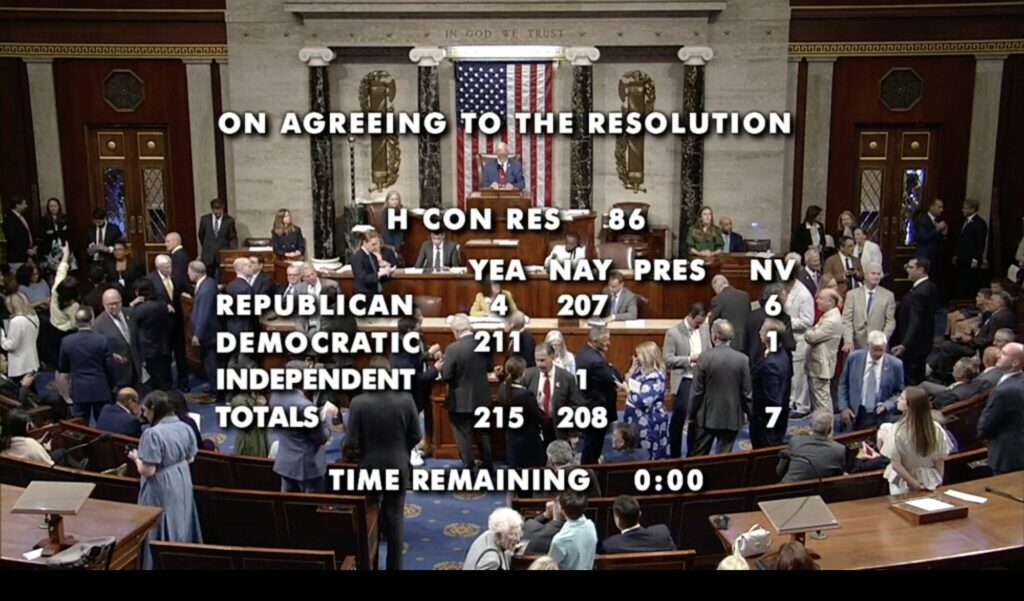
The House recently approved a war powers resolution aimed at limiting military action against Iran, with several Republicans joining Democrats in supporting the measure.
Congressional Democrats have used hearings with Secretary of State Marco Rubio to criticize the administration’s handling of the conflict and its economic consequences.
During one exchange, Senator Cory Booker argued that the ongoing stalemate demonstrated Iranian resilience.
“We are the strongest nation on the planet Earth, and we’re in a stalemate with Iran.”
“And now we’re begging to get back into a deal that you all trashed in the first place.”
Rubio forcefully rejected that characterization.
“There’s no one begging.”
“I don’t know where you’re getting this perception that Iran is stronger.”
A Defining Moment For The Administration
Political analysts say the administration now faces a difficult balancing act.
A return to military operations could create new risks and costs, while a prolonged stalemate could keep energy prices elevated and provide opponents with fresh political ammunition.
Christopher Borick of the Muhlenberg College Institute of Public Opinion said Republicans could face increasing pressure if the conflict drags on without a clear resolution.
“There’s significant risk in having this thing drag on for Republicans.”
Whether Trump chooses diplomacy, renewed military pressure, or continued negotiations, the coming weeks could prove pivotal not only for the future of the Iran conflict but also for the broader political landscape heading into the midterm elections.