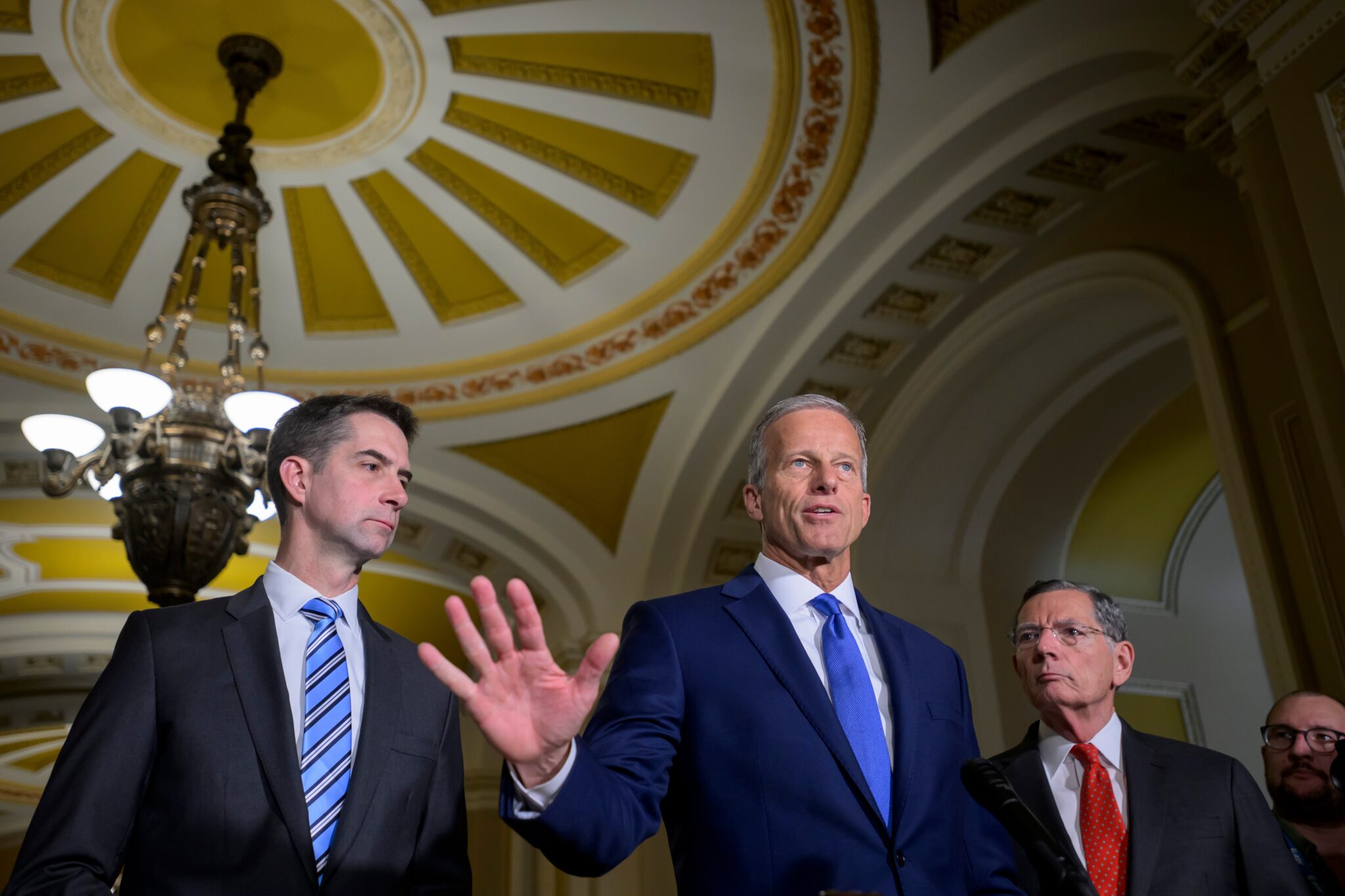
Senate Voting Marathon Begins On $70 Billion Immigration Enforcement Bill/ Newslooks/ WASHINGTON/ J. Mansour/ Morning Edition/ The Senate has begun voting on a $70 billion bill to fund ICE and Border Patrol through the remainder of President Donald Trump’s term. Democrats are attempting to derail the legislation through amendments targeting immigration policies and Trump’s controversial settlement fund. Republicans are struggling to maintain unity as several GOP senators push for legal guarantees that the administration cannot revive the fund.
Senate ICE Funding Bill Quick Looks
- Senate begins marathon voting session on immigration funding.
- Bill provides roughly $70 billion for ICE and Border Patrol.
- Funding would last through the end of Trump’s term.
- Democrats are offering amendments to block the legislation.
- Dispute centers on the abandoned $1.776 billion settlement fund.
- Some Republican senators want the fund permanently banned by law.
- Senate leaders are using reconciliation to bypass Democratic support.
- White House security funding was removed from the bill.
- GOP leaders are working to keep enough votes together.
- House Republicans hope to approve the measure quickly if the Senate passes it.
Senate ICE Funding Bill Deep Look
The Senate launched a lengthy voting session Thursday on legislation that would provide approximately $70 billion in funding for U.S. Immigration and Customs Enforcement (ICE) and the Border Patrol, setting up a major showdown between Republicans and Democrats over immigration enforcement and a controversial Trump administration settlement fund.
Republicans view the legislation as one of their most important priorities of the year, arguing that immigration enforcement agencies need long-term funding certainty. Democrats, meanwhile, are using the amendment process to challenge both the bill and broader Trump administration policies.
Republicans Push For Long-Term Immigration Funding
The legislation would provide three years of funding for ICE and Border Patrol operations, extending support through the end of President Donald Trump’s current term.
Republican leaders have spent weeks trying to move the bill through Congress after negotiations became complicated by disagreements over unrelated White House proposals and controversy surrounding a separate Justice Department initiative.
Senate Majority Leader John Thune emphasized that Republicans want to keep attention focused on immigration enforcement funding.
“The thing we’re trying to do here is to keep the focus on funding for ICE and CBP,” Thune said.
Republicans are relying on the budget reconciliation process, which allows certain legislation to pass with a simple majority rather than the 60 votes normally required to overcome a filibuster.
Democrats Launch Amendment Strategy
Before the legislation can receive final approval, senators must navigate a lengthy amendment process often referred to as a “vote-a-rama.”
Democrats are using the procedure to force votes on issues they believe could divide Republicans.
Their first major amendment seeks to permanently prohibit the Trump administration’s proposed $1.776 billion settlement fund, which was designed to compensate individuals who claim they were unfairly targeted by federal investigations.
Democratic leaders argue that verbal assurances from administration officials are insufficient.
Senate Minority Leader Chuck Schumer said lawmakers should ensure the fund cannot be revived through future executive action.
Democrats are also attempting to send the bill back to committee and attach additional restrictions to federal immigration enforcement activities.
Settlement Fund Remains Major Obstacle
The settlement fund has become one of the biggest sources of tension surrounding the legislation.
Acting Attorney General Todd Blanche told lawmakers earlier this week that the administration would not move forward with the proposal.
However, President Trump created fresh uncertainty when he suggested Wednesday that he was unsure about the fund’s future status.
“The settlement is very important,” Trump told reporters, adding, “I don’t know” whether it was permanently dead or merely paused.
Those comments fueled Democratic efforts to force votes banning the fund entirely.
The proposal had generated bipartisan criticism because opponents feared it could eventually provide compensation to individuals involved in the January 6 Capitol riot or other politically connected applicants.
Republican Unity Being Tested
While Republicans generally support the immigration funding package, several senators want stronger guarantees regarding the settlement fund.
Sen. Thom Tillis of North Carolina has publicly stated that he plans to offer an amendment preventing any future revival of the fund.
“We’ve got a sufficient number of Republicans who have been very clear they’ve got concerns there,” Tillis said.
According to reports from Capitol Hill, Senate leaders have spent hours negotiating with members who remain uneasy about supporting the bill without explicit legal language prohibiting the settlement program.
Several Republicans facing competitive elections or political pressure at home are carefully weighing their positions.
Immigration Funding Battle Months In The Making
The current dispute stems from a broader fight over immigration enforcement that began earlier this year.
Democrats have argued that any new Homeland Security funding should include reforms requiring clearer identification of federal officers, greater use of judicial warrants and other accountability measures.
Following the fatal shootings of two protesters during an immigration enforcement operation in Minneapolis earlier this year, negotiations between both parties intensified but ultimately failed to produce a bipartisan agreement.
As a result, ICE and Border Patrol have been operating without regular long-term funding while lawmakers searched for a legislative solution.
Republicans responded by pursuing a stand-alone funding package that could pass without Democratic support.
White House Security Funding Removed
The immigration package was also delayed by a separate controversy involving a proposal for approximately $1 billion in White House security spending.
The funding included security improvements connected to President Trump’s planned White House ballroom project.
Both Democrats and some Republicans questioned whether taxpayers should finance the project, especially amid economic concerns.
Republican negotiators ultimately removed the funding from the final version of the legislation to improve its chances of passage.
Final Outcome Still Uncertain
Although Senate Republicans hold a 53-47 majority, leaders still need to maintain near-unanimous support within their caucus to pass the legislation.
Several amendment votes could prove politically difficult and may reveal deeper divisions over immigration policy, executive power and the administration’s handling of the controversial settlement fund.
If Senate Republicans successfully navigate the amendment process and approve the measure, House Republican leaders have indicated they want to move quickly toward final passage and send the legislation to President Trump for his signature.