

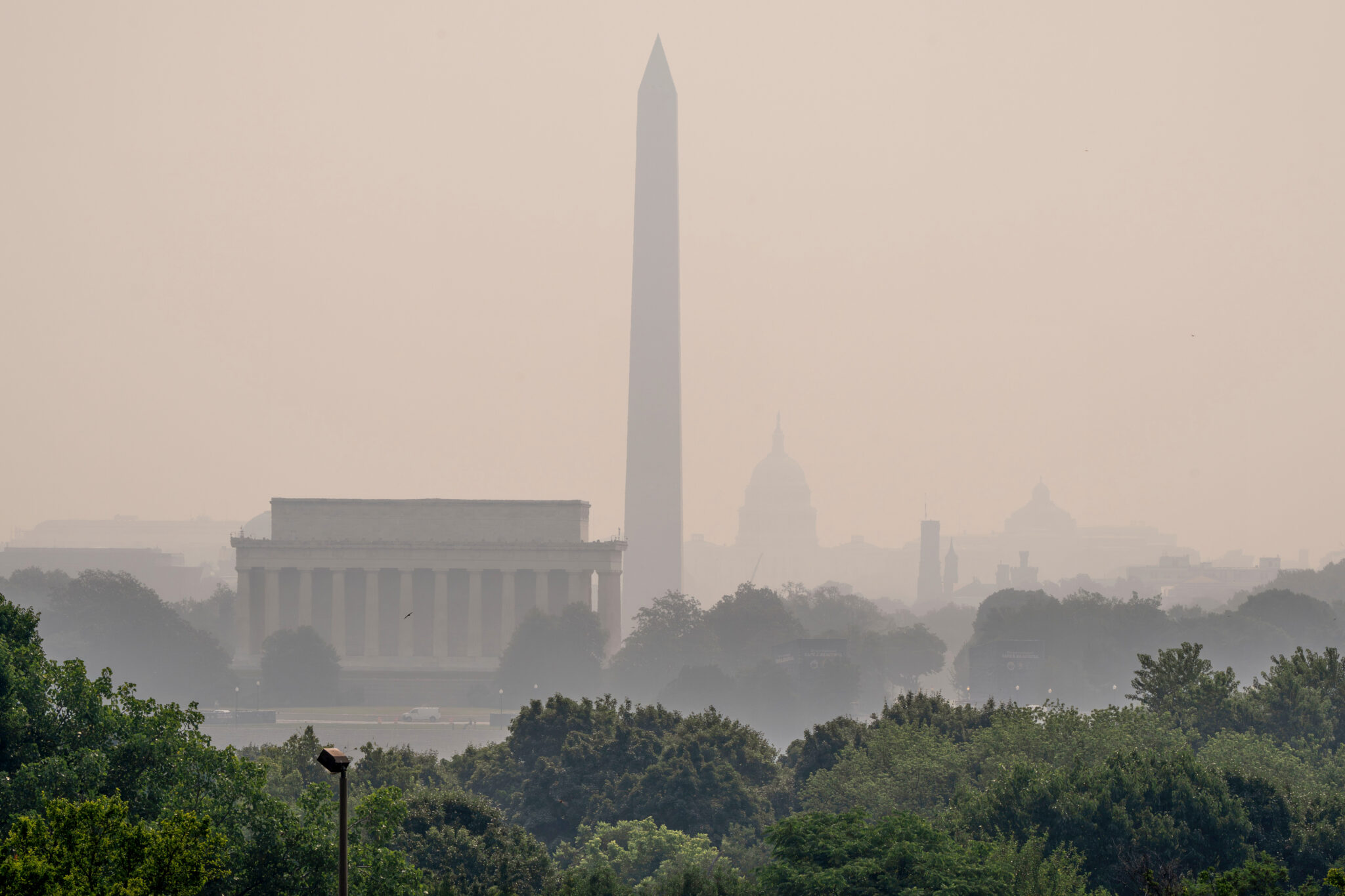
More Than 100 Million Under Air Quality Alerts as Wildfire Smoke Spreads/ Newslooks/ WASHINGTON/ J. Mansour/ Canadian wildfire smoke is creating dangerous air quality for more than 100 million people across the Midwest, Northeast and mid-Atlantic. Chicago, Milwaukee, Detroit, Washington and Philadelphia are among the major cities experiencing unhealthy pollution levels. Thunderstorms, rain, changing winds and a cold front should begin thinning the smoke from west to east Saturday.
Quick Look
- More than 100 million people are affected by wildfire smoke.
- Air quality alerts cover 18 states and the District of Columbia.
- Pollution ranges from “very unhealthy” to “hazardous” from northeastern Minnesota to southeastern Virginia.
- Chicago, Milwaukee and Detroit recorded some of the country’s worst air quality Friday morning.
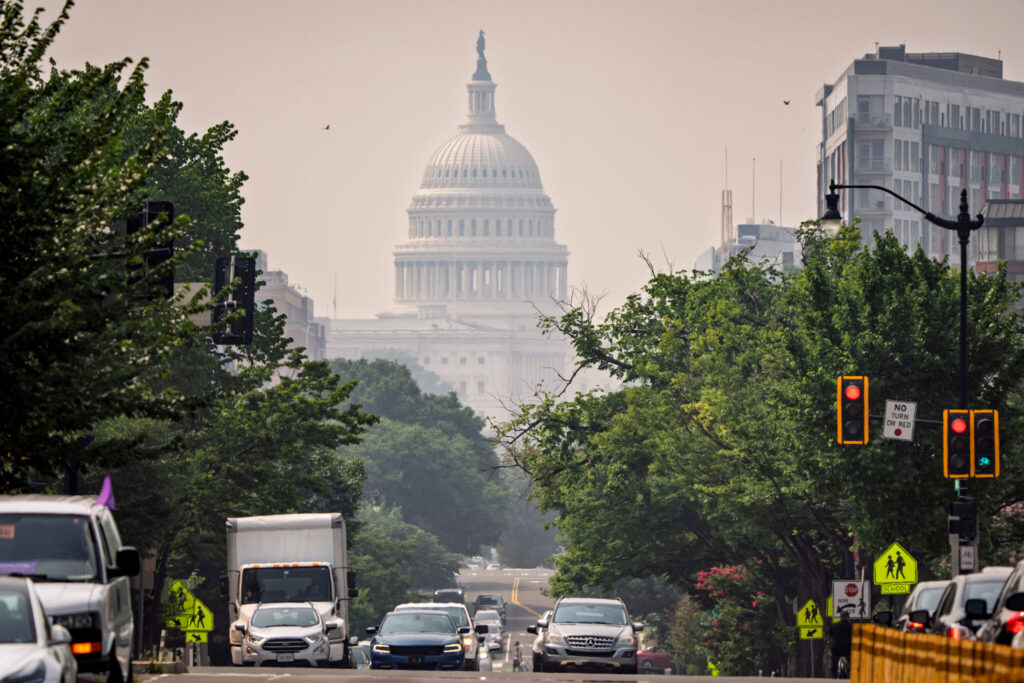
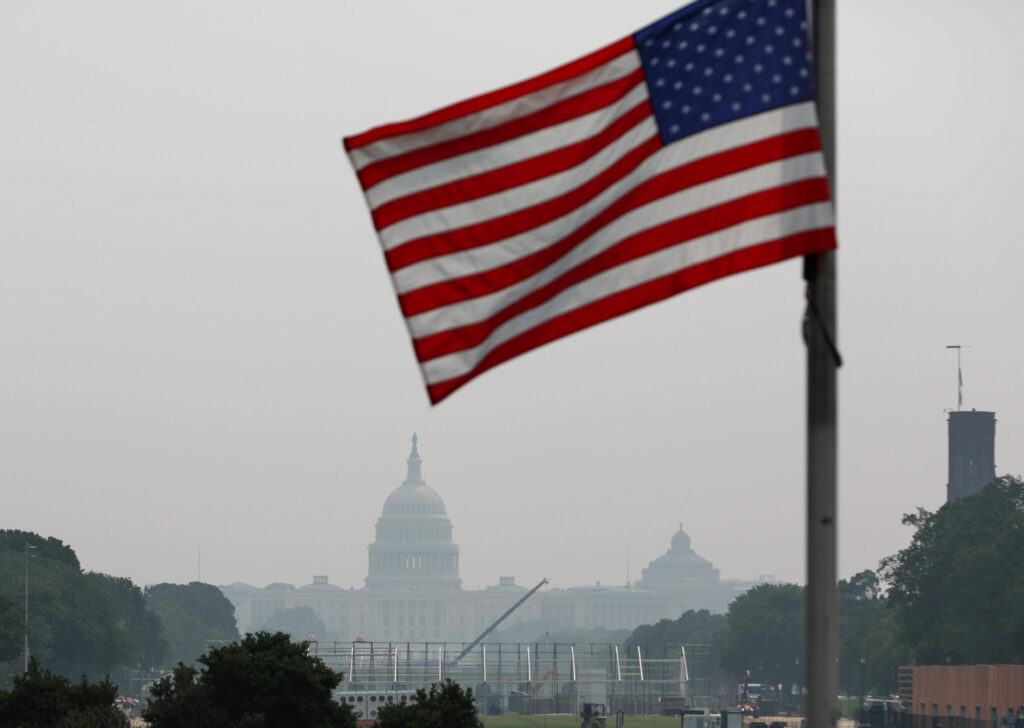
- Washington, DC, experienced dangerous air quality as smoke moved south.
- Philadelphia officials warned that everyone could experience health effects.
- Detroit is distributing free masks and encouraging residents to remain indoors.
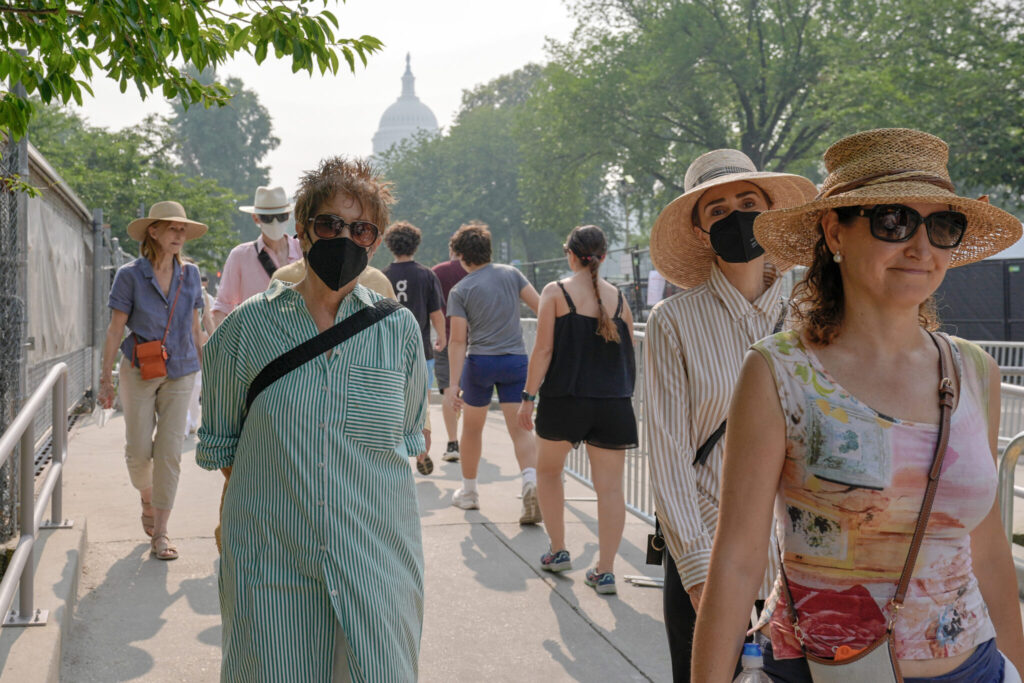
- Chicago officials recommended well-fitted N95 or KN95 masks for anyone going outside.
- Smoke could remain over some areas through at least Saturday.
- Thunderstorms and a cold front should gradually improve conditions.
- US wildfires have burned more than 3.6 million acres this summer.
- Approximately 3,500 Canadian fires have burned more than 6 million acres.
- Wildfire smoke contains PM2.5 particles that can enter the lungs and bloodstream.
- Children, older adults and people with heart or lung conditions face higher health risks.
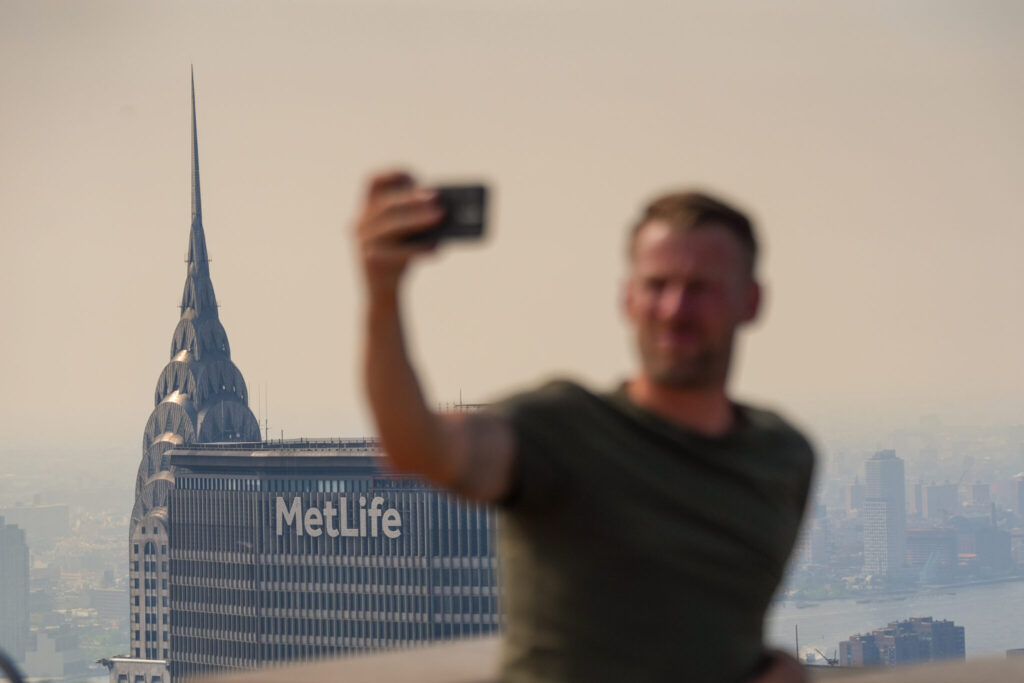
Deep Look
Canadian Wildfire Smoke Covers Major US Cities
Thick smoke from Canadian wildfires is spreading across the Midwest, Northeast and mid-Atlantic, exposing more than 100 million people to unhealthy or dangerous air.
Air quality alerts are active across 18 states and the District of Columbia. Pollution levels classified as “very unhealthy” or “hazardous” stretch from northeastern Minnesota to southeastern Virginia.
Additional waves of smoke are expected to continue moving south, meaning poor air quality could persist through at least Saturday in some areas.
The severity of the smoke will vary from one city to another as winds and weather patterns shift.
Washington Experiences Dangerous Air Quality
The smoke expanded southward Friday and reached Washington, DC, where air quality deteriorated to dangerous levels.
Conditions could change rapidly as the plume continues moving. Wind direction, atmospheric pressure and approaching storms will determine which locations experience the highest pollution levels each day.
Residents across affected areas have been advised to monitor local air quality reports as conditions can worsen even when smoke is not immediately visible.
Chicago Records Its Worst Air Quality
Milwaukee, Chicago and Detroit experienced some of the worst air quality in the United States on Friday morning.
Dangerous pollution also stretched into southern Ohio and West Virginia.
Chicago officials described the conditions as unprecedented.
“Chicago is currently experiencing its worst air quality in recorded history,” the mayor’s office said in a social media post Thursday evening. “Please stay indoors, and if you must go outdoors, use a well-fitted N95 or KN95 mask for your safety.”
The Detroit Health Department offered free masks to residents Friday and encouraged people to stay inside.
Philadelphia officials issued a similarly broad warning, saying “everyone is likely to experience health effects from being exposed” to the smoke Friday.
Thunderstorms Could Bring Relief
Weather conditions are expected to begin improving Saturday.
Several rounds of thunderstorms are possible from the lower Great Lakes through the Northeast. Rain, changing winds and an approaching cold front should gradually thin the smoke from west to east.
Hazy skies and unhealthy air could continue early Saturday, particularly in locations where the smoke remains concentrated.
Air quality may not improve everywhere immediately. Some areas could continue experiencing pollution even after rain arrives, depending on wind patterns and the location of new smoke plumes.
Thousands of Canadian Fires Feed Smoke Plume
Wildfire smoke has already affected parts of the western United States, Plains and Midwest this summer.
Fires within the United States have burned more than 3.6 million acres, with most of the damage occurring in the western half of the country.
The thicker smoke affecting major cities this week originated primarily from wildfires in Canada.
Approximately 3,500 Canadian fires have burned more than 6 million acres this summer. A dozen fires have intensified in Ontario during recent weeks, producing large smoke plumes that have moved south into the United States.
The pattern resembles the widespread smoke crisis of 2023, although Canada’s wildfire activity this year remains below the record level recorded during that season.
Heat Dome Helps Push Smoke South
The combination of Ontario wildfires and a heat dome over the central United States has created conditions that can trap and transport smoke across densely populated areas.
Heat domes form when persistent high pressure traps hot air over a region. The same broader weather pattern can affect wind direction and prevent pollutants from dispersing quickly.
As smoke continues moving through the atmosphere, cities hundreds of miles from the fires can experience hazardous pollution.
PM2.5 Particles Create Serious Health Risks
Wildfire smoke contains microscopic pollutants known as PM2.5.
These particles are small enough to travel deep into the lungs and can enter the bloodstream when inhaled. Exposure can cause breathing difficulties, bronchitis and inflammation.
PM2.5 can also aggravate existing conditions, including asthma, diabetes, heart disease and other cardiovascular or respiratory illnesses.
People with heart or lung disease, children, pregnant people and older adults are generally more vulnerable to smoke-related health problems.
The National Weather Service recommends limiting outdoor activity and keeping windows closed while smoke remains in the area.
Officials also advise using a properly fitted N95 or KN95 mask when going outdoors during periods of dangerous air quality.
US Smoke Season Is Becoming Longer
The period when unhealthy wildfire smoke can affect the United States is expanding as western fire seasons become longer and more severe.
Research has found that climate change is responsible for most of the increase in surface wildfire smoke.
The growing frequency and intensity of smoke events have reversed decades of improvements in air quality across some parts of the country, particularly in the western United States.
Pollution caused by burning fossil fuels is warming the planet and increasing the likelihood of prolonged fire and smoke seasons.
Canada’s 2023 Fire Season Exposed Millions
Canada experienced its worst wildfire season on record in 2023.
A study published last year estimated that more than 350 million people were exposed to daily air pollution caused by wildfire smoke during that historic event.
Although the current Canadian fire season has not reached the same level, experts warn that extreme seasons could become more common as global temperatures rise.
Another study estimated that planet-warming pollution contributed to approximately 15,000 additional US deaths from wildfire particles between 2006 and 2020 compared with what would have occurred in a cooler climate.






You must Register or Login to post a comment.