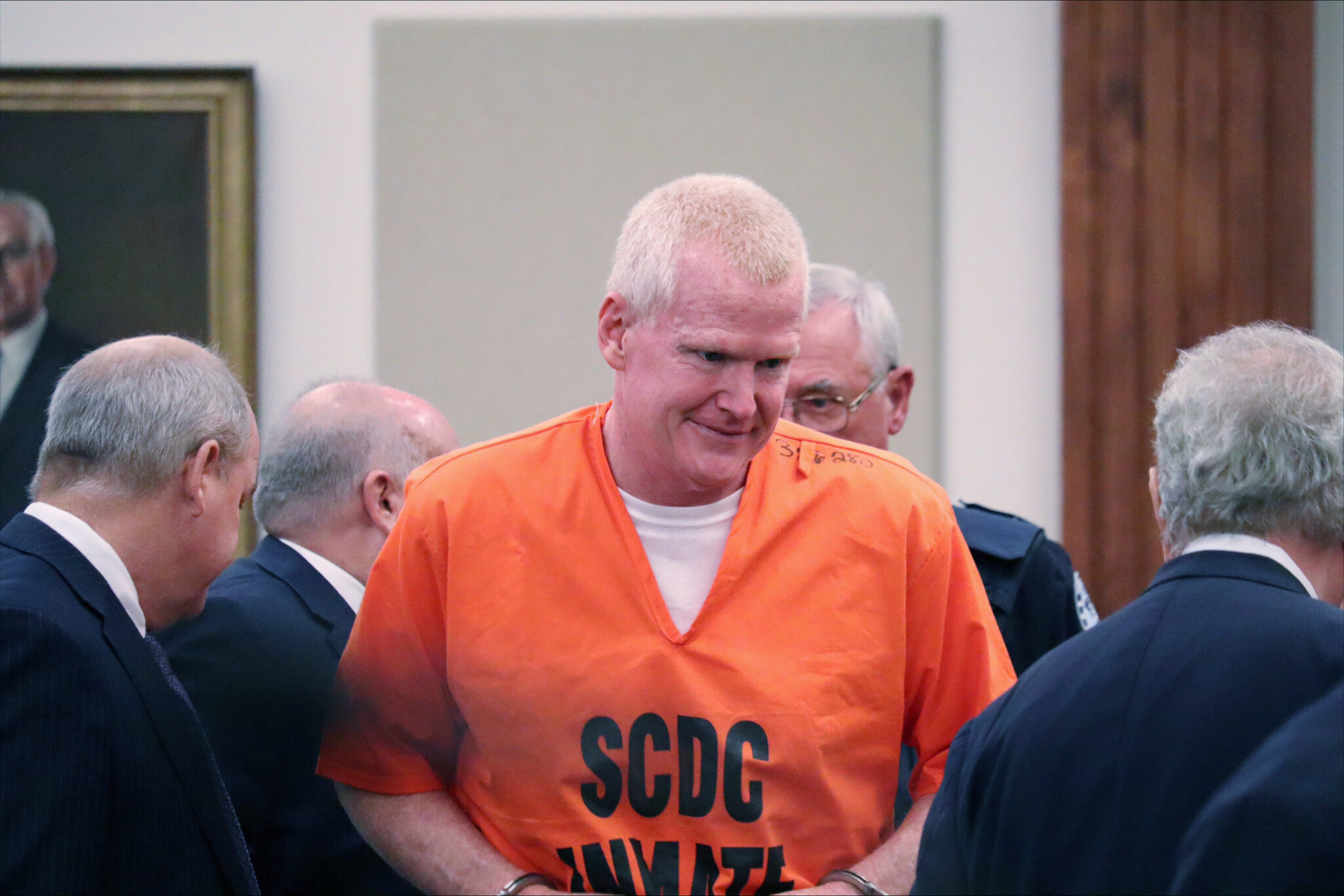
Alex Murdaugh to Be Retried After Murder Convictions Overturned/ Newslooks/ WASHINGTON/ J. Mansour/ Morning Edition/ South Carolina prosecutors plan to retry Alex Murdaugh after the state Supreme Court overturned his murder convictions. The court ruled that misconduct by the court clerk and questionable trial decisions denied Murdaugh a fair trial. Despite the reversal, Murdaugh remains in prison serving a lengthy federal sentence for financial crimes.
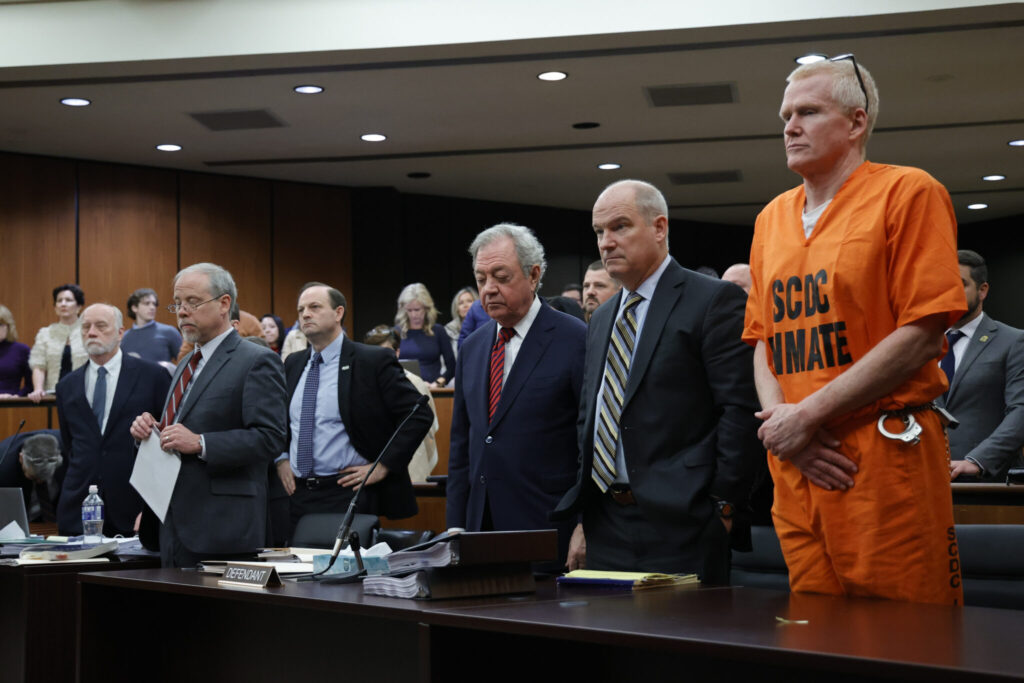
Alex Murdaugh Retrial Quick Looks
- South Carolina Supreme Court overturned Murdaugh’s murder convictions
- Prosecutors immediately announced plans for a retrial
- Judges cited misconduct by court clerk Becky Hill
- The ruling also criticized evidence involving financial crimes
- Murdaugh still faces a 40-year federal prison sentence
- He continues denying involvement in the killings
- The Murdaugh case remains one of America’s biggest true-crime stories
- The retrial could become another national media spectacle
Deep Look
Alex Murdaugh Murder Convictions Overturned
Disgraced South Carolina attorney Alex Murdaugh will face a new murder trial after the South Carolina Supreme Court overturned his convictions in the killings of his wife and younger son.
In a unanimous ruling Wednesday, the court vacated Murdaugh’s 2023 convictions and life sentence, concluding that serious misconduct by the court clerk and problematic trial decisions undermined the fairness of the proceedings.
The decision represents a dramatic legal victory for Murdaugh, whose murder case became one of the nation’s most closely watched true-crime sagas.
Prosecutors Immediately Promise Retrial
Despite the court’s ruling, prosecutors quickly made clear they intend to retry Murdaugh on the murder charges.
South Carolina Attorney General Alan Wilson said his office respects the Supreme Court’s decision but remains committed to pursuing justice in the case.
“No one is above the law,” Wilson said following the ruling.
The retrial means the state will again attempt to prove that Murdaugh murdered his wife Maggie and son Paul at the family’s rural Colleton County property in June 2021.
Murdaugh has consistently denied killing them, despite admitting to numerous other crimes including fraud, theft, insurance scams, and financial misconduct.
Court Says Clerk Improperly Influenced Jury
The Supreme Court’s ruling focused heavily on the actions of Colleton County Clerk of Court Becky Hill, who oversaw evidence and juror management during the trial.
The justices concluded that Hill improperly influenced jurors by making comments undermining Murdaugh’s credibility during the proceedings.
According to the court, Hill encouraged jurors to closely scrutinize Murdaugh’s testimony and body language before deliberations even began.
The court said her behavior “egregiously attacked Murdaugh’s credibility.”
The justices also accused Hill of exploiting the trial for personal gain tied to a book she was writing about the case.
“As her book’s title suggests, it turns out Hill was quite busy behind the doors of justice, thwarting the integrity of the justice system she was sworn to protect and uphold,” the court wrote in its 27-page ruling.
Hill’s book, “Behind the Doors of Justice: The Murdaugh Murders,” was later withdrawn after plagiarism allegations surfaced.
Becky Hill Already Pleaded Guilty
Hill has since pleaded guilty in a separate case involving allegations that she lied about her actions and statements connected to the trial.
The Supreme Court sharply criticized her conduct and placed primary responsibility for the retrial on her actions.
The justices specifically said Hill “placed her fingers on the scales of justice” and violated Murdaugh’s constitutional right to an impartial jury.
The ruling emphasized that even highly unpopular defendants are entitled to fair legal proceedings.
“Our justice system provides — indeed demands — that every person is entitled to a fair trial,” the justices wrote.
Hill’s attorney did not immediately respond publicly following Wednesday’s ruling.
Financial Crimes Evidence Also Questioned
The Supreme Court additionally criticized the trial judge’s decision to allow extensive evidence involving Murdaugh’s financial crimes during the murder trial.
Murdaugh’s attorneys argued that evidence showing he stole millions of dollars from clients unfairly prejudiced jurors by portraying him as dishonest and morally corrupt.
The defense contended those financial crimes were unrelated to the killings themselves.
The court agreed the judge may have gone too far in allowing prosecutors to introduce detailed evidence involving Murdaugh’s theft schemes and financial fraud.
Defense lawyers also highlighted the lack of direct physical evidence connecting Murdaugh to the shootings.
No murder weapons were ever recovered.
Attorneys argued there was no blood, DNA, or forensic evidence directly tying Murdaugh to the close-range killings.
Murdaugh Remains in Prison
Although the murder convictions were overturned, Murdaugh will not be released from prison.
The 57-year-old former attorney previously pleaded guilty to stealing approximately $12 million from clients through years of fraud and financial crimes.
He is currently serving a 40-year federal prison sentence related to those offenses.
Murdaugh’s spectacular downfall shocked South Carolina because his family had long dominated the legal and political system in the Lowcountry region for generations.
The once-prominent legal dynasty collapsed amid allegations involving corruption, financial crimes, suspicious deaths, and abuse of power.
Case Became National True-Crime Phenomenon
The Murdaugh case evolved into one of the biggest true-crime stories in America.
The saga inspired streaming documentaries, bestselling books, podcasts, television specials, and nonstop national media coverage.
Public fascination intensified because the case combined wealth, political influence, family tragedy, legal corruption, and violent crime.
The retrial is expected to attract enormous public attention once again.
Legal analysts say prosecutors will likely need to carefully reconsider how they present evidence during the second trial to avoid repeating the problems identified by the Supreme Court.
Questions Remain About New Trial Strategy
Prosecutors previously argued the evidence against Murdaugh was overwhelming despite the absence of direct forensic proof.
They focused heavily on cellphone records, video evidence, and financial motives, arguing Murdaugh killed his wife and son to distract from mounting investigations into his financial crimes.
Defense lawyers countered that the prosecution relied largely on circumstantial evidence and emotional assumptions.
The retrial could force prosecutors to narrow their case and avoid overreliance on evidence unrelated to the killings themselves.
National Attention Likely to Return
The new trial is expected to become another major courtroom spectacle.
The Murdaugh saga has become deeply embedded in American true-crime culture because of its extraordinary combination of privilege, violence, betrayal, and scandal.
As prosecutors prepare to retry the case, legal observers expect renewed debate over courtroom ethics, jury influence, media attention, and the balance between aggressive prosecution and defendants’ constitutional rights.
For now, the Supreme Court’s ruling resets one of the country’s most notorious criminal cases back to the beginning.