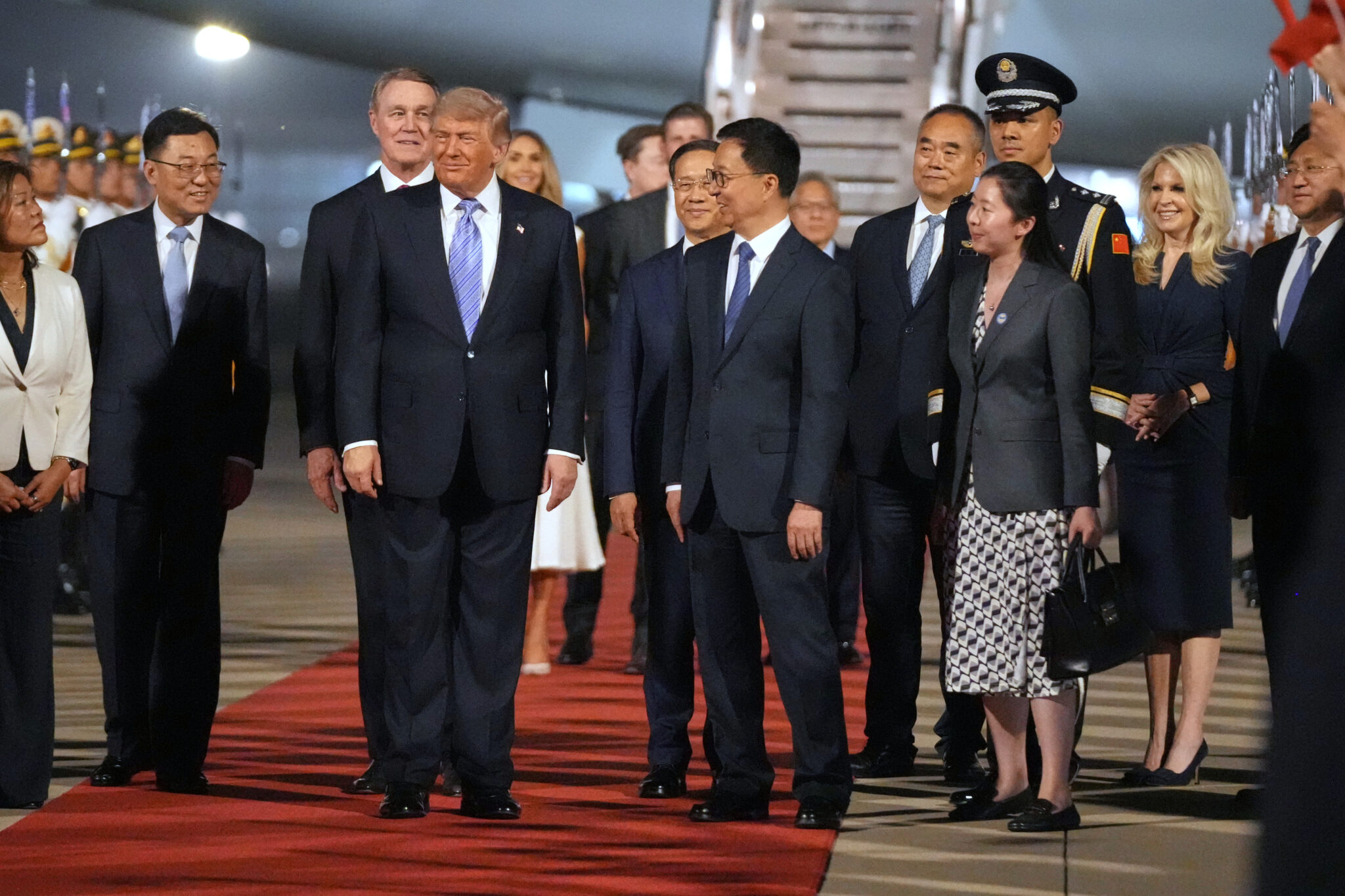
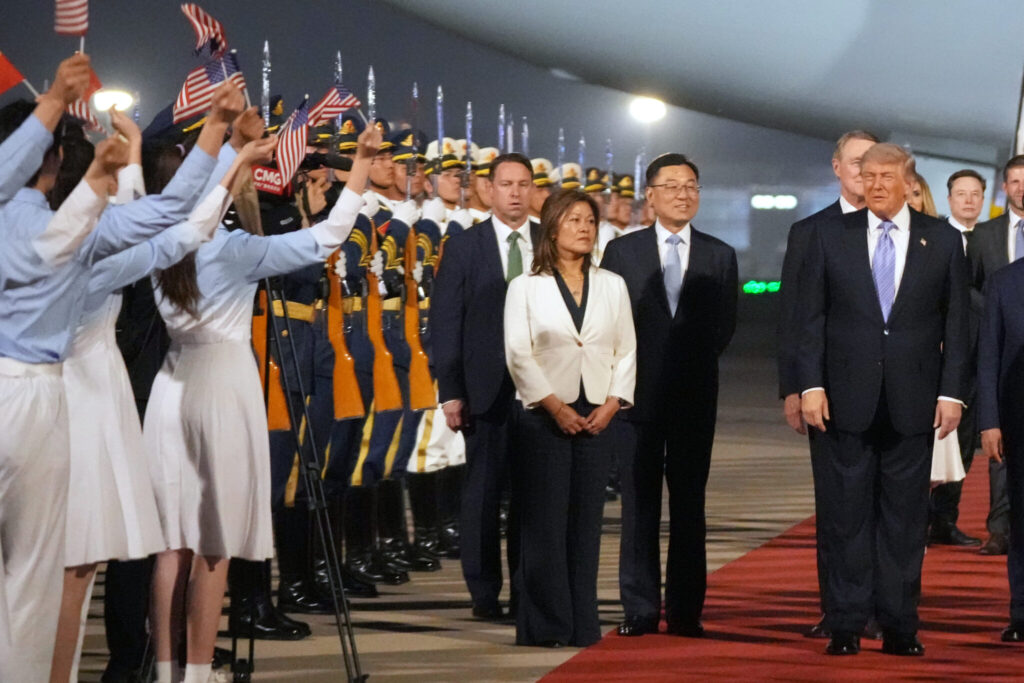
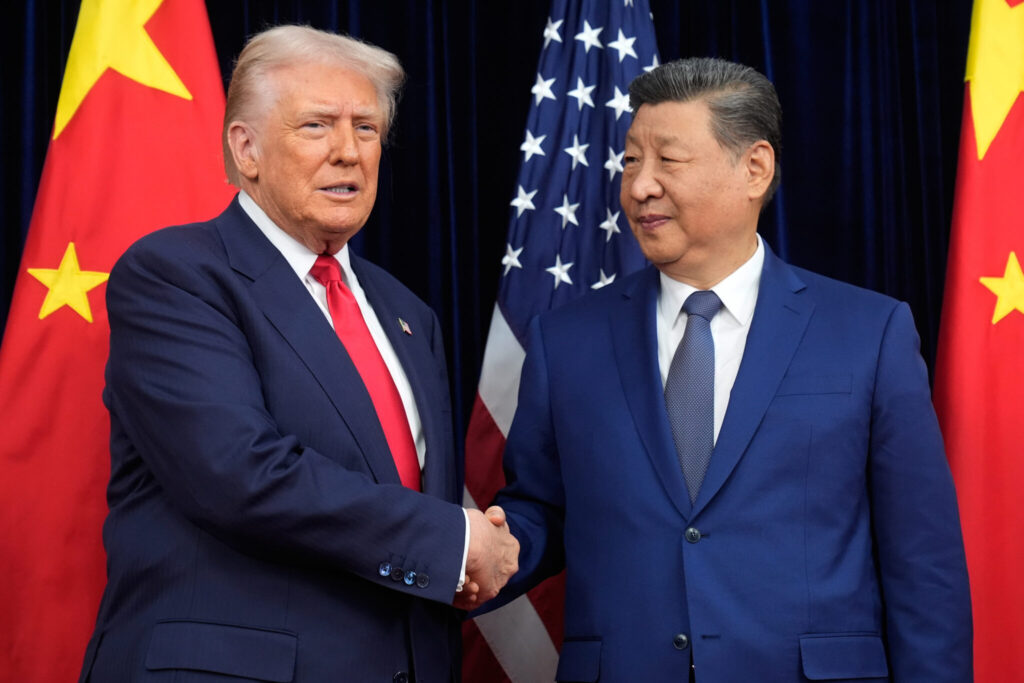
Trump and China’s Xi Seek Trade Reset After Damaging Tariff War/ Newslooks/ WASHINGTON/ J. Mansour/ Morning Edition/ President Donald Trump and Chinese President Xi Jinping are meeting in Beijing to stabilize economic relations after years of escalating tariffs and trade conflict. The prolonged trade war reshaped global supply chains, disrupted exports, and pushed companies to move production outside China. Despite tensions, both countries remain deeply dependent on one another economically and are searching for ways to reduce further damage.
US China Trade War Quick Looks
- Trump and Xi are meeting in Beijing this week
- The summit aims to stabilize US-China economic relations
- Tariffs between both countries remain historically high
- Many companies shifted manufacturing from China to Vietnam and India
- China redirected exports toward Europe and Southeast Asia
- Rare earth minerals and semiconductor restrictions remain major tensions
- American farmers suffered major losses during the trade war
- Both countries still rely heavily on each other economically
Deep Look
Trump and Xi Attempt to Repair Economic Damage
After years of escalating tariffs, trade retaliation, and geopolitical tensions, the United States and China are attempting to stabilize one of the world’s most important economic relationships.
President Donald Trump and Chinese President Xi Jinping are meeting this week in Beijing in hopes of easing tensions that severely disrupted trade between the world’s two largest economies.
The summit follows a chaotic period during which both countries imposed aggressive tariffs, restricted exports, and targeted key industries in a prolonged economic confrontation that reshaped global supply chains.
While expectations for dramatic breakthroughs remain low, officials from both sides hope the meeting can at least reduce uncertainty and prevent further escalation.
Trade War Reshaped Global Commerce
The US-China trade conflict fundamentally changed international trade patterns over the past decade.
Before Trump launched tariffs against China during his first term in 2018, the average US tariff on Chinese imports stood at roughly 3%.
Even after some reductions, tariffs on Chinese goods now remain near 48%, according to trade experts cited in the report.
The impact on trade volume has been enormous.
In 2016, China was America’s largest trading partner.
At the time, trade with China accounted for more than 13% of all US international trade.
By 2025, China’s share had fallen to just 6.4%, with Mexico and Canada overtaking China as America’s top trading partners.
Supply Chains Moved Beyond China
One of the biggest long-term effects of the trade war has been the rapid diversification of global manufacturing.
Many American companies shifted production away from China toward countries such as:
- Vietnam
- India
- Thailand
- Indonesia
- Cambodia
- Mexico
Technology giant Apple expanded iPhone production in India.
Nike increased manufacturing operations in Vietnam.
Other businesses developed multi-country supply chains to reduce dependence on China while still maintaining some Chinese production capacity.
“Most serious manufacturers did not simply ‘leave China,’” said Velong Enterprises CEO Jacob Rothman. “Instead, they built multi-country supply chains around China.”
Chinese Companies Found Workarounds
Chinese exporters also adapted aggressively.
Many Chinese firms relocated portions of their manufacturing operations into Southeast Asia to bypass American tariffs.
Goods assembled in Vietnam, Thailand, and other nearby countries are often still tied to Chinese supply networks before ultimately reaching American consumers.
As direct Chinese exports to the United States declined, imports from Southeast Asian nations surged sharply.
Imports from Vietnam rose 42%, Thailand 44%, and Indonesia 24%, according to the report.
Analysts say the numbers suggest China remains deeply embedded in global manufacturing despite efforts to reduce dependence on Beijing.
Farmers and Manufacturers Took Major Hits
The trade war caused significant pain across multiple sectors of the American economy.
US soybean farmers were among the hardest hit after China dramatically reduced purchases of American agricultural products in retaliation for US tariffs.
US soybean exports to China reportedly fell 75% during 2025.
Meanwhile, manufacturers relying on Chinese imports faced volatile costs and uncertainty.
Appu Jacob Varghese, owner of Zion Foodtrucks in Colorado, described the turmoil created by rapidly changing tariffs.
“Last year, a lot of my hair turned white,” Varghese said.
His business relied heavily on Chinese cooking equipment and fire-suppression systems used in custom-built food trucks.
Trump’s tariff rates fluctuated unpredictably throughout the year, at one point reaching as high as 145%.
Varghese eventually diversified suppliers into Vietnam, Thailand, Israel, and the United States to reduce future risk.
Rare Earths and Technology Became Weapons
The trade war increasingly expanded beyond ordinary tariffs into strategic industries and national security concerns.
The United States restricted exports of advanced semiconductor chips to China, particularly involving artificial intelligence technologies.
China responded by limiting access to critical rare earth minerals and metals essential for electronics, aerospace, defense, and manufacturing.
Beijing also imposed restrictions on tungsten exports — a strategically important metal used in military and industrial products.
China currently controls roughly 80% of global tungsten production.
These actions demonstrated how both countries possess powerful leverage over global supply chains and critical industries.
Summit Expected to Focus on Stability
Despite ongoing tensions, analysts say both countries increasingly recognize they cannot completely separate economically.
“The idea of somehow China being totally independent of us and us being totally independent of China, I think, is a fiction,” said former Commerce Secretary Wilbur Ross.
Officials expect only modest policy announcements during the summit.
Potential agreements could include:
- Extension of the current trade truce
- Chinese purchases of US soybeans and beef
- Boeing aircraft deals
- Discussion of a possible US-China Board of Trade
The broader goal appears to be stabilizing relations rather than resolving every dispute.
Businesses Want Predictability More Than Peace
For many businesses, the biggest concern is no longer simply tariffs themselves but unpredictability.
Companies increasingly worry about abrupt policy changes, geopolitical conflict, and unstable supply chains.
Economists say firms are now designing operations around resilience and diversification rather than assuming stable globalization will return.
“Trade tensions can flare up quite quickly,” said Moody’s economist Sarah Tan. “That makes US firms hesitant to rely too heavily on Chinese supply.”
Even companies maintaining strong Chinese partnerships are building backup manufacturing options elsewhere.
Trade Relationship Remains Deeply Intertwined
Despite years of economic conflict, the summit highlights a central reality: the United States and China remain deeply interconnected.
American consumers still depend heavily on Chinese manufacturing.
China still relies on American agricultural products, technology, and financial markets.
Neither side appears capable of fully decoupling without major economic consequences.
“We have to coexist in some way,” former Commerce Secretary Ross said. “The question is, what will be the rules of the road.”
Global Markets Watching Closely
Financial markets, manufacturers, investors, and governments worldwide are closely monitoring the Beijing summit.
Any signs of easing tensions could stabilize supply chains and reduce economic uncertainty.
But analysts caution that structural rivalry between the United States and China — especially involving technology, national security, artificial intelligence, and global influence — is unlikely to disappear.
Instead, the summit may represent a temporary effort to manage competition more carefully rather than fully repair the relationship.