

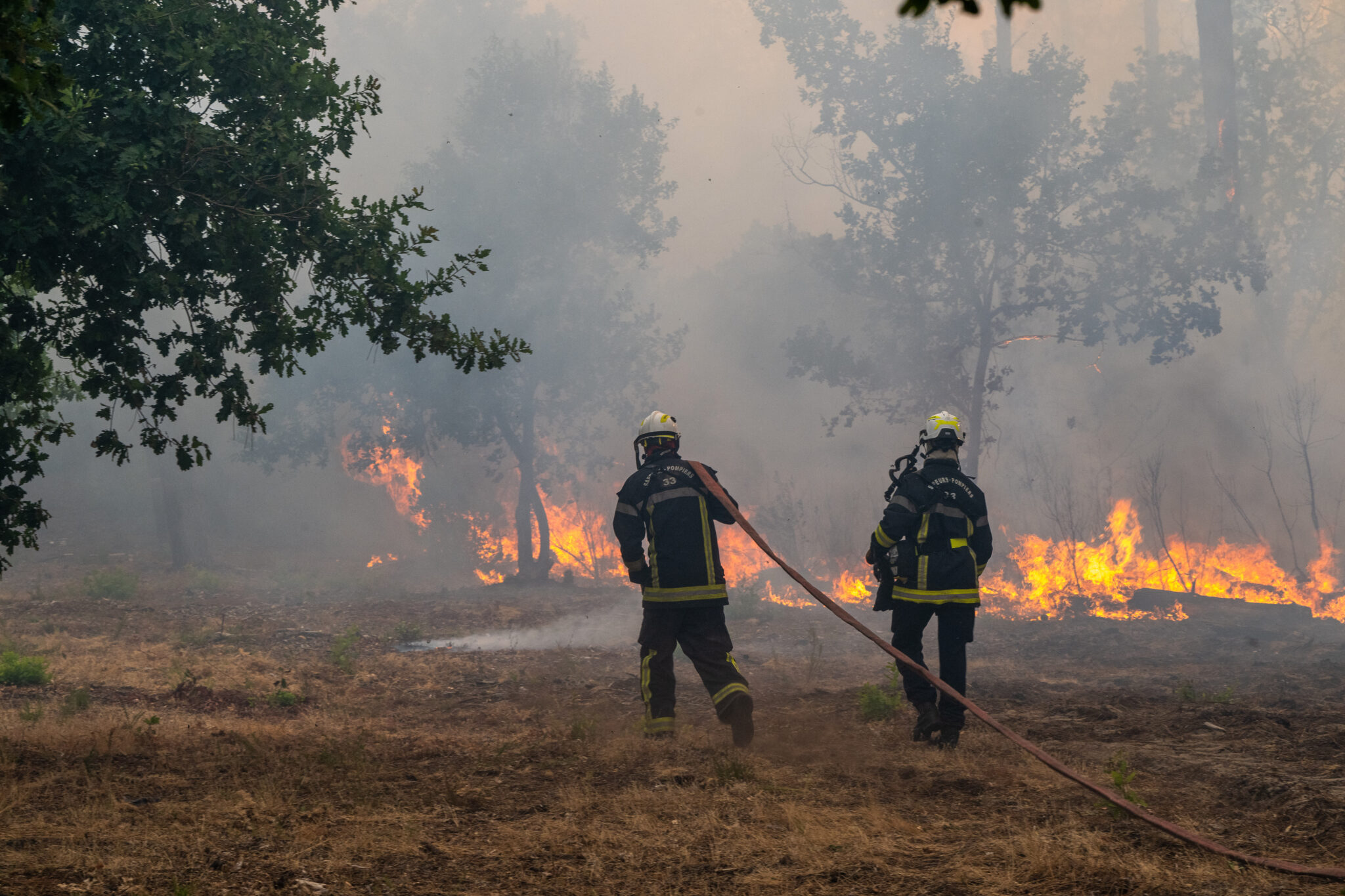
France and Spain Wildfires Force More Than 250,000 People From Their Homes/ Newslooks/ WASHINGTON/ J. Mansour/ Wildfires across France and Spain have forced more than 250,000 people to evacuate as flames threaten communities near Bordeaux and west of Madrid. France shortened the Tour de France’s final stage to redirect police officers and deployed an A400M military transport aircraft for firefighting. Thousands of firefighters, soldiers and emergency personnel are battling blazes intensified by extreme heat, shifting winds and climate change.
Quick Look
- More than 250,000 people have been displaced by wildfires in France and Spain.
- About 70,000 people were evacuated in central Spain.
- Evacuations expanded into western suburbs of Bordeaux.
- France shortened the Tour de France’s final stage by one-third.
- The revised race will cover 89 kilometers instead of 133 kilometers.
- France deployed an adapted A400M capable of dropping 20 tons of water.
- About 1,300 firefighters are fighting fires in southwestern France.
- Spain deployed 2,600 emergency personnel and 19 firefighting aircraft.
- Spain has lost 130,000 hectares to fires in 2026.
- No deaths were reported, but dozens of firefighters were injured.
Deep Look
Wildfires Force Mass Evacuations Across Southern Europe
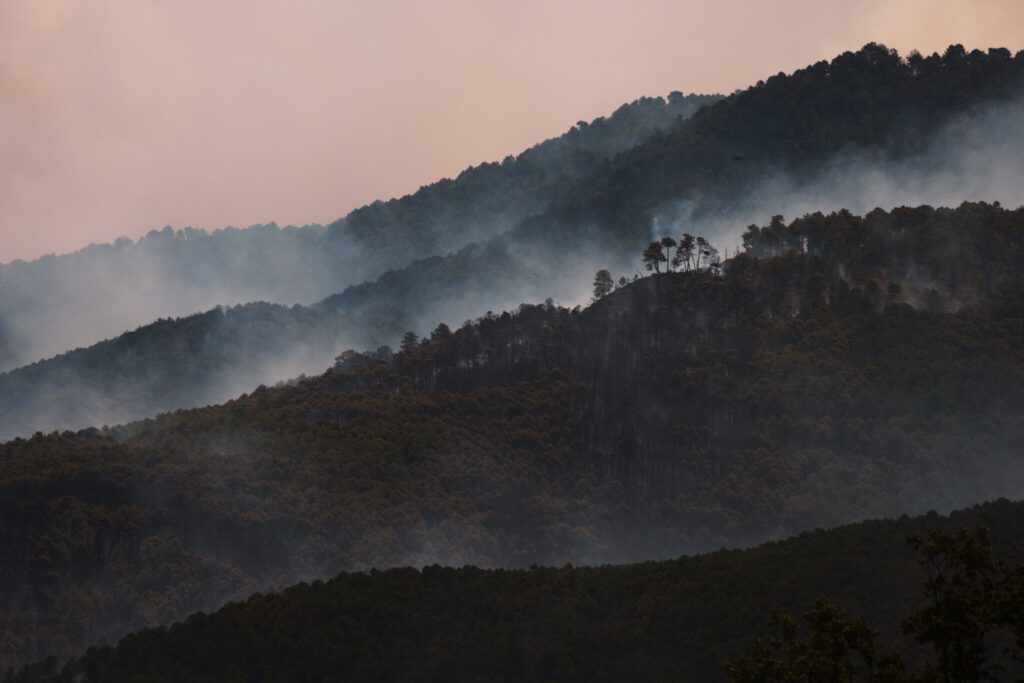
LEGE-CAP FERRET, France — France and Spain battled rapidly spreading wildfires Saturday that have displaced more than 250,000 people across southern Europe.
The evacuations included tens of thousands of residents in southwestern France, with orders reaching western suburbs of Bordeaux as a major fire advanced through the Gironde region.
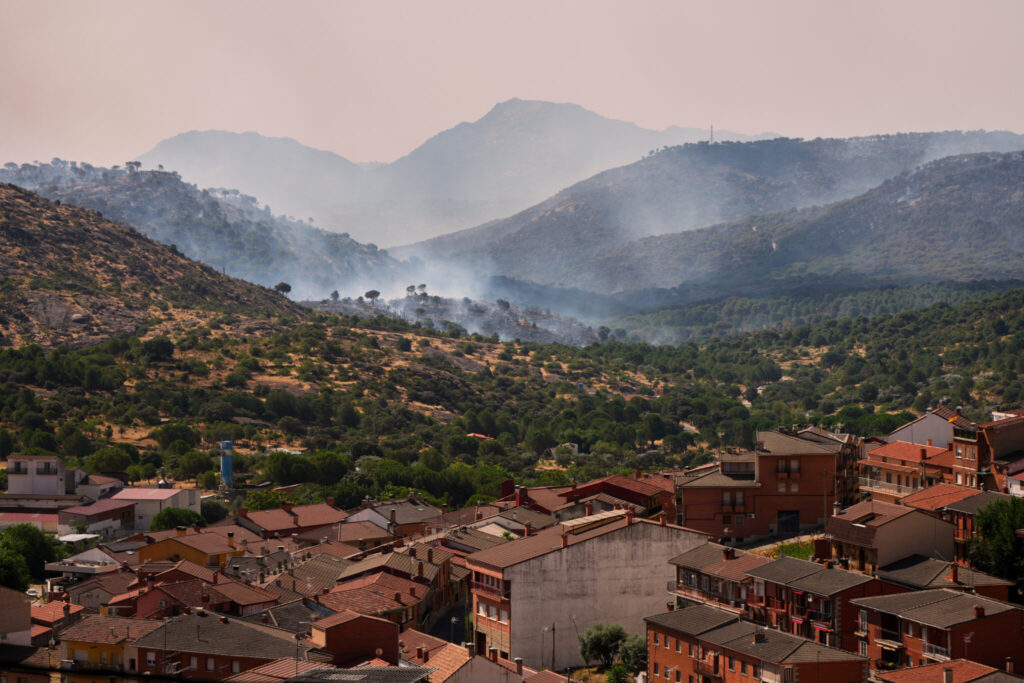
Approximately 70,000 people were also evacuated in central Spain, where fires west of Madrid spread with enough speed and intensity to overwhelm conventional firefighting efforts.
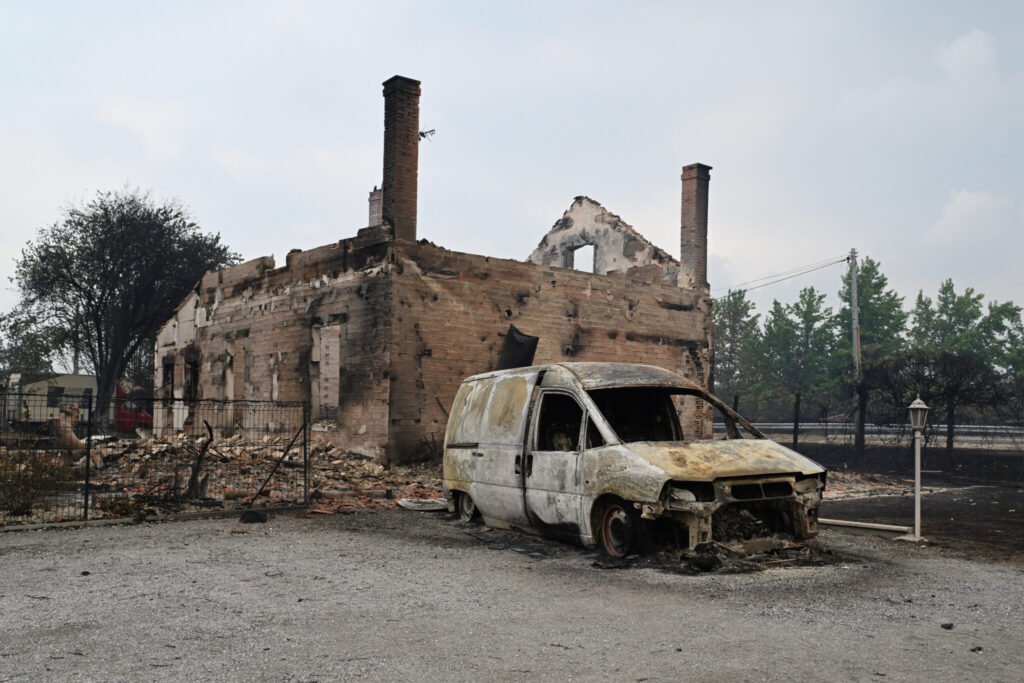
Despite scenes of panic and widespread destruction, authorities in both countries reported no deaths. Dozens of firefighters suffered injuries.
Tour de France Final Stage Shortened
French officials reduced the length of Sunday’s final Tour de France stage by one-third so police officers assigned to the race could reinforce emergency operations in wildfire-affected areas.
Instead of beginning in Thoiry, west of Paris, riders will race entirely within the capital on an 89-kilometer—or 55-mile—circuit.
The original route was scheduled to cover 133 kilometers, equivalent to 82.5 miles.
Part of the event’s security force will be reassigned “to reinforce the response efforts in the areas affected by the wildfires,” the Paris police department said.
The unusual change to one of the world’s most prominent sporting events reflected the severity of the emergency in southwestern France.
Military Aircraft Joins French Firefighting Fleet
France deployed an A400M military transport aircraft adapted to drop flame retardant and water on the Gironde fire.
During testing, the aircraft carried and released 20 tons of water—approximately three times the capacity of Canadair water bombers commonly used against wildfires.
The A400M joined 18 other airplanes and helicopters attacking the fire from the air.
French Interior Minister Laurent Nunez warned that crews faced a “long and very difficult” operation.
France also mobilized soldiers and sent 1.5 million protective face masks to areas affected by heavy smoke.
Wind Shift Could Push Flames Toward Bordeaux
Authorities were particularly concerned about forecasts indicating that winds would shift from west to east Saturday afternoon.
Such a change could drive the Gironde fire closer to Bordeaux. Nunez said the flames were approximately 30 kilometers, or 20 miles, west of the city after losing some intensity overnight.
Crews dug trenches, applied flame retardants and constructed other barriers intended to slow the fire’s movement.
Officials ordered people living between the blaze and Bordeaux to evacuate, including residents of several towns, villages and sections of the city’s western suburbs.
Prime Minister Sébastien Lecornu said the Gironde fire had become powerful enough Friday to generate its own winds.
“Our priority is clear: protecting human lives,” Lecornu wrote on X, adding that evacuation orders “must be respected without delay.”
Bordeaux Suburbs Receive Evacuation Orders
The evacuation area included Le Haillan and parts of Eysines and Mérignac, where Bordeaux’s airport is located.
The airport remained open, but bus and tram connections were suspended.
The fire began Wednesday near the Cap Ferret peninsula on France’s Atlantic coast, approximately 60 kilometers—or 37 miles—from Bordeaux.
The city opened an exhibition center to provide shelter and food to thousands of evacuees. Bordeaux’s mayor said the facility could be prepared to receive as many as 10,000 people if necessary.
Gironde Prefect Sophie Brocas said emergency alerts were sent directly to mobile phones ordering residents to leave.
“We want everyone to be quickly brought to safety. We must act quickly together,” Brocas said.
Some French Residents Escape by Boat
The intensity and speed of the fires caught officials and firefighting crews off guard in both France and Spain.
In France, some residents and visitors fled Atlantic coastal tourist towns by boat as flames approached.
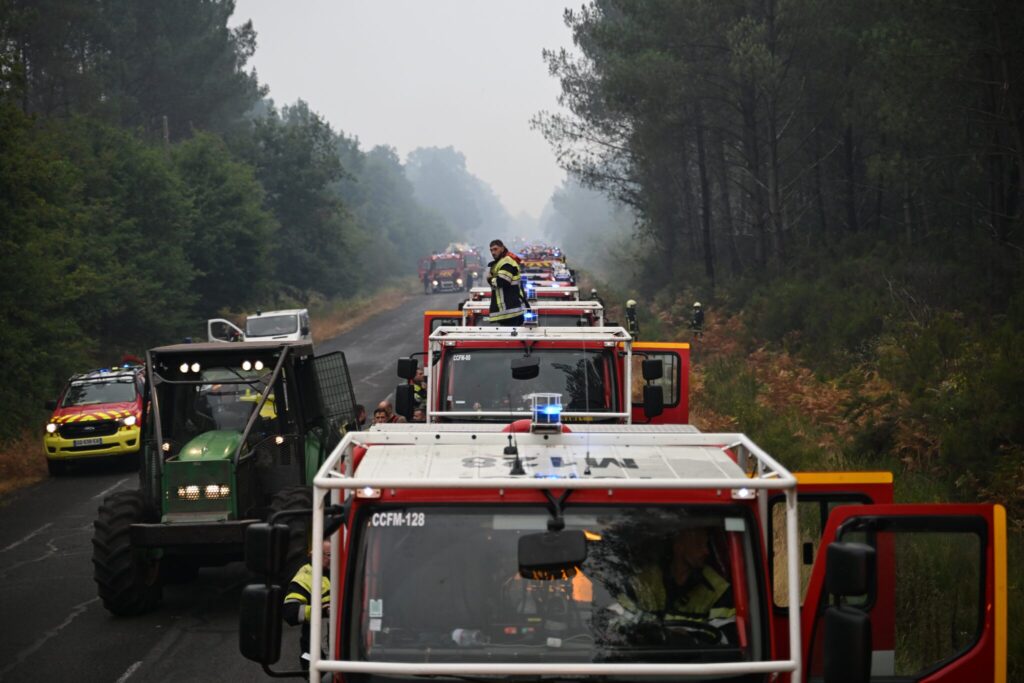
Approximately 1,300 firefighters were assigned to the Gironde blaze and another fire farther south in the Landes region.
Authorities reinforced the teams with hundreds of soldiers and supplied masks designed to filter smoke particles from the air.
Spanish Fire Surrounds Town Near Madrid
In Spain, some fires spread too quickly and violently for firefighters to confront directly.
Residents of El Tiemblo, west of Madrid, attempted to protect their community as flames surrounded the town and burned a celebrated chestnut grove.
“We’ve never seen anything like this,” resident Javier Organista said. “When we saw the flames coming into our town, surrounding us, leaving us with practically no way out, all the neighbors joined together to try to stop its advance.”
“It’s just really sad,” he added.
Spain deployed 2,600 firefighters, police officers and other emergency workers to two major blazes west of Madrid. Nineteen water-dropping aircraft and helicopters supported the operations.
Improved Weather Offers Spain an Opening
Spanish Prime Minister Pedro Sánchez visited a command center west of Madrid on Saturday as firefighters tried to take advantage of lower temperatures and calmer winds.
He said the improved conditions offered “a window of opportunity” to bring the blazes under control.
Madrid’s regional government reported that the fires had lost some intensity as temperatures and winds decreased.
Police continued going door to door in threatened communities, while residents fled by car beneath smoke that darkened the sky.
Spain’s Burned Area Exceeds Annual Average
Fires have burned approximately 130,000 hectares of forest in Spain so far in 2026, Sánchez said.
That figure already exceeds the country’s average annual loss of 100,000 hectares during the previous decade.
Successive heat waves arrived unusually early and produced record-breaking temperatures across Europe. The extreme conditions dried forests and vegetation, creating highly combustible landscapes.
Scientists have found that climate change increases the frequency and intensity of extreme heat and drought conditions that can fuel larger and more destructive wildfires.
European Countries Send Assistance
Several European nations provided or prepared to send firefighting assistance to France and Spain.
Italy, Greece, the Netherlands, Portugal, Croatia, the Czech Republic and Slovakia offered water-dropping airplanes, helicopters or other emergency support.
The international deployments expanded the aerial resources available to firefighters confronting multiple major blazes simultaneously.
As crews worked to protect Bordeaux and communities west of Madrid, authorities warned that shifting winds and extreme conditions could continue to change the fires’ direction and intensity.





You must Register or Login to post a comment.