

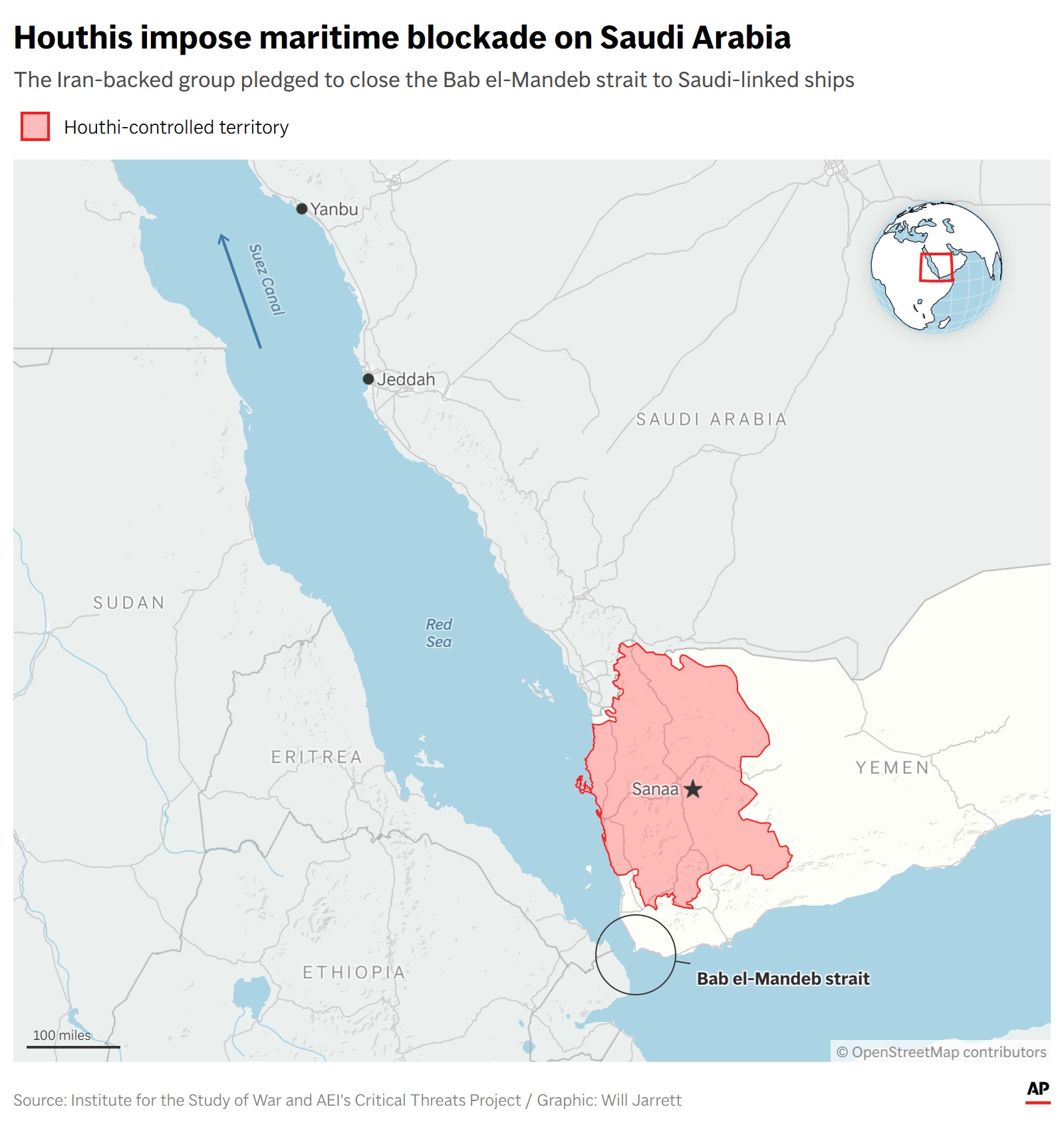
Houthis Fire Missiles and Drones at Saudi Arabia After Hodeida Strikes/ Newslooks/ WASHINGTON/ J. Mansour/ Yemen’s Iran-backed Houthis said they launched missiles and drones at Saudi Arabia following Saudi airstrikes in Hodeida. The Houthis said the operation targeted Aramco facilities in Yanbu and Jizan, where Saudi authorities reported multiple alerts but provided no further details. The escalation threatens shipping through the Bab el-Mandeb Strait as the United States and Iran remain locked in a wider confrontation over the Strait of Hormuz.
Quick Look
- The Houthis said they fired missiles and drones at Saudi Arabia.
- Houthi military spokesperson Yahya Saree identified Aramco facilities in Yanbu and Jizan as the targets.
- Saudi civil defense reported multiple alerts in both cities.
- No damage or casualties from the Houthi operation were immediately reported.
- The attack followed Saudi strikes in Yemen’s Hodeida province.
- Houthi health officials said two people were injured in Hodeida.
- Saudi Arabia denied striking the port and said it targeted military sites.
- The Houthis have threatened Saudi-linked shipping in the Bab el-Mandeb Strait.
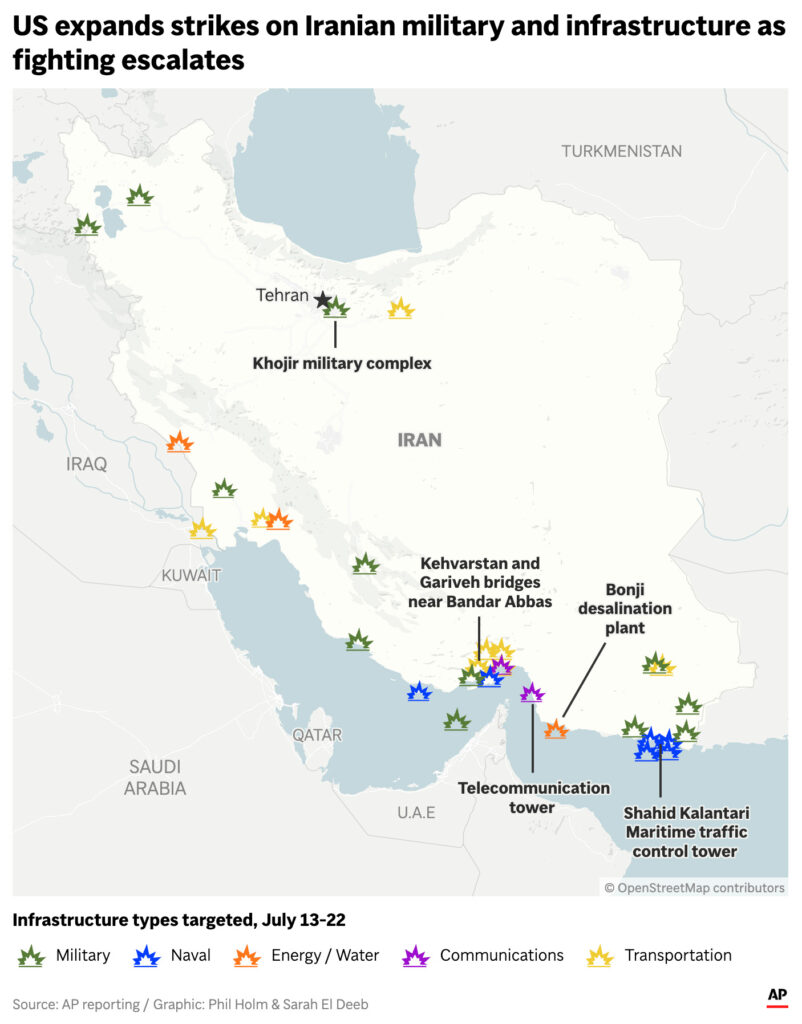
- No new US strikes were reported in Iran overnight following 13 consecutive nights of attacks.
Deep Look
Houthis Announce Retaliatory Attack on Saudi Arabia
CAIRO — Yemen’s Iran-backed Houthi rebels said Saturday that they launched missiles and drones toward Saudi Arabia in retaliation for Saudi airstrikes on the Red Sea city of Hodeida.
Brig. Gen. Yahya Saree, the Houthis’ military spokesperson, said in a prerecorded statement that the operation targeted facilities belonging to Aramco in the Saudi cities of Yanbu and Jizan.
Aramco is Saudi Arabia’s state-owned energy company and the world’s largest oil producer.
Saudi civil defense authorities said alerts sounded several times in both cities early Saturday. The kingdom did not immediately provide further information, and there were no confirmed reports of damage or casualties.
Saudi Strikes Follow Attacks on Oil Tankers
The latest exchange followed Houthi attacks against two Saudi oil tankers in the Red Sea earlier in the week.
The Saudi-led coalition fighting in Yemen said it responded by striking targets in Hodeida province late Friday.
Anees al-Asbahi, a spokesperson for the Houthi-run Health Ministry, said the attacks hit Hodeida’s port and the state-operated telecommunications corporation, injuring two people.
The Saudi-led coalition denied attacking the port. It said its forces struck “legitimate military targets” in Hodeida province that “were linked to threats to commercial vessels in the Red Sea.”
The conflicting claims could not immediately be independently verified.
Bab el-Mandeb Shipping Faces Greater Risk
The escalation threatens to further disrupt international commerce through the Red Sea.
The Houthis have said they intend to close the Bab el-Mandeb Strait to shipping linked to Saudi Arabia. Located at the southern end of the Arabian Peninsula, the strait connects the Red Sea with the Gulf of Aden.
Approximately 12% of global trade passes through the narrow waterway, including about one-quarter of the world’s container traffic.
Expanded Houthi operations could force more commercial vessels to avoid the Red Sea and travel around Africa, increasing shipping times and transportation costs.
Iran Calls for Diplomacy in Yemen
Iranian Foreign Minister Abbas Araghchi called for “diplomacy and dialogue” to address the conflict in Yemen without “military confrontations.”
His comments appeared Saturday in an interview with the state-run Iran newspaper.
Iran supports the Houthis, although Tehran and the rebel group have disputed allegations that Iran directly controls Houthi military decisions.
The Houthi attack adds another front to the broader regional conflict involving Iran, the United States, Israel and allied governments and armed groups.
Iran Reports a Night Without US Strikes
No new attacks were reported overnight in Iran, marking an apparent pause after nearly two weeks of consecutive US strikes.
“Iran had a peaceful night,” Iranian Health Ministry spokesperson Hossein Kermanpour wrote Saturday on X.
US Central Command did not immediately respond to a request for comment. Unlike during the previous 13 nights, the command did not announce additional strikes.
The pause did not indicate that the wider conflict had ended, and regional tensions remained high.
Strait of Hormuz Remains at Center of Conflict
The United States and Israel attacked Iran in late February. A fragile ceasefire subsequently halted major military operations for several weeks before appearing to unravel in July.
The United States accused Iran of attacking three ships in the Strait of Hormuz and responded by striking dozens of targets inside Iran. Tehran retaliated by firing at Gulf Arab countries allied with Washington.
On Friday, the US military fired on a merchant vessel in the Gulf of Oman that American officials said was attempting to breach Washington’s renewed blockade of Iranian ports.
Iran, meanwhile, targeted US-allied countries across the region.
The competing confrontations around the Strait of Hormuz and the Bab el-Mandeb Strait threaten two of the world’s most consequential maritime routes.
Security Warnings Issued Across the Region
US embassies warned American citizens in the Middle East on Friday that their options for leaving the region could become increasingly limited.
Iran’s Revolutionary Guard separately advised people in neighboring countries to remain away from military installations hosting American troops.
The warnings reflected concern that the conflict could spread further across the Gulf and the wider Middle East.
Regional Death Toll Continues to Rise
More than 3,400 people have been killed in Iran since the war began, according to Iran’s Health Ministry.
Reported deaths elsewhere include 18 US service members and 24 civilians in Israel, along with smaller numbers of civilians in other countries across the region.
In Lebanon, more than 4,000 people and 38 Israeli soldiers have been killed following fighting between Israel and the Iran-backed Hezbollah militant group. Hezbollah entered the conflict in support of Iran.
The figures were provided by governments and parties involved in the conflict and may be subject to revision.






You must Register or Login to post a comment.