

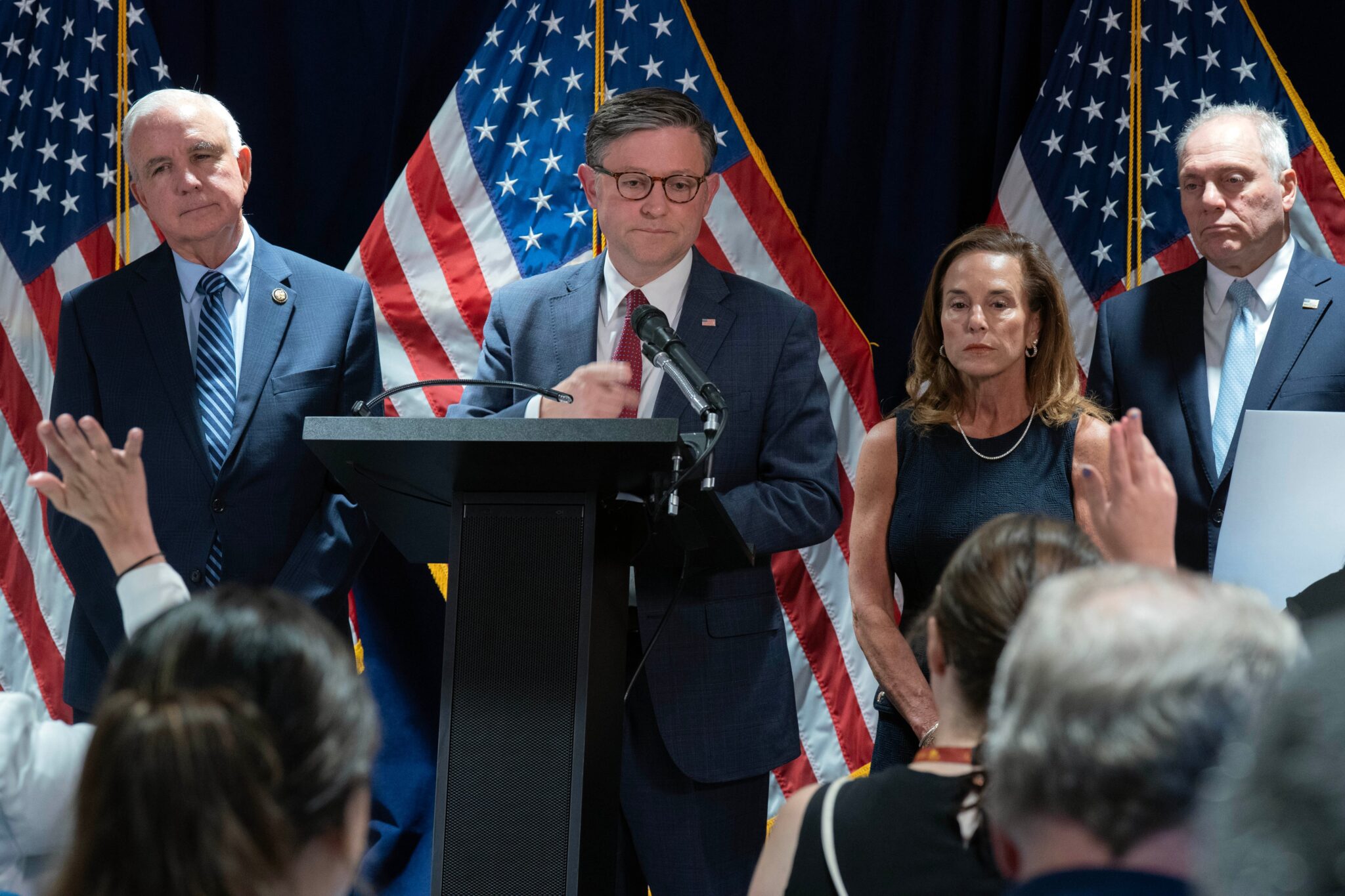
House Republicans Unveil $95 Billion Iran War Budget Plan/ Newslooks/ WASHINGTONB/ J. Mansour/ Morning Edition/ House Republicans unveiled a $95 billion budget resolution focused on funding the Iran war, providing farm assistance and advancing stricter voter registration requirements. GOP leaders plan to use the reconciliation process to bypass Democratic opposition, while Democrats argue the package would significantly increase the federal deficit. The proposal now heads to the House Budget Committee.

House GOP Budget Plan Quick Looks
- Republicans introduced a $95 billion budget resolution.
- Plan funds the Iran war and defense replenishment.
- Includes $12 billion in farm assistance.
- Provides $10 billion for election-related initiatives.
- GOP seeks proof-of-citizenship voter registration changes.
- Speaker Mike Johnson backs reconciliation strategy.
- Defense funding reflects White House supplemental request.
- Budget Committee considers proposal Thursday.
- House floor vote expected next week.
- Democrats oppose the package over deficit concerns.
- Republicans hold narrow House and Senate majorities.
- Senate must approve the same budget resolution.

House Republicans Unveil $95 Billion Budget Plan
GOP Targets Defense, Agriculture and Election Priorities
House Republicans have introduced a $95 billion budget resolution that would provide additional defense funding, aid struggling farmers and advance new election policies as the party seeks to expand President Donald Trump’s legislative agenda ahead of the November midterm elections.
The proposal represents Republicans’ latest attempt to move major priorities through the budget reconciliation process, allowing legislation to pass the Senate with a simple majority rather than the usual 60-vote threshold.
Speaker Mike Johnson described the package as a continuation of last year’s tax and spending legislation while emphasizing national security and election integrity.
“Safeguarding American elections and strengthening our national defense are the most basic responsibilities of Congress,” Johnson said.
The House Budget Committee is expected to begin consideration of the proposal before lawmakers vote on the resolution next week.
Most Funding Focused on Iran War
The largest share of the proposal would support ongoing U.S. military operations connected to the conflict with Iran.
Republicans structured the package around the White House’s supplemental funding request to replenish military stockpiles, finance classified defense programs and support Operation Epic Fury.
Under the proposal:
- House Armed Services Committee: up to $60 billion
- House Intelligence Committee: $13 billion
- House Agriculture Committee: $12 billion
- House Administration Committee: $10 billion
Although the proposal aligns generally with the administration’s supplemental request, it falls well below the broader defense spending increase sought in the White House’s full budget proposal.
Republicans argue the funding is necessary to replace weapons systems and maintain military readiness following months of combat operations.
Election Changes Remain a Top Republican Priority
The proposal also dedicates $10 billion toward election-related initiatives tied to Republican efforts to strengthen voter registration requirements.
Republicans hope to incorporate portions of legislation requiring documentary proof of U.S. citizenship when registering to vote.
That legislation previously passed the House but has struggled to gain enough Senate support under normal legislative rules.
By using budget reconciliation, GOP leaders hope to bypass a Senate filibuster and approve portions of the election package with a simple majority.
It remains unclear exactly how election-related provisions would be structured within the reconciliation legislation or whether any changes could be implemented before this year’s midterm elections.
Farm Aid Added to Address Rural Concerns
Agricultural assistance represents another major component of the proposal.
The package includes $12 billion aimed at helping farmers dealing with higher fuel prices, rising fertilizer costs and retaliatory tariffs that have affected agricultural exports.
Republicans say rural communities continue facing significant financial pressure from increased operating expenses.
The farm aid was included to address concerns raised by lawmakers representing agricultural districts while also broadening support for the overall package.
Democrats Criticize Deficit Impact
Democrats immediately criticized the proposal, arguing it would increase federal borrowing while funding Republican political priorities.
Representative Brendan Boyle, the ranking Democrat on the House Budget Committee, said the package would add tens of billions of dollars to the national debt.
Boyle argued taxpayer resources should instead be directed toward lowering everyday costs for American families rather than expanding military spending and election initiatives.
Democrats also objected to Republicans using reconciliation instead of pursuing bipartisan negotiations on defense funding.
Traditionally, emergency military appropriations often receive bipartisan consideration, although that process would require Senate cooperation and likely involve negotiations over domestic spending priorities.
Republicans Defend Reconciliation Strategy
Johnson and Budget Committee Chairman Jodey Arrington defended the decision to pursue reconciliation rather than seek bipartisan legislation.
Republicans contend the process allows Congress to move more quickly while avoiding policy concessions demanded by Democrats.
Arrington said the proposal intentionally limits defense spending primarily to replenishing military inventories instead of pursuing the much larger increases initially requested by the administration.
He also argued that attempting to offset all new spending could reopen negotiations over savings already achieved in previous Republican legislation.
According to Arrington, using reconciliation avoids broader spending negotiations that could significantly alter Republican priorities.
Narrow Margins Leave Little Room for Error
Despite Republican control of both chambers, passage remains far from certain.
The House and Senate must first approve identical budget resolutions before committees can draft the detailed reconciliation legislation.
Republicans hold only slim majorities, leaving leadership with little room for internal disagreement.
Once lawmakers return from the August recess, committee negotiations, amendments and Senate procedural reviews are expected to dominate much of the fall legislative calendar.
House Republicans hope to complete the first step before lawmakers leave Washington later this month.
Budget Fight Becomes Midterm Centerpiece
The proposal is expected to become one of the defining legislative battles ahead of the 2026 midterm elections.
Republicans argue the package focuses on national defense, election security and assistance for farmers.
Democrats counter that it increases federal deficits while advancing partisan priorities through a process that limits bipartisan participation.
Whether the legislation ultimately becomes law will depend on Republican unity in both chambers and whether the Senate agrees to move forward under reconciliation rules.






You must Register or Login to post a comment.