

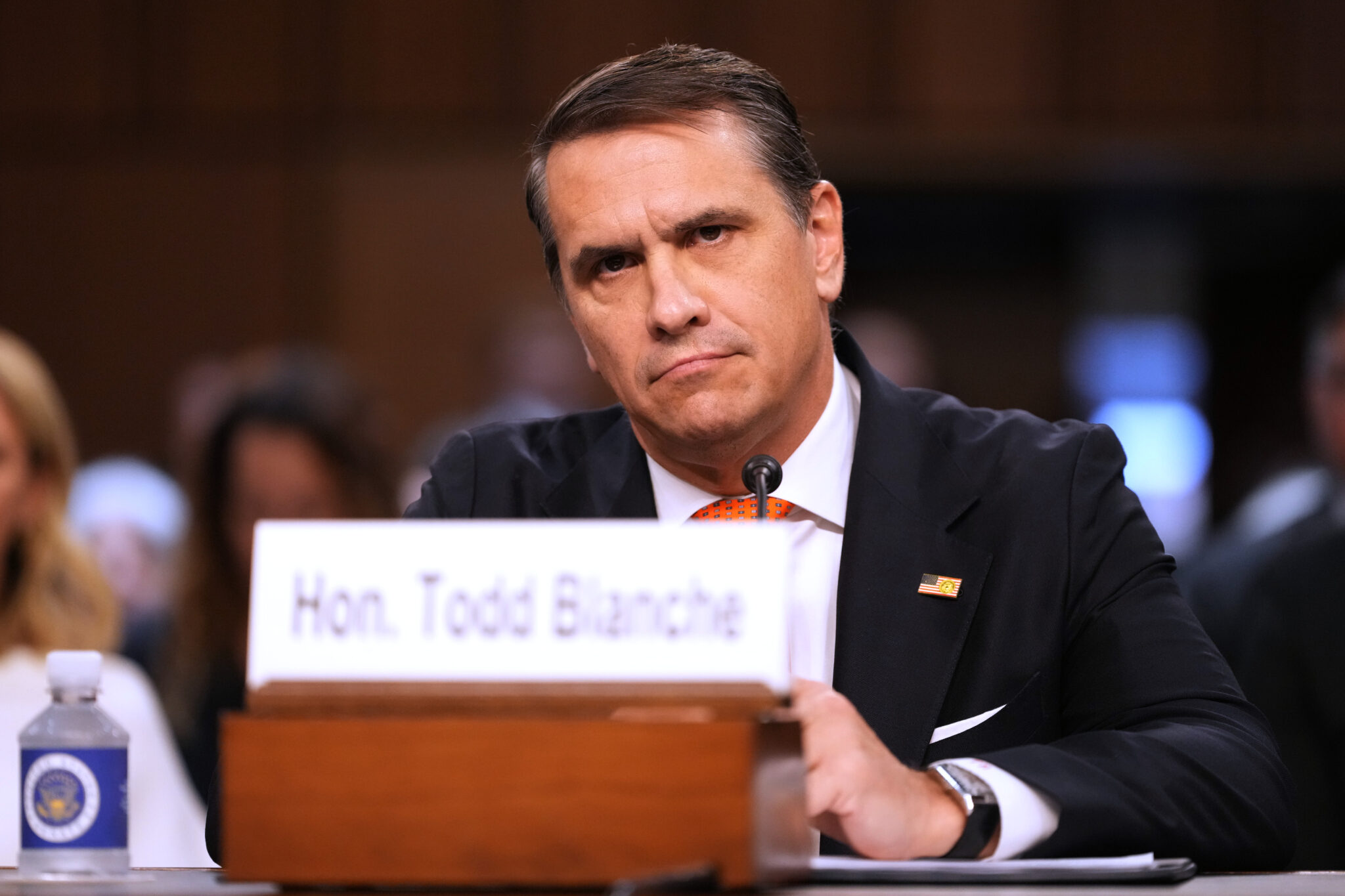
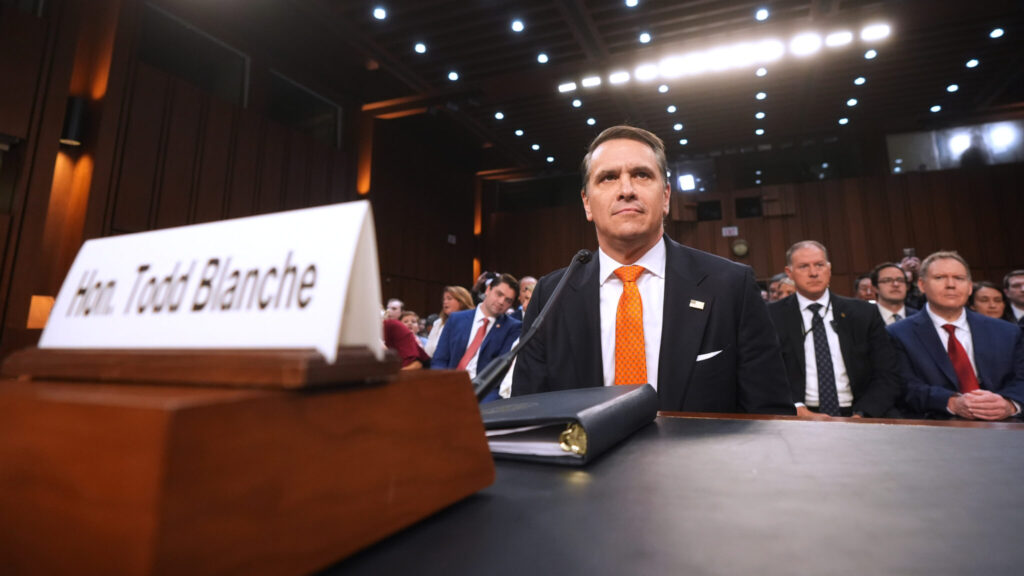
Blanche Defends Epstein Files Handling at Senate Confirmation Hearing/ Newslooks/ WASHINGTON/ J. Mansour/ Morning Edition/ Acting Attorney General Todd Blanche defended the Justice Department’s handling of the Jeffrey Epstein files during his confirmation hearing. He acknowledged that mistakes occurred but argued the Trump administration had delivered unprecedented transparency. His nomination now depends on unified Republican support amid concerns over ethics, political prosecutions and department upheaval.
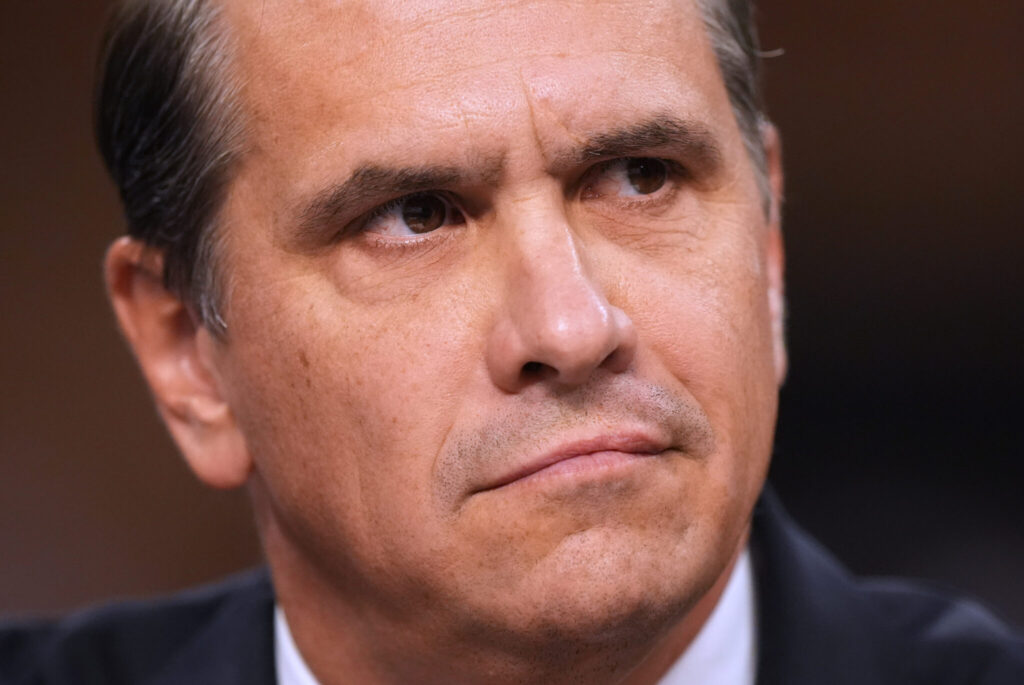
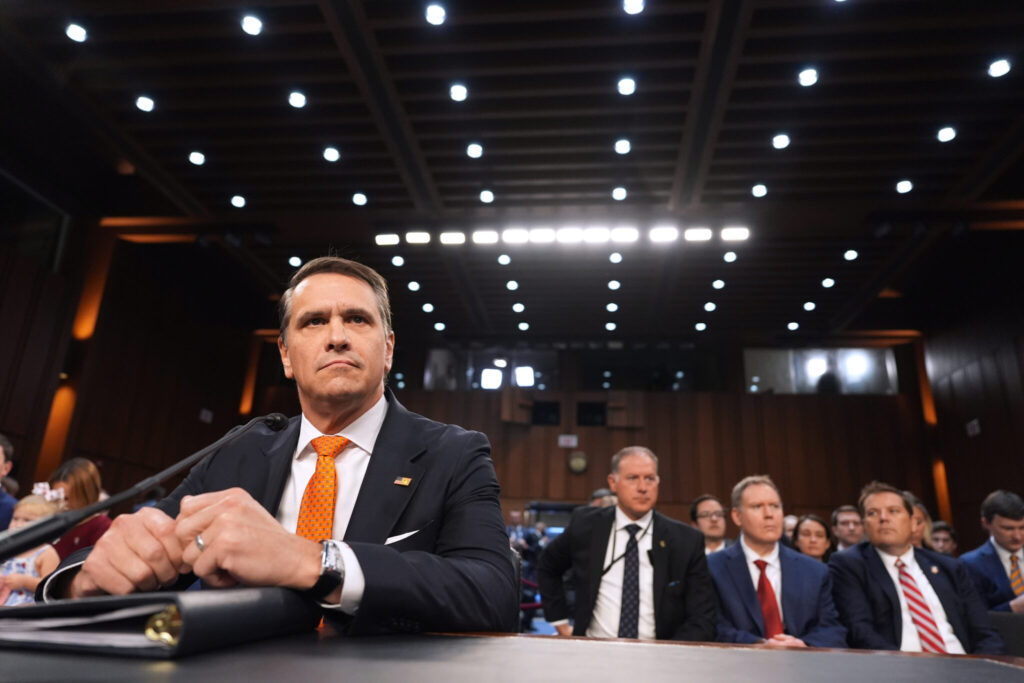
Todd Blanche Confirmation Hearing Quick Looks
- Todd Blanche defended the Justice Department’s Epstein files release.
- Blanche acknowledged that “mistakes were made.”
- He called the disclosures an unprecedented act of transparency.
- The staggered release exposed some victim information because of redaction failures.
- Blanche needs support from every Republican on the Judiciary Committee.
- One Republican defection could derail the nomination.
- Democrats accused Blanche of acting like Trump’s personal attorney.
- The Anti-Weaponization Fund is expected to receive close scrutiny.
- Blanche also faces questions about protections shielding Trump from tax audits.
- More than 1,200 former Justice Department employees oppose his nomination.
- His handling of investigations into Trump critics will also be examined.
- Press freedom advocates are concerned about subpoenas targeting journalists.
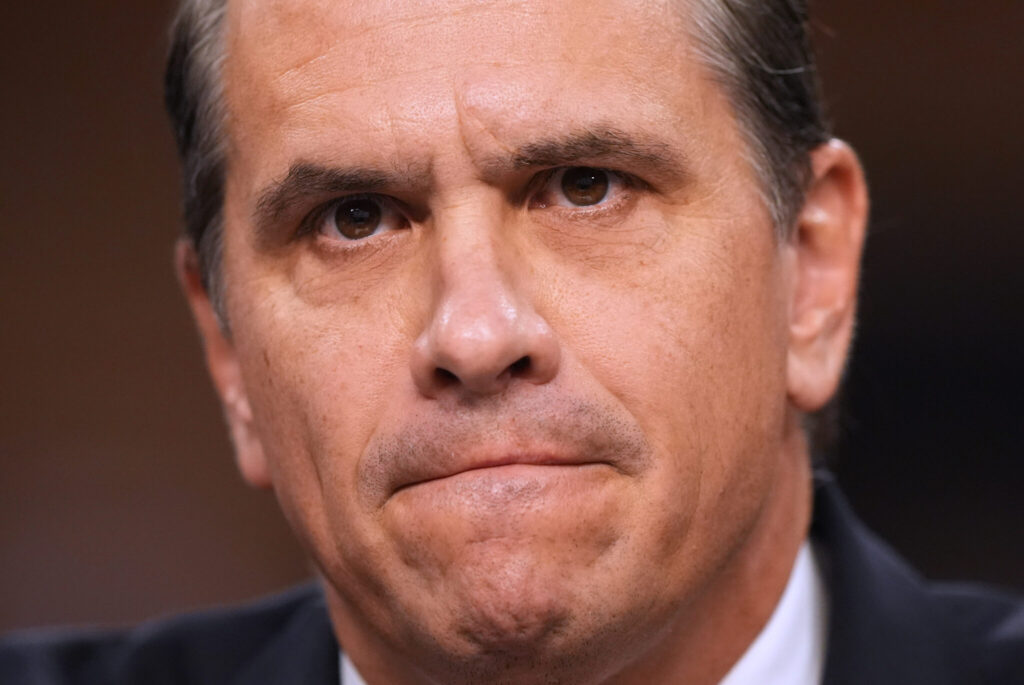
Deep Look
Blanche Defends Epstein Files Release During Confirmation Hearing
Acting Attorney General Todd Blanche defended the Justice Department’s handling of the Jeffrey Epstein files Wednesday as he sought to secure enough Republican support to become attorney general for the remainder of President Donald Trump’s term.
Appearing before the Senate Judiciary Committee, Blanche acknowledged that problems occurred during the release of documents connected to the late financier and convicted sex offender.
Still, he argued that the Trump administration had provided the public with more information about Epstein than any previous administration.
Blanche said “mistakes were made,” but presented the disclosure effort as a historic step toward transparency.
“I want to make sure that the American people know that this administration, when it comes to Jeffrey Epstein, has been more transparent than any administration,” Blanche said.
The confirmation hearing is a major test of Trump’s influence over Senate Republicans.
Blanche is expected to receive no Democratic support on the committee, meaning he will likely need every Republican vote to advance his nomination.
Epstein Files Release Marred by Redaction Errors
The Justice Department’s handling of the Epstein records has become one of the most controversial issues surrounding Blanche’s nomination.
Congress required the department to release the documents, but the staggered disclosure process was plagued by serious problems.
Redaction failures exposed nude images that showed the faces of potential victims.
Some names, email addresses and other identifying details were either not concealed or were only partially obscured.
Blanche said approximately 1% of the released records contained redaction mistakes that required correction.
The errors intensified criticism of the department’s handling of highly sensitive victim information.
Former Attorney General Pam Bondi told lawmakers after leaving office that Blanche had served as the Justice Department’s point person for the Epstein disclosures.
That has placed responsibility for the flawed release directly on him.
Democrats Accuse Blanche of Serving Trump Personally
Democrats used the hearing to argue that Blanche has continued operating as Trump’s personal lawyer rather than as an independent leader of the Justice Department.
Before joining the administration, Blanche represented Trump during the former president’s criminal cases.
Sen. Dick Durbin, the Judiciary Committee’s top Democrat, accused Blanche of maintaining that loyalty after entering government.
“In less than 18 months at the Department of Justice, you’ve shown you’re still President Trump’s personal attorney. Your tenure can be summed up in the four words you said — ‘I love you, sir’ — to President Trump,” Durbin told him.
The remark referred to comments Blanche made during an April news conference.
Blanche rejected the criticism and argued that he had been correcting a Justice Department he believes lost public trust during years of investigations into Trump.
“In recent years, we watched the Justice Department turned against many of you and a former president, and it damaged the public’s faith in justice,” Blanche said.
“We are fixing that.”
Republican Support Will Determine Blanche’s Fate
Blanche’s nomination depends heavily on the 11 Republicans serving on the Senate Judiciary Committee.
There are 10 Democrats on the panel.
The balance changed after the death of South Carolina Sen. Lindsey Graham, who had been a Republican member of the committee.
If every Democrat votes against Blanche, one Republican defection could block the nomination from advancing.
Attention is focused particularly on Texas Sen. John Cornyn and North Carolina Sen. Thom Tillis.
Cornyn lost his Republican primary in May and has said he will wait until after the hearing before deciding whether to support Blanche.
Tillis is not seeking reelection and has previously criticized the administration’s proposed Anti-Weaponization Fund.
He has also said he would not support an attorney general nominee who minimized the Jan. 6, 2021, Capitol attack.
Tillis recently indicated that Blanche’s record on Jan. 6 does not currently trouble him, but his broader concerns remain significant.
Anti-Weaponization Fund Creates Major Confirmation Risk
The $1.776 billion Anti-Weaponization Fund is expected to be another central issue during the hearing.
The Trump administration created the fund as part of a settlement involving Trump’s $10 billion lawsuit against the Internal Revenue Service over the leak of his tax returns.
The money was intended to compensate people who believed they had been unfairly targeted by the criminal justice system.
Critics argued it could become a taxpayer-funded mechanism for rewarding Trump allies.
Blanche initially defended the fund during congressional appearances.
He later announced that the administration was abandoning it after intense bipartisan opposition.
Even then, Blanche resisted lawmakers’ demands that the Justice Department provide written confirmation that the fund had been permanently scrapped.
That refusal fueled suspicion that some version of the proposal could return.
Judge Questions Blanche’s Role in Trump IRS Settlement
The settlement that created the fund has also drawn judicial criticism.
A federal judge overseeing Trump’s lawsuit against the IRS issued a sharply worded ruling questioning the conduct of Trump and his lawyers.
Judge Kathleen Williams said the lawsuit had been used to manipulate the judicial system.
She also raised concerns about Blanche’s involvement in negotiating the settlement because he had previously represented Trump personally.
Cornyn said the ruling created additional questions Blanche would need to answer.
“He’s got a few more questions to get through, after the judge’s decision today,” Cornyn said.
The settlement also included another controversial provision that protects Trump and members of his family from tax audits.
Blanche has said that part of the agreement remains on track despite criticism from lawmakers in both parties.
Blanche’s Justice Department Has Targeted Trump Adversaries
Blanche took over as acting attorney general in April after Trump removed Bondi.
The White House had become frustrated with Bondi’s inability to bring successful criminal cases against the president’s political opponents.
Since taking charge, Blanche has accelerated investigations involving people Trump has publicly attacked.
He appointed a new prosecutor to oversee a Florida-based investigation focused on former government officials disliked by the president.
The Justice Department also secured an indictment against former FBI Director James Comey.
Comey was charged over a social media photograph showing seashells arranged as “86 47.”
Prosecutors interpreted the image as a threat against Trump, the 47th president.
Comey said he understood the image as a political message rather than a call for violence.
Blanche Rejects Claims of Justice Department Weaponization
Blanche has denied that he is weaponizing the Justice Department on Trump’s behalf.
At the same time, he has said the president has a legitimate right to express interest in department investigations.
Blanche argued that the existence of personal or political conflicts involving Trump does not prevent prosecutors from examining potential wrongdoing.
“We have thousands of ongoing investigations and prosecutions going on in this country right now,” Blanche said in May.
“And it is true that some of them involve men, women and entities that the president in the past has had issues with and believes should be investigated. That is his right, and indeed it is his duty to do that.”
Critics say that position weakens the traditional separation between the White House and federal law enforcement.
Supporters argue the Justice Department is entitled to investigate wrongdoing regardless of political affiliation.
Mass Firings and Resignations Hollow Out Department
Blanche’s nomination comes during major upheaval inside the Justice Department.
Mass dismissals and resignations have depleted the agency’s workforce.
More than 1,200 former Justice Department officials have publicly opposed his confirmation.
They argue that Blanche has undermined the department’s independence and damaged internal morale.
Supporters counter that personnel changes were necessary to reform an institution they believe became politicized during earlier administrations.
The condition of the department is likely to remain a major topic as senators evaluate whether Blanche should receive a full appointment.
Press Freedom Concerns Add to Scrutiny
Blanche has also overseen an aggressive campaign targeting leaks to news organizations.
Federal prosecutors recently issued subpoenas seeking testimony from New York Times journalists before a grand jury.
The reporters had published information about security concerns involving a Qatari-gifted Air Force One aircraft.
Press freedom advocates warned that compelling journalists to testify could chill investigative reporting and expose confidential sources.
New York Times Executive Editor Joseph Kahn criticized the subpoenas and defended the journalists’ work.
“We expect to prevail,” Kahn said.
The case has added another layer of controversy to Blanche’s record.
Confirmation Hearing Tests Trump’s Grip on Senate GOP
Blanche’s confirmation hearing is about more than his own record.
It is also a test of Trump’s control over Senate Republicans.
The president selected a former personal attorney to lead the Justice Department during a period of intense political and institutional conflict.
Blanche’s ability to advance will depend on whether Republican senators are willing to overlook concerns about the Epstein files, the IRS settlement, politically sensitive prosecutions and press subpoenas.
Democrats appear united in opposition.
Republicans must decide whether Blanche has acted as an independent law enforcement official or remains primarily loyal to Trump.
For Blanche, the Epstein disclosures may be the most visible controversy.
But the hearing is also a broader examination of how the Justice Department has changed under his leadership and whether senators trust him to lead it through the remainder of Trump’s term.






You must Register or Login to post a comment.