

Iran Attacks Gulf Bases as US Targets Revolutionary Guard and Naval Sites/ Newslooks/ WASHINGTON/ J. Mansour/ Iran targeted American military positions across the Persian Gulf while the United States carried out another wave of strikes against Iranian sites. The fighting entered a 13th consecutive night as embassies warned Americans that options for leaving the region could become limited. Attacks around the Strait of Hormuz and Red Sea continued disrupting global trade, raising fuel prices and leaving thousands of mariners stranded.
Quick Look
- Iran and the United States exchanged another round of attacks Friday.
- U.S.-led forces reportedly intercepted five explosive drones over Irbil.
- Iran claimed strikes against American facilities in Kuwait and Bahrain.
- U.S. Central Command had not confirmed those Iranian claims.
- Bahrain and Jordan said they intercepted Iranian aerial attacks.
- American strikes reportedly hit several Iranian provinces and Qeshm Island.
- The U.S. targeted a Revolutionary Guard naval facility in northern Iran.
- Washington says its goal is to reduce Iran’s ability to threaten shipping.
- The Strait of Hormuz remains largely closed.
- Houthi attacks targeted two Saudi oil tankers in the Red Sea.
- Around 12% of global trade passes through the Bab el-Mandeb Strait.
- Brent crude traded at approximately $96 per barrel Friday.
- U.S. gasoline reached a national average of $4.11 per gallon.
- Iran’s Health Ministry reported 3,434 deaths since the war began.
- An estimated 6,000 mariners were stranded on about 400 vessels near Hormuz.
- Netanyahu is expected to meet Trump in the United States next week.
Deep Look
Iran and US Exchange New Attacks
IRBIL, Iraq — Iran targeted American military positions around the Persian Gulf on Friday while the United States bombed additional Iranian military sites.
The conflict entered a 13th consecutive night of strikes, with neither side showing signs of retreating.
Diplomatic efforts appeared stalled as Washington and Tehran made preparations suggesting that a broader escalation remained possible.
US Embassies Warn Americans
American embassies in the Middle East began warning U.S. citizens that transportation and departure options could become increasingly limited.
Iran’s Revolutionary Guard separately advised residents of neighboring countries to avoid military bases housing American troops.
The warnings reflected concern that attacks could spread further across a region containing numerous U.S. facilities and personnel.
Iran Says It Will Not Submit to Pressure
Iranian Foreign Minister Abbas Araghchi said his country “will not bow to U.S.” pressure.
In an interview with Iran’s semiofficial Tasnim news agency, he said Tehran remained in contact with China and Russia.
Araghchi said the Islamic Republic is “neither intimidated by threats nor will we yield to pressure.”
Both China and Russia have often opposed American policy toward Iran and could provide Tehran with diplomatic support.
Drones Intercepted Over Irbil
Security officials in northern Iraq said U.S.-led forces shot down five drones carrying explosives over Irbil.
The city is the capital of Iraq’s semiautonomous Kurdish region and hosts American military advisers.
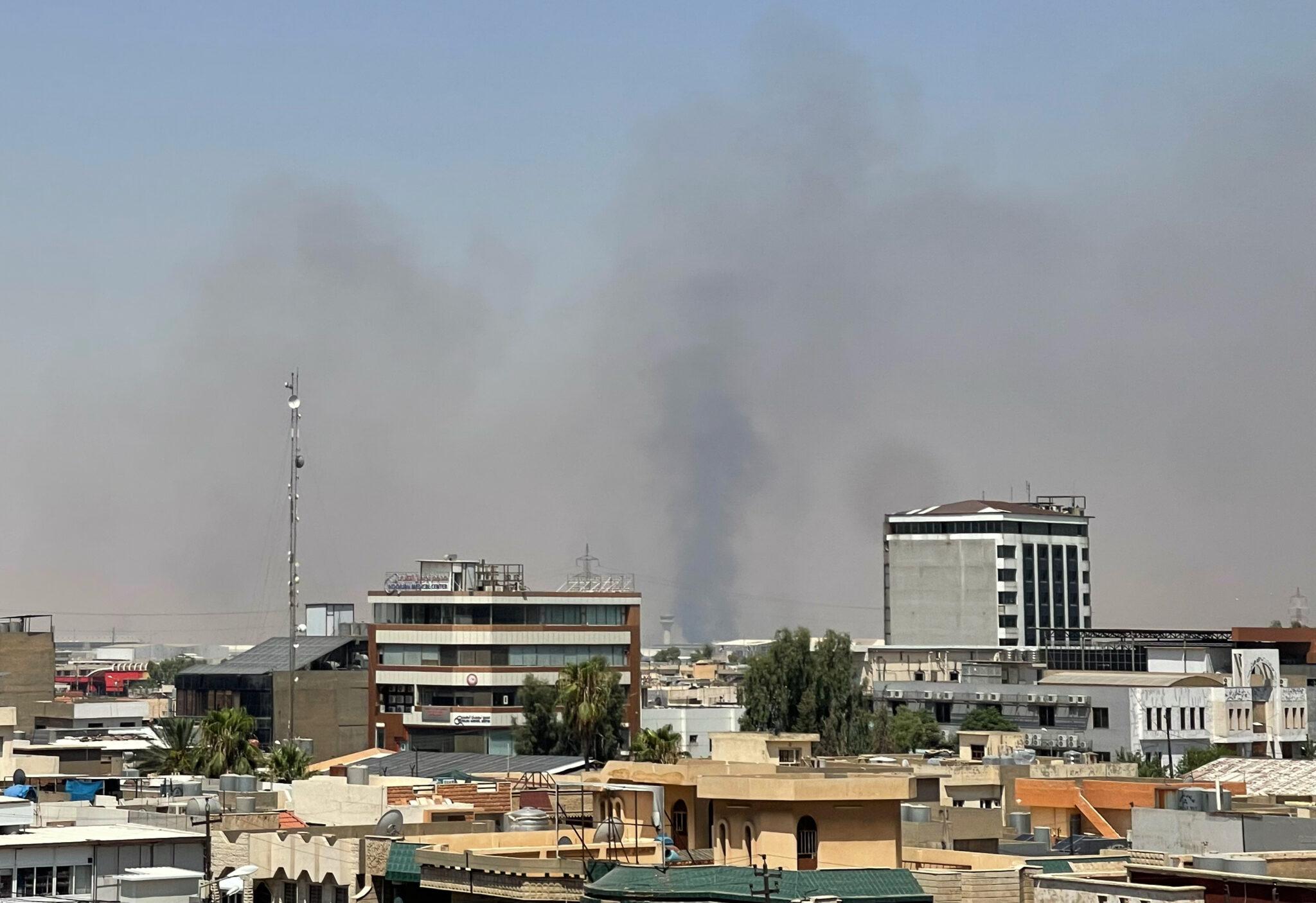
Multiple explosions were heard, while black smoke was visible near Irbil’s airport, where U.S. forces are stationed.
American military officials did not immediately comment on the reported attacks.
Iran Claims Strikes in Kuwait and Bahrain
Iran’s Revolutionary Guard said it attacked the U.S. base in Udairi, Kuwait.
The Guard claimed that three ammunition and storage buildings were destroyed and set on fire.
It also said it damaged a watchtower associated with the U.S. Navy’s Fifth Fleet in Bahrain.
U.S. Central Command did not confirm or otherwise respond to those claims.
Bahrain and Jordan separately said their forces intercepted Iranian aerial attacks Friday.
US Strikes Multiple Iranian Locations
The United States launched attacks against military sites across Iran as American bases and allies faced Iranian fire.
Iran’s semiofficial Fars and ISNA news agencies reported that a Revolutionary Guard naval base in northern Iran was targeted.
Explosions were also reported on Qeshm Island, which hosts Iranian naval assets, including drone boats capable of attacking ships in the Strait of Hormuz.
Other strikes were reported in Isfahan, Khuzestan and Fars provinces.
Isfahan contains a major Iranian air base and one of the country’s nuclear facilities.
US Says Strikes Aim to Protect Shipping
Central Command said the latest attacks were intended to “further degrade Iran’s ability to threaten civilian mariners and commercial vessels transiting regional waters.”
The United States is seeking to reopen the Strait of Hormuz, which Iran has effectively closed through repeated attacks.
During peacetime, approximately one-fifth of the world’s traded oil and natural gas passed through the waterway.
The closure has driven up energy prices and produced economic effects far beyond the Middle East.
Houthis Expand Pressure in Red Sea
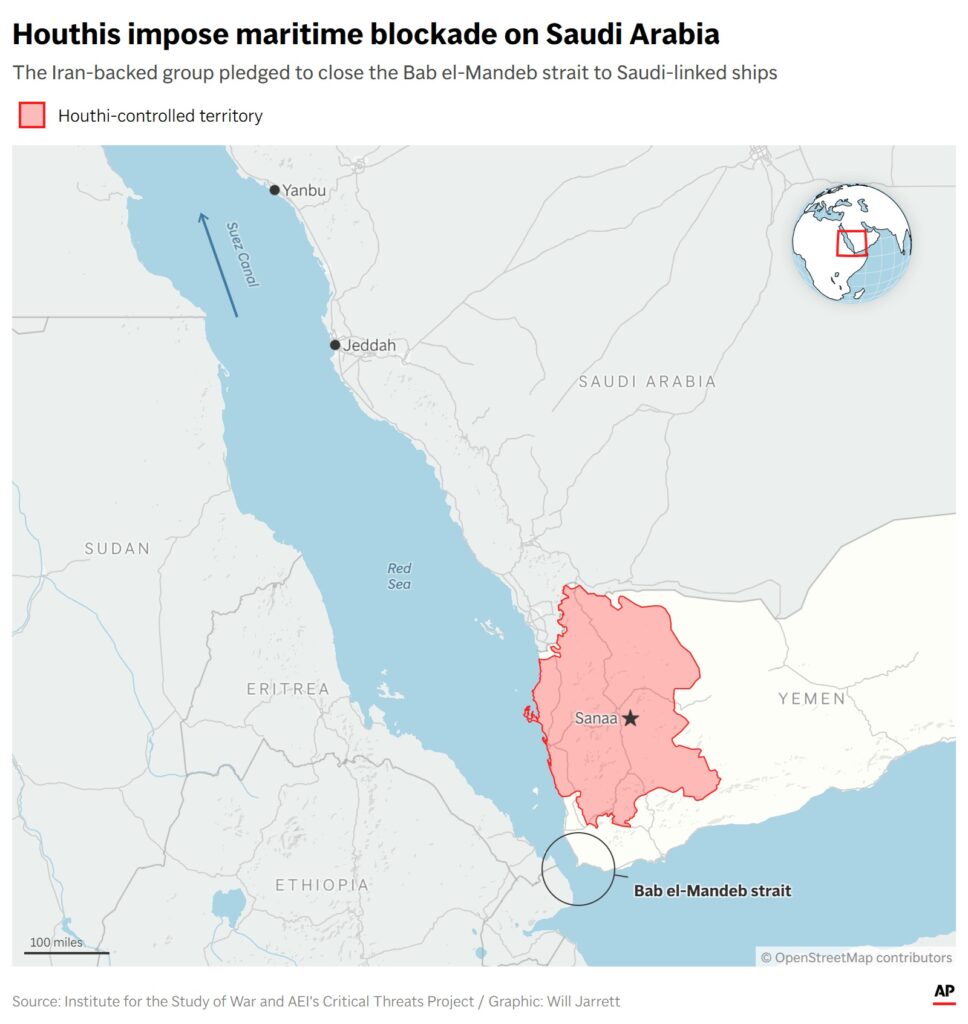
Iran-aligned Houthi rebels in Yemen attacked two Saudi oil tankers in the Red Sea on Thursday.
The attacks followed the group’s threat to close the Bab el-Mandeb Strait to vessels connected to Saudi Arabia.
The strait, located at the southern end of the Arabian Peninsula, connects the Red Sea with the Gulf of Aden.
Approximately 12% of global trade and one-quarter of worldwide container traffic pass through the route.
Saudi Arabia Faces Two Shipping Threats
The Bab el-Mandeb route has become increasingly important for Saudi Arabia because the kingdom has redirected millions of barrels of oil to avoid the Strait of Hormuz.
Houthi attacks now threaten that alternative route.
The disruption of both waterways could give Iran and its allies additional leverage in possible negotiations by increasing global economic pressure.
President Donald Trump threatened “major military punishment” against the Houthis if they continue attacking vessels.
Oil and Gasoline Remain Expensive
Brent crude, the international oil benchmark, slipped to approximately $96 per barrel Friday.
The price remained significantly higher than before the war, when Brent traded at around $72.
AAA said the average U.S. gasoline price increased to $4.11 per gallon.
Continued shipping disruptions could keep fuel prices elevated even when daily oil trading records occasional declines.
Iran Reports More Than 3,400 Deaths
Iran’s Health Ministry reported that 3,434 people have been killed since the war began.
The figure was provided by Iranian authorities and was not independently verified in the supplied report.
The conflict started when the United States and Israel attacked Iran on Feb. 28.
Washington and Israel have offered several objectives for the war, including eliminating Iran’s nuclear program and, at times, replacing the government in Tehran.
Thousands of Mariners Stranded
The International Maritime Organization said at least 6,000 seafarers were stranded on approximately 400 ships around the Strait of Hormuz.
U.N. human rights chief Volker Türk called for “urgent action” to assist them.
His office said the sailors faced exposure to ongoing attacks and that some had been abandoned by vessel owners.
According to the rights office, crew members were being left to “fend for themselves without food, water, fuel, medical care, electricity or means to communicate with their families.”
Pakistan Continues Diplomatic Efforts
Pakistani Foreign Minister Ishaq Dar met Araghchi on Friday.
Pakistan played an important role in previous negotiations and ceasefire efforts between Washington and Tehran.
Before the meeting, however, Araghchi dismissed the need for additional mediators and argued that progress depended on a change in the American position.
No public sign of a diplomatic breakthrough had emerged.
Israel Signals Possible Return to Fighting
Israel has recently indicated that it may become directly involved in the conflict again.
Prime Minister Benjamin Netanyahu’s office said he will travel to the United States next week for talks with Trump.
The expected meeting comes as American attacks expand and Iranian operations increasingly target U.S. positions and allies across the Gulf.





You must Register or Login to post a comment.