

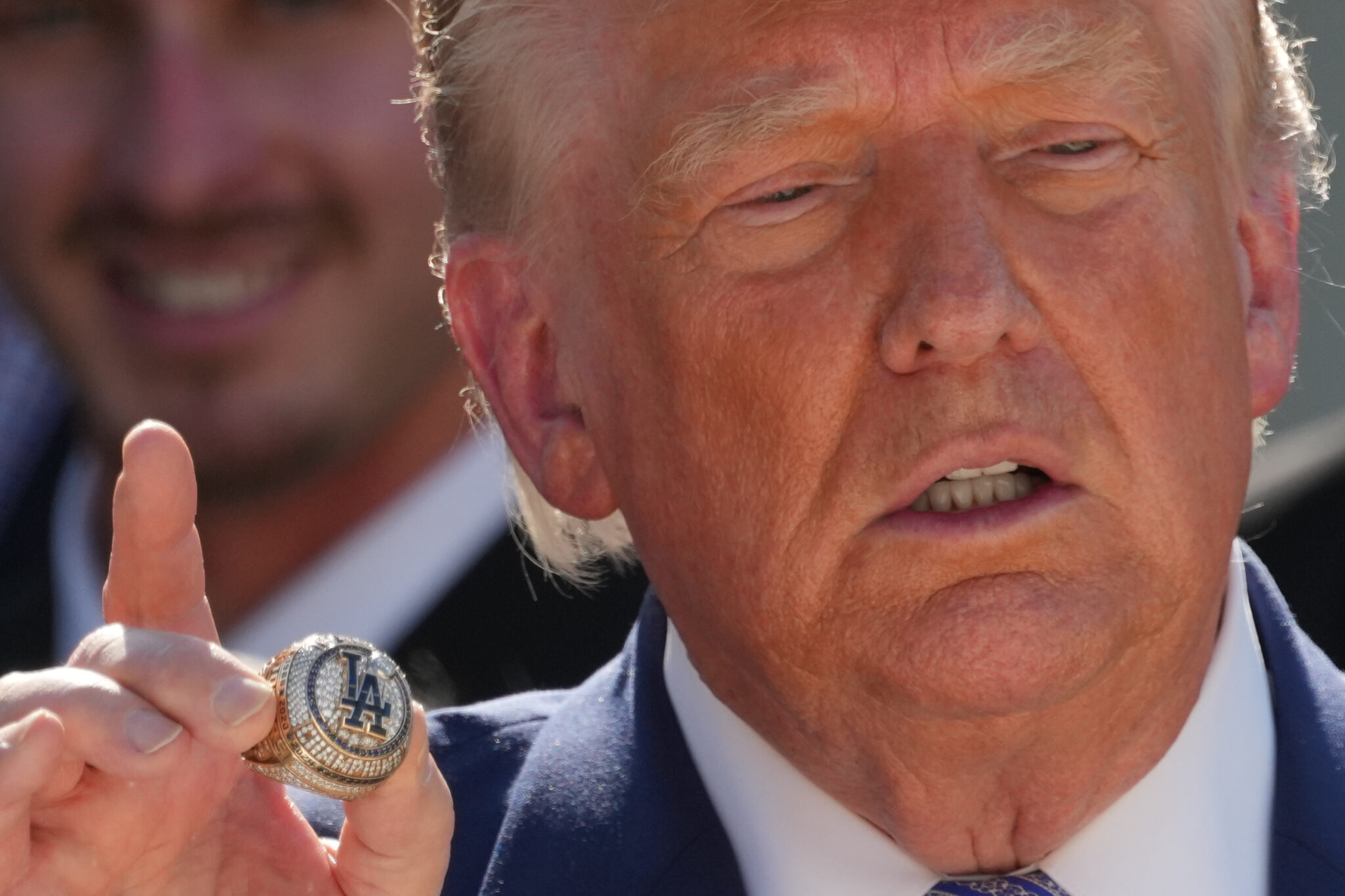
Trump Orders EU Trade Investigation After $1 Billion Google Fine/ Newslooks/ WASHINGTON/ J. Mansour/ President Donald Trump announced a formal investigation into European Union trade practices after regulators fined Google $1 billion. Trump accused the bloc of unfairly targeting American technology companies and predicted that the inquiry would lead to substantial tariffs. EU officials maintain that their digital regulations protect competition and give European consumers more choices.
Quick Look
- The United States will investigate the EU’s treatment of American technology companies.
- Trump announced the action one day after the EU fined Google 890 million euros, or $1 billion.
- The investigation could lead to tariffs or other trade sanctions under Section 301.
- Trump said penalties against Google, Apple, Meta, Amazon and other companies should be reversed.
- Google welcomed the Trump administration’s engagement.
- The European Commission says its regulations ensure fair competition and consumer choice.
- EU officials had not immediately responded to Trump’s announcement.
Deep Look
Trump Announces Investigation of EU Trade Practices
WASHINGTON (AP) — President Donald Trump said Friday that the United States will formally investigate the European Union’s trade practices, accusing the bloc of unfairly imposing billions of dollars in penalties on American technology companies.
The announcement followed the EU’s decision Thursday to fine Google 890 million euros, equivalent to about $1 billion. European regulators said Google violated digital antitrust rules by steering users of its Play app store and search engine toward the company’s own products and services at competitors’ expense.
Trump said on social media that he has repeatedly warned European officials against penalizing companies including Google, Apple, Meta and Amazon.
“The United States of America is not a ‘PIGGYBANK’ for Europe, nor will we allow it to be!” Trump said, adding that his post constituted notice of an immediate trade investigation “into the practice of ‘ROBBING’ American Companies and, in turn, the American Taxpayer.”
“The European Union will pay a very big price for this illegal and highly unethical conduct, which I have consistently warned them about,” Trump added.
Trump Predicts Tariffs and Reversal of Fines
Trump asserted that the European penalties against American companies “will be entirely reversed.” He also predicted that “a substantial TARIFF” would be imposed on the EU “at the earliest possible moment.”
“Stay tuned!” he said.
Trump did not provide details about the investigation’s scope, timeline or possible tariff rate.
The investigation could be conducted under Section 301 of the Trade Act of 1974. That law allows the president to impose tariffs and other sanctions against trading partners found to engage in practices deemed “unjustifiable,” “unreasonable” or “discriminatory.”
Investigation Follows New Global Tariffs
The announcement came one day after the White House unveiled double-digit tariffs on imports from more than 60 countries. The administration accused those trading partners of failing to adequately enforce prohibitions against goods made through forced labor.
Those duties replaced temporary worldwide tariffs of 10% that Trump imposed after the Supreme Court invalidated his largest tariff program.
The administration is using Section 301 to impose the new forced-labor tariffs, providing a possible model for measures directed at the European Union following the latest investigation.
Google Welcomes US Government’s Involvement
Google spokesperson José Castañeda said the company has made extensive efforts to comply with the EU’s Digital Markets Act while raising concerns about recent European Commission decisions.
“We appreciate the engagement by the administration and U.S. government,” Castañeda said.
Amazon, Apple, Meta and Microsoft did not immediately respond to requests for comment. The European Commission also did not immediately comment on Trump’s investigation announcement.
EU Intensifies Regulation of Big Tech
The latest Google fine is part of the EU’s broader effort to regulate some of the world’s largest technology companies. Brussels has taken a leading role in imposing antitrust and digital-market rules on companies headquartered in the United States and elsewhere.
Trump previously threatened retaliation if European authorities imposed penalties on American technology firms.
Google also recently lost an appeal involving a separate $4.5 billion EU antitrust fine. Regulators in that case accused the company of using the dominance of its Android operating system to restrict competition and reduce consumer choice.
European Commission Defends Google Decision
The European Commission, which serves as the EU’s executive branch and leading antitrust regulator, said its action against Google was intended to protect consumers and competitors.
“The best products should succeed because they’re better, not because they’re owned by the company running the search engine. And European consumers have a right to be told by app developers where to sign up to the best offers, even when the app store owner does not get a cut,” said Teresa Ribera, the commission’s executive vice president for clean, just and competitive transition.
Google’s president of global affairs, Kent Walker, criticized the fine as “product degradation driven by a small group of self-serving complainants” that would harm European companies and consumers.
Walker said the Digital Markets Act forces Google “to strip away real-time search features Europeans love — like instant pricing and direct availability for hotels, flights, and restaurants — and dismantle safety protections on Google Play.”
Dispute Centers on EU “Gatekeeper” Rules
The EU classifies Amazon, Apple, Google parent Alphabet, Meta, Microsoft and TikTok owner ByteDance as digital “gatekeepers.” The designation applies to major technology platforms that European regulators say control access between businesses and consumers.
“In the EU, businesses have the right to compete fairly. Gatekeepers have the obligation to ensure a level playing field and consumers the right to choose for cheaper alternative offers,” European Commission spokesperson Thomas Regnier said.
Alphabet reported revenue of $403 billion last year.
The escalating disagreement now threatens to turn a regulatory dispute over competition and consumer choice into a broader trade confrontation between the United States and the European Union.






You must Register or Login to post a comment.