

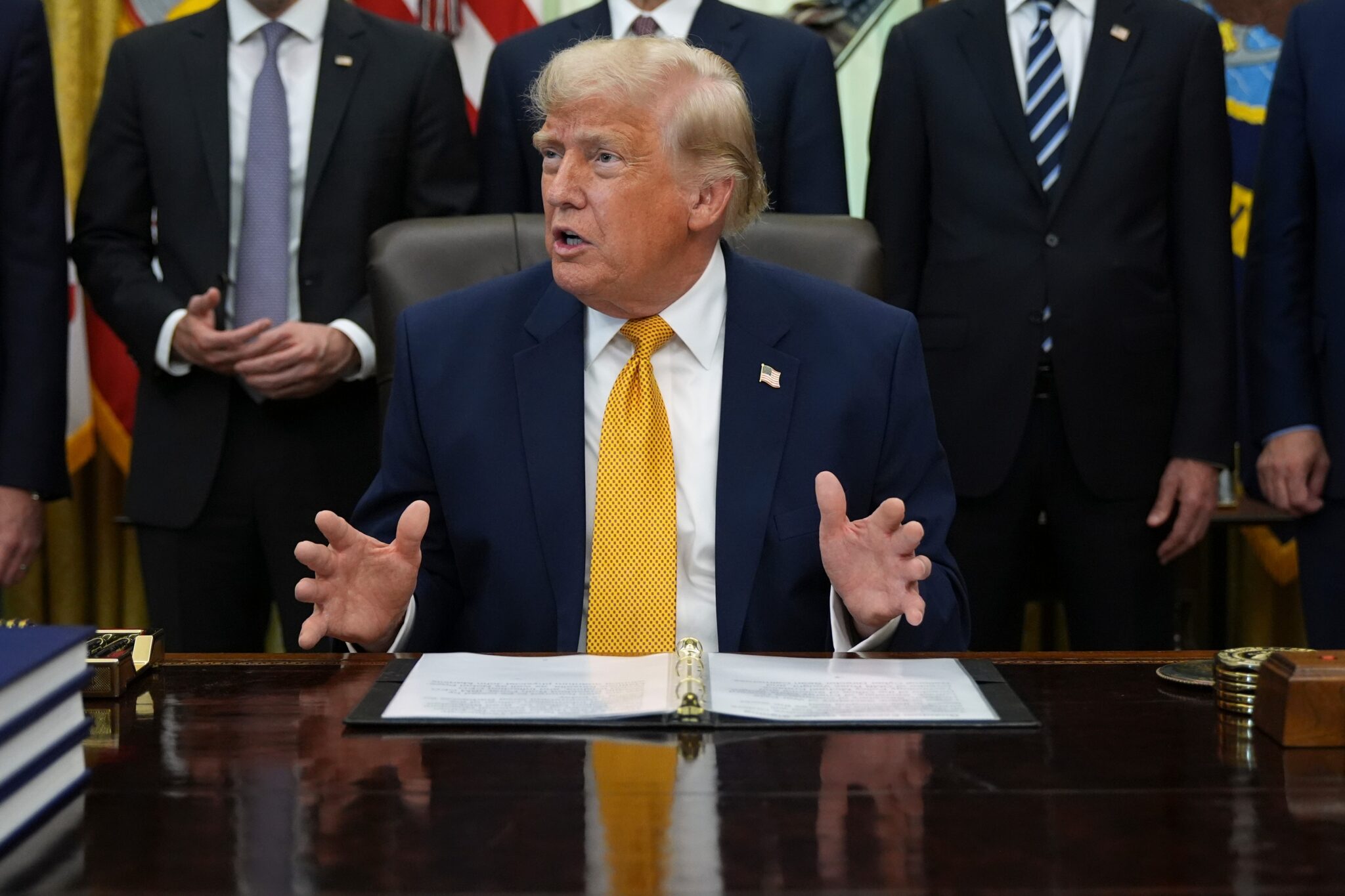
Judge Blocks Trump Admin’s SAVE Citizenship Database in Major Voting Rights Ruling/ Newslooks/ WASHINGTON/ J. Mansour/ Morning Edition/ A federal judge has blocked the Trump administration’s expanded SAVE citizenship verification system. The court found the database could wrongly identify eligible voters and lead to improper voter roll removals. The ruling marks another legal setback for the administration’s efforts to reshape election oversight nationwide.
SAVE Database Ruling Quick Looks
- Federal judge halts use of the expanded SAVE system.
- Court cites privacy concerns and voting rights risks.
- Decision challenges a key element of Trump’s election agenda.
- Advocacy groups argued the database could wrongly purge eligible voters.
- At least 67 million voter registrations were checked through the system.
- More than 25 states had used SAVE for voter roll reviews.
- DHS and DOJ vow to continue defending the program.
- Naturalized citizens were identified as particularly vulnerable to database errors.
- Judge says federal agencies improperly centralized sensitive personal information.
- Future of the revamped SAVE system remains uncertain.
Deep Look
Federal Court Blocks Expanded SAVE Citizenship Verification Program
A federal judge has delivered a significant setback to the Trump administration’s election policies by blocking the use of a revamped federal citizenship verification system that officials promoted as a tool to identify noncitizens on voter rolls.
U.S. District Court Judge Sparkle L. Sooknanan ruled Monday that the updated Systematic Alien Verification for Entitlements program, commonly known as SAVE, cannot continue operating in its current form.
The judge sided with voting rights advocates and privacy groups that challenged the database, arguing that recent changes created serious risks for American citizens whose voter registrations could be incorrectly flagged and removed.
In her ruling, Sooknanan wrote:
“All in all, the federal government has knowingly trampled on the privacy rights of American citizens in a manner that threatens the sacred right to vote.”
“This Court cannot stand idly by while that happens.”
Judge Cites Privacy Violations
The court found that federal agencies combined large amounts of personal information into a centralized database despite legal restrictions designed to protect Americans’ private data.
According to the ruling, Congress specifically prohibited federal agencies from creating centralized repositories of sensitive personal information.
Sooknanan concluded that agencies involved in expanding SAVE understood the legal concerns but moved forward regardless.
She wrote that the agencies responsible for creating the updated system “knew that the database violates those statutory protections.”
The decision effectively suspends one of the central tools used by the Trump administration to verify voter citizenship nationwide.
Key Pillar of Trump’s Election Agenda
The SAVE database became a major component of President Donald Trump’s broader efforts to overhaul election administration during his second term.
Trump has repeatedly argued that stronger citizenship verification is necessary to prevent noncitizens from participating in U.S. elections.
The administration’s election initiatives have included executive actions seeking:
- Proof of citizenship requirements for voter registration.
- Restrictions on mail ballots received after Election Day.
- New federal oversight of voter registration systems.
- Expanded use of federal databases to verify voter eligibility.
Several of those initiatives have already been blocked by courts.
Judges have repeatedly cited constitutional provisions granting states and Congress primary authority over election administration rather than the executive branch.
Critics Say Noncitizen Voting Is Already Rare
Voting by noncitizens is already illegal under federal law and can carry severe penalties, including criminal prosecution and deportation.
Election experts have consistently found that cases of noncitizen voting represent only a tiny fraction of total registrations and ballots cast nationwide.
Opponents of the SAVE expansion argued that the risks of wrongly removing eligible voters outweighed any potential benefits.
The concern became more significant after federal officials expanded the system’s capabilities in 2025.
How the SAVE System Was Expanded
The SAVE program originally operated as an immigration-related tool intended to help government agencies verify eligibility for public benefits.
Republican election officials and state governments had long requested improvements that would allow broader use of the database for voter registration reviews.
In 2025, the Department of Homeland Security, U.S. Citizenship and Immigration Services, and Elon Musk’s Department of Government Efficiency implemented major upgrades.
The changes included:
- Making the system free for election officials.
- Allowing bulk searches involving thousands of records.
- Permitting searches using names, birth dates and Social Security numbers.
- Eliminating the requirement for DHS-issued identification numbers.
As a result, states significantly increased their use of the database.
Court records indicate that at least 67 million voter registrations were reviewed through SAVE after the upgrades were introduced.
Naturalized Citizens Face Greater Risk
One of the central arguments raised during the case involved the possibility that naturalized citizens could be disproportionately affected by database errors.
Plaintiffs argued that immigration records often fail to accurately reflect citizenship status after naturalization, creating opportunities for false matches.
Attorney Nikhel Sus, representing Citizens for Responsibility and Ethics in Washington, warned during court proceedings:
“They are uniquely vulnerable to errors in the database.”
Judge Sooknanan agreed that evidence showed lawful voters had already been improperly flagged.
She concluded that states using the updated system “are actively removing United States citizens from voter rolls based on inaccurate information.”
Voter Shares Personal Experience
One example highlighted during the lawsuit involved Texas voter Anthony Nel.
Originally from South Africa, Nel became a U.S. citizen more than a decade ago.
Despite his citizenship status, a SAVE review incorrectly identified him as a potential noncitizen, leading to the temporary cancellation of his voter registration in Denton, Texas.
Reflecting on the experience, Nel said:
“I hope others can see this fight and not take their right to vote for granted.”
Administration Pushes Back
Federal officials sharply criticized the ruling.
James Percival, general counsel for the Department of Homeland Security, responded on social media:
“It’s amazing how hard the Left will fight to stop us from solving problems they insist do not exist.”
The Department of Justice also signaled it plans to continue defending the administration’s policies.
In a statement, the DOJ said it would:
“continue to aggressively defend President Trump’s immigration enforcement agenda and DHS’s use of the SAVE system to verify citizenship.”
Election and Privacy Advocates Celebrate Decision
Plaintiffs described the ruling as a major victory for voter rights and privacy protections.
Sus called the decision an “across the board victory,” emphasizing that federal agencies cannot freely share and combine sensitive personal information without legal authorization.
Election law expert Mark Johnson of the University of Kansas also supported the ruling.
“It couldn’t be more clear” that the SAVE system violates federal privacy laws, Johnson said.
He added:
“It’s an illegal idea. Plus it’s a bad idea.”
What Happens Next
The ruling leaves the future of the expanded SAVE system uncertain.
Federal officials could appeal the decision, while Congress could potentially revisit legislation governing voter verification and federal data sharing.
For now, however, the court’s decision halts one of the Trump administration’s most ambitious efforts to establish a nationwide system for identifying potential noncitizens on voter rolls.
The case is expected to remain a major battleground in the broader national debate over election security, voting rights and federal authority in administering elections.






You must Register or Login to post a comment.