

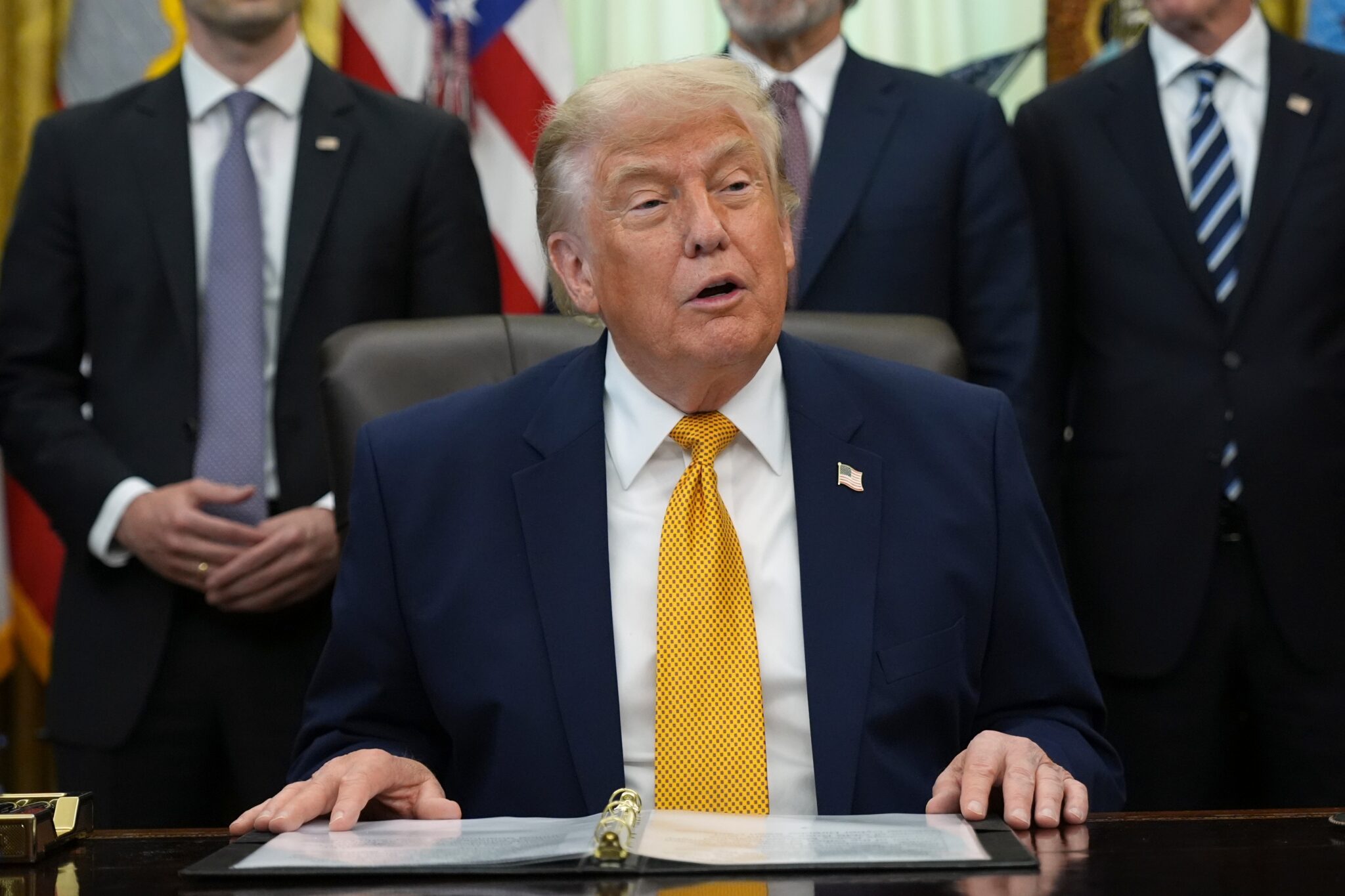
Judge Blocks Trump Student Loan Cap for Nursing, Public Health Graduate Programs/ Newslooks/ WASHINGTON/ J. Mansour/ Morning Edition/ A federal judge has temporarily blocked part of the Trump administration’s plan to limit federal student loans for graduate programs in nursing, public health and other healthcare fields. The ruling prevents the Education Department from enforcing a new definition of “professional degree” while legal challenges continue. Healthcare organizations say the decision protects future students and helps address workforce shortages.
Trump Student Loan Caps Quick Looks
- Federal judge blocks part of Trump’s graduate loan cap plan.
- Ruling affects nursing, physical therapy, public health and similar healthcare fields.
- Education Department’s revised definition of “professional degree” is temporarily suspended.
- Loan caps remain in place, but the definition used to determine eligibility is on hold.
- Healthcare organizations argued the rule would reduce access to graduate education.
- The Education Department is reviewing the court’s decision.
Deep Look
Judge Pauses Key Part of Student Loan Rule
A federal judge has temporarily blocked a key portion of the Trump administration’s effort to limit federal student loans for graduate students in several healthcare professions, giving nursing and other medical programs a temporary legal victory.
The ruling pauses the Education Department’s revised definition of what qualifies as a “professional degree” under the new federal student loan law while litigation continues.
New Loan Caps Spark Legal Challenge
The dispute centers on the One Big Beautiful Bill Act, which introduces new borrowing limits beginning in July.
Previously, graduate students could generally borrow up to the full cost of attendance through federal loans. Under the new law, graduate degree programs are limited to $100,000 in federal loans, while professional degree programs qualify for a higher borrowing cap of $200,000.
The Education Department classified medicine, dentistry, pharmacy, veterinary medicine, chiropractic, law, optometry, osteopathic medicine, podiatry and theology as professional degree programs eligible for the higher cap.
However, programs in nursing, physical therapy, physician assistant studies, speech-language pathology and public health were excluded from that category.
Healthcare Groups Say Students Would Be Hurt
Eight professional organizations filed suit, arguing the revised definition would leave many graduate students unable to finance their education through federal loans.
The plaintiffs warned that students would either be forced to abandon their studies or turn to higher-interest private loans, making advanced healthcare education less accessible.
The American Association of Nurse Practitioners welcomed the court’s decision, calling it “an important step for NP students, the future health care workforce and the patients who depend on them.”
Judge Questions Education Department’s Authority
U.S. District Judge Beryl Howell ruled that the Education Department likely exceeded the authority granted by Congress.
Among the changes challenged in court was a new requirement stating that professional degree holders must be able to practice independently without supervision from another licensed professional.
Judge Howell concluded Congress never authorized the department to impose that additional requirement. She also expressed concern that limiting loan eligibility could reduce the number of qualified healthcare professionals, particularly in underserved communities already facing workforce shortages.
Loan Caps Still Remain in Effect
The ruling does not eliminate the student loan caps created by Congress.
Instead, it temporarily blocks only the Education Department’s revised definition of professional degree programs while the legal challenge moves forward.
As a result, additional court proceedings will determine whether the department can continue using its new classification system.
Education Department Reviews Next Steps
The Education Department said it is reviewing the ruling and will determine its response.
Officials have previously argued that limiting federal borrowing would encourage colleges and universities to control rising tuition costs.
Meanwhile, a separate lawsuit filed by a coalition of Democratic-led states challenging the broader student loan caps remains pending in federal court.






You must Register or Login to post a comment.