

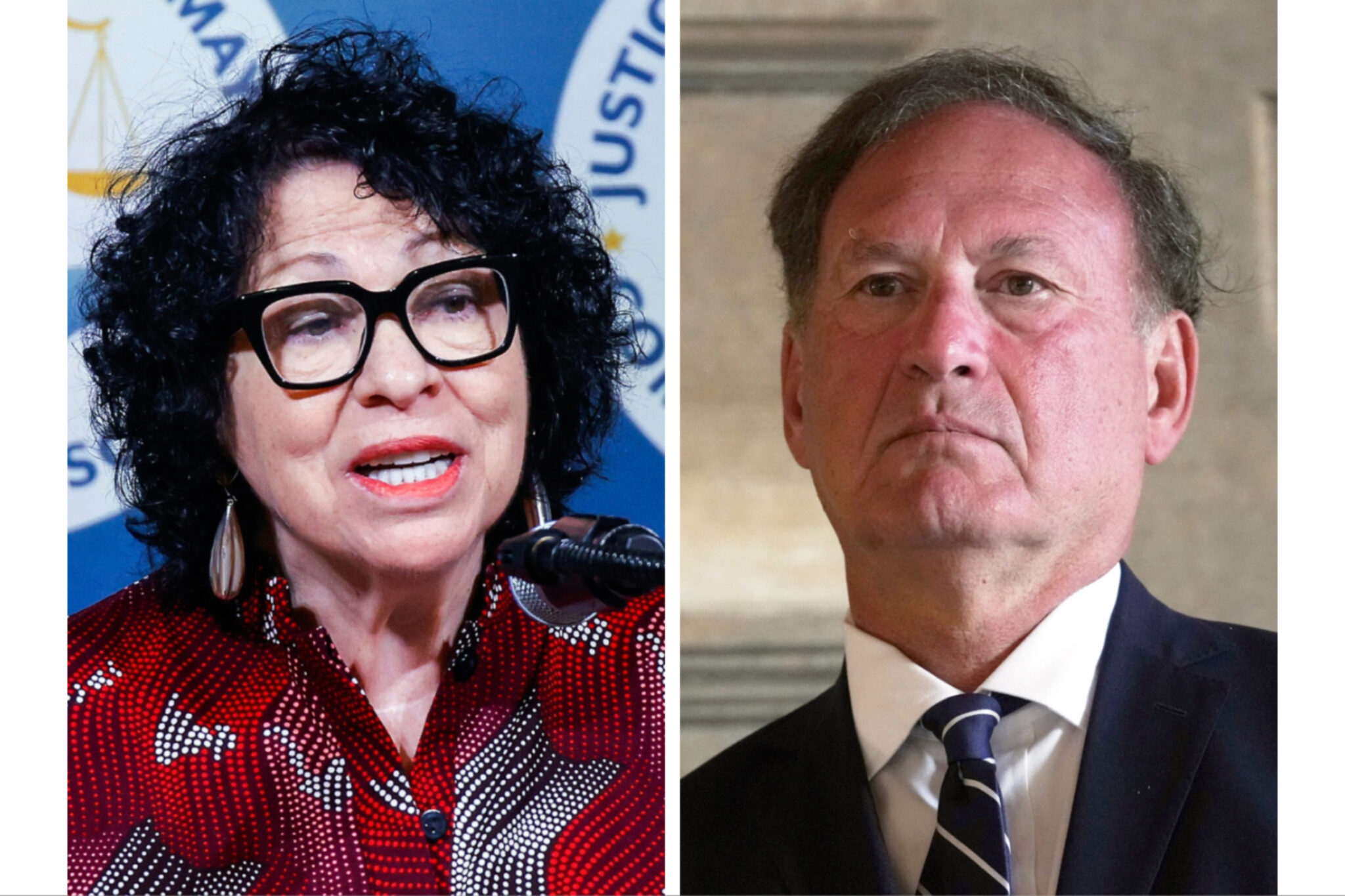
Supreme Court Tensions Surface as Justices Clash Ahead of Major Trump Rulings/ Newslooks/ WASHINGTON/ J. Mansour/ Morning Edition/ Public tensions briefly surfaced at the U.S. Supreme Court as Justices Sonia Sotomayor and Samuel Alito exchanged rare remarks from the bench during a major immigration ruling. The unusual moment comes as the court prepares to issue several high-profile decisions involving President Donald Trump’s agenda before the end of its term.
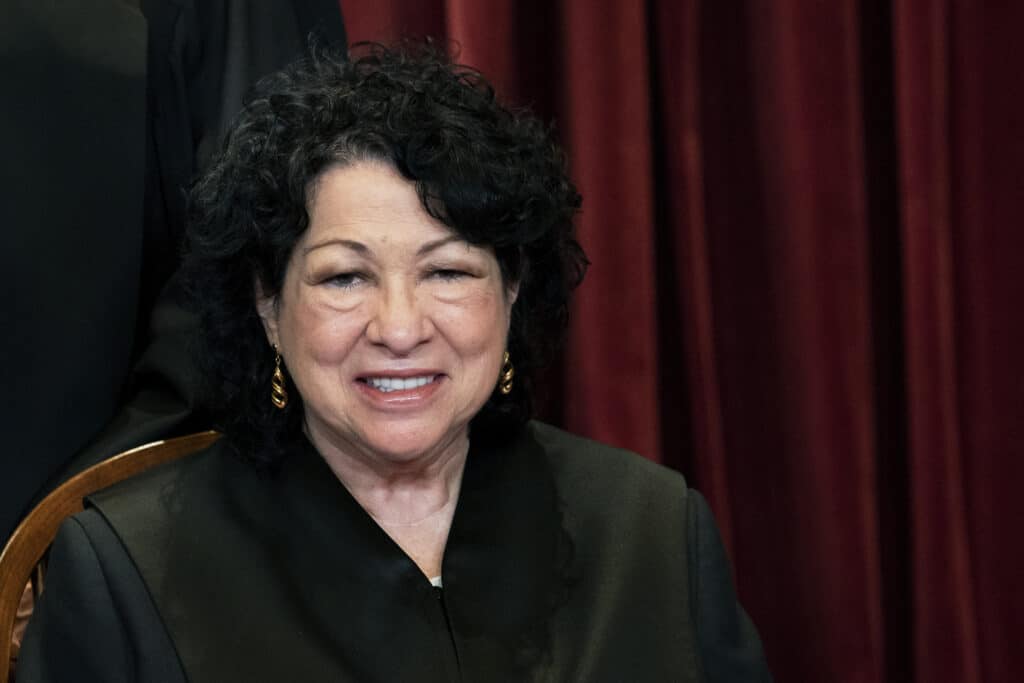
Supreme Court Tensions Quick Looks
- Rare public exchange occurred between Justices Samuel Alito and Sonia Sotomayor.
- Incident followed a major ruling favoring the Trump administration on asylum policy.
- Court later said confusion stemmed from a misunderstanding about Sotomayor’s planned dissent.
- Additional landmark rulings are expected before the Supreme Court concludes its term.
- Pending cases include birthright citizenship and presidential authority over independent agencies.
- Despite ideological divisions, the court continues to decide many cases unanimously.
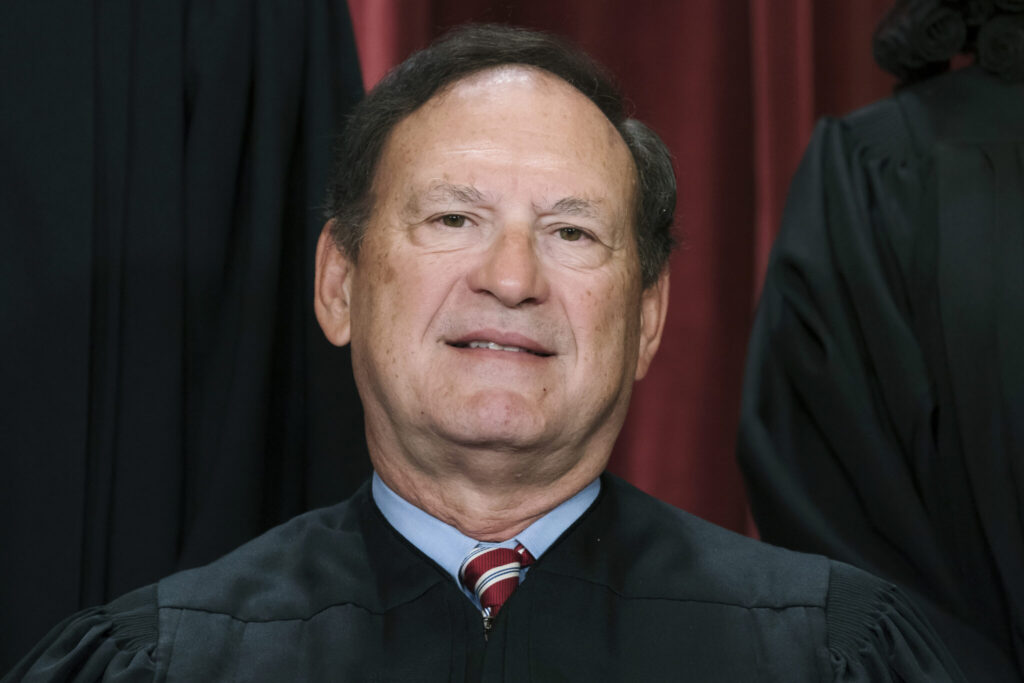
Deep Look
Rare Exchange Breaks Supreme Court Tradition
The Supreme Court displayed an uncommon moment of public disagreement as internal tensions briefly emerged during the announcement of one of its major immigration decisions.
Following the release of a ruling that handed President Donald Trump another legal victory on immigration policy, conservative Justice Samuel Alito summarized the court’s majority opinion from the bench. After he concluded, liberal Justice Sonia Sotomayor delivered an emotional oral dissent criticizing the decision and warning of its humanitarian consequences.
The exchange stood out because the Supreme Court typically maintains a reserved atmosphere even during deeply divided cases.
Sotomayor Delivers Emotional Dissent
While reading her dissent, Sotomayor described the dangerous journeys many asylum seekers undertake before reaching the U.S. border. She also referenced the tragic 1939 voyage of Jewish refugees who were denied entry while fleeing Nazi persecution, noting that hundreds later died during the Holocaust.
Sotomayor argued the ruling would allow the federal government to deny many migrants the opportunity to seek asylum at the southern border, potentially placing lives at risk.
She concluded that the decision “regrettably and tragically extinguishes the light of the torch of the Statue of Liberty.”
As she spoke, Justice Brett Kavanaugh watched attentively while Justice Ketanji Brown Jackson remained focused ahead.
Alito Responds to Unexpected Dissent
In an unusual departure from normal Supreme Court practice, Alito responded after Sotomayor finished speaking.
He expressed surprise that she had chosen to deliver an oral dissent, saying he would have expanded his own courtroom summary had he known she intended to speak.
Court officials later clarified that the incident resulted from a misunderstanding. According to the court, Sotomayor’s chambers had properly informed colleagues of her plans, but the information had not reached Alito as expected.
Alito defended the majority opinion, emphasizing that the case centered on whether federal immigration law permits officials to delay entry for asylum seekers while they are processed—not on whether the underlying policy itself is wise.
He also noted that similar border procedures had been used during both the Obama and Trump administrations.
Major Decisions Still Awaited
The courtroom disagreement comes as the Supreme Court approaches the end of one of its most consequential terms in recent years.
Several highly anticipated rulings are expected in the coming days, including cases involving President Trump’s effort to limit birthright citizenship and expand presidential authority to remove officials serving on independent federal agencies.
These decisions are expected to further define the balance of executive power during Trump’s second administration.
Public Disagreements Have Increased This Term
Although Supreme Court justices frequently describe their working relationships as respectful and collegial, this is not the first sign of tension during the current term.
In April, Sotomayor publicly apologized to Justice Brett Kavanaugh after remarks she made during a law school event were viewed as personal criticism.
Earlier this year, Kavanaugh and Justice Ketanji Brown Jackson also publicly disagreed over the court’s increasing use of emergency rulings allowing the Trump administration to implement major policies while legal challenges continue.
Despite ideological differences, the justices continue to reach unanimous decisions in many cases, including a recent ruling involving Second Amendment rights for marijuana users.
Court Nears End of High-Stakes Term
With only a handful of opinions remaining before the court recesses for the summer, attention remains focused on several landmark constitutional disputes involving immigration, executive authority and civil rights.
Justices’ unusual courtroom exchange offered a rare glimpse into the pressure facing the justices as they finalize decisions that could shape U.S. law and presidential power for years to come.






You must Register or Login to post a comment.