
Trump Administration Quietly Shifts Strategy on Immigration Crackdown/ Newslooks/ WASHINGTON/ J. Mansour/ Morning Edition/ The Trump administration is adjusting its immigration enforcement strategy, moving toward quieter operations after earlier high-profile crackdowns. Arrests have declined, but deportation targets remain aggressive, with plans to remove up to 1 million people annually. Officials are expanding detention capacity and legal measures to sustain enforcement efforts.

Immigration Crackdown Shift Quick Looks
- Trump administration shifting to less public enforcement tactics
- ICE arrests and detention numbers have declined recently
- Deportation goal remains high at 1 million per year
- Detention capacity expanding to hold up to 100,000 people
- Fewer high-profile raids after public backlash
- Increased cooperation with local law enforcement (287g agreements)
- Legal protections for migrants being reduced
- Work restrictions may be used to push migrants to leave

Deep Look
Shift Toward Quieter Enforcement Strategy
WASHINGTON — The Trump administration is recalibrating its immigration crackdown, moving away from highly visible enforcement operations toward a quieter, more strategic approach.
Homeland Security Secretary Markwayne Mullin has emphasized a lower-profile strategy, aiming to avoid the public confrontations that marked earlier enforcement efforts.
“We’re still enforcing immigration laws… but we’re doing it in a more quiet way,” Mullin said.
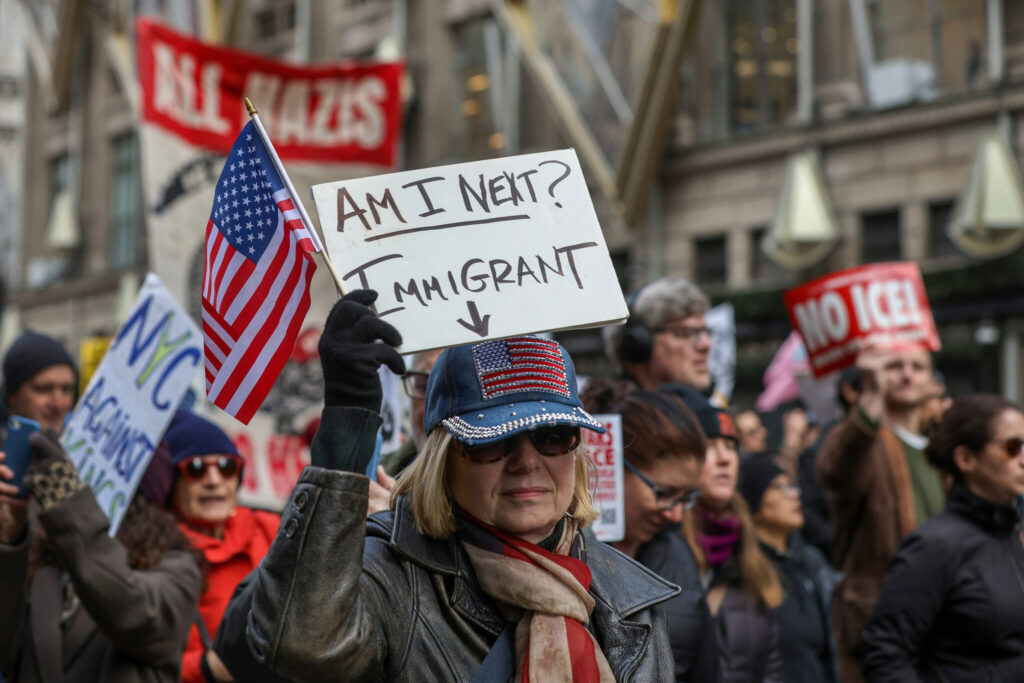
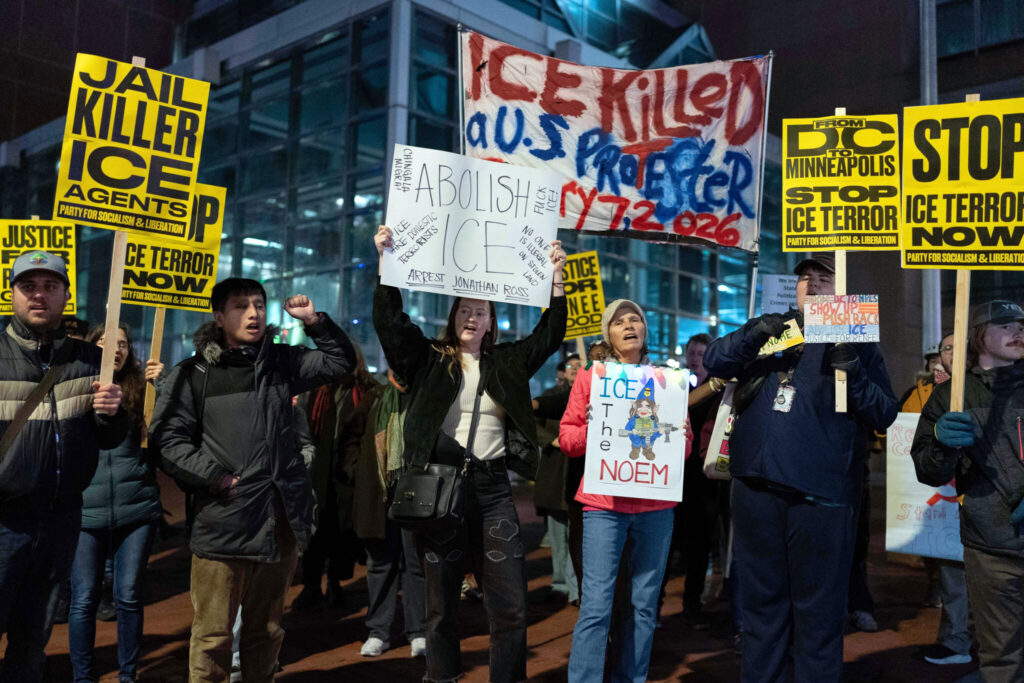
The shift follows months of controversy surrounding aggressive raids and clashes with protesters in major cities.
“They are working really on building a juggernaut of a system,” said Doris Meissner, who headed the U.S. Immigration and Naturalization Service, a predecessor to ICE, during President Bill Clinton’s Democratic administration and is now a senior fellow at the Migration Policy Institute.
White House spokesperson Abigail Jackson said there had been no change to Trump’s strategy.
“President Trump’s highest priority has always been the deportation of illegal alien criminals who endanger American communities,” Jackson said.
Arrests Decline, Goals Remain Aggressive
Recent data shows a drop in Immigration and Customs Enforcement (ICE) arrests and detention levels.
The number of detainees has fallen from about 72,000 earlier this year to roughly 58,000.
Despite the decline, the administration’s long-term goals remain unchanged.
ICE plans to remove up to 1 million people annually — more than double last year’s total — signaling a continued commitment to large-scale deportations.
Expansion of Detention Capacity
To meet its deportation targets, the administration is significantly expanding detention capacity.
Officials aim to hold as many as 100,000 individuals at a time, more than doubling previous levels.
The government has already acquired additional facilities, including warehouses repurposed for detention use.
Experts describe the effort as building a large-scale system capable of sustaining high deportation rates.
Reducing Legal Protections
Another key element of the strategy involves limiting legal protections that allow migrants to remain in the United States.
Approvals for green cards and humanitarian visas have declined sharply, reflecting stricter vetting policies.
The administration is also pursuing efforts to revoke Temporary Protected Status for certain groups, a move currently being challenged in court.
Advocates warn these actions could make more people vulnerable to deportation without increasing visible enforcement.
Expanding Local Enforcement Partnerships
The administration is also increasing cooperation with state and local authorities.
Programs known as 287(g) agreements allow local law enforcement to assist with immigration enforcement tasks.
These agreements have expanded dramatically, growing from 135 agreements in 20 states to more than 1,400 across 41 states and territories.
This approach allows immigration enforcement to occur more routinely, such as during traffic stops or jail bookings.
Pressure From Both Sides
The shift in strategy comes amid political pressure.
Critics argue the administration’s earlier tactics were too aggressive and damaging, while supporters say current deportation numbers are still too low.
Some conservative groups are calling for stricter enforcement measures, including workplace audits and restrictions on employment for undocumented immigrants.
They argue that limiting job opportunities would encourage people to leave voluntarily.
Balancing Visibility and Effectiveness
The administration’s new approach appears to prioritize effectiveness over visibility.
By focusing on systemic changes — such as legal restrictions and expanded enforcement networks — officials aim to increase deportations without generating the same level of public backlash.
However, the long-term success of this strategy remains uncertain.
What Comes Next
As the administration continues refining its approach, key questions remain about how these policies will affect immigration levels, labor markets, and communities across the country.
Legal challenges, political opposition, and public opinion will likely shape the next phase of immigration enforcement.
For now, the shift signals a move toward a more calculated, less visible approach — while maintaining ambitious enforcement goals.
Whatever the strategy going forward, the administration is facing heavy pressure not to back away from its goals.
“The numbers are too low,” said Mike Howell, part of the Mass Deportation Coalition, which launched a playbook for how the administration can actually get to a million deportations a year by using tactics such as worksite enforcement.
“The deportation numbers are just too low,” Howell said, “and they need to be much higher, and they can be much higher.”