

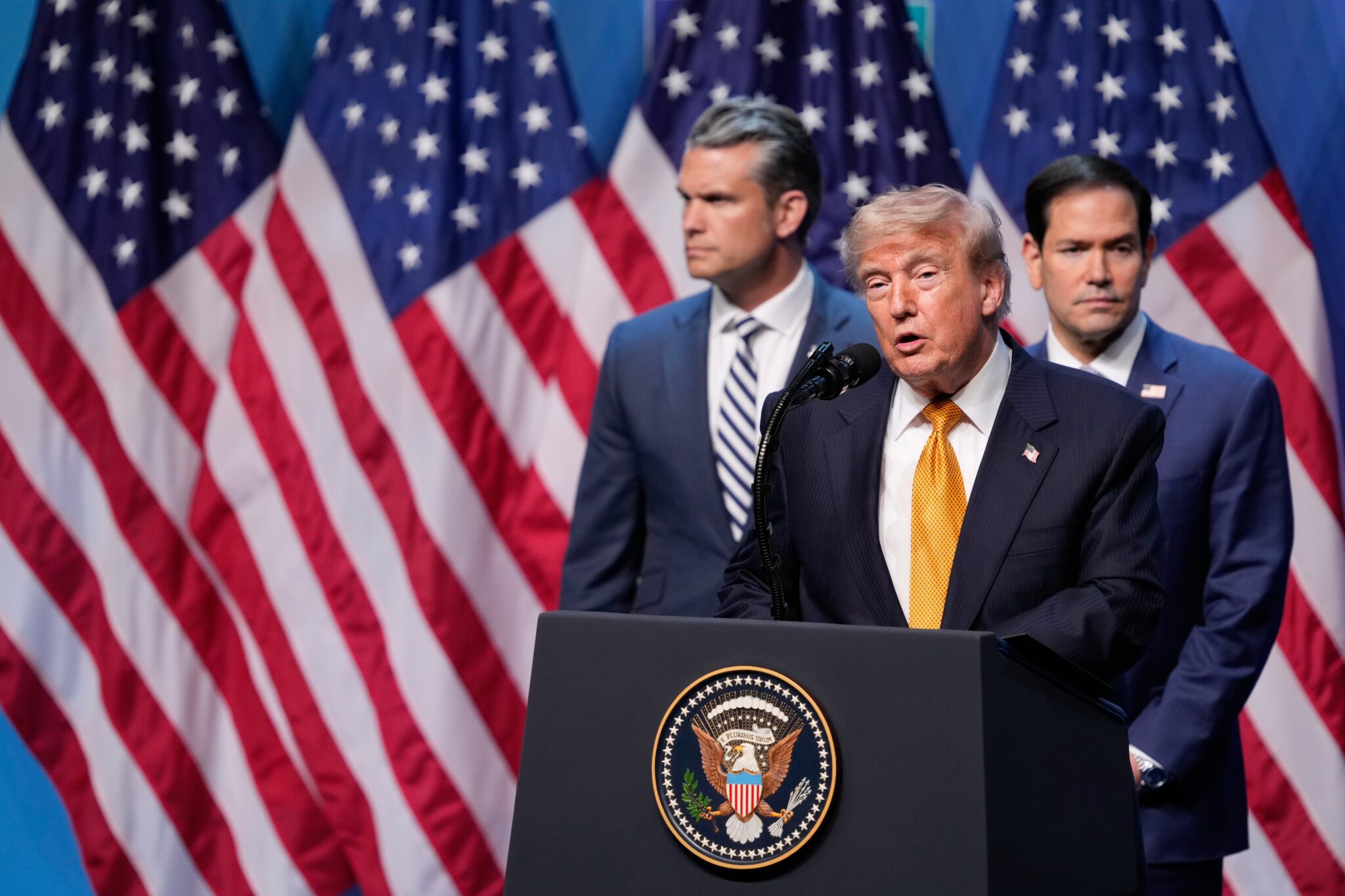
Trump, Iran War and Ideological Fights Reshape Key Midterm Races/ Newslooks/ Washington/ J. Mansour/ Republicans and Democrats are confronting scandals, internal divisions and unpredictable primaries with just over three months before the midterm elections. Democrats are divided between progressives and moderates, while Republicans face retirements, ousted incumbents and questions about Trump-endorsed candidates.
The Iran war, rising fuel prices and President Donald Trump’s low approval rating have further complicated the political environment.
Quick Look
- Both parties have struggled to maintain their original midterm strategies.
- Democrats are divided between progressive challengers and establishment-backed candidates.
- Candidate scandals have disrupted important races in Wisconsin and Maine.
- Republicans face difficult contests after Trump pushed aside incumbents and promoted loyalists.
- The Iran war and higher gasoline prices have weakened the GOP’s planned economic message.
- Trump’s approval rating stood at 37% in the latest AP-NORC poll.
- Democrats view opposition to Trump as a major source of voter motivation.
- Republicans say Trump remains their most effective turnout asset.
- Key Senate races in Michigan, Texas, Maine and North Carolina could affect control of Congress.
- Pollster Frank Luntz described the campaign environment as “a sense of chaos and confusion.”
Deep Look
Original Midterm Strategies Begin to Unravel
NEW YORK — Republicans and Democrats entered the 2026 midterm campaign with relatively straightforward strategies.
Republicans planned to emphasize border security and an economy beginning to recover from prolonged inflation. Democrats expected to make an unpopular President Donald Trump the central issue and use opposition to him to mobilize their supporters.
With just over three months remaining, scandals, internal disputes and unexpected developments have complicated both approaches.
Trump led the United States into an open-ended war with Iran that disrupted global oil supplies and increased gasoline prices. At the same time, he has continued challenging Republicans who disagree with him and revisiting his 2020 election defeat.
Democrats, meanwhile, are experiencing a conflict between the party’s moderate establishment and an increasingly assertive progressive movement.
Longtime pollster Frank Luntz said the campaign has been defined by “a sense of chaos and confusion.”
“We really do not know what’s going to happen in November,” he said.
Democratic Scandal Disrupts Wisconsin Governor Race
One of the latest Democratic setbacks emerged in Wisconsin, a closely divided battleground state.
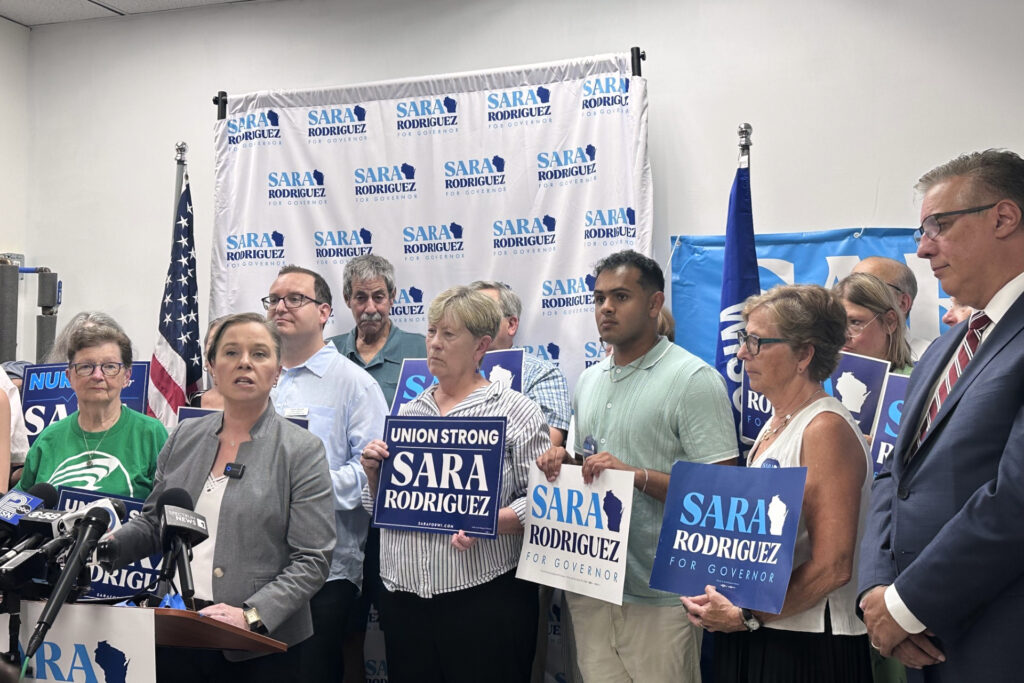
Lt. Gov. Sara Rodriguez ended her campaign for governor following a campaign finance scandal. Her withdrawal came as she appeared to be consolidating establishment support.
Party leaders worry that her departure could benefit Francesca Hong, a democratic socialist they consider potentially vulnerable against U.S. Rep. Tom Tiffany, the likely Republican nominee.
“If we lose, Trump’s most loyal lackey in Congress takes control of Wisconsin, and that’s turned regular Democratic angst into flop sweats,” said Wisconsin liberal activist Scot Ross.
Ross nevertheless predicted that Democratic voters would unite around the eventual nominee once the primary ends.
Maine Democrats Search for Replacement Candidate
Democrats are also dealing with uncertainty in Maine, where defeating Republican Sen. Susan Collins is central to their effort to regain control of the Senate.
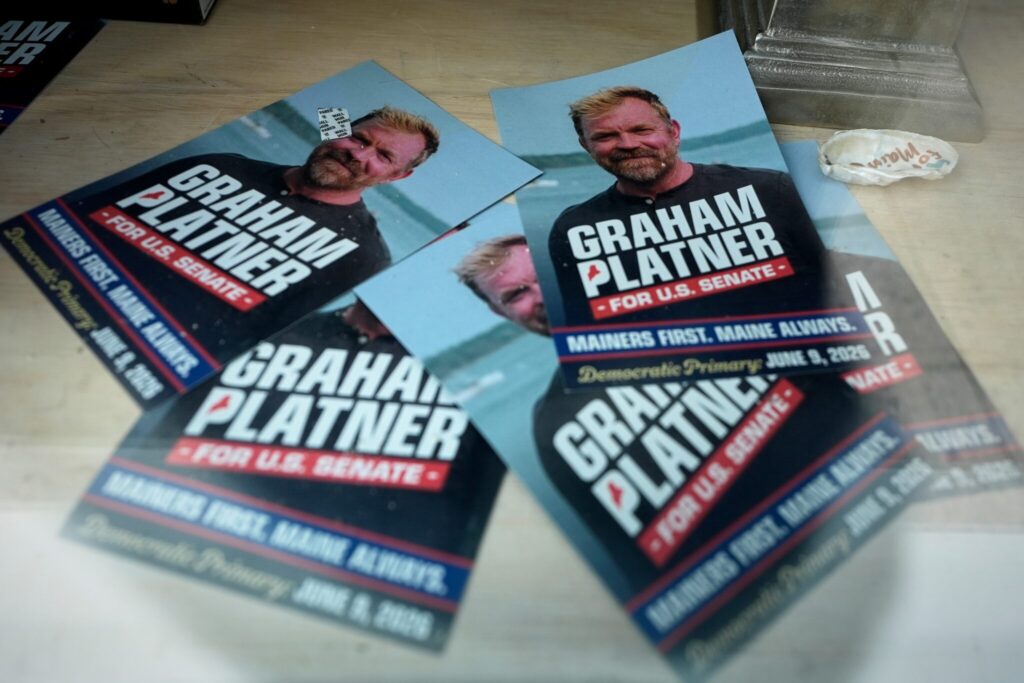
Oyster farmer and political newcomer Graham Platner won the Democratic nomination with strong grassroots support but later withdrew following a sexual assault allegation, which he denies.
His campaign had already faced scrutiny over inflammatory social media posts and a tattoo widely recognized as a Nazi symbol.
Supporters had hoped Platner could reconnect the party with white working-class voters. Democrats are now planning a convention to select a replacement nominee.
Outsider Candidates Bring Energy and Risk
Democratic pollster Celinda Lake said some activists have supported political outsiders while overlooking potential weaknesses that could become significant in general elections.
“There is something in the air that has made these candidates incredibly reckless and thinking that they can get away with it,” Lake said. “I think Trump has kind of created a high-risk environment.”
Marc Short, who served as chief of staff to Vice President Mike Pence during Trump’s first term, compared the Democratic situation with the Republican experience in 2010.
The tea party movement helped little-known conservative candidates defeat establishment Republicans in primaries that year. Some later lost winnable general election contests, limiting Republican Senate gains.
“I feel like when there is a lot of energy on one side that you can tend to nominate candidates that create hurdles for you and limit what your gains could be,” Short said.
Michigan Primary Highlights Democratic Divide
The Michigan Senate primary has become another test of the Democratic Party’s ideological direction.
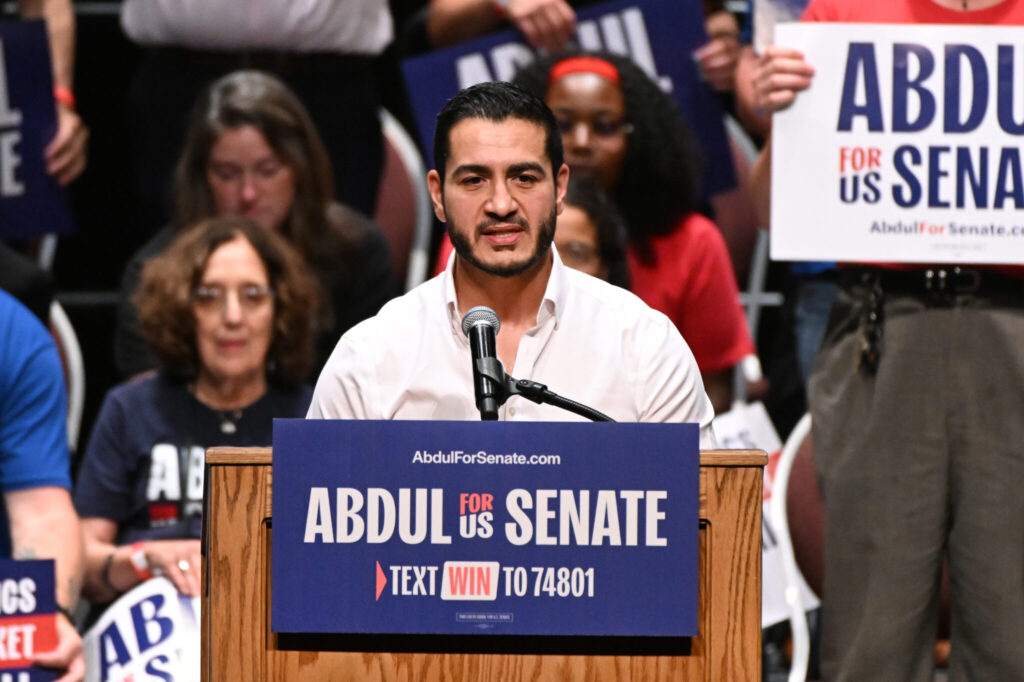
Progressive candidate Abdul El-Sayed has generated significant grassroots enthusiasm. However, establishment figures—including Senate Democratic Leader Chuck Schumer—are concerned that his positions may be too far left for a competitive general election.
Democrats likely need to retain the Michigan seat to have a realistic chance of winning control of the Senate.
The contest also reflects the party’s divisions over Israel. El-Sayed has characterized Israel’s military campaign in Gaza as genocide, an allegation rejected by Israel and the White House.
The American Israel Public Affairs Committee and affiliated organizations have spent nearly $30 million supporting El-Sayed’s primary opponent, Haley Stevens.
Progressives Argue Voters Want Major Change
Adam Green, co-founder of the Progressive Change Campaign Committee, said voters are rejecting a political system they consider unfair and want candidates who will forcefully represent their economic interests.
He said El-Sayed and similar candidates could demonstrate before the 2028 election that “bold, shake-up-the system economic fighters” can perform better in politically divided and Republican-leaning states than “stale, status quo corporate-aligned Democrats.”
Sen. Chris Murphy of Connecticut argued that competitive debates do not necessarily weaken the party.
“A healthy party is a party that has arguments,” Murphy said. “I think our party should be debating ideas. We should be having hotly contested primaries.”
Trump Reshapes Republican Senate Contests
Republicans face separate challenges as they attempt to overcome the historical tendency for a president’s party to lose congressional seats during midterm elections.
Trump altered the Senate map by opposing some incumbents and endorsing loyalists.
In Texas, he helped push aside longtime Sen. John Cornyn and supported Ken Paxton, a combative conservative who has faced corruption allegations.
Republican leaders warned that Paxton’s nomination could make a traditionally safe seat more competitive and require the party to spend millions of dollars defending it.
Tillis Departure Creates North Carolina Opening
In North Carolina, Republican Sen. Thom Tillis decided not to seek reelection after clashing with Trump.
Democrats hope to capture the seat with former Gov. Roy Cooper as their candidate.
Republican pollster and strategist Whit Ayres said Trump “has exacerbated the problem” of increasingly extreme nominees emerging from closed primary systems in both parties.
Republicans must now defend their congressional majorities while managing divisions over loyalty to Trump and the general election viability of his favored candidates.
Iran War Complicates Republican Economic Message
Republicans have often struggled to generate the same turnout when Trump is not personally on the ballot.
The president could also become a liability in some competitive districts and states. Only 37% of American adults approved of his performance in the latest AP-NORC poll, with widespread dissatisfaction over the economy and other issues.
Instead of maintaining a focus on reducing prices, Trump has continued military strikes against Iran amid a fight over the Strait of Hormuz, a major route for global energy shipments.
The conflict has contributed to rising oil and gasoline prices, potentially undermining the economic argument Republicans originally intended to make.
Trump also used a primetime address to dispute his 2020 election defeat while promoting more restrictive voting rules.
Both Parties Disagree About Trump’s Impact
Democratic strategists believe Trump’s conduct and low approval rating will motivate voters to support their candidates.
“Trump is our biggest ally,” Lake said. “He’s the best things that Democrats have going. And it’s the gift that keeps on going.”
Conservative organizers view the president very differently.
“President Trump is the single greatest advantage Republicans have in the midterm elections,” Tea Party Patriots Action Chair Jenny Beth Martin said. “The energy and enthusiasm he generates is incomparable, and we’re counting on him to motivate his supporters to go to the polls.”
The competing assessments reflect the broader uncertainty surrounding a midterm campaign increasingly shaped by scandal, war and intraparty conflict.




You must Register or Login to post a comment.