

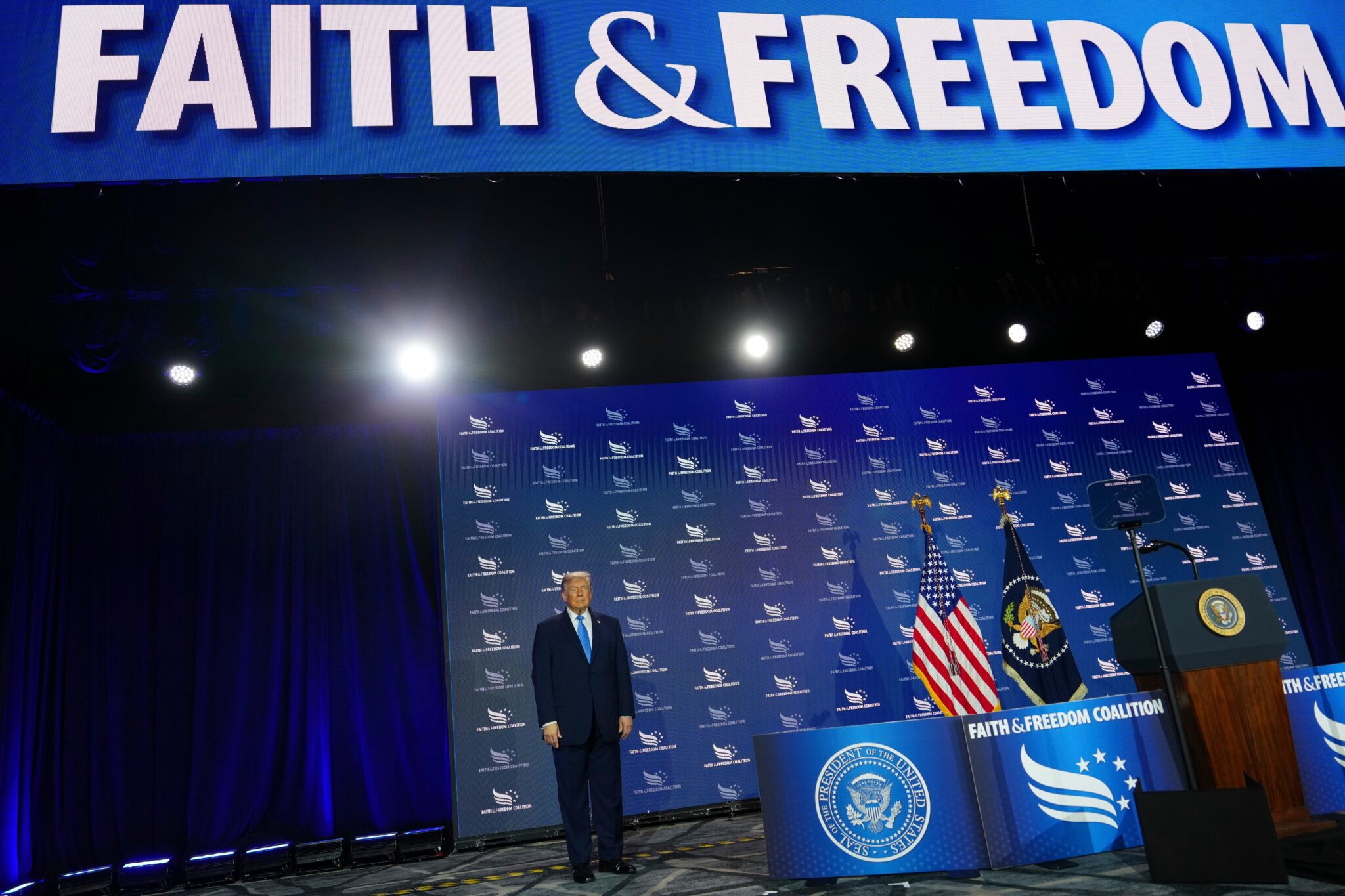
Trump Religious Liberty Panel Challenges Church-State Separation/ Newslooks/ WASHINGTON/ J. Mansour/ Morning Edition/ A Trump administration commission has released a draft report calling for closer cooperation between government and religion while challenging the traditional interpretation of church-state separation. The proposal includes expanded religious protections, new federal initiatives, and recommendations expected to spark significant legal and political debate.
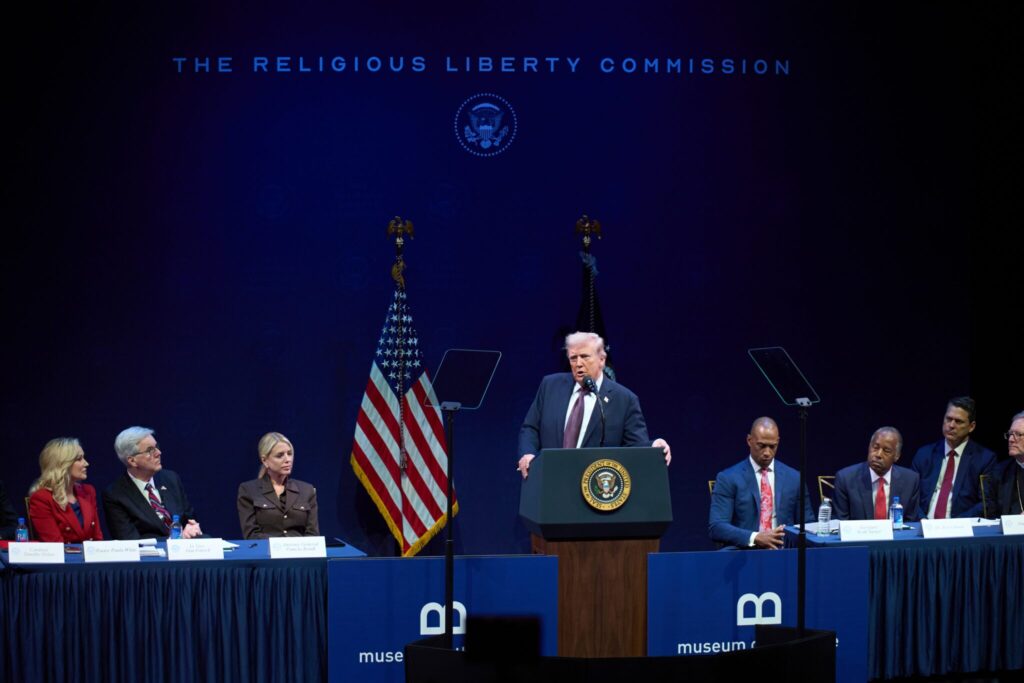
Religious Liberty Commission Quick Looks
- Draft report urges replacing “separation of church and state” with stronger cooperation.
- Commission recommends expanding religious expression in public life.
- Calls for repealing the Johnson Amendment.
- Supports broader religious exemptions for schools, workplaces and healthcare.
- Proposes new federal religious liberty awards and historical exhibits.
- Critics argue the commission lacks ideological diversity.
- Public comment period remains open for 15 days.
Deep Look
Commission Challenges Traditional Church-State Interpretation
A commission established by President Donald Trump is proposing a major shift in how the federal government approaches religious liberty, arguing that America should replace the concept of strict separation between church and state with a framework that builds stronger partnerships between religious institutions and government.
The recommendations appear in a 224-page draft report released Friday by the Religious Liberty Commission, an advisory panel created by Trump and composed almost entirely of conservative Christian members.
The report combines policy proposals with constitutional arguments supporting a larger public role for religion in schools, government agencies and civic life.
Report Seeks Expanded Religious Expression
Among its recommendations, the commission advocates expanding protections for religious expression across American society.
The report supports broader access to public funding for faith-based organizations and wider exemptions for individuals who raise religious objections involving vaccine mandates, pronoun usage, classroom instruction and other public policies.
It also recommends creating religious liberty complaint hotlines and requiring federal agencies to display “Know Your Rights” posters explaining protections for religious freedom.
The commission additionally proposes creating a Presidential Medal of Religious Liberty and First Freedom Hero Awards to recognize individuals who advance religious freedom in America.
Historical exhibits and public markers highlighting religion’s role in American history are also recommended.
Repeal of Johnson Amendment Highlighted
One of the report’s most significant recommendations is repealing the Johnson Amendment, which prohibits tax-exempt religious organizations from directly participating in political campaigns.
Repealing the measure has long been a priority for Trump and many conservative religious organizations.
The commission also recommends compensating military personnel discharged after refusing COVID-19 vaccinations on religious grounds.
In addition, the report supports stronger legal protections against antisemitism while recommending that public officials provide written explanations whenever employees are accused of improper religious expression.
Commission Says Faith Has Been Suppressed
During an Oval Office news conference, commission members argued that many Americans have experienced religious discrimination in workplaces, schools and public institutions.
The report contends that government officials and employers often discourage lawful expressions of faith.
“In many cases the law protects the religious expression of Americans, but government officials and employers often use fear tactics to silence individuals into believing that they don’t have the right to publicly express their faith,” the report states.
Commission members said witnesses appearing before the panel described experiences of religious “persecution” in various professional settings.
Debate Over Church and State
Rather than completely eliminating the constitutional principle separating church and state, the commission argues that the concept has been misunderstood.
“To be clear, this does not involve or require advocating ‘theocracy’ or even the total elimination of any separation between church and state,” the report says.
Instead, the commission argues the First Amendment should be interpreted as creating a productive balance between government and religion.
“In reality, the church and state strengthen and support one another,” the report states.
Texas Lt. Gov. Dan Patrick, who chairs the commission, argued that the phrase “separation of church and state” has been used unfairly against religious Americans.
Americans “cannot be attacked by that phrase any longer,” Patrick said.
Supreme Court Shift Supports Commission’s View
The report points to recent Supreme Court decisions that have expanded religious expression in public life.
Those rulings have permitted practices including public school coaches praying on athletic fields and expanded parental religious objections to certain classroom lessons.
The commission argues those decisions represent a move away from earlier court rulings that restricted organized prayer and religious displays in public schools.
The report also argues that Thomas Jefferson’s famous reference to “a wall of separation between church and state” has been interpreted too broadly over time.
Critics Raise Concerns
The report is already drawing criticism from religious liberty advocates and church-state watchdog groups.
The Interfaith Alliance, which has sued over the commission’s makeup, argues the panel lacks the ideological diversity required of federal advisory bodies.
Its president, the Rev. Paul Raushenbush, described the draft as “a wishlist of divisive, unpopular ideas far-right religious groups have pushed for years.”
He also criticized the commission for giving insufficient attention to Islamophobia while failing to address Trump’s public criticism of several religious leaders, including Pope Leo XIV and Episcopal Bishop Mariann Budde.
Other critics note that the report gives little attention to Americans with no religious affiliation, despite their growing share of the U.S. population.
Public Review Begins
The draft report will remain open for public comment for 15 days before commissioners finalize their recommendations.
Its release follows another Trump administration initiative earlier this year when the Task Force to Eradicate Anti-Christian Bias issued a report alleging discrimination against Christians under the Biden administration.
Together, the reports reflect the administration’s broader effort to reshape federal policy on religious liberty while expanding the role of faith in American public life.


You must Register or Login to post a comment.