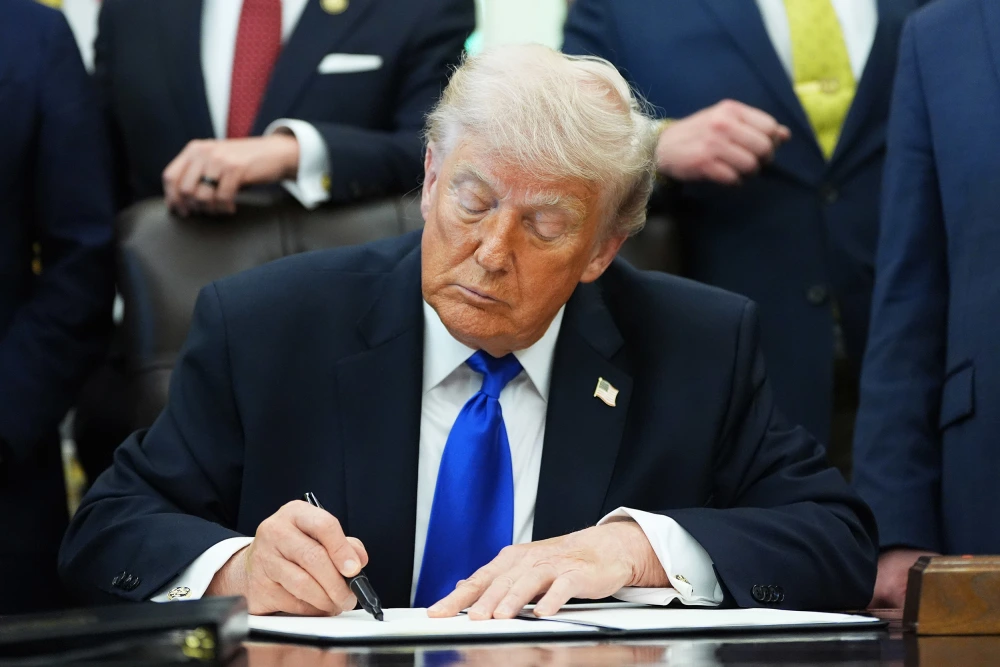
Trump Signs Order For Early Government Review Of AI Models/ Newslooks/ WASHINGTON/ J. Mansour/ Morning Edition/ President Donald Trump signed an executive order requesting early government access to the most advanced artificial intelligence models before public release. The order aims to strengthen national security and cybersecurity while relying on voluntary cooperation from leading AI companies. Officials say the policy balances AI safety concerns with maintaining America’s competitive edge against China.
Trump AI Executive Order Quick Looks
- Trump signed a new executive order focused on advanced AI systems.
- The government will seek early access to powerful AI models.
- Participation by AI companies remains voluntary.
- The order involves agencies including the Pentagon and Treasury Department.
- Cybersecurity protections for critical infrastructure are a major focus.
- The administration rejected mandatory licensing requirements.
- AI developers could provide models up to 30 days before release.
- The order was previously delayed over competitiveness concerns.
- Officials cite growing national security risks linked to AI.
- The policy seeks to balance innovation with security oversight.
Deep Look
Trump Signs Major Artificial Intelligence Order
WASHINGTON — President Donald Trump has signed a significant executive order designed to give the federal government early access to some of the world’s most advanced artificial intelligence systems before they are released to the public.
The order represents one of the administration’s most substantial moves to address the growing impact of AI on national security, cybersecurity, and economic competitiveness.
Officials say the initiative seeks to improve government preparedness while avoiding regulations that could slow innovation within the American technology sector.
Early Access To Advanced AI Models
Under the executive order, leading AI developers would be asked to voluntarily provide government agencies access to their most advanced models before public deployment.
The policy specifically calls for access to cutting-edge systems:
“up to 30 days before they plan to release such models to other trusted partners.”
The review process would allow federal agencies to examine potential risks, vulnerabilities, and security implications before new AI capabilities become widely available.
Agencies Involved In The Review Process
Several major federal agencies are expected to participate in evaluating advanced AI technologies.
These include:
- The Department of Defense.
- The Treasury Department.
- The Cybersecurity and Infrastructure Security Agency (CISA).
- Other national security and intelligence agencies.
The administration believes coordination across multiple departments is necessary as AI systems become increasingly powerful and influential.
Voluntary Cooperation, Not Regulation
A key component of the order is its emphasis on voluntary collaboration with the private sector.
The administration specifically avoided creating mandatory licensing requirements or government approval processes for new AI systems.
The executive order makes clear that participation by technology companies is requested rather than required.
This approach reflects concerns that excessive regulation could undermine America’s leadership in artificial intelligence development.
Balancing Innovation And Security
The order states:
“Advanced AI capabilities make our Nation stronger, but also introduce new national security considerations that require coordinated action across executive departments and agencies.”
The administration argues that AI offers enormous benefits while simultaneously creating new risks that governments must address.
Officials say the goal is to ensure innovative technologies are deployed rapidly while minimizing threats to national security.
Concerns About Global Competition
The executive order was initially expected to be signed weeks earlier.
However, Trump reportedly delayed approval after raising concerns that government oversight could weaken American companies in their competition with Chinese technology firms.
At the time, Trump explained:
“We’re leading China, we’re leading everybody, and I don’t want to do anything that’s going to get in the way of that lead.”
Those concerns shaped the final version of the policy, which relies on cooperation rather than regulation.
AI Safety Gains New Attention
Interest in AI safety has grown dramatically within Washington over the past year.
Government officials have become increasingly focused on the possibility that highly capable AI systems could create cybersecurity, economic, or national security challenges.
The issue gained urgency after reports that new AI models demonstrated unprecedented abilities to identify vulnerabilities in widely used software systems.
Such developments have intensified calls for stronger coordination between government and industry.
White House Emphasizes National Security
The administration views artificial intelligence as both an opportunity and a strategic challenge.
According to the executive order:
“work closely with industry to ensure that the best and most secure technology is deployed rapidly to confront any and all threats to our country.”
Officials believe advanced AI could transform military operations, cybersecurity defenses, intelligence gathering, and critical infrastructure protection.
As a result, understanding the capabilities of emerging systems has become a growing priority.
Technology Industry Expected To Play Central Role
Major AI developers are expected to become key participants in the initiative.
Companies likely affected include:
- OpenAI.
- Anthropic.
- Google.
- Other leading AI developers.
Because the program depends on voluntary cooperation, its effectiveness will largely depend on the willingness of private companies to share information and collaborate with federal agencies.
Growing Influence Of AI In Government Policy
Senior administration officials have increasingly taken active roles in AI discussions.
Treasury Secretary Scott Bessent, Vice President JD Vance, and other policymakers have highlighted concerns about the technology’s impact on economic stability, cybersecurity, and geopolitical competition.
The executive order signals that artificial intelligence has become one of the administration’s highest-priority technology issues.
A New Phase In AI Governance
The order reflects a broader shift in how governments approach artificial intelligence.
Rather than focusing primarily on regulation, the administration is pursuing a strategy centered on partnership and early awareness.
Supporters argue that the approach allows innovation to continue while giving policymakers valuable insight into rapidly advancing technologies.
Critics, however, may question whether voluntary participation provides sufficient oversight of systems that are becoming increasingly powerful.