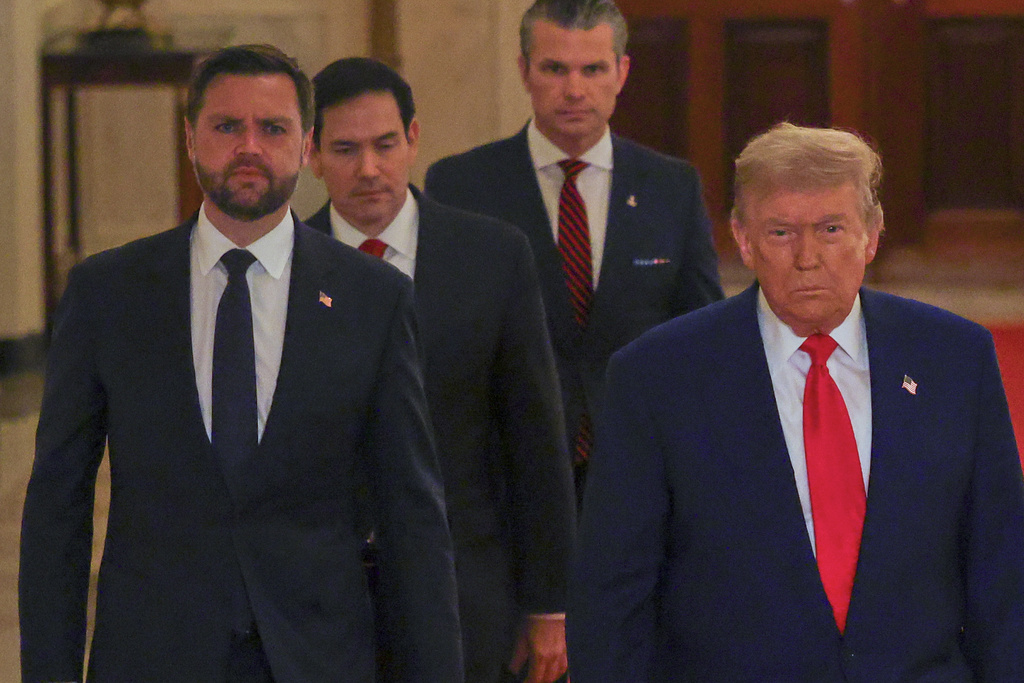
Trump to Hold Top-Level Situation Room Meeting on Iran With No Deal in Sight/ Newslooks/ WASHINGTON/ J. Mansour/ Morning Edition/ President Donald Trump warned Iran that “the clock is ticking” on reaching a nuclear agreement acceptable to the United States. The White House is reportedly preparing possible military responses as tensions rise across the Middle East. A high-level Situation Room meeting is expected Tuesday amid growing regional instability and attacks involving Iran-linked targets.
Trump Iran Crisis Quick Looks
- Trump warned Iran to quickly propose a nuclear deal
- The president suggested military action remains under consideration
- A Situation Room meeting is expected Tuesday
- Iran’s president admitted the country has “suffered harm” from U.S. strikes
- Trump criticized media coverage of the Iran conflict
- The UAE condemned a drone attack on a nuclear power plant
- Regional tensions are straining the Abraham Accords alliance
- Iran said it would not “bow to pressure”
- U.S. officials continue monitoring Middle East security risks
- Concerns over broader regional escalation remain high
Deep Look
Trump Issues Stark Warning to Iran
President Donald Trump intensified pressure on Iran Monday, warning that “the clock is ticking” for Tehran to present a nuclear agreement acceptable to the United States.
Trump signaled that the administration is simultaneously preparing potential military responses if diplomatic negotiations fail to prevent Iran from obtaining nuclear weapons.
The warning comes amid escalating tensions across the Middle East and growing uncertainty over whether negotiations between Washington and Tehran can avoid further confrontation.
Trump is expected to convene a high-level Situation Room meeting Tuesday focused on Iran strategy and possible next steps involving military planning and regional security concerns.
Iran Acknowledges Damage From US Attacks
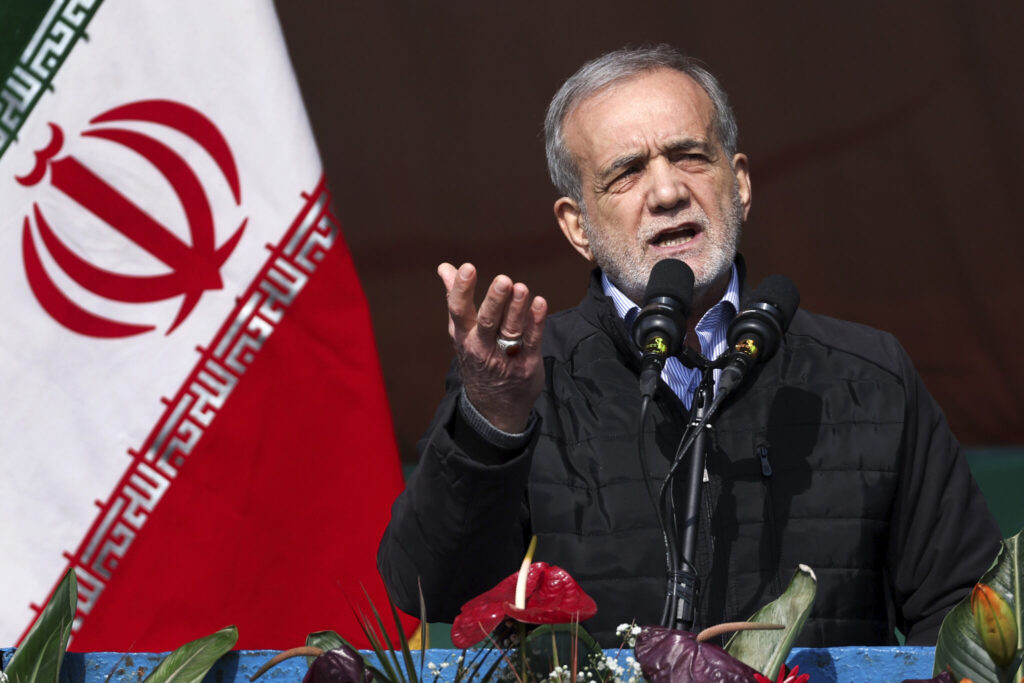
Iranian President Masoud Pezeshkian publicly acknowledged the impact of recent U.S. military actions while urging Iranian officials to “face reality.”
Iran has “suffered harm” from U.S. attacks, Pezeshkian said during a televised meeting of the Government Information Council.
Iran’s leaders “should avoid any tone or voices that create division, but we must also face reality; It is not the case that we have not suffered harm,” Pezeshkian stated.
“Anyone in a position of leadership must speak honestly and transparently to their society and their people,” he added. “Misleading information, false messaging, or portraying a reality in which ‘they are collapsing while we are prospering’ is unacceptable. The truth is that both we and others face challenges.”
Despite acknowledging setbacks, Pezeshkian emphasized that Iran would continue resisting foreign pressure.
“We will not sacrifice our country’s dignity and honor for comfort or convenience. We have valid reasons and clear justification, and we are fully capable of defending our nation’s rights with strength, backed by our people,” he said.
His remarks represented one of the clearest public acknowledgments by Iranian leadership regarding the consequences of recent military escalations.
Trump Attacks Media Coverage of Iran Conflict
In a lengthy Truth Social post, Trump accused major news organizations of portraying Iran favorably regardless of developments on the battlefield.
“If Iran surrenders, admits their Navy is gone and resting at the bottom of the sea, and their Air Force is no longer with us, and if their entire Military walks out of Tehran, weapons dropped and hands held high, each shouting ‘I surrender, I surrender’ while wildly waving the representative White Flag, and if their entire remaining Leadership signs all necessary ‘Documents of Surrender,’ and admit their defeat to the great power and force of the magnificent U.S.A., The Failing New York Times, The China Street Journal (WSJ!), Corrupt and now Irrelevant CNN, and all other members of the Fake News Media, will headline that Iran had a Masterful and Brilliant Victory over The United States of America, it wasn’t even close,” Trump wrote.
“The Dumacrats and Media have totally lost their way. They have gone absolutely CRAZY!” he added.
The comments highlighted Trump’s continuing criticism of major media organizations during periods of heightened geopolitical tension.
UAE Condemns Drone Attack on Nuclear Facility
Regional tensions escalated further after the United Arab Emirates condemned a drone strike targeting one of its nuclear power facilities over the weekend.
Dr. Sultan Al Jaber, the UAE’s Minister of Industry and Advanced Technology, described the incident as a “terrorist attack” against peaceful infrastructure.
“The targeting of Barakah is a terrorist attack on a peaceful project, built to the highest safety standards, that powers homes, hospitals, and industries across the UAE, and on the right of every nation to build, to progress, and to deliver clean energy to its people. Barakah will keep running,” Jaber said.
“The UAE will keep building. Our resolve only grows stronger,” he added.
Although the UAE statement did not directly name Iran, Tehran has repeatedly been accused of targeting energy infrastructure and strategic facilities across the Gulf region through missiles and drones in recent weeks.
Abraham Accords Face New Pressure
The latest regional violence is also placing strain on the U.S.-brokered Abraham Accords, which were originally designed to strengthen cooperation among Israel, the UAE, and other Arab states while countering Iranian influence in the Middle East.
Growing military tensions involving Israel, Iran, and Gulf states have complicated diplomatic relationships and increased fears of broader regional instability.
Analysts warn that additional attacks on infrastructure, shipping lanes, or energy facilities could further weaken regional alliances and threaten global energy markets.
The conflict has already contributed to rising oil prices and increased concerns over international security and trade disruptions.
White House Weighs Military and Diplomatic Options
The expected Situation Room meeting reflects growing urgency inside the White House as officials balance diplomatic efforts with military preparedness.
Trump administration officials continue insisting that Iran must never obtain nuclear weapons capability, while Tehran maintains that its nuclear activities are intended for peaceful purposes.
The administration’s next steps could shape the direction of U.S. policy in the Middle East for months to come.
With negotiations stalled, military tensions rising, and regional allies increasingly exposed to attacks, both Washington and Tehran face mounting pressure to determine whether diplomacy can still prevent a wider conflict.