Airport Disruptions Grow as Senators Race Homeland Security Deal/ Newslooks/ WASHINGTON/ J. Mansour/ Morning Edition/ Airport delays across major U.S. hubs worsened as lawmakers rushed to end the Homeland Security funding standoff. Thousands of TSA workers skipped shifts or resigned, creating long security lines and travel disruptions. Senators are negotiating a deal that funds airport operations but excludes key immigration enforcement funding.
Airport Disruptions Homeland Security Shutdown — Quick Looks
- Airport delays growing nationwide amid Homeland Security shutdown
- TSA worker shortages causing long security lines
- Over 3,200 TSA workers missed shifts Monday
- At least 458 TSA workers quit since shutdown began
- Airports affected include Houston, Atlanta, Baltimore, and New York hubs
- Democrats demand limits on immigration enforcement
- Republicans push for partial Homeland Security funding deal
- President Trump noncommittal about proposed agreement
- ICE operations remain central to political dispute
- Delta suspends special services for members of Congress
Deep Look: Airport Disruptions Grow as Homeland Security Shutdown Drags On
WASHINGTON — Travel disruptions across major U.S. airports intensified as senators hurried to negotiate a deal aimed at ending the ongoing Homeland Security funding standoff. The impasse, which has already left thousands of airport workers unpaid, is now spilling into widespread delays and operational chaos during the busy spring travel season.
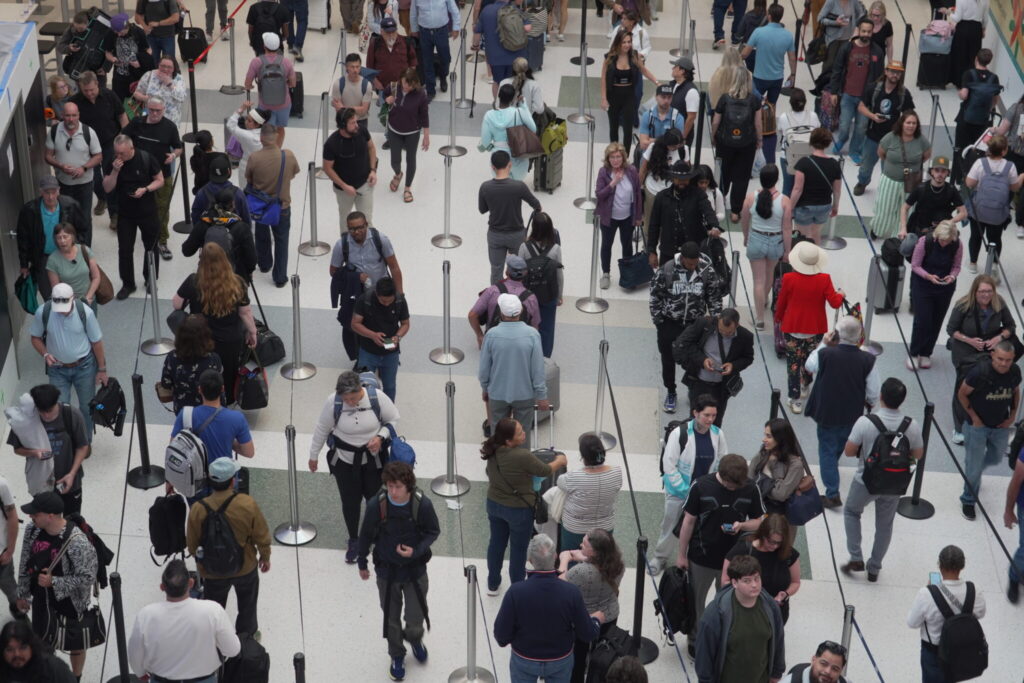
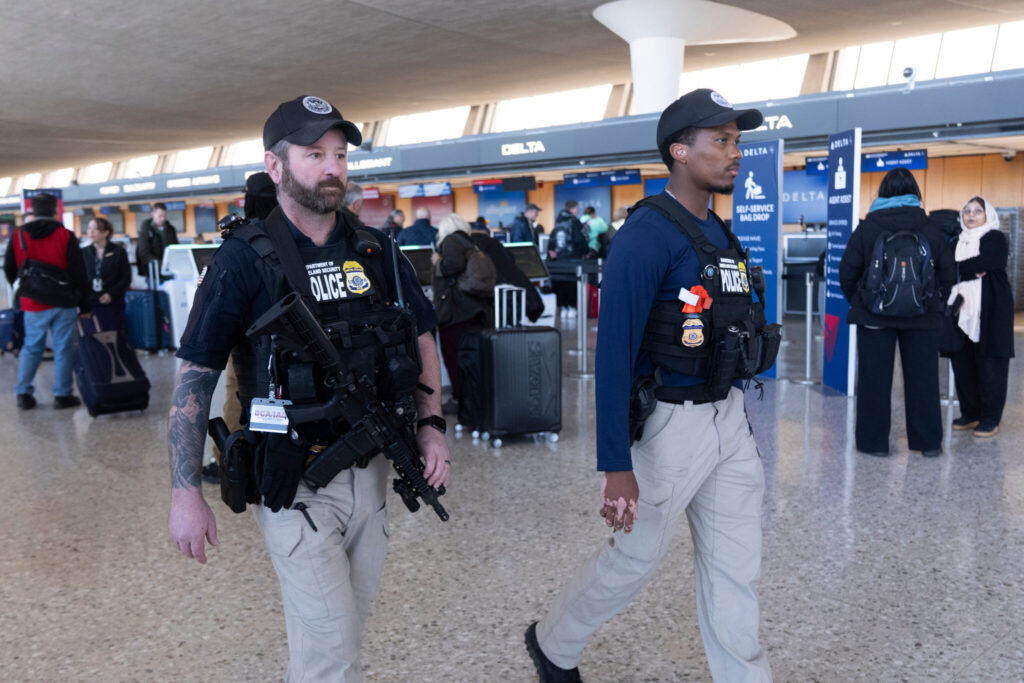
The urgency comes as travelers encounter unusually long security lines and unpredictable airport conditions nationwide. Airports in Houston, Atlanta, and Baltimore/Washington International reported extended wait times, with some travelers being advised to arrive hours earlier than normal. In New York, passengers flying from LaGuardia, John F. Kennedy, and Newark Liberty International were unable to access online TSA wait-time updates, further adding to confusion and delays.
The shutdown began in mid-February after routine funding for the Department of Homeland Security expired. Since then, staffing shortages have grown increasingly severe. Nearly 11% of Transportation Security Administration workers scheduled to work Monday — more than 3,200 employees — failed to report for duty. Additionally, at least 458 TSA workers have resigned since the shutdown started, according to the Department of Homeland Security.
Acting TSA Administrator Ha McNeill is expected to tell lawmakers that some airports are seeing call-out rates exceeding 40%. She also plans to highlight the personal impact on workers who have gone weeks without pay, noting many employees are struggling to cover housing and food costs.
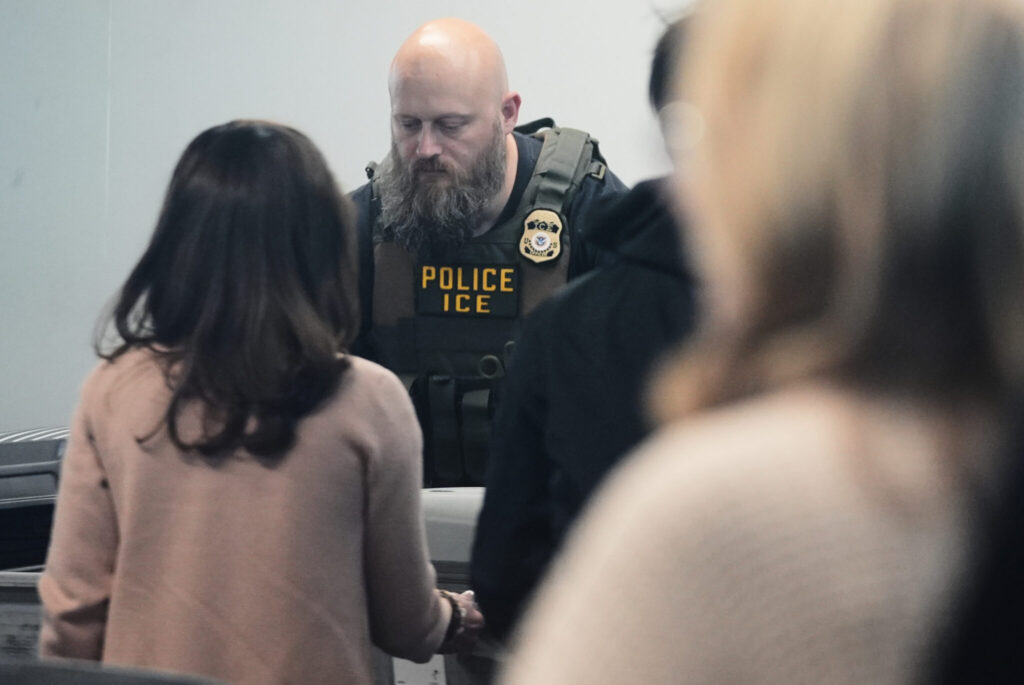
Travelers are already feeling the effects. In Houston’s George Bush Intercontinental Airport, passengers faced winding security lines stretching across multiple floors. Immigration and Customs Enforcement agents were also spotted inside terminals, including at Philadelphia International Airport, where protesters criticized immigration enforcement policies.
Senators Push for Compromise Deal
Senators began accelerating negotiations after a late-night White House meeting between President Donald Trump and Republican lawmakers. The proposed compromise would fund most of the Department of Homeland Security — including TSA airport operations — but exclude Immigration and Customs Enforcement’s enforcement and removal division, which remains at the center of political disagreements.
Under the proposal:
- TSA operations would resume normal funding
- Customs and Border Protection would receive funding
- Homeland Security Investigations would remain funded
- Funding for ICE deportation operations would remain unresolved
- Body camera funding for officers would be included
Democrats, however, argue the proposal does not go far enough. They are pushing for stricter oversight and reforms to immigration enforcement following the deaths of two U.S. citizens in Minneapolis during federal immigration operations.
Senate Democratic Leader Chuck Schumer emphasized the need for stronger reforms, calling for limits on ICE activities and enhanced accountability.
Meanwhile, President Trump expressed dissatisfaction with potential compromises, stating he was unlikely to fully support any negotiated deal.
Political Pressure Builds as Delays Worsen
The political standoff deepened after Trump linked negotiations to the SAVE America Act, a voter identification and citizenship verification bill currently stalled in the Senate. Some Republican senators suggested addressing the election bill separately to move forward on Homeland Security funding.
Sen. Lindsey Graham, who participated in negotiations, said the worsening airport delays increased pressure to reach a deal quickly.
“If you’re waiting in line four hours in Atlanta, this madness needs to come to an end,” Graham said.
Sen. Chris Coons also noted increasing urgency as travel disruptions continued to spread.
Airlines Respond to Shutdown Fallout
Airlines are beginning to adjust operations as uncertainty grows. Delta Air Lines confirmed it has suspended special travel services for members of Congress during the shutdown. Lawmakers flying Delta will now be treated like regular passengers based on SkyMiles status.
The move reflects broader operational challenges airlines face as staffing shortages impact airport security operations.
Leadership Changes at Homeland Security
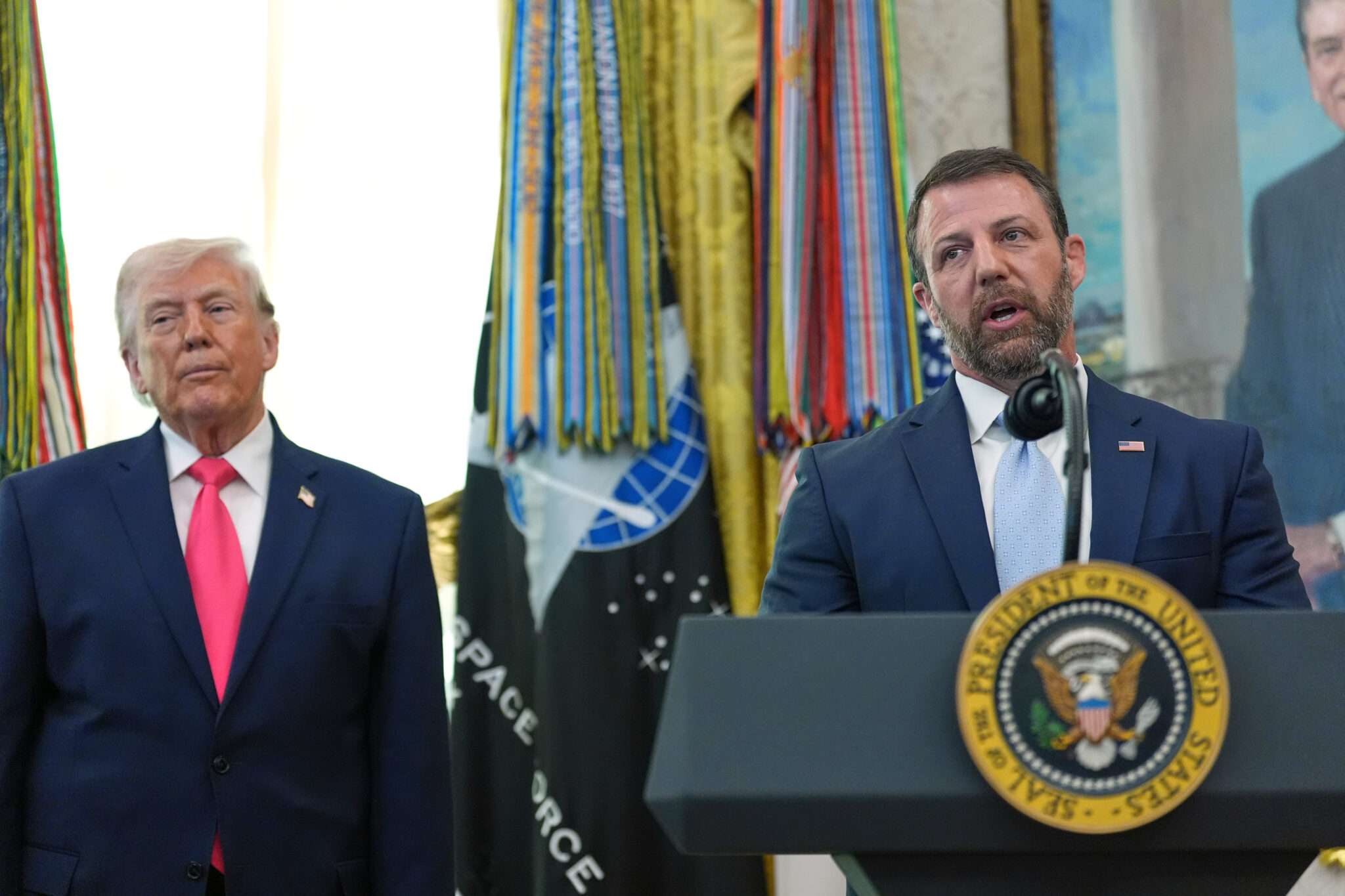
The shutdown has also triggered leadership changes within the Department of Homeland Security. President Trump removed Homeland Security Secretary Kristi Noem amid mounting criticism over immigration enforcement operations.
Senators confirmed Markwayne Mullin as the new Homeland Security Secretary. Mullin, a former Oklahoma senator aligned with Trump’s agenda, signaled potential policy adjustments, including support for requiring judicial approval for immigration search warrants.
Some Democrats viewed Mullin’s confirmation as a potential path toward compromise.
Funding at the Center of Dispute
While the shutdown impacts routine Homeland Security funding, immigration enforcement remains largely funded through a separate legislative package. ICE’s budget grew by $75 billion in last year’s bill, meaning many immigration officers continue receiving pay.
However, routine annual funding — roughly $10 billion — could be reduced significantly under the proposed compromise.
Lawmakers hope resolving the funding dispute quickly will stabilize airport operations before peak travel periods worsen delays further.