
Republicans Defer to Trump as Iran War Deadline Passes Without Vote/ Newslooks/ WASHINGTON/ J. Mansour/ Morning Edition/ Republicans are declining to challenge President Donald Trump as the deadline for congressional approval of the Iran war passes. The administration argues the war has effectively ended due to a ceasefire, avoiding legal requirements. Some lawmakers from both parties warn Congress must still assert its authority.
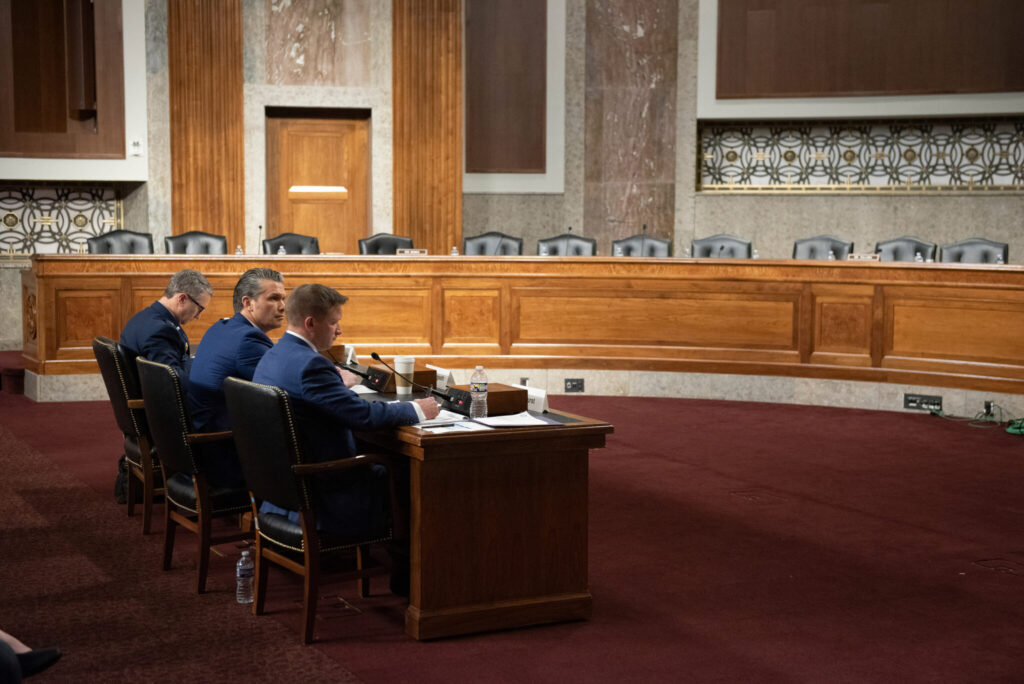
Iran War Congress Debate Quick Looks
- GOP lawmakers decline to act before 60-day deadline
- War Powers Resolution requires congressional approval
- White House says ceasefire means war has “terminated”
- Senate rejects Democratic effort to halt war again
- Some Republicans still want future congressional vote
- Democrats argue legal deadline still applies
- Debate grows over presidential war powers
- Gas prices and public pressure influencing politics

Deep Look
Republicans Step Back as Deadline Arrives
WASHINGTON — Congressional Republicans are allowing a key legal deadline on the Iran war to pass without taking action, choosing instead to defer to President Donald Trump’s leadership.
The deadline stems from the War Powers Resolution of 1973, which requires Congress to authorize military action within 60 days or force its end. That deadline arrives with lawmakers leaving Washington for a recess and no vote scheduled.
Senate Leadership Declines Vote
Senate Majority Leader John Thune made clear that no vote is planned on authorizing force.
“I’m listening carefully to what the members of our conference are saying, and at this point I don’t see that,” Thune said.
The Senate had already rejected multiple Democratic attempts to halt the war, including a sixth failed effort just before lawmakers departed.
White House Argues War Has Ended
The Trump administration maintains that congressional approval is unnecessary because the war has effectively concluded.
Officials point to the ceasefire that began in early April, arguing it ended active hostilities.
Defense Secretary Pete Hegseth said, “We are in a ceasefire right now, which our understanding means, the 60-day clock pauses or stops.”
A senior administration official added that “the hostilities that began on Saturday, Feb. 28 have terminated.”
Continued Military Activity Raises Questions
Despite the ceasefire, tensions remain high.
Iran continues to control the Strait of Hormuz, and U.S. naval forces are enforcing a blockade to restrict Iranian oil exports.
Critics argue that ongoing military operations contradict the claim that the conflict has ended.
Some Republicans Want Congressional Role
While most Republicans are backing Trump or waiting for further developments, a number of GOP lawmakers say Congress should eventually weigh in.
Sen. Lisa Murkowski warned that lawmakers must act if the administration does not present a clear strategy.
“I do not believe we should engage in open-ended military action without clear accountability,” she said. “Congress has a role.”
Sen. Susan Collins also emphasized the importance of congressional authority.
“The president’s authority as commander-in-chief is not without limits,” Collins said, adding that the 60-day deadline is “not a suggestion, it is a requirement.”
Other senators, including John Curtis and Thom Tillis, have indicated they would support a vote at some point.
Democrats Reject Administration’s Argument
Democrats have strongly opposed the administration’s interpretation of the law.
Sen. Tim Kaine said, “I do not believe the statute would support that.”
Sen. Adam Schiff added, “Ceasing to use some forces while using others does not somehow stop the clock.”
They argue that the War Powers Resolution clearly applies as long as U.S. military forces remain engaged in any capacity.
Broader Debate Over War Powers
The situation reflects a longstanding tension between Congress and the presidency over control of military action.
Some Republicans have questioned whether the War Powers Resolution itself is constitutional.
“Our founders created a really strong executive, like it or not like it,” Sen. Kevin Cramer said.
Still, others insist Congress must reclaim its role in authorizing prolonged conflicts.
Political Pressure Builds
The decision to avoid a vote comes amid growing public concern over the war and its economic consequences, including rising gas prices.
Republicans face a delicate balance between supporting the president and responding to voter concerns.
For now, most are choosing to give Trump more time as the ceasefire continues.
What Comes Next
Lawmakers are expected to revisit the issue after returning from recess.
Some Republicans have pledged to push for a vote if the administration does not present a clear plan.
The outcome could shape not only the future of the Iran conflict but also the balance of power between Congress and the presidency.