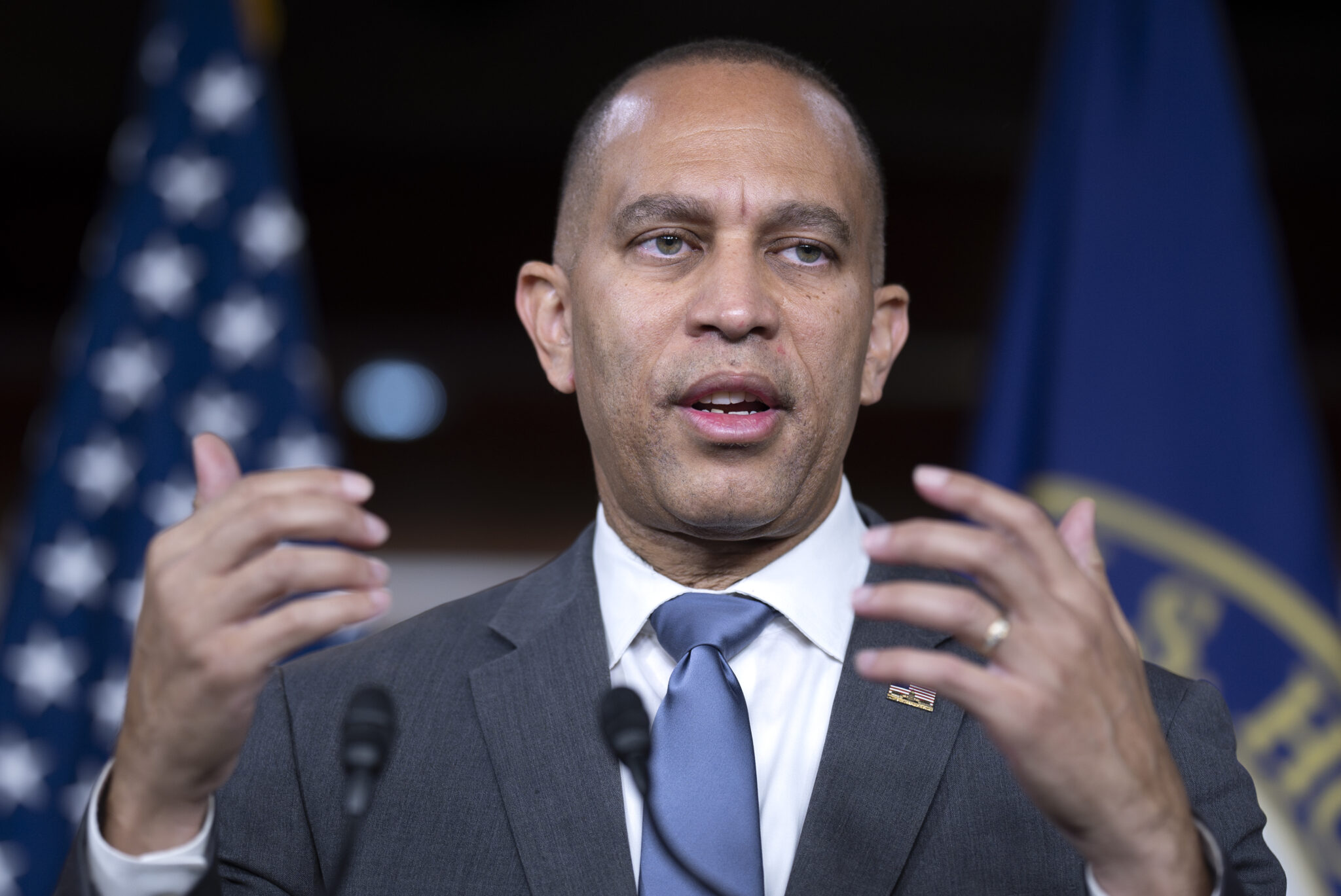
Hakeem Jeffries Pushes Democrats Toward Aggressive Redistricting Fight/ Newslooks/ WASHINGTON/ J. Mansour/ Morning Edition/ House Minority Leader Hakeem Jeffries is urging Democrats nationwide to aggressively redraw congressional maps ahead of the 2028 elections. The push comes after recent court rulings weakened Democratic redistricting efforts and boosted Republican gains. Democrats are now debating whether to abandon long-standing anti-gerrymandering principles to compete politically.
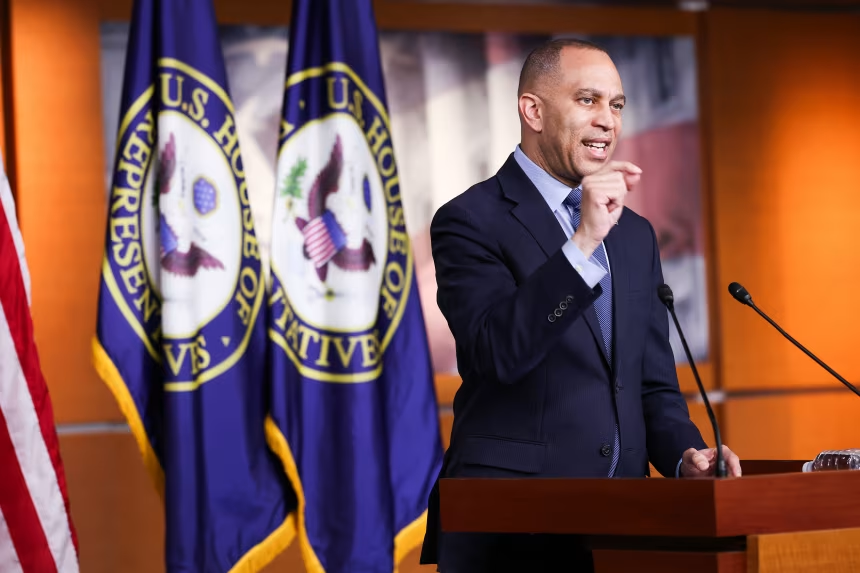
Hakeem Jeffries Redistricting Quick Looks
- Hakeem Jeffries wants Democrats to redraw House maps nationwide
- Democrats are targeting states from New York to Oregon
- Recent court rulings severely damaged Democratic redistricting plans
- Republicans already expanded favorable maps in several Southern states
- Some Democrats want aggressive gerrymandering in blue states
- Internal Democratic tensions are growing over strategy and representation
- Black lawmakers fear loss of minority political power
- The redistricting fight could reshape Congress before 2028
Deep Look
Democrats Escalate National Redistricting Battle
House Minority Leader Hakeem Jeffries is leading a major Democratic push to aggressively redraw congressional maps across multiple blue states in response to Republican redistricting victories nationwide.
The effort marks a dramatic shift for many Democrats who historically criticized partisan gerrymandering and supported independent redistricting systems.
Now, after a series of devastating court rulings and Republican map changes, party leaders increasingly believe they must fully engage in the same tactics to remain competitive ahead of the 2028 elections.
“The days of Democrats unilaterally disarming are over, particularly given how high the stakes are,” Jeffries told CNN.
Court Decisions Triggered Democratic Alarm
Democratic frustration intensified after two recent court rulings significantly weakened the party’s redistricting position.
One ruling from the U.S. Supreme Court and another from Virginia’s highest court together threatened Democratic hopes for as many as 10 additional House seats.
Those decisions accelerated fears that Republicans could solidify control of Congress through aggressive redistricting efforts in GOP-controlled states.
Democrats now believe they must counter with their own map changes in blue states or risk entering the 2028 election cycle at a major structural disadvantage.
Jeffries Targets Multiple Blue States
The primary targets include:
- New York
- New Jersey
- Washington state
- Colorado
- Oregon
- Maryland
- Illinois
Party officials are also monitoring additional states where Democrats could gain enough legislative power to redraw maps after upcoming elections.
According to people familiar with the discussions, Democrats are willing to spend hundreds of millions of dollars over the next two years to reshape congressional districts and potentially create a dozen or more Democratic-friendly House seats by 2028.
Democrats Debate Abandoning Anti-Gerrymandering Principles
The strategy represents a major philosophical shift for Democrats.
For years, many Democratic leaders promoted independent commissions and anti-gerrymandering reforms as good-government measures.
Now some party leaders argue those rules leave Democrats vulnerable while Republicans aggressively redraw districts in states they control.
Jeffries and allies have reportedly discussed pressuring Democrats who resist redistricting efforts.
According to CNN, some discussions have included the possibility of denying convention speaking opportunities or supporting primary challenges against Democratic officials unwilling to pursue aggressive map changes.
The growing frustration reflects how central congressional maps have become to the national political battle for House control.
New York Emerges as Top Democratic Target
New York is viewed as Democrats’ biggest potential opportunity.
The state currently sends seven Republicans to Congress despite its overall Democratic lean.
However, changing New York’s congressional map presents major legal and political challenges because the state has some of the nation’s strictest anti-gerrymandering protections.
Democrats may need to amend the state constitution to significantly alter the process.
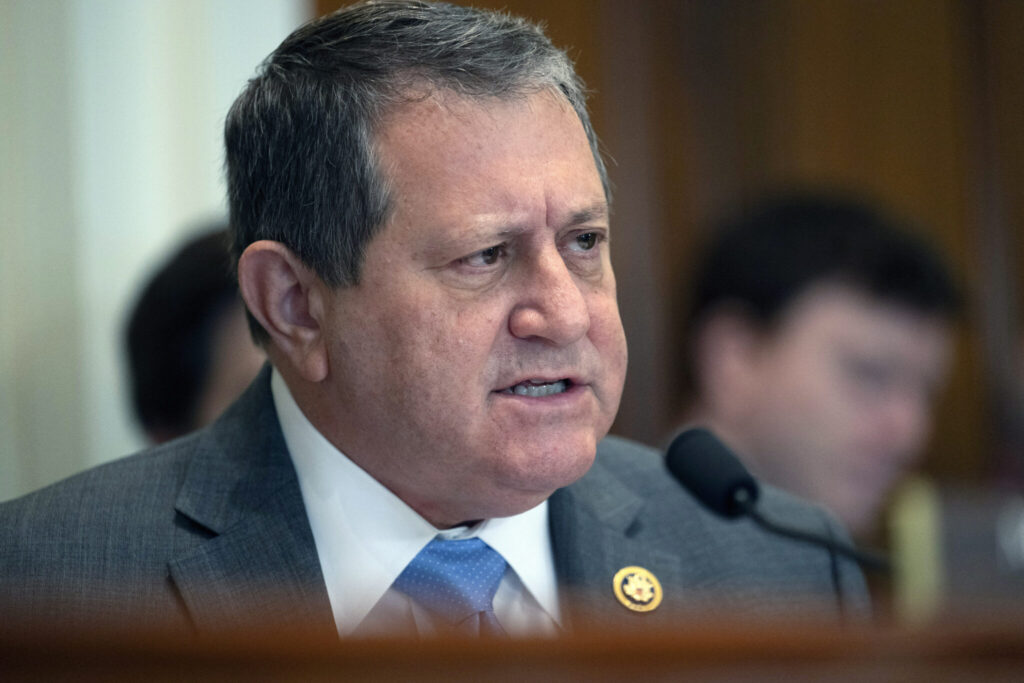
Representative Joe Morelle recently traveled to Albany to push state leaders toward action.
“It’s not lost on anyone that the next speaker of the House is likely to be a New Yorker,” Morelle said.
Still, even Democratic officials acknowledge the difficulty of changing constitutional redistricting rules.
Colorado, Washington and New Jersey Also in Play
Democrats are also advancing redistricting efforts in Colorado, where party-aligned organizations recently invested money supporting a ballot initiative related to map drawing.
In Washington state, Democrats are discussing dismantling the state’s independent redistricting system if they can secure legislative supermajorities.
New Jersey Gov. Mikie Sherrill recently expressed public support for exploring redistricting changes.
Illinois and Maryland are also under discussion, though previous attempts to aggressively redraw districts there faced resistance from some Democratic leaders.
Republicans Already Redrawing Southern Maps
Democratic leaders argue their aggressive response is necessary because Republicans have already moved rapidly in multiple Southern states.
Florida recently approved maps designed to eliminate four Democratic-held congressional seats.
Tennessee passed new maps targeting its last remaining Democratic congressional district.
Republicans in Alabama and Louisiana are also pursuing changes following recent Supreme Court rulings weakening protections for majority-Black districts under the Voting Rights Act.
Compared with blue states, many Republican-controlled states face fewer legal restrictions and do not require voter referendums for redistricting changes.
Black Lawmakers Fear Loss of Representation
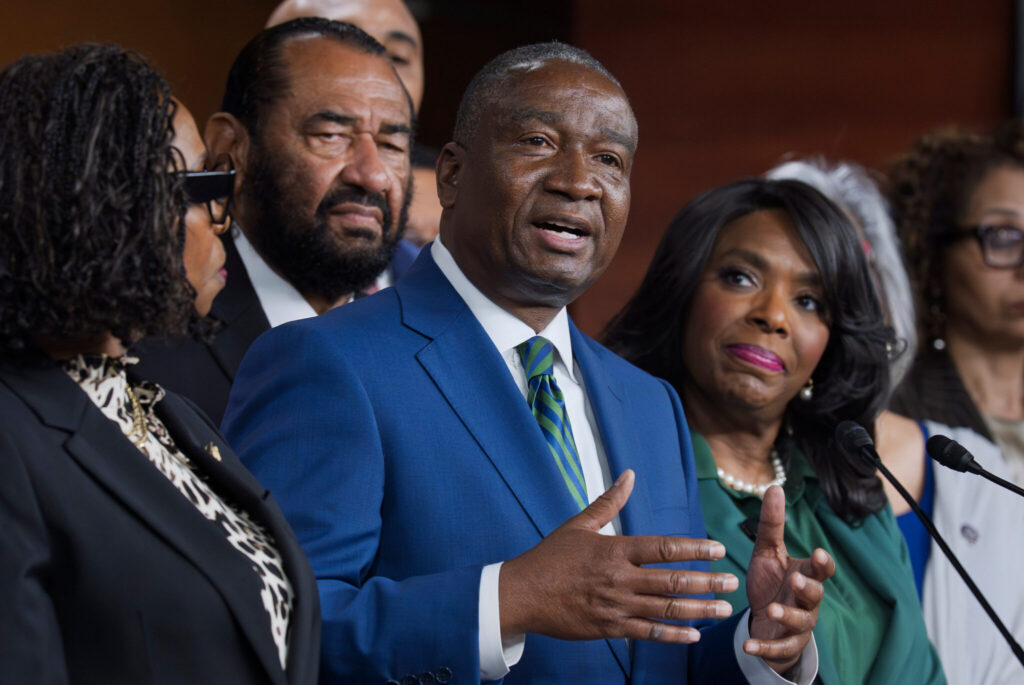
The escalating redistricting war has created tensions inside the Democratic Party, particularly among Black lawmakers worried about losing minority representation.
Members of the Congressional Black Caucus estimate that up to 19 Black-held congressional seats nationwide could be threatened by Republican map changes.
Some Democratic strategies in blue states could also dilute majority-Black districts while attempting to maximize overall Democratic seats.
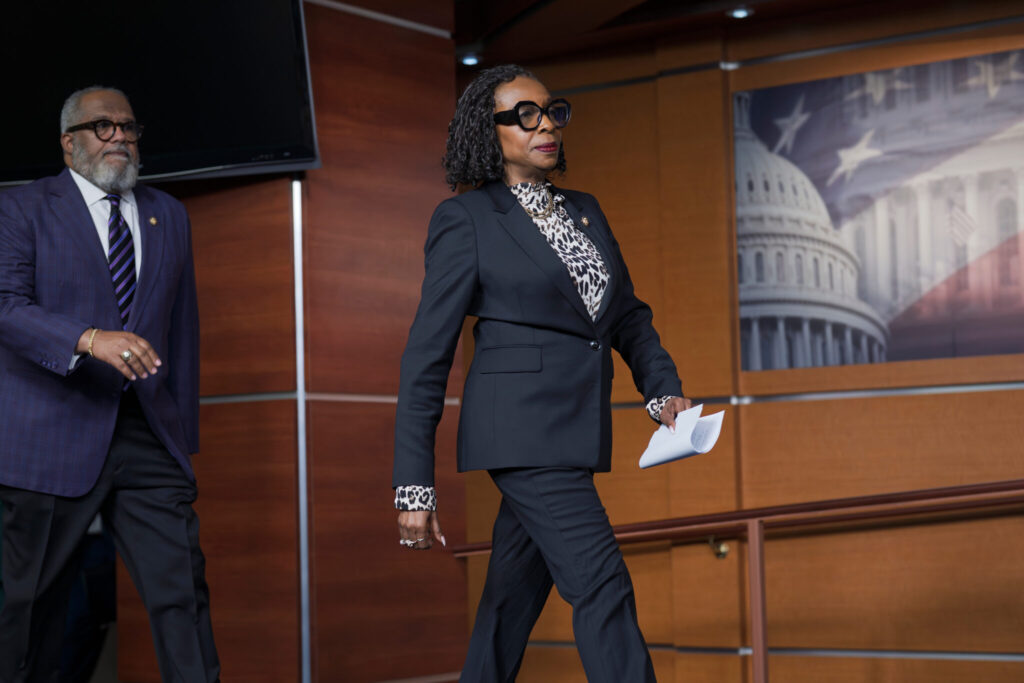
Representative Yvette Clarke, chair of the Congressional Black Caucus, acknowledged the difficult balancing act.
“The idea here is that in order to protect Black voters and to advance progress in the Congress and to have accountability for what is taking place is to make sure we have a Democratic majority,” Clarke said.
Still, disagreements continue over how best to preserve minority political influence while competing in an increasingly partisan redistricting environment.
Critics Warn of “Race to the Bottom”
Even some Democrats acknowledge the danger of escalating partisan gerrymandering battles.
Representative Cleo Fields of Louisiana described the situation as “almost a race to the bottom.”
“The Democratic Party has always taken the moral high ground,” Fields said. “I think they all need to rethink that. At least short term.”
Good-government advocates warn that both parties increasingly abandoning independent redistricting principles could further undermine public trust in elections and democratic institutions.
Redistricting Could Decide Future House Control
The nationwide redistricting fight is rapidly becoming one of the most important political battles heading into the 2026 midterms and 2028 presidential election cycle.
Control of the House of Representatives may ultimately depend less on persuading voters and more on how congressional districts are drawn.
As both parties intensify efforts to redraw political boundaries, the long-running debate over fairness, representation, race, and partisan power is entering a far more aggressive phase.