US Retail Sales Slow as Rising Gas Prices Squeeze Shoppers/ Newslooks/ WASHINGTON/ J. Mansour/ Morning Edition/ US retail sales slowed in April as rising gasoline prices left consumers with less money for discretionary purchases. Economists say strong tax refunds helped support spending temporarily, but concerns are growing about future consumer pullbacks. Higher energy costs linked to the Iran war continue fueling inflation and pressuring household budgets nationwide.
US Retail Sales April Quick Looks
- Retail sales rose 0.5% in April
- Growth slowed from March’s 1.6% increase
- Gas prices remain elevated because of the Iran war
- Consumers spent less on clothing and furniture
- Online and electronics sales showed strength
- Tax refunds temporarily boosted household spending
- Inflation continues raising costs across the economy
- Economists expect discretionary spending to weaken further
Deep Look
US Retail Spending Slows in April
]American consumers slowed their spending in April as rising gasoline prices continued putting pressure on household budgets.
The Commerce Department reported Thursday that retail sales rose 0.5% last month, a noticeable slowdown from the revised 1.6% increase recorded in March.
Economists say much of the moderation reflected the growing financial impact of higher fuel costs caused by the ongoing Iran conflict and disruptions in global oil supplies.
While shoppers are still spending overall, many households are beginning to cut back on discretionary purchases such as clothing, furniture, and other nonessential items.
Gas Prices Continue Pressuring Consumers
The Iran war remains a major force behind rising consumer costs.
Since fighting began in late February, the Strait of Hormuz — a key global oil shipping route — has remained largely shut down, disrupting roughly one-fifth of the world’s daily oil supply.
As a result, gasoline prices have surged sharply.
According to AAA, the national average for a gallon of regular gas climbed to $4.53 on Thursday, roughly $1.35 higher than a year ago.
Fuel costs are consuming a larger share of household budgets, leaving consumers with less money available for optional purchases.
Spending Patterns Show Consumer Caution
Retail spending data showed uneven shopping behavior across industries.
Consumers pulled back in several discretionary categories:
- Department store sales fell 3.2%
- Furniture and home furnishing sales dropped 2%
- Building material and garden equipment sales rose only 0.1%
At the same time, some categories remained resilient:
- Online retail sales increased 1.1%
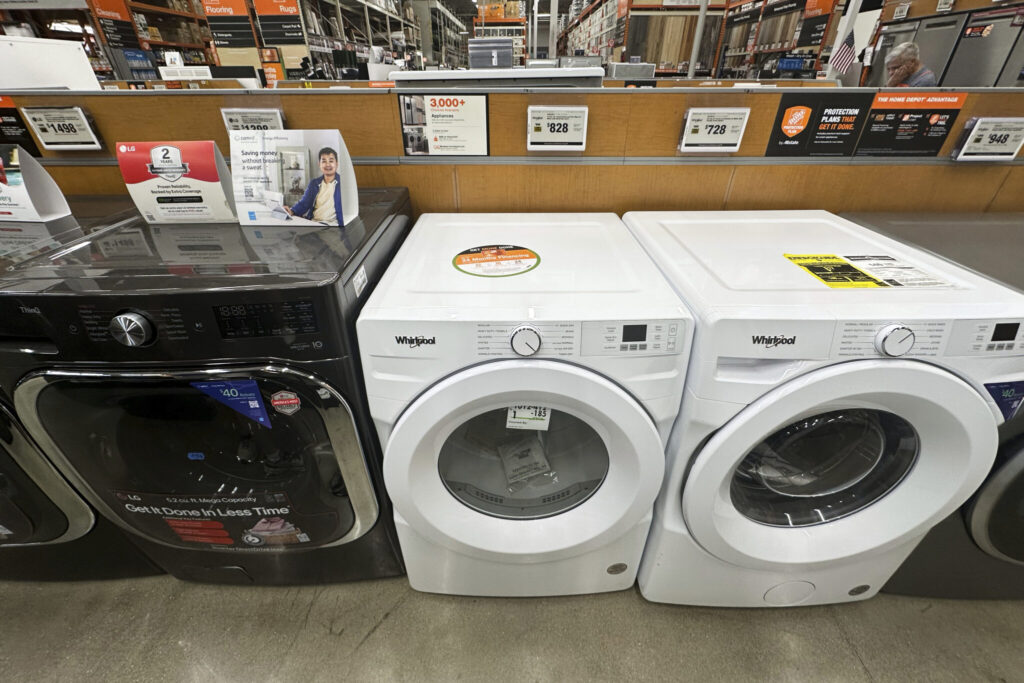
- Electronics and appliance sales rose 1.4%
- Restaurant spending climbed 0.6%
Economists say the mixed data suggests consumers are becoming more selective about where they spend money.
Tax Refunds Helped Support Spending
One factor temporarily supporting consumer activity has been larger tax refunds.
Economists said refunds tied to President Donald Trump’s tax-cut legislation provided households with additional cash during the spring spending season.
Oliver Allen, senior economist at Pantheon Macroeconomics, estimated that April tax refunds were roughly $22 billion higher than during the same month last year.
That increase represented about 3% of monthly retail sales and partially offset rising fuel costs.
“Some of this money will have been saved, but much of it has been spent,” Allen wrote.
However, economists warn that the boost from refund season is now fading.
Economists Warn of Future Pullback
Many analysts believe consumer spending could weaken more significantly in the coming months.
As tax refunds taper off, households will become increasingly exposed to higher gasoline prices and broader inflation pressures.
Allen predicted a “meaningful pullback” in discretionary spending later in the second quarter.
Michael Pearce, chief US economist at Oxford Economics, also warned that rising fuel costs are likely to weigh more heavily on consumers moving forward.
“With refund season behind us and gas prices still creeping higher, that will flip in the months ahead, putting downward pressure on spending growth,” Pearce wrote.
Inflation Pressures Continue Growing
The retail sales report arrived during a week filled with concerning inflation data.
The Labor Department reported Wednesday that wholesale inflation surged 1.4% in April — the largest monthly increase in more than four years.
Earlier this week, consumer inflation rose 3.8% compared with April 2025, marking the biggest annual jump in more than three years.
Rising energy prices are increasingly affecting a wide range of goods and services across the economy.
Consumers are paying more for:
- Plane tickets
- Baggage fees
- Groceries
- Household goods
- Personal care products
The widespread impact of energy inflation is fueling fears about slower economic growth later this year.
Consumer Spending Still Supports Economy
Despite mounting concerns, consumer spending remains one of the strongest pillars supporting the US economy.
The so-called “control group” within the retail sales report — which excludes volatile categories like gasoline, autos, and restaurants — rose 0.5%.
Economists often use this measure to help calculate overall economic growth.
The increase suggested consumers are still spending at a relatively healthy pace overall, even if momentum is beginning to slow.
Labor Market Remains Resilient
Another reason economists are not yet forecasting a sharp consumer collapse is the continued strength of the labor market.
US employers added 115,000 jobs last month despite growing economic uncertainty tied to inflation and the Iran conflict.
The unemployment rate remains historically low, helping many households continue spending despite rising prices.
However, analysts warn that prolonged inflation and higher energy costs could eventually weaken hiring and consumer confidence if conditions persist.
Retail Giants Could Reveal More Warning Signs
Economists say a clearer picture of consumer behavior may emerge next week when major retailers begin reporting quarterly earnings.
Companies such as Walmart and Target are expected to provide updated guidance about:
- Consumer demand
- Pricing pressures
- Inflation trends
- Shopping behavior
- Inventory levels
Their results may offer important insight into whether American shoppers are becoming increasingly cautious heading deeper into 2026.