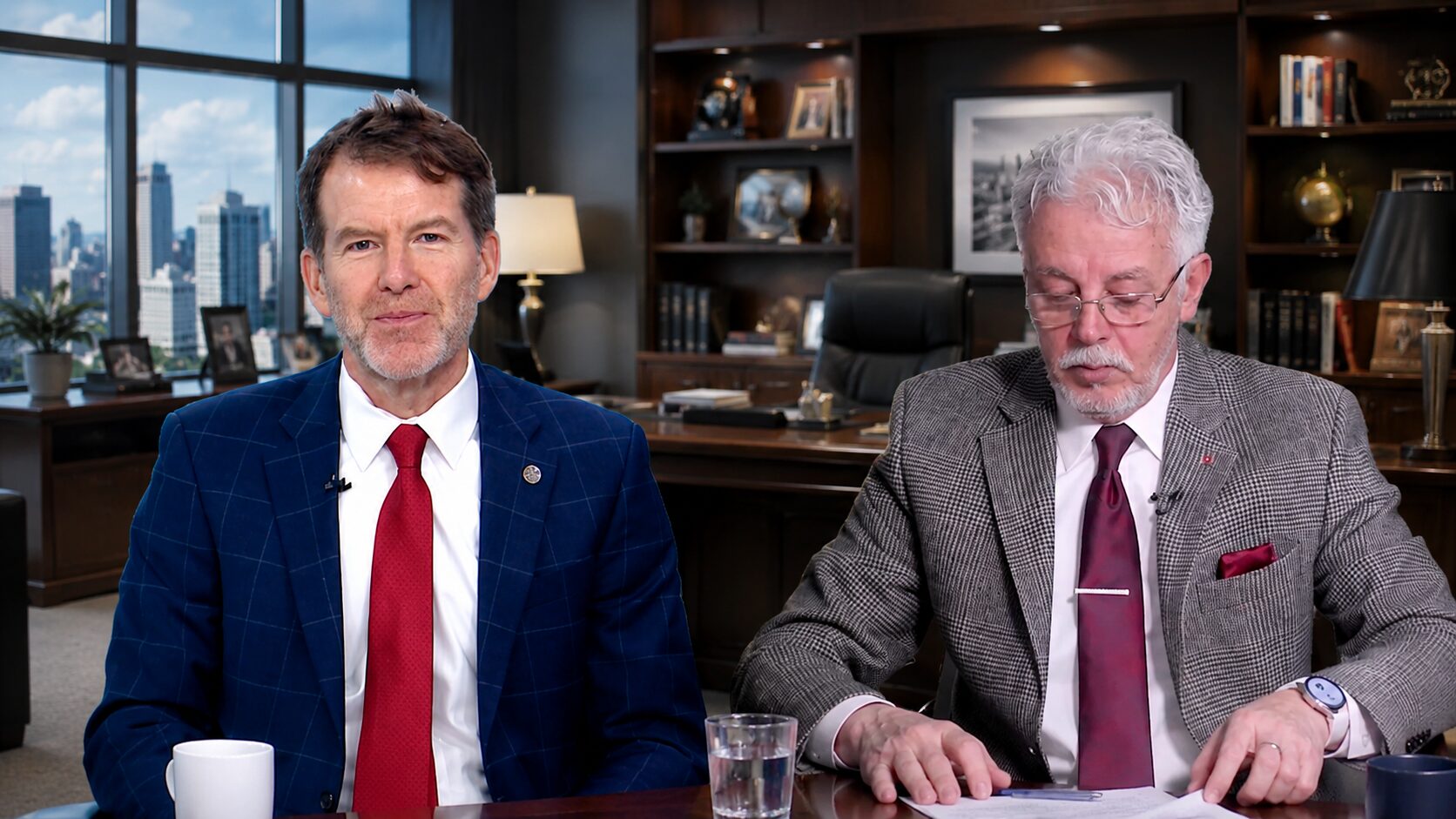
Mark Pfeifle President & CEO, Off the Record Strategies Former White House National Security Council Deputy.
Interviewed by Mohamed Said Ouafi.
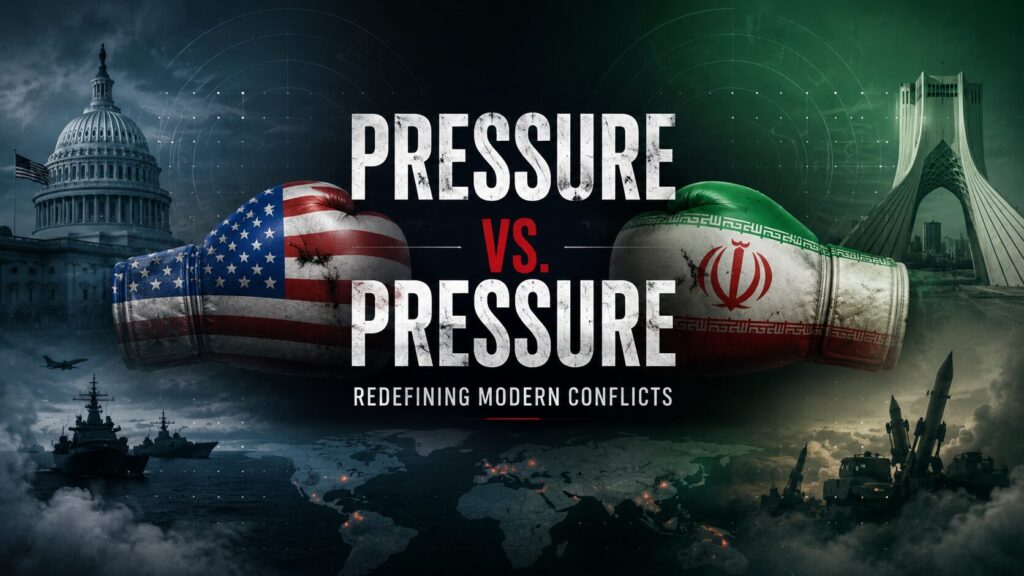
Former White House National Security Council Deputy and strategic communications expert Mark Pfeifle discusses his new geopolitical framework, “Pressure vs. Pressure,” a theory that argues modern conflicts are no longer defined solely by military victories or battlefield dominance.
In this interview, Pfeifle explains how global powers increasingly compete through economic leverage, strategic choke points, technology, energy markets, public confidence, and long-term endurance rather than conventional warfare alone.
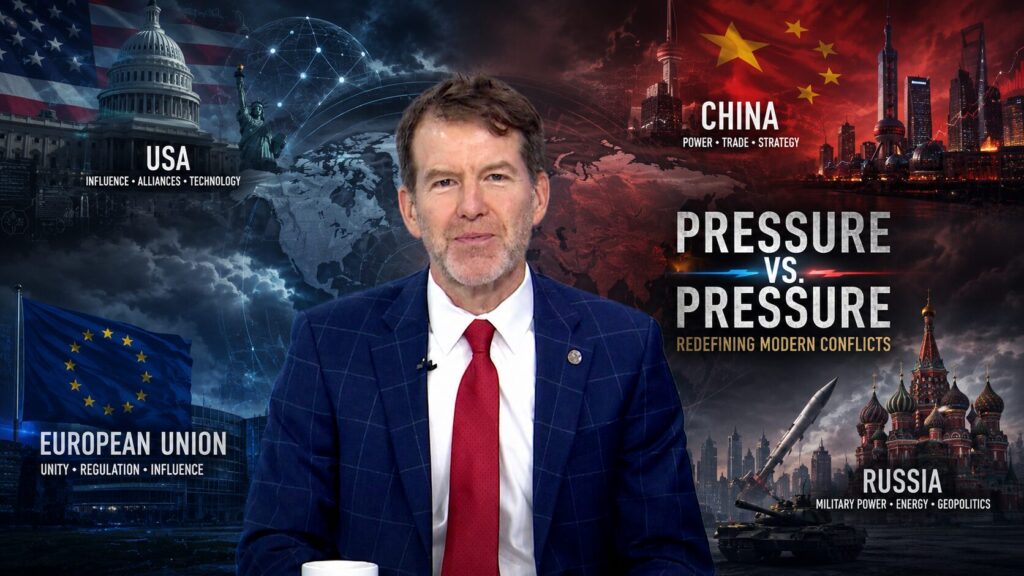
The conversation examines the growing confrontation between the United States, China, Iran, and Russia, the strategic significance of the Strait of Hormuz, the limitations of military power in the modern era, and why many international confrontations today are becoming “pressure talks” rather than peace talks.
Drawing on decades of experience in national security, crisis management, and strategic communications, Pfeifle offers a broader view of how pressure systems are reshaping global politics, economics, and war in the twenty-first century.
Mark, welcome, and thank you for being with us.
Mark Pfeifle
Well, thank you, Mohammed.
Question
. Talk to our readers about the real concept of “Pressure vs. Pressure” and how you define it.
Mark Pfeifle
So it’s the new 21st century challenge of nation states, of non-nation actors and competition where diplomacy, economics, military power and public pressure all collide. And how there’s not as much peace talks today, but there’s pressure talks. It’s who can exert the most pressure on the other side and create the most leverage to bring somebody to the table to change their behavior.
Wars now hit ports, markets, supply chains and public confidence before they hit borders.
We see it specifically in Iran and the Strait of Hormuz, in that the United States has the most lethal, the most expensive military in the history of civilization, but yet because of pressure versus pressure, an Iranian regime that is quite weak and quite fragile is holding the world hostage economically right now.
Because they don’t need to have an outrageously large army or military.
What they must have is enough capability to disrupt shipping and inject uncertainty into the global economy.
That pressure alone can reshape negotiations.
Question.
So if I may say that, in today’s warfare, you don’t believe that power itself is enough to achieve goals. Military power, drones, weapons — all of that together doesn’t make it if you don’t have pressure points or pressure cards.
Am I right in saying that you are redefining the rules and norms of conflict?
Mark Pfeifle
: That’s right.
Military strength alone no longer guarantees strategic success.
Modern conflict is no longer about who destroys more targets. It’s about who absorbs and applies pressure longer.
Pressure breaks systems long before armies collapse.
China is a superpower, but its dependence on imported energy creates strategic vulnerability.
Russia thought that they could easily go in and take down its much smaller and less populated neighbor in Ukraine, but multiple years in, Russia is losing some ground to this small, very resourceful country in Ukraine.
Russia expected a three-week war. Large militaries can still lose strategically when smaller countries refuse to psychologically collapse. Years later, they are burning manpower, money and political capital against a smaller country that refused to collapse. Forty percent of their budget goes to military and security, and they have to refigure that they can’t just go in and march and take over.
The United States built the most powerful military in human history, yet after 47 years the Iranian regime still knows how to exploit shipping lanes, energy markets and economic pressure against the West.
America mastered battlefield dominance. Iran mastered strategic disruption.
Question
. So if the readers understand your point correctly, you are saying that I don’t necessarily need to bomb my enemy. I need to identify and target pressure points strategically.
Mark Pfeifle
. I have to look at what is the pressure point in my opponent, and if I can just whittle that down and pick at it, I can take advantage even if they have a large population, a large military, an industrial base, or an amazing technology sector.
Sometimes even great powers become paper tigers when their pressure points are exposed. Every organization, every country has to figure out what is its “Strait of Hormuz” — what is the strategic choke point that can hurt your organization, your country, your society.
And if you’re not dealing with that right now and figuring out how you’re going to plan for it and battle against those who are gonna use that as leverage against you, then you have a weakness that can be exploited very quickly and very easily.
Question
. Since you mentioned China several times, after President Donald Trump’s visit to China, how would you define the “pressure versus pressure” relationship between the United States and China?
Mark Pfeifle
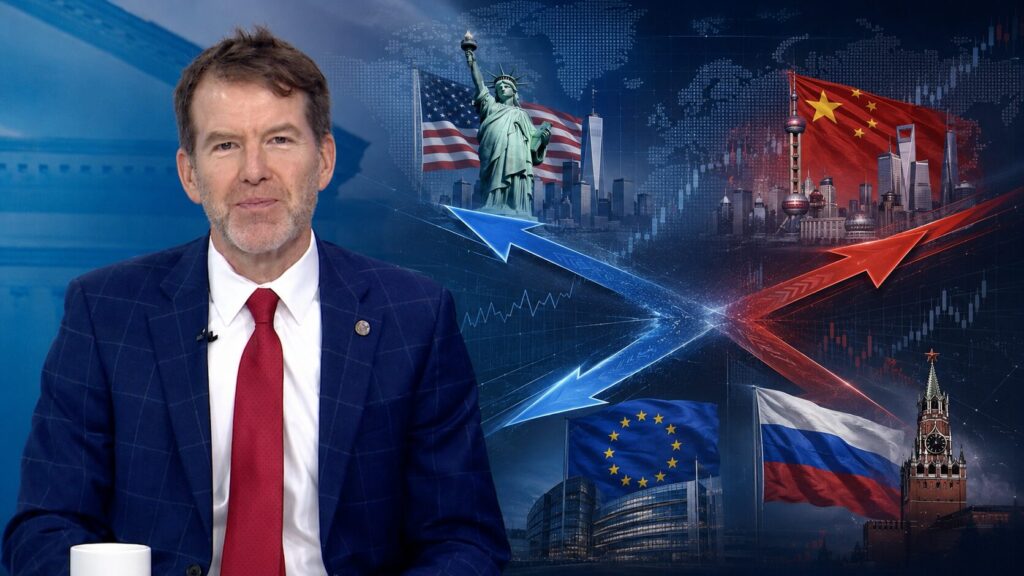
. The US has leverage and pressure right now because they have the technological advantage.
Through ingenuity and entrepreneurship, they can produce better technology, and if the Chinese cannot steal it, that puts the United States at an advantage.
With chip manufacturing and Nvidia’s H200 chips, China needs that technology if they are going to compete from an AI and quantum computing standpoint.
China learned that you do not have to defeat the United States militarily. You just have to exhaust it economically and politically.
The next superpower competition will be fought through chips, energy, manufacturing and strategic dependency.
Trump’s challenge is that he needs China to stand up and tell the Iranian regime to open the Strait of Hormuz.
At the same time, China has no problem watching the US struggle in the Middle East.
China purchases 80 to 90 percent of Iran’s exported oil. Forty to forty-five percent of the Iranian budget is paid for by the Chinese.
So China has been paying for destabilization in the Middle East for years, and now the bill is coming due.
Question.
So in this case, aren’t you essentially telling military institutions that weapons alone are no longer enough? That war machines must now be combined with pressure strategy, economic leverage, and long-term tactics?
Mark Pfeifle
. America thinks in election cycles. China and Russia think in decades.
That’s the wonderful thing about the US system — we are dynamic and always changing — but that’s also our strategic challenge.
Our competitors can sometimes wait us out.
For 47 years, the United States tried to manage the Iran problem.
Sometimes sanctions were imposed. Sometimes they were lifted. Sometimes harder sanctions came back.
But there was never enough consistency to profoundly change the behavior of the Iranian regime.
America fought Iran tactically for 47 years. Iran fought strategically.
Question
. If you had one direct message to decision makers in the United States today, what would it be?
Mark Pfeifle
. Get your government and your strategy and your society all marching in one direction for what your long-term goals are.
Don’t manage things as if they’re a news cycle. Manage them like they are a survival cycle that plays out over years and decades.
Unless you do that, you are always going to be playing catch-up.
Pressure rewards countries that prepare early and punishes those that improvise late.
The United States still operates in many ways with an antiquated system.
And the challenge now is whether the country has the political will and communication capability to move together strategically for the long term.
Question
. Final question. Who are the victims of today’s “pressure versus pressure” conflicts in the Middle East?
You pressure Iran, but Gulf countries are harmed economically and strategically as well.
How do you resolve that?
Mark Pfeifle
. The victims are the organizations and countries that are not identifying where their vulnerabilities and pressure points are.
If we take the Gulf States, for example, their economies are diversifying rapidly, but energy exposure still creates strategic vulnerability. The Iranian regime’s challenge is different. They possess massive oil and gas reserves, but their people live on roughly one-fifteenth of what the average Gulf citizen lives on.
Israel’s challenge is also different.
Israel has a highly educated society, but because of what has happened in Gaza over the last several years, their international standing — especially among young people — has become very weak.
Their vulnerability is reputational.
In the digital era, reputational pressure can become strategic pressure very quickly.
Israel can win battles and still lose strategic ground internationally.
They must find a way to extend an olive branch, not just the butt of a weapon.
The next global winners will not always be the strongest countries. They will be the ones that withstand pressure the longest.
LinkedIn: mpfeifle – https://www.linkedin.com/in/pfeifle/
Twitter: @pfeifle
Disclaimer: The views and opinions expressed in this article are those of the authors and do not necessarily reflect the official policy or position of Newslooks.com