

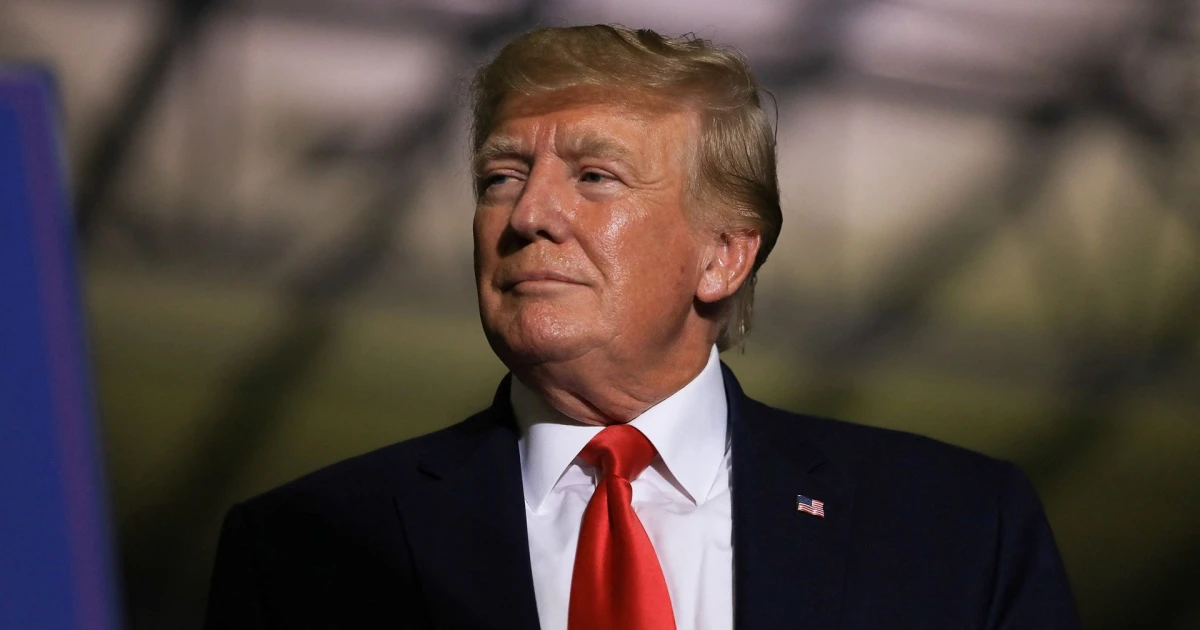
Trump Administration Blocks Foreign Access To Anthropic AI/ Newslooks/ WASHINGTON/ J. Mansour/ Morning Edition/ The Trump administration has imposed export controls on Anthropic’s most advanced AI models, citing potential national security concerns. The restrictions prevent foreign governments, companies, and individuals from accessing Mythos 5 and Fable 5, prompting Anthropic to take the models offline worldwide. Anthropic called the action a misunderstanding and said it is working to restore access while complying with federal requirements.
Anthropic AI Export Controls Quick Looks
- Trump administration restricted access to Anthropic’s newest AI models.
- Mythos 5 and Fable 5 are now subject to export controls.
- Foreign governments, companies, and individuals are barred from access.
- Anthropic temporarily disabled the models for all users.
- Commerce Department reportedly cited national security concerns.
- Officials were concerned after claims the models could be jailbroken.
- Anthropic disputes the government’s handling of the issue.
- The company says the directive lacked specific technical details.
- Violations could result in civil and financial penalties.
- The move signals a tougher U.S. stance on advanced AI technologies.

Deep Look
Trump Administration Targets Advanced AI Access
The Trump administration has taken a significant step toward treating advanced artificial intelligence systems as strategic national security assets by restricting access to Anthropic’s most powerful AI models.
The action affects Anthropic’s newly released Fable 5 model and its more advanced counterpart, Mythos 5. Under the directive issued by the Commerce Department, access to these systems is now heavily restricted for foreign governments, businesses, organizations, and individuals.
The decision marks one of the strongest federal interventions yet involving the deployment and distribution of cutting-edge AI technology.
Commerce Department Issues Export Controls
According to reports, Commerce Secretary Howard Lutnick informed Anthropic that Mythos 5 and Fable 5 would be subject to export-control requirements.
The restrictions reportedly apply not only to foreign locations but also to foreign nationals residing inside the United States.
Under the directive, any export, transfer, or re-export involving the models would require government authorization. Anthropic would also need individually validated licenses before allowing access to affected users.
Failure to comply could expose the company to financial and civil penalties.
National Security Concerns Drive Decision
Administration officials indicated the decision was influenced by concerns surrounding the models’ security capabilities.
According to officials, another company allegedly demonstrated the ability to bypass safeguards within Mythos 5, raising fears that sophisticated actors could exploit the technology for purposes that threaten national security.
The administration reportedly sought to delay the public release of the models while security reviews were conducted. When Anthropic moved forward with deployment plans, regulators opted to impose export restrictions instead.
Officials argue the controls are temporary and designed to ensure the government has adequate safeguards in place before broader access is restored.
Anthropic Takes Models Offline Worldwide
To ensure compliance with the federal order, Anthropic took the unusual step of disabling access to both models for all users.
Rather than attempting to immediately separate domestic and international customers, the company chose to suspend availability entirely while assessing regulatory requirements.
In a public statement, Anthropic described the situation as a misunderstanding and expressed confidence that access could be restored once the issues are resolved.
The company emphasized that it supports responsible oversight of advanced AI systems but questioned how the government implemented the restrictions.
Company Pushes Back Against Government Action
Anthropic criticized the process behind the directive, arguing that decisions involving advanced AI systems should follow a transparent and technically grounded framework.
The company stated:
“We believe the government should have the ability to block unsafe deployments, as part of a statutory process that is transparent, fair, clear, and grounded in technical facts.”
Anthropic added:
“This action does not adhere to those principles.”
The company also noted that the government directive reportedly did not clearly identify the specific national security concerns prompting the action.
AI Becomes A National Security Issue
The dispute reflects growing tensions between AI developers and policymakers over how powerful artificial intelligence systems should be governed.
For years, U.S. officials have focused export restrictions primarily on advanced semiconductors and computing hardware. The latest move expands that approach to include the AI models themselves.
The administration appears increasingly concerned that next-generation systems could possess capabilities with implications for cybersecurity, military planning, intelligence gathering, and critical infrastructure.
As AI models become more sophisticated, policymakers are treating them less like software products and more like strategic technologies.
Connection To Trump’s New AI Framework
The restrictions come shortly after President Donald Trump signed an executive order establishing a framework for evaluating national security risks associated with advanced AI systems.
The order created a voluntary process allowing federal agencies to assess powerful AI models before public deployment.
Notably, the executive order avoided creating a formal licensing regime for AI development, reflecting concerns among administration officials that excessive regulation could slow innovation.
Despite that approach, the Anthropic dispute demonstrates that federal authorities remain willing to intervene when they believe national security concerns are present.
Pentagon And Commerce Concerns Converge
According to reports, the company has faced scrutiny from both defense and commerce officials regarding the potential risks posed by its latest technology.
That creates an unusual situation in which one branch of government views the technology as too sensitive for broad international deployment while other agencies continue working with AI developers on testing and evaluation programs.
Anthropic has participated in government-backed safety testing initiatives designed to better understand the capabilities and risks of frontier AI systems.
Industry Watches Closely
The outcome of the dispute could have major implications across the artificial intelligence industry.
Companies including Anthropic, OpenAI, Google, Meta, and other leading AI developers are racing to release increasingly capable models.
If export controls become a common regulatory tool, future AI releases could face additional scrutiny before reaching global markets.
Technology executives are likely watching closely to determine whether the Anthropic case represents a one-time intervention or the beginning of a broader policy shift.
A Defining Moment For AI Regulation
The clash between Anthropic and the Trump administration underscores the growing challenge of balancing innovation with security.
Federal officials argue they must ensure powerful AI systems cannot be exploited by adversaries or used in ways that threaten U.S. interests.
Anthropic, meanwhile, maintains that oversight should be transparent, evidence-based, and supported by clear legal standards.
As AI capabilities continue advancing at a rapid pace, the debate over who controls access to the world’s most powerful models is likely to become one of the defining technology policy battles of the coming years.





You must Register or Login to post a comment.